






















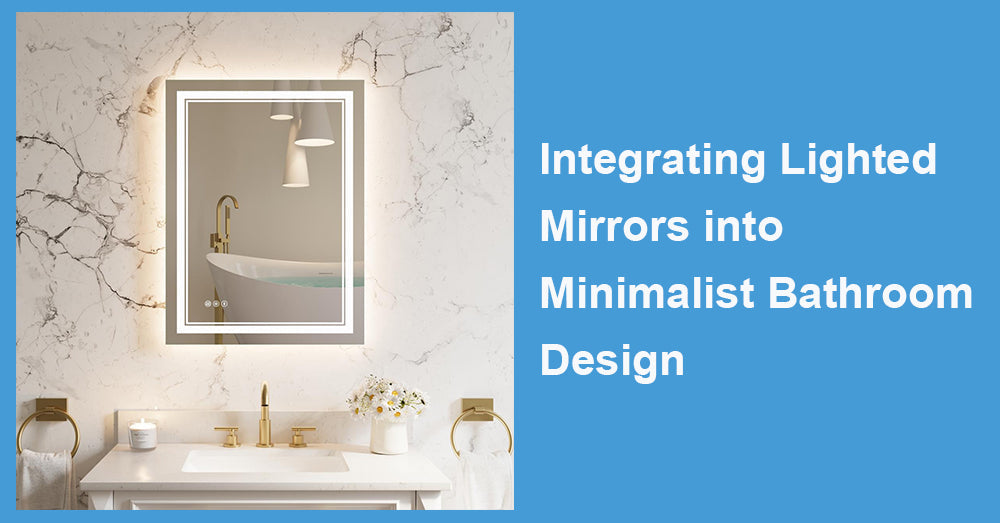
In recent years, minimalism has continued to gain momentum in residential design. From open kitchens to living rooms without main lights, more and more consumers are pursuing the spatial expression of "less is more". The lighted mirrors are becoming an important core item in minimalist design in bathroom spaces. According to the annual trend report released by industry organizations such as the National Kitchen & Bath Association (NKBA), the use of mirror systems that integrate lighting, defogging, and intelligent control continues to increase in mid- to high-end bathroom renovation projects.

This article will analyze how mirrors with light can be integrated into minimalist bathroom design from four dimensions: design logic, technological trends, installation points, and market prospects.
1. Minimalism and the trend of functional integration
Minimalism is not simply about "blankness", but emphasizes functional integration and visual order. In bathroom spaces, traditional combinations often include: main light + wall light + decorative light + ordinary mirror. The emergence of mirrors with lights integrates the three functions of "lighting+decoration+practicality" into one.
The LED light source is hidden behind or at the edge of the mirror body, forming a soft surround lighting effect, making the mirror surface seem to be "suspended" above the wall. This design reduces the number of additional lighting fixtures, making the walls cleaner and more in line with the core principle of minimalist space, "subtractive design".
In new apartment projects in West Coast cities such as Los Angeles and Seattle, developers are increasingly inclined to adopt integrated LED mirror systems to replace traditional dual-wall light layouts and enhance the modernity of the space.
2. Light Environment Design: The Key to Minimalist Space
Minimalist bathrooms often use neutral tones - white, beige, gray, or light wood. In this context, light becomes a key factor in shaping spatial hierarchy.
Mirrors with lights usually use the following three light source structures:
Backlit: The light source is located on the back of the mirror, creating an ambient light effect
Edge-lit: Light is evenly emitted from the edge of the mirror
Dual lit: Balancing functional lighting and atmosphere creation
In minimalist design, it is recommended to choose a dimmable system with a color temperature between 3000K and 4000K to adapt to different usage scenarios. In the morning, neutral white light can be used for washing, and at night, it can be switched to warm light mode to enhance comfort.
The standards in the field of lighting engineering usually refer to the recommended illuminance values of the Illuminating Engineering Society (IES), and it is recommended to maintain the washbasin area between 300 and 500 lux to meet the needs of makeup and shaving.
3. Technological Upgrade: Parallel Integration of Intelligence and Security Standards
With the popularization of smart home systems, illuminated mirrors are shifting from single lighting products to intelligent terminal devices. The mainstream features include:
Touch switch or no-touch sensing
Anti-fog heating film
Bluetooth speaker
Time and temperature display
Linkage with voice systems such as Alexa
In terms of safety, illuminated mirrors sold in the market must comply with UL or ETL certification standards. The relevant electrical installation specifications must comply with the National Electrical Code (NEC) referenced by the National Electrical Contractors Association (NECA).
For minimalist design, a concealed Hardwired Installation is superior to an exposed plug installation, as it can prevent wires from damaging the overall visual effect of the wall.
4. Size and Proportion: The Balance Principle of Minimalist Aesthetics
Minimalist design emphasizes "proportional order". The size of the mirror with lights should be coordinated with the bathroom cabinet (Vanity).
Common pairing suggestions:
24-30 inch bathroom cabinet: Choose a 24-28 inch mirror
36-48 inch bathroom cabinet: Choose a 30-40 inch mirror
Double basin 72-inch bathroom cabinet: can choose two independent mirrors or an integrated long mirror
In high-end residential projects, designers often use the method of "mirror width slightly smaller than cabinet width" to create visual space, making the space more restrained and elegant.
5. Material selection and minimalist texture
Minimalist space emphasizes the realism of the material itself. High-quality illuminated mirrors typically use:
5mm copper-free, environmentally friendly lens
Anti-corrosion silver mirror layer
IP44 or higher waterproof rating
Aluminum alloy or stainless steel frame
In humid environments, moisture resistance and corrosion resistance are particularly critical. Especially in the humid climate of Florida, consumers are more concerned about anti-fog and anti-rust capabilities.
6. Installation Trend: Surface Installation vs Embedded Installation
In the renovation market, surface-mounted is more common, with lower construction costs and suitable for DIY enthusiasts. In newly built residential buildings, Recessed Installation is more favored by designers because it can make the mirror level with the wall, resulting in a cleaner visual experience.
Minimalist bathrooms often avoid complex lines, so embedded designs are more in line with the overall tone. But it is necessary to reserve a power box and installation space on the wall.
7. Market prospects and consumption trends
According to industry data, the bathroom renovation market has continued to grow after the pandemic. Consumers are more willing to invest in high-frequency usage areas, and bathrooms are one of them. Mirrors with lights have become a growth engine for the mid-range and high-end markets due to their obvious visual upgrades, relatively convenient installation, and wide price range.
In a user survey released by the design platform Houzz, over 60% of surveyed homeowners stated that upgrading the mirror and lighting system is a priority when renovating their bathroom.
In the next three years, mirrors with lights will show the following trends:
Thinner design (over 1 inch thickness)
Full touch mirror
Deep integration with smart home systems
Application of LED chips with higher energy-saving levels
Conclusion
In minimalist bathroom design, illuminated mirrors are not only functional products, but also the core shapers of spatial atmosphere. It achieves the design goal of "reducing elements while enhancing the experience" through the integration of light, proportion, and technology.
As intelligence and energy-saving standards continue to advance, illuminated mirrors will expand in residential design and become an indispensable iconic feature of modern minimalist bathrooms.









































Leave a comment
This site is protected by hCaptcha and the hCaptcha Privacy Policy and Terms of Service apply.