






















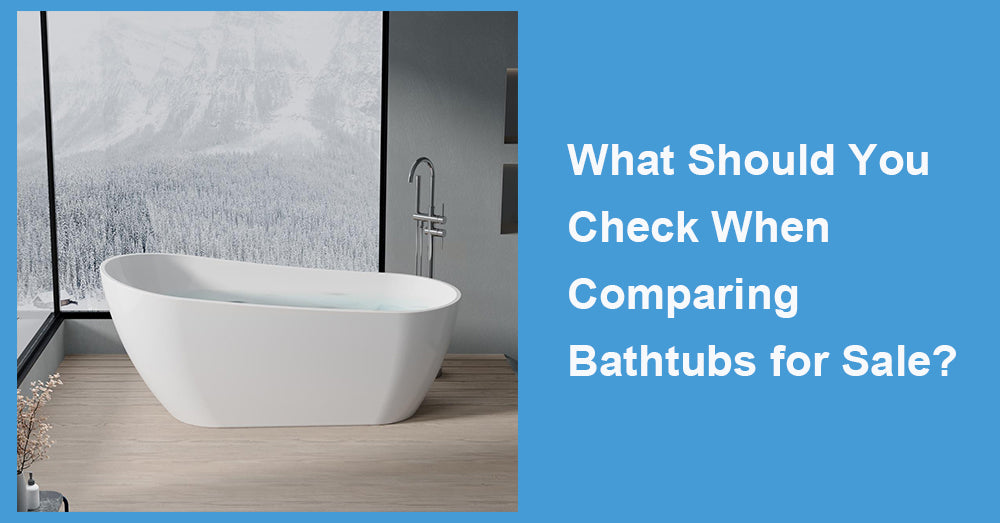
In the residential decoration and renovation market, the bathroom has always been one of the spaces with the highest input-output ratio, and the bathtub, as the core facility of the bathroom, not only affects the daily use experience, but also directly affects the overall value of the house. According to data released by the National Association of Home Builders (NAHB) and Houzz, consumers have significantly increased their focus on "comfort, design sense, and long-term durability" in bathroom renovations in recent years.
In the market environment, what factors should be considered when choosing a suitable bathtub? The following provides a systematic analysis from the industry's perspective and from consumers' actual needs.
1. First, clarify the bathroom space and installation conditions

Measuring the size of the space is the most fundamental and crucial step before choosing the bathtubs for sale. The common types of bathrooms in residential areas include Master Bathroom, Guest Bathroom, and En suite, and there are significant differences in the size and form requirements for bathtubs in different spaces.
Standard embedded bathtub (Alcove Tub)
It is commonly used in apartments and small to medium-sized residential buildings, with a common size of 60 inches by 30 inches. It is installed between three walls, saving space and keeping costs under control.
Freestanding Tub
More commonly found in mid to high-end residential and newly-built villas, with higher space requirements and the need to reserve sufficient walking and cleaning space.
Corner bathtub or large soaking bathtub
Suitable for large-scale main bathrooms, but with high requirements for ground load-bearing and drainage layout.
Industry advice: In renovation projects, if bathtub replacement involves changes to pipelines or ground structures, the overall cost may increase by more than 30%. Therefore, it is imperative to assess installation conditions in advance.
2. The material of the bathtub determines its service life and experience.
In the market, the choice of bathtub material is directly related to durability, insulation performance, and maintenance costs.
2.1. Acrylic
The highest market share
Lightweight and easy to install
Sound insulation and a warm touch
Wide price range, suitable for mainstream families
2.2. Cast Iron
Known for its enamel coating, extremely durable
Excellent insulation performance
Heavyweight, high requirements for floor load-bearing capacity
Mainly used for high-end or traditional style residences.
2.3. Fiberglass
Low cost and lightweight
Weak durability and scratch resistance
More suitable for budget-limited or rental housing projects
2.4. Artificial stone/composite material (Solid Surface)
In recent years, the high-end market has seen significant growth.
Texture close to natural stone
Easy to clean, strong design sense
Relatively high price
Industry trends show that consumers are shifting from "low price priority" to "long-term use value priority", and the proportion of mid to high-end materials continues to increase.
3. The type of bathtub should match the usage scenario.
There are significant differences in the demand for bathtub types among different family structures and lifestyles.
Family users:
More attention is paid to safety and practicality, and bathtubs with anti-slip bottoms and low step heights are more popular.
Dual career families or young users:
Prefer soaking bathtubs with greater depth to relieve stress and improve quality of life.
Aging families:
The demand for "accessible bathrooms" in the market continues to grow, and walk-in bathtubs have become a segmented growth category.
In industry applications, the selection of functional bathtubs often enhances user satisfaction more than their appearance.
4. Comfort design is increasingly valued.
Modern bathtubs are no longer just "containers that can hold water", but are lifestyle products that emphasize ergonomic design.
When making a purchase, special attention should be paid to:
Does the backrest angle conform to the human body curve?
Does the depth of the bathtub support full-body soaking
Is the edge width convenient for sitting or placing items?
In mid- to high-end bathroom projects, comfort has become a critical indicator for consumer repurchase and reputation.
5. Maintenance costs and cleaning difficulty cannot be ignored.
According to industry after-sales feedback, consumers often underestimate the maintenance costs of bathtubs.
Whether the surface is resistant to dirt and scratches
Is it prone to discoloration due to scale and cleaning agents?
Do you need regular waxing or professional care?
Acrylic and artificial stone bathtubs have more advantages in terms of maintenance convenience, which is also an important reason for their continued growth in the market.
6. Energy efficiency and sustainability have become new considerations.
Environmental protection and energy conservation are influencing consumer decision-making.
Does a deeper soaking bathtub mean more water?
Does the material comply with low-VOC or environmental certification requirements?
Does the product comply with local building codes and water-saving trends?
More and more brands are balancing "comfort experience" and "water efficiency" in their designs to adapt to future regulations and market changes.
7. Balance between price range and overall decoration budget
In the market, bathtub prices vary greatly:
Basic model: $300-600 USD
Mid-end model: $800- $1500
High-end and customized models: over $2000
Industry experts generally suggest that the budget for bathtubs should match the bathroom's overall investment level, avoiding situations where a single item is excessively luxurious or significantly lowers the bathroom's overall grade.
Conclusion: Rational choice is the true high-end
Against the backdrop of constantly evolving bathroom design trends, the selection of bathtubs has long since moved beyond a single product and has become a systematic decision that takes into account space, usage habits, materials, comfort, and long-term value.
For consumers, a suitable bathtub may not necessarily be the most expensive, but it is definitely the choice that best suits their lifestyle and family needs.
For the industry, designing products based on real user scenarios is becoming the core of future competition in the bathtub market.









































Leave a comment
This site is protected by hCaptcha and the hCaptcha Privacy Policy and Terms of Service apply.