


















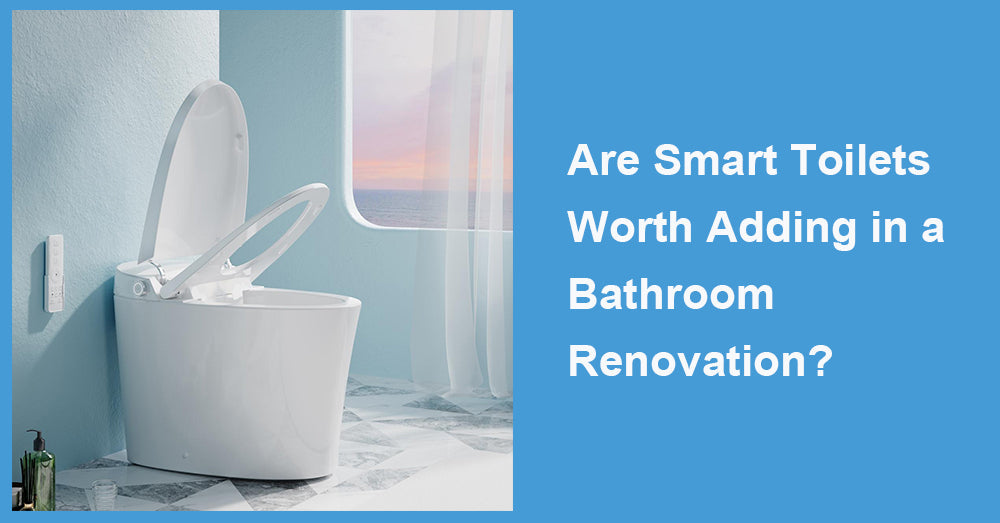
With the rapid popularization of smart homes worldwide, smart toilets, as an essential component of home bathroom intelligence, are gradually spreading from Asia into North America. According to the latest market statistics, the adoption rate of smart toilets and smart toilet seat covers in high-end homes and hotel properties continues to grow, suggesting that many consumers are rethinking traditional bathroom design.
Smart toilets were once seen as a "luxury" item in Asian countries such as Japan for a long time. Still, there are now two intertwined trends in the market: one is the demand for high-end bathroom equipment driven by consumer upgrades, and the other is that price and installation costs remain the main obstacles to the popularization of smart toilets among mass consumers. This article will comprehensively explore whether smart toilets are worth installing in home bathrooms, examining market dynamics, industry trends, user experience, and challenges.

1. Market Trend: Growth and Demand for Smart Toilets
The market size is steadily expanding.
Although the penetration rate of smart toilets is still lower than in Japan (as of 2023, the penetration rate of smart toilets in Japanese households is about 82%), the penetration rate in the United States is much higher than in China, only about 39% (compared globally), indicating that the North American consumer market has a clear interest and potential for advanced bathroom equipment.
On the other hand, the global smart toilet market and smart toilet seat market are showing a sustained growth trend. The predicted data shows that:
The global smart toilet market is expected to continue to grow before 2031, with a stable compound annual growth rate.
The smart toilet seat market is expected to grow from approximately $3.65 billion in 2025 to roughly $5.85 billion in 2035.
This indicates that not only is there an increasing demand from consumers for intelligent and comfortable experiences, but the market supply and business opportunities for related products are also steadily expanding.
High-end families and hotel properties are the first to adopt
According to industry observations, approximately 42% of high-income households and 38% of high-end hotel properties have installed smart toilet technology, indicating that the acceptance of such products in the high-end market is significantly ahead of that of ordinary households.
This is because high-end users have higher requirements for hygiene, comfort, water-saving performance, and technological sense, and the advanced functions of smart toilets perfectly match this consumer preference.
2. Why are smart toilets receiving attention?
The core appeal of smart toilets comes from their integrated multiple functions and technological advantages, which traditional toilets cannot achieve, and are changing the bathroom experience.
Comfortable and personalized experience
Modern smart toilets are typically equipped with:
Heating seat ring
Adjustable warm water flushing function with adjustable water temperature and pressure;
Automatic deodorization and seat ring sensing function;
Additional experiences, such as dry air and night lights.
These provide users with a more comfortable, hygienic, and personalized toilet experience that traditional toilets cannot compare to.
Hygiene and health monitoring function
At the recent CES 2026 Consumer Electronics Show, multiple companies showcased innovative smart toilet technologies. Some products not only have basic cleaning functions, but also monitor human health indicators through sensors, such as intestinal health and urine analysis, further expanding toilets into home health management terminals.
In addition, the brand Kohler has launched smart devices that can analyze excrement to provide health insights services, attempting to transform bathrooms into entry points for connecting health data.
3. Decoration Value Analysis: Is Smart Toilet Worth It?
The following is an evaluation of the value of smart toilets from three core perspectives: practicality of decoration, cost-effectiveness, and improvement of quality of life.
3.1. Improve the quality of life and comfort
For families who pursue high-end living experiences and have high requirements for sanitary environments, smart toilets are undoubtedly a powerful tool for upgrading bathroom comfort. For example, automatic flushing, nozzle cleaning, and heating seat ring are particularly friendly to elderly users or winter use.
3.2. Water conservation and sustainability benefits
Advanced smart toilets typically feature water-saving designs, comply with EPA WaterSense standards, and offer dual-flush modes (with different water volumes), helping reduce household water costs in the long run.
3.3. Connect with the future smart home ecosystem
The integration of Wi-Fi, APP control, and other functions enables the smart toilet to be integrated with smart homes as a whole, such as controlling flushing or analyzing usage data through voice assistants, which is an essential addition to the layout of modern home intelligence.
4. Installation costs and potential issues cannot be ignored
Despite its apparent advantages, smart toilets still face some significant challenges in bathroom decoration:
Higher initial cost
Compared with traditional toilets, smart toilets generally have higher product prices, professional installation costs, and maintenance costs. The installation costs of mainstream brands may also require additional electricity and waterproofing, which is a significant burden for families with limited budgets.
Installation requirements and maintenance complexity
Smart toilets require power, water, and intelligent system integration support, which may increase construction complexity and potential failure points during decoration. In addition, once a malfunction occurs, the maintenance cost is also higher.
Privacy and Data Security Issues
With the improvement of intelligence, some products have even started collecting user toilet data, which has raised concerns about privacy and security among users. For example, some smart toilet cameras and sensing functions have been questioned as data that can be accessed by manufacturers and used for AI training, which has raised concerns about personal privacy.
Conclusion
Is it worth installing smart toilets in bathroom decoration? Taking into account market trends, functional value, user experience, and cost considerations:
For high-end users and families who value comfort and an intelligent experience, smart toilets are indeed worth investing in; However, for those with limited budgets or a preference for simplicity and practicality, choosing a smart toilet currently requires a balance between cost and actual needs.
With advances in technology, price rationalization, and improvements to the smart home ecosystem, smart toilets are expected to become a standard feature of home bathrooms in the future. Consumers can make the best choices for their decor based on their budget and lifestyle.




















Leave a comment
This site is protected by hCaptcha and the hCaptcha Privacy Policy and Terms of Service apply.