






















Introduction
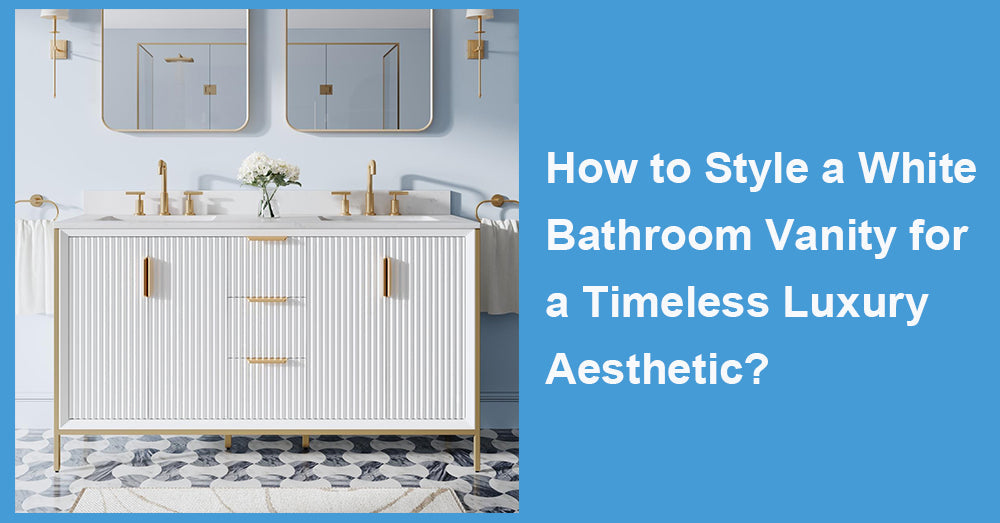
A white bathroom vanity can look clean, expensive, and quietly refined, though only when the styling around it is handled with restraint. I have seen homeowners invest in beautiful vanities, marble-look tops, and polished hardware, then lose the luxury effect because the mirror was too small, the lighting felt generic, or the countertop became crowded with everyday clutter. The vanity itself was not the problem. The room simply did not know how to support it.
That is why styling a white bathroom vanity well has less to do with chasing trends and more to do with balance. Timeless luxury usually comes from proportion, material contrast, and a few thoughtful choices repeated consistently throughout the room.
1. Why a White Bathroom Vanity Works So Well for Timeless Luxury
White has staying power because it gives the bathroom a polished base without locking the room into one era. It can lean classic with polished nickel and framed mirrors. It can feel modern with slab fronts, stone counters, and warm wood accents. It can even move toward a boutique-hotel look when paired with layered lighting and a more architectural mirror shape.
That flexibility is exactly why white works so well in luxury bathrooms. A white vanity reflects light, visually lightens the room, and allows the more expensive-looking materials around it to stand out. Stone, brass, brushed nickel, fluted glass, textured tile, and soft wall colors all read more clearly when the vanity is not fighting them.
In smaller bathrooms, that matters even more. A dark vanity can look beautiful, though it often makes the room feel heavier than necessary. White tends to open the space and make the layout feel calmer. That quietness is part of the luxury.
2. Start With Proportion, Then Build the Mood
The biggest styling mistake I see is treating the vanity as an isolated product instead of the center of a composition. A timeless bathroom is usually built around proportion first. The mirror should feel correctly scaled above the vanity. The sconces or light fixture should reinforce the width and height of the sink zone. The countertop should have enough breathing room to look deliberate, not overly decorated.
If the vanity is shaker-style or slightly classic, I usually prefer a mirror with some structure, such as a thin metal frame, a gently arched shape, or a clean rectangular frame with softened corners. If the vanity is modern and flat-fronted, a slimmer mirror and cleaner lighting help preserve the tailored look.
Material contrast matters too. A white vanity becomes more luxurious when it sits next to something with depth. That might be a quartz or marble-look countertop with subtle veining, warm metal hardware, pale limestone-style tile, or even a wood stool placed nearby. Without contrast, white can look flat. With the right contrast, it looks intentional.
Choose finishes that feel quiet, not trendy
Luxury styling is rarely loud. Brass can look beautiful, though I prefer softer, more muted brass over anything too yellow or glossy. Polished nickel and chrome still work extremely well when the goal is a classic, collected feel. Matte black can be elegant too, though it needs some warmth elsewhere in the room so the space does not become too sharp.
This is also where many homeowners overdo it. Mixing too many finish tones weakens the room fast. Two is usually enough. One primary metal, one supporting tone at most.
Avoid the “all-white everywhere” trap
A white vanity does not mean the entire bathroom should be white. When the vanity, wall, tile, countertop, and accessories all sit in the same bright range, the room often loses dimension. The result is clean, but not luxurious.
I usually bring in softness through one or two of the following: warm wall paint, natural wood, a textured rug, linen hand towels, or stone with a little movement. The goal is not to make the room busy. It is to keep the white vanity from looking disconnected or overly stark.
3. Style the Countertop Like a Designer, Not a Retail Display
This is where good bathrooms often go wrong.
A luxury vanity top should never feel crowded. That does not mean it has to be empty, but what stays on it should earn its place. A soap dispenser in a quality finish, a small tray, a candle, a low arrangement, or a single lidded container can be enough. If there are ten visible products, the vanity stops feeling elegant no matter how expensive it was.
Real life still has to fit, of course. In a primary bath, I often suggest keeping daily products together on one tray so the countertop feels curated rather than scattered. In a guest bath, the surface can stay even cleaner. In a family bath, good drawer organization matters more than styling because countertop overflow is what ruins the luxury effect first.
A white vanity is especially good at highlighting clutter. That sounds like a flaw, but it is actually useful. It tells you quickly when the room needs editing.
The styling details that make the room feel expensive
Textiles do a lot of work here. Thick, simple towels in white, taupe, stone, or soft gray almost always feel better than loud color accents. Lighting matters just as much. Warm, flattering light near the mirror is one of the fastest ways to make a bathroom feel high-end.
I also pay attention to what is reflected in the mirror. A beautiful vanity loses impact if the mirror reflects visual mess, poor storage, or a harsh wall color. Luxury bathrooms feel composed from every angle.

4. Know the Limits of a White Vanity Before You Commit
A white vanity is not always the right answer. In a bathroom used heavily by young children, or in a household where maintenance is inconsistent, it can show neglect quickly around the sink edge, handles, and drawer fronts. That does not make it a bad choice. It just means the finish quality and the cleaning habits matter.
It can also feel too formal or too crisp in bathrooms aiming for a rustic, deeply traditional, or moodier layered look. In those rooms, a painted wood tone or natural wood vanity may fit more naturally.
Installation matters more than many people realize. A white vanity shows alignment issues fast. If the mirror is off-center, the sconces are mounted unevenly, or the countertop seam is messy, the eye catches it immediately. Good installation is part of the luxury aesthetic, not a separate concern.
Maintenance is simple. Wipe water around the faucet and sink edge. Use gentle, non-abrasive cleaners. Keep makeup, tinted soap, and hair products from sitting too long on the finish. A white vanity rewards consistency.
For homeowners considering a brand like Wellfor, my advice is simple: style a white bathroom vanity with discipline. Choose one strong mirror, one cohesive metal finish, a countertop with subtle depth, and only a few countertop accessories that truly deserve to be seen. That is how a white bathroom vanity stops looking merely clean and starts feeling timeless, layered, and genuinely luxurious.







































Leave a comment
This site is protected by hCaptcha and the hCaptcha Privacy Policy and Terms of Service apply.