






















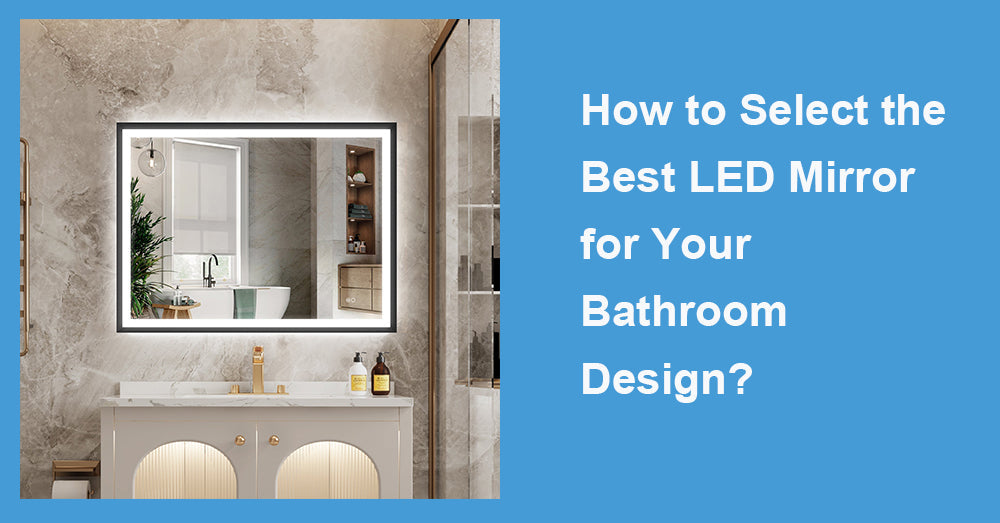
In bathroom design, LED mirrors have long transcended their role as mere "mirrors." They elevate lighting, ambiance, functionality, and spatial aesthetics: enabling more precise makeup application, more comfortable grooming, and an overall premium feel. Yet with countless styles and specifications available, choosing incorrectly can lead to issues like "glaring light," "foggy visibility," "poor fit," or "complicated installation." Below, we guide you step-by-step from design to installation to find the perfect LED mirror for your bathroom.
First, clarify: What problem are you solving with an LED mirror?
Different needs demand different priorities. We recommend ranking your most important considerations:
Clear makeup/shaving: Focus on Color Rendering Index (CRI), color temperature, and light uniformity
Ambience & aesthetics: Prioritize frame design, edge lighting, backlight effects, and smart dimming
Multiple users: Focus on touch controls/memory functions, adjustable color temperature, and brightness range
Small bathroom expansion: Emphasize mirror-to-frame ratio, vertical installation, and frameless visuals
Humid/poorly ventilated areas: Prioritize anti-fog, sealing, and waterproof ratings
Clarify your needs first, then each parameter becomes easier to select.
How to choose the size: Measure the wall first, then select the mirror
Size is the most common pitfall. A practical approach: Use the vanity width as your reference.
Single-sink vanity: Mirror width typically doesn't exceed the cabinet width for a cleaner look
Double-sink vanity: Opt for one large mirror or two separate mirrors (more flexible)
Height Selection: Accommodate both the tallest and shortest users, positioning the mirror's center within the primary viewing range.
Small Space Tips: Opt for taller, narrower vertical mirrors to enhance perceived ceiling height; wider horizontal mirrors create a more spacious feel.
If your bathroom has wall sconces, wall cabinets, or windows, measure the clearance distance from these "obstacles" to avoid installation conflicts.
Lighting Performance Essentials: Understanding Brightness, Color Temperature, and CRI
When selecting LED mirrors, lighting performance impacts experience more than aesthetics.
Brightness (Sufficiency)
Many focus solely on "having lights" while overlooking "sufficient brightness." If your bathroom's main light is dim, opt for dimmable models so the mirror light can supplement illumination. The ideal setup: Mirror lights for facial illumination, ceiling lights for ambient lighting—combining both creates optimal comfort.
Color Temperature (Ambiance vs. True Skin Tone)
Warm-toned (softer): Suited for relaxation and hotel-like ambiance
Cool-toned (clearer): Ideal for makeup application, shaving, and detail work
The most practical choice: Adjustable color temperature (warm/neutral/cool) adapts to morning/evening routines and seasonal changes.
Color Rendering Index (CRI) (Higher values indicate truer color reproduction)
You may notice some mirrors make skin appear "grayish" or cause "lipstick color distortion"—this indicates poor color rendering. Prioritize high-CRI LED mirrors to avoid makeup and outfit mishaps.

How to choose lighting type: Front-lit, backlit, or dual-lit?
Different lighting structures determine "facial illumination" and "ambient effect."
Front-lit: Light shines through or surrounds the mirror surface, providing direct illumination ideal for makeup application or shaving.
Backlit: Light projects onto the wall, creating a halo effect for a sophisticated ambiance and softer visual appeal.
Dual Lighting (Front + Back): Balances functionality and ambiance for a more comprehensive experience.
If you prioritize "practical lighting," front-lit or dual-lighting options offer greater reliability. If you seek a "premium ambiance," backlit designs are more appealing.
Is the anti-fog feature worth it? It depends on your usage scenario.
Fogging mirrors after hot showers is a common pain point. Anti-fog typically involves a heating element on the mirror's back, offering the advantage of quick localized defogging. Here's how to decide:
Average ventilation, frequent showers at home: Anti-fog is highly worthwhile
Well-defined dry zone in bathroom, minimal fogging with exhaust fan: Optional
Northern winters/humid cold regions: Noticeably improves fog-free experience
Even with anti-fog, note usage habits: Typically, turning it on a few minutes early yields better results.
Safety and Durability: Don't overlook waterproofing, moisture resistance, and electrical details
Bathrooms are high-humidity environments—LED mirror safety is paramount:
Waterproof/moisture resistance rating: The higher the rating, the safer for wet areas
Mirror back sealing & rustproofing: Determines longevity and mold resistance.
Tempered glass/explosion-proof film: Enhanced safety, especially recommended for households with children
Power supply: Some plug-in, some hardwired; plan ahead during renovation
If undertaking whole-home or bathroom renovations, finalize mirror models during plumbing/electrical stages to avoid later rewiring.
Don't overload on features: Practicality is true "high-end."
Many LED mirrors boast numerous functions, but more isn't always better. Opt for frequently used combinations instead:
Touch-sensitive switch + Stepless dimming: Daily essentials
Color temperature switching/memory function: Eliminates constant readjustment
Time/temperature display: Useful but non-essential, depends on personal preference
Bluetooth speaker: Enhances ambiance, but accept bathroom echoes and cleaning demands
Motion sensor switch: Operable with wet hands, excellent user experience
Principle: Don't sacrifice reliability for "smart aesthetics." Stability, usability, and durability matter most.
Style integration: Make the LED mirror truly "blend into the design"
Treat the LED mirror as your bathroom's "visual focal point." Styling suggestions:
Modern minimalist: Frameless, ultra-thin, with backlight halo for maximum impact
Luxury/hotel chic: Round or oval + backlighting, paired with metal faucets for elevated sophistication
Nordic/cream-toned: Soft warm light + rounded rectangular shape for gentle ambiance
Industrial/monochrome: Square with clean lines + cool white light for crisp minimalism
If your bathroom hardware (faucets, showerheads, towel racks) features black or brushed gold finishes, align the mirror's design lines with this style for a cohesive "set" look.
Installation & Maintenance: Don't overlook "long-term usage costs"
Final step: Implementation:
Wall conditions: Different mounting methods for tiled walls, lightweight walls, and drywall
Clearance Requirements: Avoid positioning mirrors near countertops, faucets, or electrical outlets
Cleaning & Maintenance: Opt for easy-clean mirror coatings; avoid harsh cleaners on touch-sensitive surfaces
Confirm these details before ordering: mounting holes, bracket structure, and included installation hardware to prevent on-site installation issues.
Conclusion: Using a "requirements checklist" to select an LED mirror minimizes mistakes.
The core principles for choosing an LED mirror are: appropriate size, comfortable lighting, practical features, safety and durability, and style compatibility. By following this guide—from requirements to specifications to installation—you'll avoid common pitfalls. As a space used daily, a well-chosen LED mirror enhances comfort from morning to night while elevating your bathroom's overall design and sophistication.









































Leave a comment
This site is protected by hCaptcha and the hCaptcha Privacy Policy and Terms of Service apply.