

















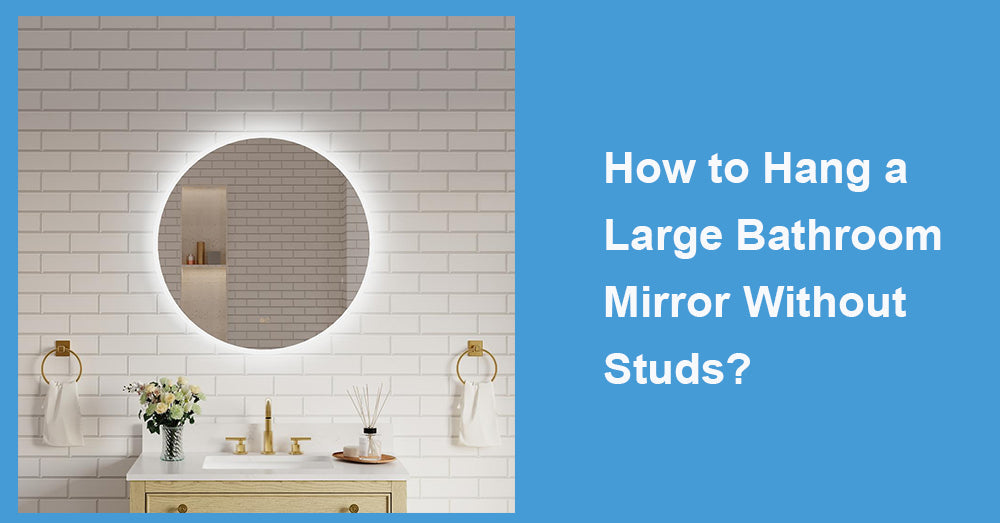
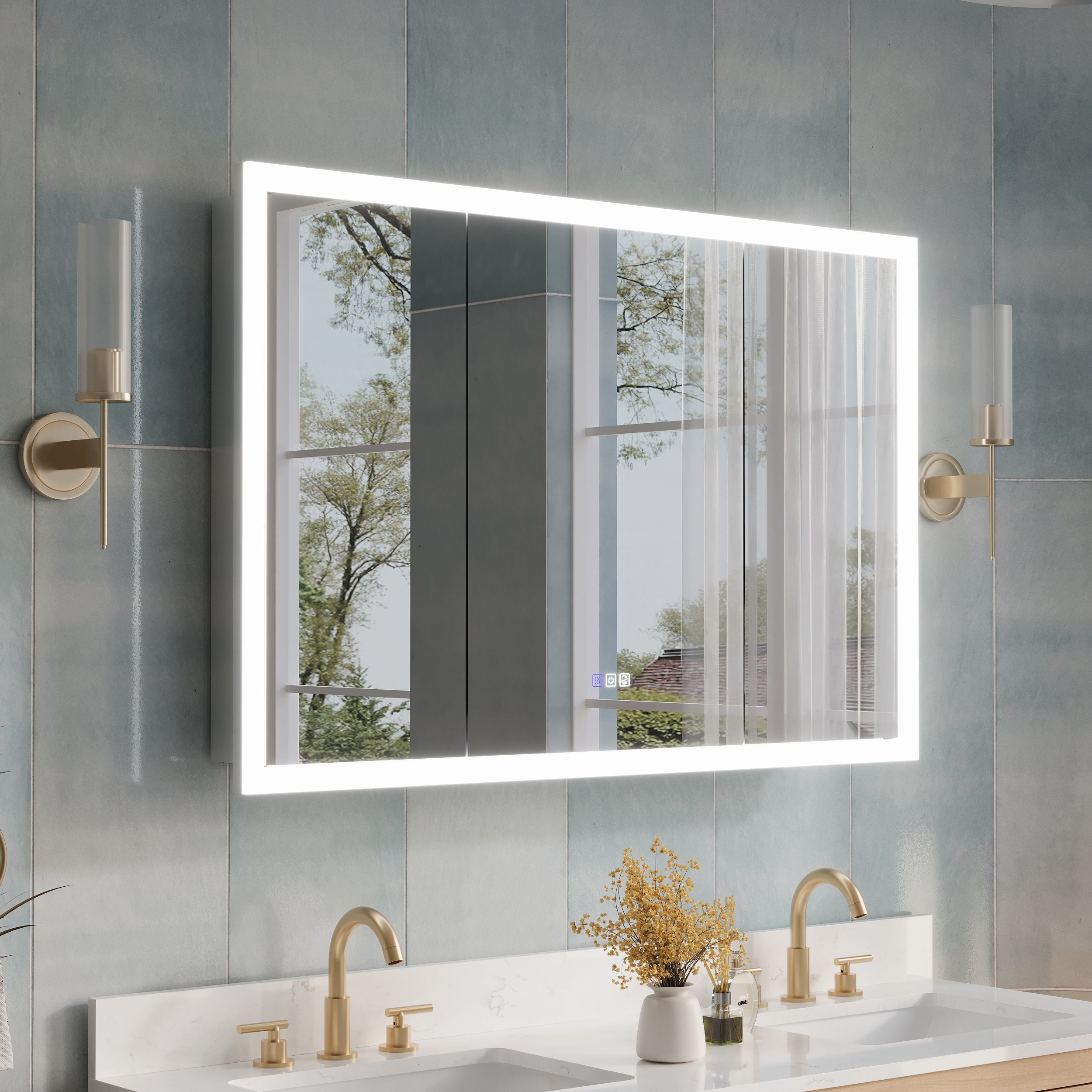
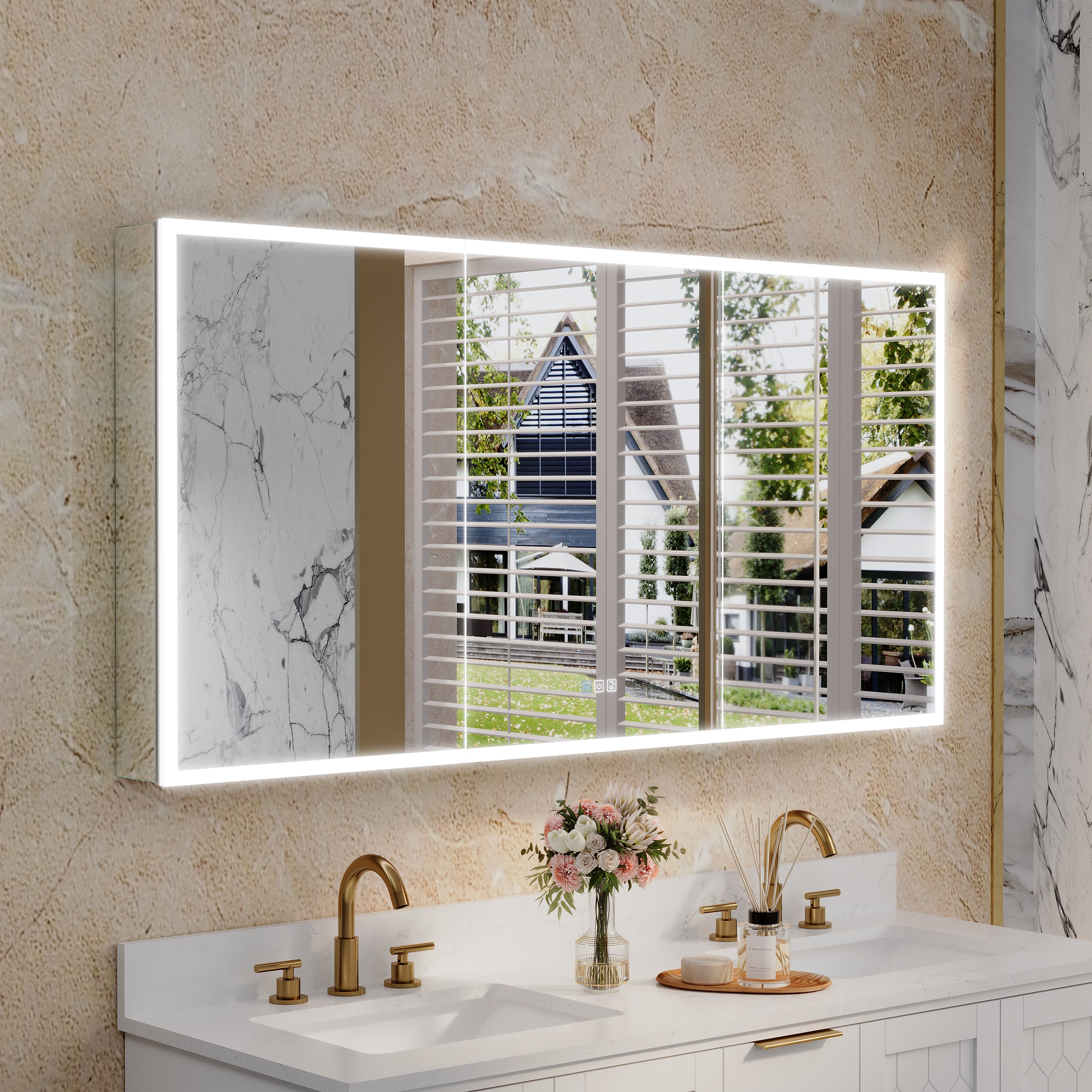
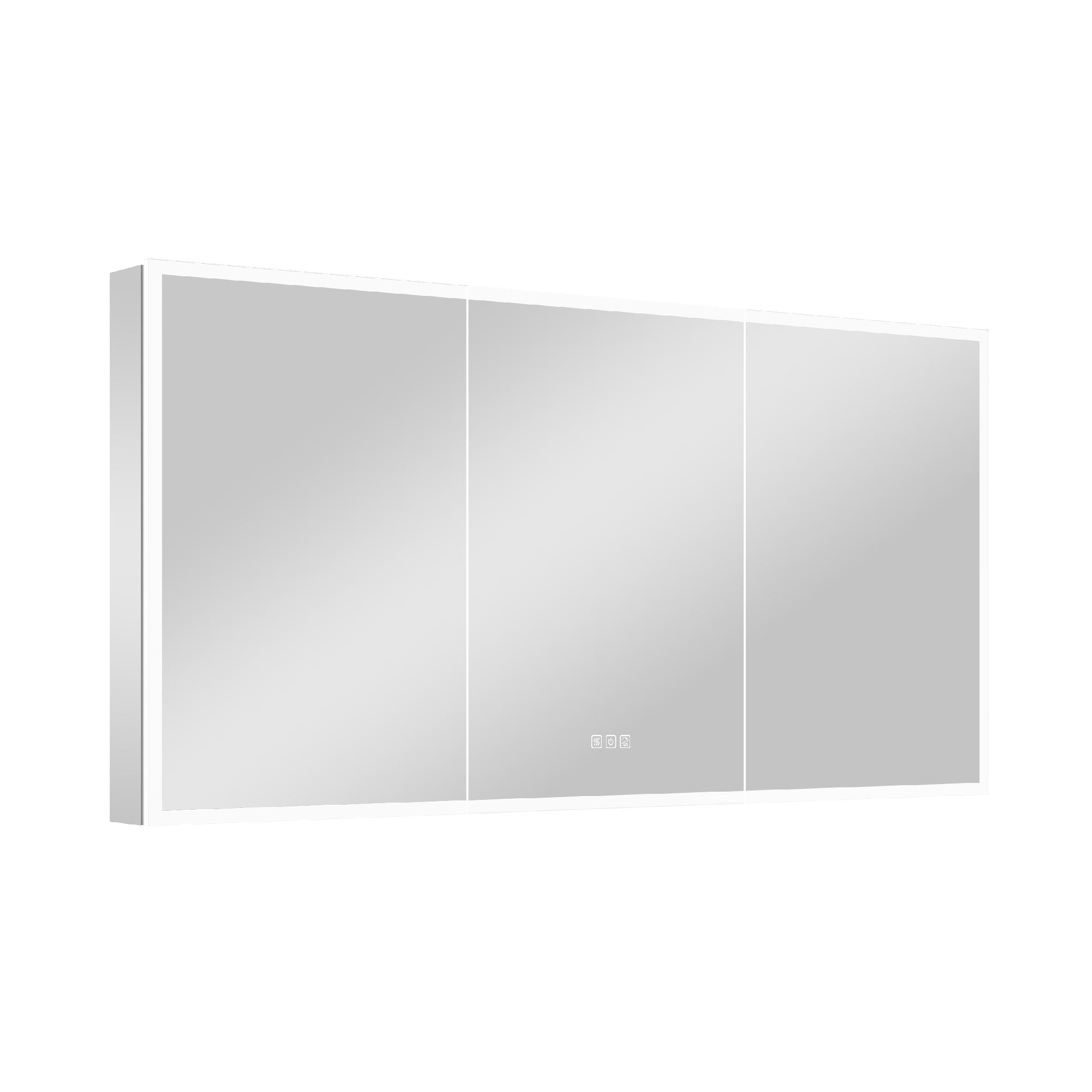
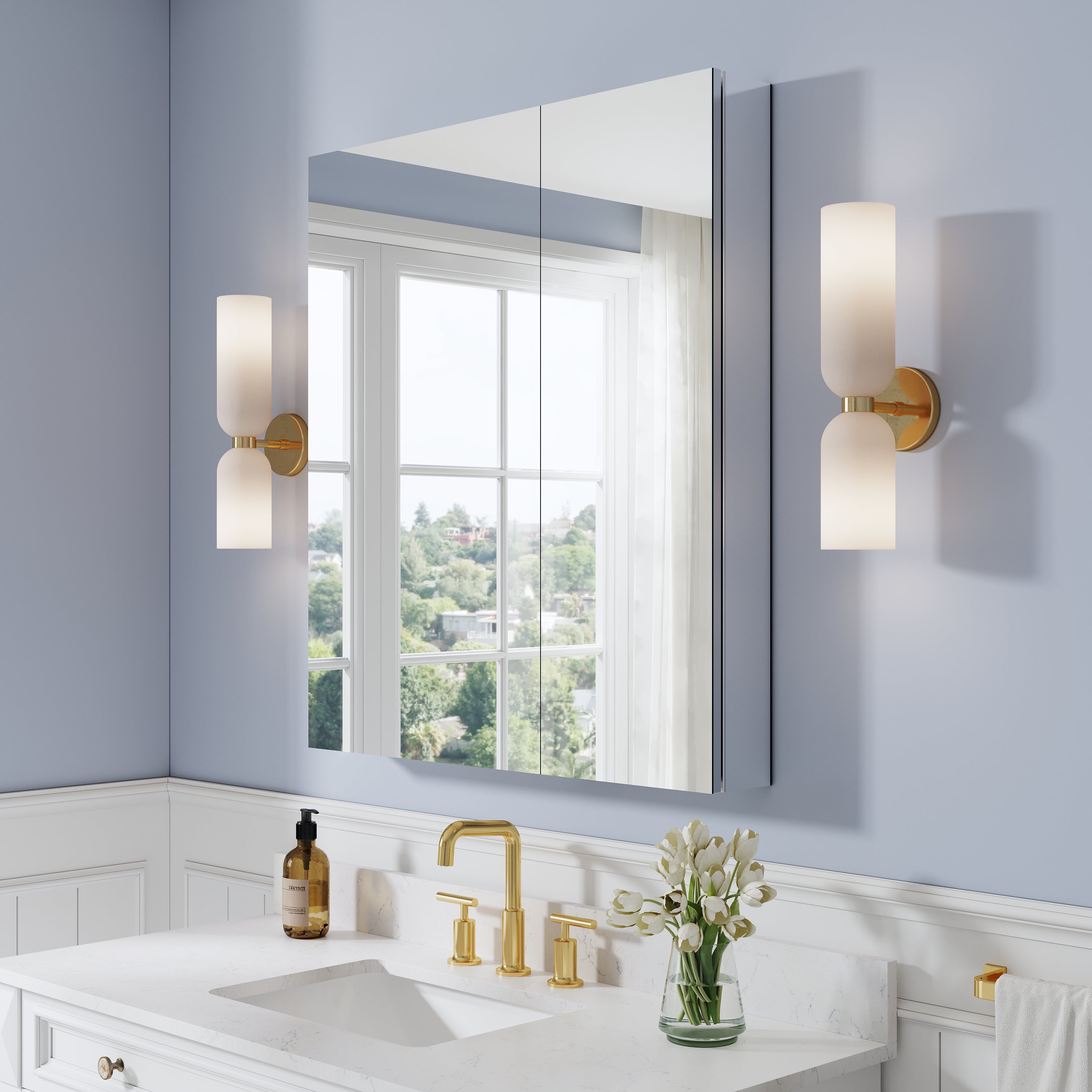
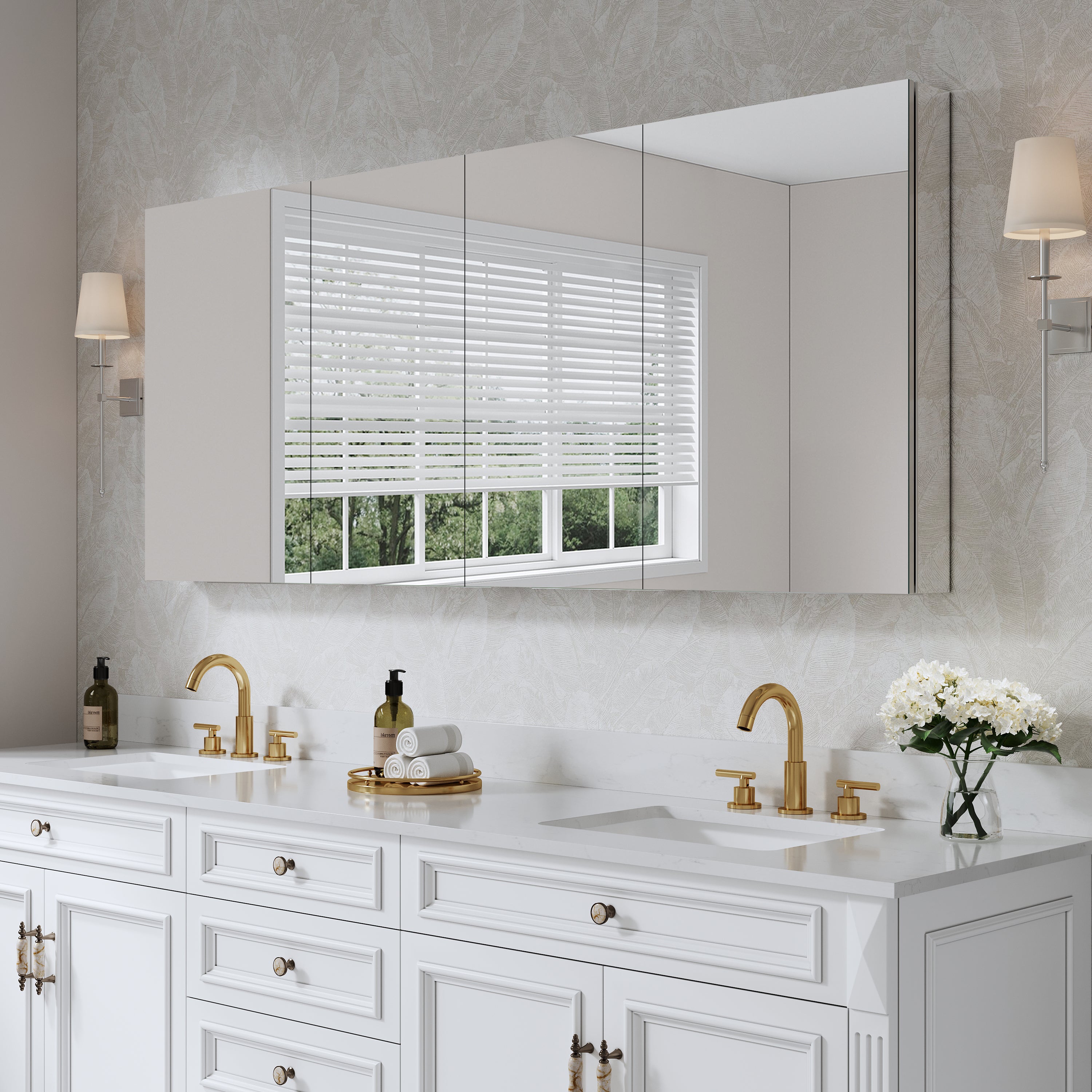
A large bathroom mirror is often the focal point of a bathroom design, especially in modern remodels where wider vanities and frameless styles are preferred. But one common challenge appears during installation: not every wall has studs exactly where the mirror needs support. That raises a practical question—how to safely mount a large bathroom mirror without studs?
The short answer is that it is possible, but only when the right mounting system is used and the wall conditions are properly evaluated. In fact, professional installers frequently rely on engineered anchors and load-distribution hardware when studs are not available at ideal spacing.
Industry trend data from Houzz renovation reports shows that wall-mounted mirrors above 36 in wide are now among the most common bathroom upgrades, especially in mid-size bathroom remodels where maximizing visual space is a priority. (Source: Houzz)
1. Understanding why studs are normally preferred
Studs are the strongest anchoring points in a wall because they transfer load directly into the framing structure. In most residential construction, studs are spaced either 16 in or 24 in on-center, depending on building design standards.
The National Association of Home Builders notes that stud-based anchoring is the default method for securing heavy wall fixtures because it provides direct structural support and reduces long-term failure risk. (Source: NAHB)
A large bathroom mirror can weigh anywhere from 20 lb to over 60 lb depending on size, thickness, and whether it includes LED lighting or a metal frame. Without studs, that entire load must be redistributed through alternative anchoring systems.
2. Drywall anchors are the most common alternative
When studs are not available, heavy-duty drywall anchors become the primary solution.
Not all anchors are equal. Standard plastic expansion anchors are not suitable for large mirrors. Instead, professionals use:
* Toggle bolts
* Metal molly bolts
* High-load self-drilling anchors rated for 50 lb+ per point
A properly installed toggle bolt can support significantly higher pull-out strength because it expands behind the drywall, distributing the load over a wider surface area.
Industry observation: most installation failures come from using low-rated anchors rather than from the absence of studs themselves.
3. Weight distribution matters more than single-point strength
A common mistake is assuming one strong anchor is enough. For large bathroom mirrors, load distribution is the key factor.
For example:
* A 48 in wide mirror typically requires at least 4 mounting points
* Larger mirrors (60 in to 72 in) often require 6 or more anchors or a French cleat system
Instead of concentrating weight in one or two points, installers spread the load horizontally across multiple anchors. This reduces stress per point and increases long-term stability.
Engineering principles used in residential wall mounting emphasize distributed load as the safest approach when structural studs are not used directly.
4. French cleat systems offer the most stable stud-free solution
One of the most reliable methods for hanging a large mirror without studs is a French cleat system.
This system uses two interlocking angled brackets:
* One attached to the mirror
* One mounted to the wall
The weight is distributed along the entire length of the cleat rather than concentrated at specific screws.
This approach is widely used in commercial installations and high-end residential design because it reduces point-load failure risk and makes leveling easier during installation.
In practice, a properly installed cleat can support mirrors well above 60 lb when paired with appropriate anchors.
5. Adhesive mounting: useful but not always primary support
Construction-grade mirror adhesives are sometimes used in combination with mechanical fasteners.
These adhesives are designed to bond directly to drywall or tile surfaces. However, they should not be used as the only support system for large mirrors unless specifically rated for full-load bearing.
The Consumer Product Safety Commission has noted that improper wall-mounted fixture installation contributes to preventable household injuries, especially when adhesive-only methods are used incorrectly. (Source: CPSC)
Industry judgment: adhesives should be treated as reinforcement, not replacement for mechanical anchoring.

6. Wall material affects installation success
Not all “no-stud” situations are the same. The type of wall surface plays a major role:
* Drywall over wood framing → most common, easiest to anchor
* Tile over cement board → requires special drilling and anchors
* Plaster walls → more brittle, needs careful pre-drilling
* Concrete walls → require masonry anchors instead of drywall hardware
In bathrooms, tile surfaces are especially common, and drilling through tile adds another layer of complexity. Diamond drill bits are typically required to avoid cracking.
7. Safety checks before installation
Before hanging a large mirror without studs, professionals usually verify:
* Wall condition (drywall thickness, typically 1/2 in or 5/8 in)
* Anchor load rating vs mirror weight
* Evenness of wall surface
* Moisture exposure level behind vanity area
Humidity is especially relevant in bathrooms, where long-term moisture exposure can weaken poorly installed anchors over time.
DOE building guidance highlights that material stability in moisture-prone environments directly affects long-term fixture safety and durability. (Source: U.S. Department of Energy)
8. When you should not skip studs
Even though stud-free mounting is possible, there are cases where it is not recommended:
* Mirrors over 70 lb
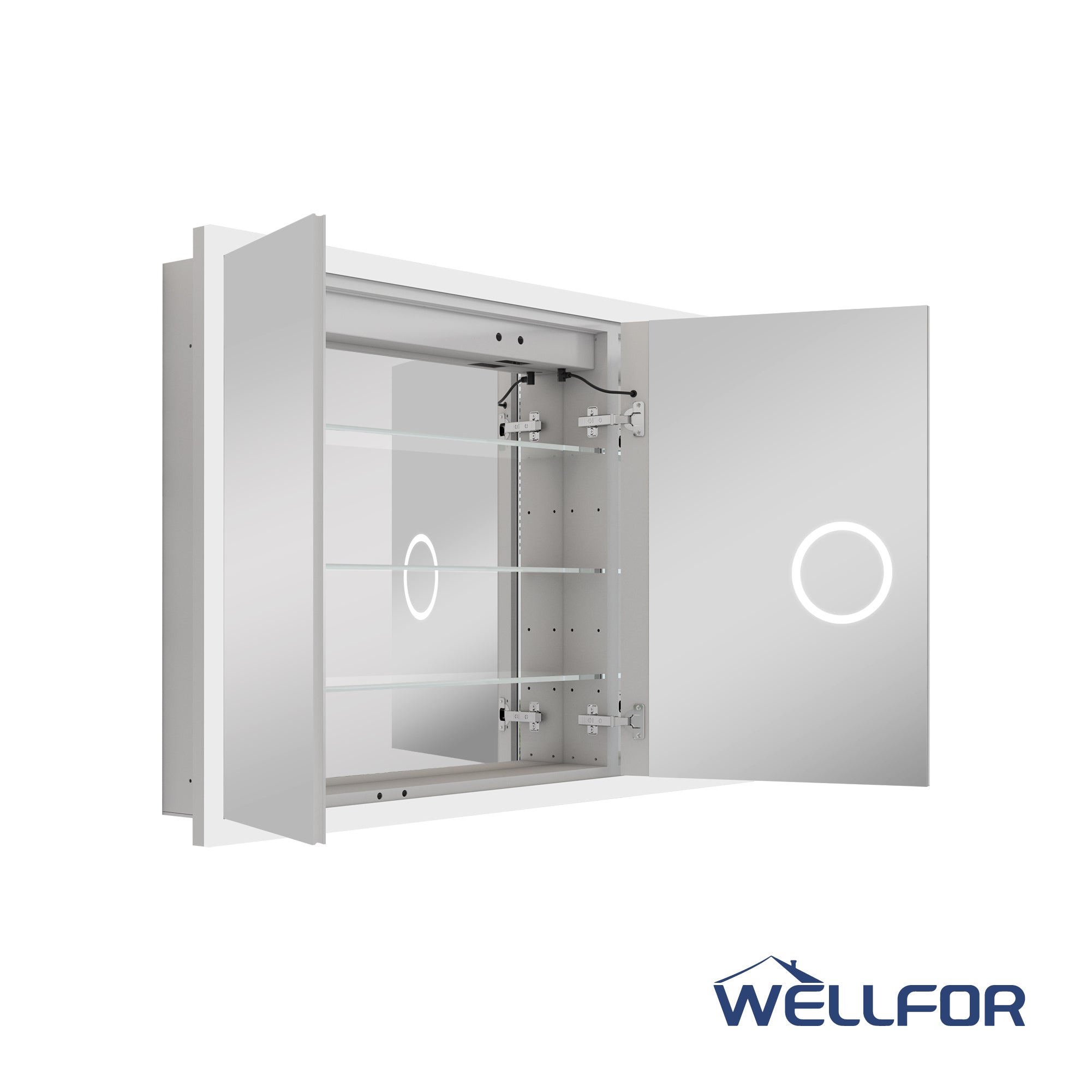
* Mirrors with integrated lighting and electronics
* Uneven or damaged drywall surfaces
* High-traffic commercial bathrooms
In these cases, installing a backing board anchored to studs is often the safer solution, even if it requires opening the wall.
Final takeaway
Hanging a large bathroom mirror without studs is absolutely possible, but it depends on using the right combination of anchors, load distribution methods, and installation planning.
In most modern installations, the deciding factor is not whether studs exist, but whether the mounting system is engineered to handle the full weight safely over time.
From a practical standpoint, stud-free mounting works best when:
* Load is distributed across multiple anchors
* High-quality hardware is used
* Installation follows a structured support system like a French cleat
In short, the mirror is not the challenge—the mounting strategy is.

















Leave a comment
This site is protected by hCaptcha and the hCaptcha Privacy Policy and Terms of Service apply.