






















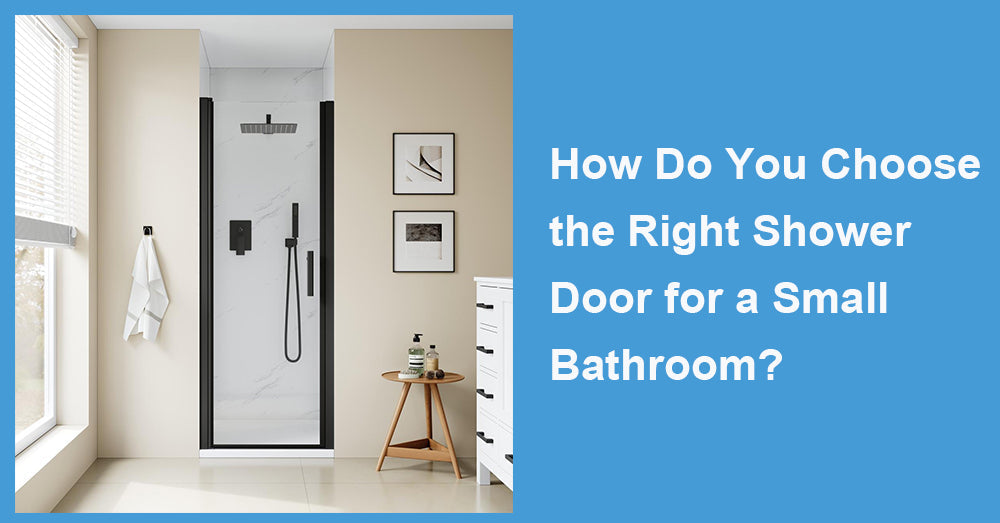
Choosing the right shower door for a small bathroom starts with understanding how the room is actually used. The width of the shower opening matters, but so do the toilet position, vanity depth, towel storage, and walking space. A door may look ideal in a product photo yet feel awkward once it blocks a drawer, swings into a fixture, or leaves too little room to step out safely.
From a product and installation standpoint, the best option is rarely the most decorative one. It is the door that fits the layout, controls water, and remains convenient to clean.
1. Evaluate the Space Outside the Shower
Many homeowners measure the shower opening and stop there. That is one of the most common buying mistakes.
Open the vanity drawers and bathroom door. Check how close the toilet is to the shower entrance. Look at towel bars, floor vents, and any storage that may interfere with movement. If a hinged glass panel opens into a narrow walkway, daily use can quickly become frustrating.
A sliding door is often safer for a compact bathroom because it does not require outward clearance. A hinged model can still work, but only when the swing path is completely open.
Consider who will use the bathroom as well. Children, older adults, and anyone with limited mobility may need a wider entrance and more stable footing than a typical layout provides.
2. Which Shower Door Style Works Best in a Small Bathroom?
Each door style solves a different space problem. There is no single design that suits every small bathroom.
Sliding Shower Doors
Sliding doors are a practical choice for narrow bathrooms, tub-and-shower combinations, and layouts where the vanity or toilet sits close to the enclosure. The panels move along a track, so no floor area is needed for a door swing.
They also create a broad glass surface that helps the bathroom feel more open. Clear glass is especially effective in a room with limited natural light.
The downside is cleaning. Tracks, rollers, and overlapping panels can collect soap residue and mineral deposits. Semi-frameless sliding doors tend to look lighter than fully framed models, but they still need routine maintenance.
Hinged and Pivot Doors
A hinged door provides a wide entrance and a clean, upscale appearance. It works well in a small walk-in shower when the bathroom has enough open space directly in front of the enclosure.
These doors are usually easier to wipe down because they have fewer tracks. Frameless versions can also make the bathroom appear larger.
Still, the swing clearance cannot be ignored. I would not recommend a hinged model if it opens toward a toilet, vanity corner, or bathroom entrance. A pivot door may reduce the swing slightly, but it does not eliminate the need for planning.
Bifold and Fixed Glass Options
Bifold doors fold inward or toward one side, making them useful in very tight bathrooms. They provide better access than some sliding doors, though the extra hinges create more moving parts that may loosen over time.
A fixed glass panel offers the simplest appearance. There are no rollers, handles, or door seals to maintain. It can make a small bathroom feel calm and spacious.
The limitation is splash control. A fixed panel is best for a deeper shower with a properly positioned showerhead. In a shallow enclosure, water may reach the bathroom floor, and the open entrance can feel drafty during colder months.
3. Measure the Finished Opening Carefully
Measure the width at the top, middle, and bottom of the shower opening. Bathroom walls are not always perfectly straight, particularly in older homes.
Check the walls and curb with a level. Framed and semi-frameless doors often include some adjustment for uneven surfaces. Frameless glass usually requires more accurate dimensions.
Height matters too. Tall panels may interfere with a sloped ceiling, soffit, or ventilation fan. Always use the finished tile-to-tile dimensions rather than measurements taken before wall coverings were installed.
Tempered glass cannot be cut after production. For a custom frameless enclosure, professional measurement is usually worth the cost.
4. Choose the Right Glass and Frame Style
Clear glass visually connects the shower with the rest of the bathroom, which can make a compact space appear larger. The tradeoff is that water spots and fingerprints remain visible.
Frosted or patterned glass provides privacy and hides minor residue, but it may visually divide the room. In a very small bathroom, that can make the shower feel more enclosed.
Framed doors are generally affordable and adaptable to walls that are slightly out of square. They are reliable, though the metal channels create more areas to clean. Semi-frameless doors balance modern styling with useful adjustability.
Frameless doors offer the cleanest appearance, but they cost more and require strong wall support. Thicker glass is also heavy. Do not select it purely because it feels more luxurious; the wall structure and hardware must be able to carry the load.
5. Think About Water Control Before Appearance
The primary job of any shower enclosure is to keep water inside the wet area.
Consider the showerhead direction, water pressure, curb slope, panel overlap, and bottom seals. A powerful spray aimed toward the entrance may leak even when the door is installed correctly.
Some buyers expect frameless glass to be completely watertight. In practice, minimal seals and narrow gaps may allow small amounts of water to escape. If wood cabinetry or moisture-sensitive flooring sits close to the shower, a framed or semi-frameless design may be the more sensible purchase.
6. Plan for Installation and Long-Term Maintenance
Heavy hinged doors should be fastened into studs or reinforced blocking. Standard wall anchors may not provide enough support. Drilling through porcelain or stone tile also requires the correct tools and technique.
Experienced DIY homeowners may be comfortable installing certain framed or sliding models. Large frameless doors are better handled by professionals.
Before ordering from Wellfor, compare the product’s adjustment range, glass thickness, hardware requirements, and opening direction with the finished bathroom. Two doors with the same listed width may fit very differently.
After installation, use a squeegee on the glass and wipe standing water from the tracks. Clean seals, rollers, and hinges with a mild bathroom cleaner. Avoid abrasive pads that can scratch protective coatings or damage metal finishes.

7. Make the Choice Based on Daily Use
For a bathroom with almost no swing clearance, a sliding shower door is usually the safest choice. A hinged door works best when you want wider access and have a clear opening path. Choose a fixed panel only when the shower is deep enough to control splashing.
Measure every part of the finished opening, confirm the wall structure, and picture how the door will feel during a busy morning—not just how it will look in an empty room. A well-chosen door should make the bathroom easier to enter, simpler to clean, and more comfortable to use every day.









































Leave a comment
This site is protected by hCaptcha and the hCaptcha Privacy Policy and Terms of Service apply.