






















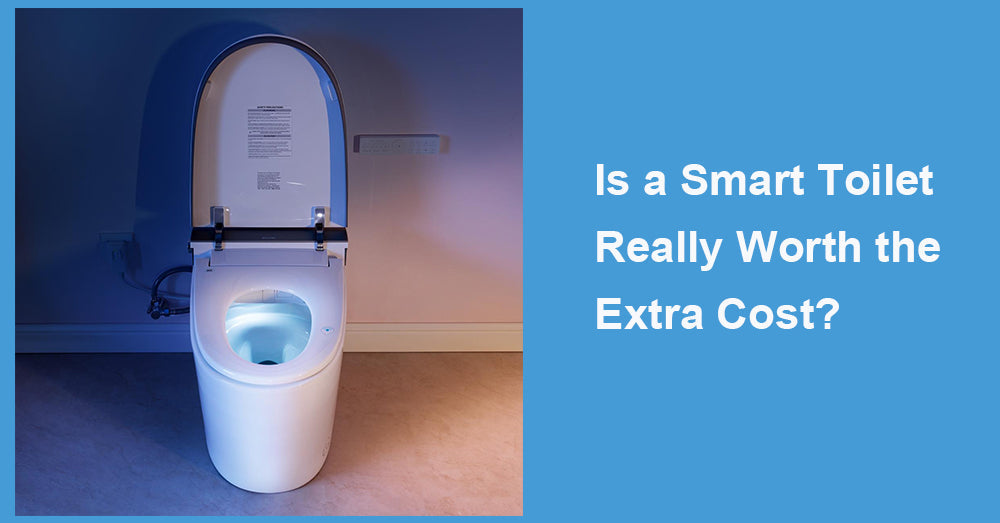
A smart toilet can feel like an indulgence when you first compare prices, especially beside a reliable conventional model. Yet features such as heated seating, built-in washing, automatic flushing, warm-air drying, and touch-free operation can make a noticeable difference in daily comfort. Whether the upgrade is worth paying for depends less on the number of functions and more on your household’s needs, bathroom layout, and willingness to maintain a more complex fixture.
From a practical buying perspective, smart toilets offer real value when they solve an everyday problem. They are harder to justify when the appeal comes mainly from novelty.
1. What Are You Paying for in a Smart Toilet?
A standard toilet relies on a relatively simple flushing mechanism. A smart model adds sensors, electronic controls, heating elements, water-pressure adjustments, and sometimes pumps, filters, fans, or motorized lids.
The most useful features are often straightforward. A heated seat improves comfort in colder bathrooms. Adjustable bidet washing supports better personal hygiene, while warm-air drying may reduce toilet paper use. Automatic flushing and touch-free lids are convenient in family bathrooms where several people share the same fixture.
Higher-priced models may include deodorizing systems, UV sanitation, foot sensors, remote controls, night lights, and individual user settings. Some of these features are helpful. Others may be used for the first week and largely ignored afterward.
When advising buyers, I recommend prioritizing flushing performance, seat comfort, easy controls, adjustable washing, and accessible replacement parts before considering decorative lighting or app-based functions.
2. When Is a Smart Toilet Worth the Extra Cost?
A smart toilet makes the strongest financial sense in a primary bathroom. When the fixture is used several times a day, comfort and hygiene benefits become part of the household routine rather than an occasional luxury.
It can also be a practical accessibility investment.
Better Support for Limited Mobility
Older adults, people recovering from surgery, and users with reduced mobility may find washing and drying functions easier than reaching, twisting, or maintaining balance. Automatic opening, closing, and flushing can reduce the number of movements required during use.
For these households, the upgrade is not simply about convenience. It may help a person use the bathroom more independently and with greater confidence.
Families can benefit too. A night light makes late bathroom visits less disruptive, while programmable water pressure and temperature settings allow users to choose a comfortable wash without repeatedly adjusting the controls.
3. The Advantages You Will Notice Every Day
Comfort is the most immediate benefit. Once users become accustomed to a heated seat and warm-water wash, returning to a basic toilet can feel surprisingly abrupt.
Hygiene is another strong selling point. A well-designed bidet system uses a controlled water stream to clean more thoroughly than dry toilet paper alone. Self-rinsing nozzles can help keep the washing system clean between uses, though they do not remove the need for regular maintenance.
Integrated models also tend to look neater than aftermarket bidet attachments. The seat, bowl, controls, and water connections are designed as one system, reducing exposed hoses and bulky add-on components.
In a compact bathroom, a combined toilet and bidet can save space compared with installing two separate fixtures. This is especially useful in modern renovations where every inch of floor area matters.
4. The Drawbacks Buyers Often Underestimate
Smart toilets contain more components than conventional toilets, which means there are more potential failure points. Sensors may need adjustment. Heating elements, pumps, fans, and motorized lids can eventually require service.
Repairs are rarely as simple as replacing a standard flapper. Parts may be model-specific, and a local plumber may not stock them.
The toilet also depends on electricity. Most functions will stop during a power outage, although some models retain manual flushing. Buyers should confirm this before purchasing rather than assuming the fixture will operate normally without power.
Hard water presents another concern. Mineral deposits can build up inside nozzles, filters, and narrow water passages. Regular descaling may be necessary, particularly in homes where faucets and showerheads already show visible scale.
Noise can be overlooked as well. Pumps, deodorizing fans, and automatic lids are usually quiet, but not silent. In a bedroom-adjacent bathroom, even a low mechanical sound may be noticeable at night.
5. Common Smart Toilet Buying Mistakes
The most common mistake is shopping by feature count. A toilet with twenty functions is not automatically better than one with eight well-designed functions.
Seat shape and dimensions deserve close attention. Some integrated models have shorter seating areas or higher rear housings than buyers expect. The toilet may technically fit the bathroom while still feeling uncomfortable.
Another mistake is overlooking the outlet. Most smart toilets require a nearby GFCI-protected electrical receptacle. If one is not already installed, the project may require an electrician, wall access, and added labor costs.
Buyers also assume every model fits a standard rough-in. Check the drain position, water supply location, rear clearance, bowl projection, and space beside the vanity. Never rely on the old toilet’s general appearance as proof that the new one will fit.
6. Smart Toilet or Bidet Seat?
A bidet seat is often the better value when the existing toilet is in good condition. It can provide heated seating, adjustable washing, drying, and deodorizing at a lower cost.
The compromise is fit and appearance. A bidet seat may expose cords and hoses, raise the sitting position, or look oversized on the bowl. Some toilets are not compatible with common seat shapes.
An integrated smart toilet provides a cleaner profile and a more coordinated user experience. It is usually the stronger choice during a full remodel or when the existing toilet already needs replacement.
For a guest bathroom, rental property, or short-term home, an affordable bidet seat may be the more sensible purchase.
7. Installation Advice Before You Order
Measure the rough-in distance from the finished wall to the center of the floor drain. Check the total bowl length and confirm that doors, drawers, and walkways will remain clear.
The water shutoff and electrical outlet should remain accessible after installation. Service panels, filters, and hoses also need room for future maintenance.
Wellfor shoppers should compare each model’s specification sheet with the finished bathroom dimensions. Professional installation is recommended when the toilet is heavy, the water connection must be relocated, or a new electrical outlet is required.
Do Not Hide Every Connection
A clean installation is desirable, but permanently enclosing valves, filters, or power connections can turn routine service into an expensive repair. Conceal what you can while keeping essential components reachable.
8. Maintenance Is Part of Ownership
Treat the fixture as both a toilet and an electrical appliance. Use mild, nonabrasive cleaners on the bowl, seat, nozzle area, and exterior housing. Strong chemicals can damage coatings, rubber seals, and plastic parts.
Clean or replace filters according to the manufacturer’s instructions. Inspect the nozzle regularly, especially in hard-water areas, and descale the system before mineral buildup affects spray performance.
Do not spray cleaning liquid directly into control panels, electrical openings, or motorized components. Apply the cleaner to a soft cloth first.

9. Is a Smart Toilet the Right Choice for Your Bathroom?
A smart toilet is worth the extra cost when heated seating, washing, drying, or hands-free operation will improve daily comfort, hygiene, or accessibility. It is less convincing for a lightly used bathroom or a renovation budget that still needs essential upgrades such as ventilation, safer flooring, or improved lighting.
Choose based on the functions you will use every day. Confirm the plumbing and electrical requirements, look for intuitive controls, and make sure replacement parts and service support are available. A carefully selected model can be a worthwhile long-term bathroom upgrade, but a reliable standard toilet or bidet seat remains the better purchase when simplicity and lower maintenance matter more than integrated technology.









































Leave a comment
This site is protected by hCaptcha and the hCaptcha Privacy Policy and Terms of Service apply.