






















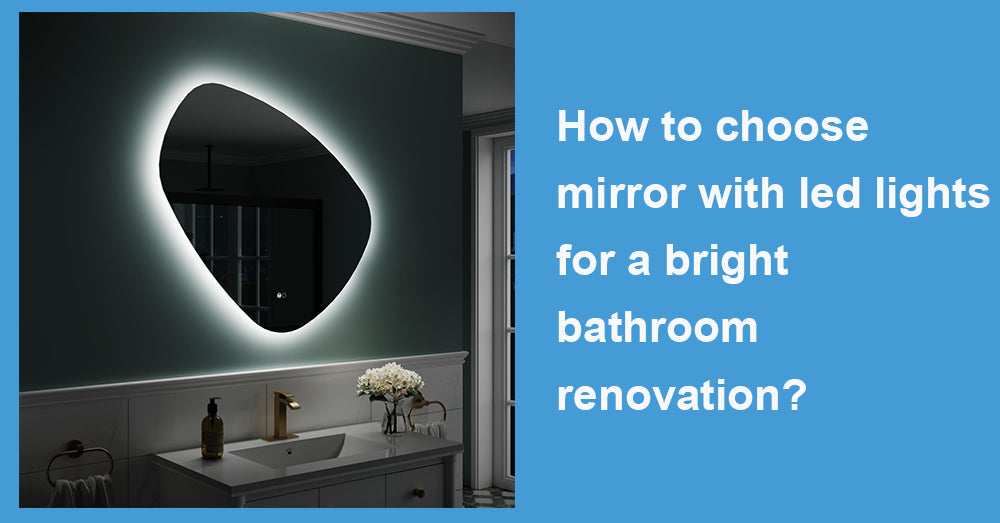
In modern bathroom decoration that emphasizes spatial sense and quality of life, "brightness" and "spaciousness" have gradually become the core goals of many design schemes. In addition to natural lighting, wall materials, and layout planning, mirror with led lights are increasingly being incorporated into the overall lighting and visual design system. Compared with traditional mirrors, bathroom mirrors with LED lighting are not only functional accessories but also play an essential role in visual extension, light environment optimization, and overall detail experience.
But not all mirrors with lights are genuinely suitable for large-scale, well-lit bathroom spaces. How to choose such products reasonably without compromising the overall transparency is a problem that is easily overlooked in many decoration projects.
1. Serve 'Bright Spaces' Instead of Creating a Burden of Light
In a spacious bathroom, the goal of lighting is not simply to increase brightness, but to enhance the uniformity and layering of light. Research has shown that in bathroom spaces with over 80 square feet, users are significantly more satisfied with "soft but no dead corners" lighting than with simple high-brightness light sources (source: LightingResearchCenter.org).
The advantage of a mirror with LED lights is that it can provide vertical illumination near the user's face, avoiding shadows cast by overhead lighting fixtures. This type of light is significant for high-precision operations such as washing, skincare, shaving, etc., while not interfering with the overall brightness structure of the space.
2. The Importance of Mirror Size and Proportion
In large bathrooms or master bathrooms, the size of mirrors can directly affect visual balance. A common practice is to choose mirror sizes that are close to or slightly smaller than the vanity's width, such as 48 inches, 60 inches, or wider. This horizontal extension enhances the space's overall sense of openness.
Industry data shows that over 70% of users in bathroom designs with 48-inch or larger mirrors with lights believe that "the space appears cleaner and more orderly" rather than more complex (source: Houzz.com). The key lies in whether the light strip is thin enough and whether the mirror edge is clean and sharp, avoiding too many decorative elements that weaken the overall transparency.
3. The Influence of Light and Temperature Selection on Spatial Atmosphere
In a bright bathroom, the temperature of the light often determines the space's mood more than its brightness. Although the cool light color is clear, it tends to appear stiff in large environments; warmer light colors have a more layered feel, but it is essential not to go too dark.
The current mainstream LED mirror lights offer a color temperature range of 3000K-5000K. A survey on bathroom lighting experience shows that about 60% of users prefer a natural light range around 4000K for daily use, believing a balance has been achieved between comfort and realistic color reproduction (source: EnergyStar.gov).
If the product supports a color temperature adjustment function and can be freely switched between day and night, it will be more conducive to adapting to different usage scenarios.
4. Differential Selection of Lighting Layout Methods
Not all LED light mirrors use the same method of emitting light. Standard designs include front-illuminated, back-illuminated, or a combination of both.
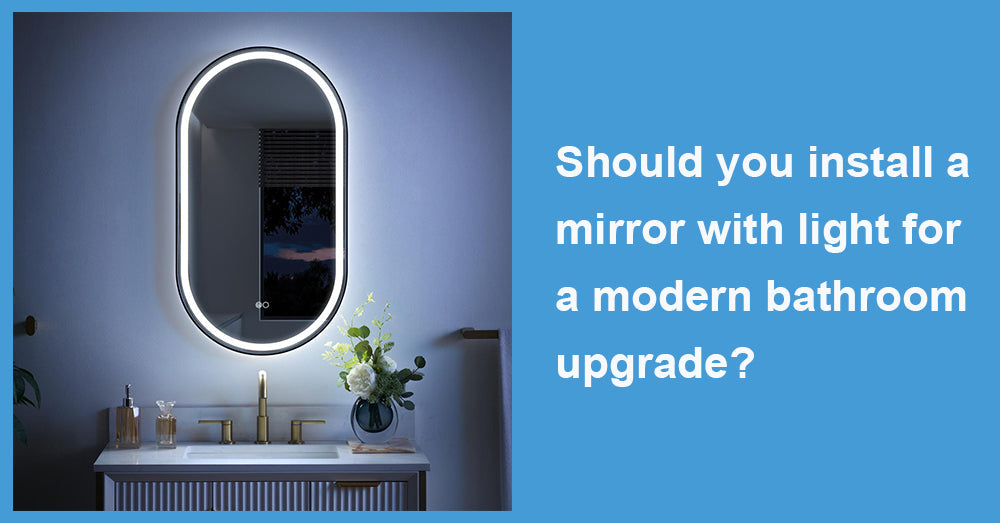
In a spacious bathroom, backlit mirrors are more likely to create a "suspended feeling" and a soft halo, creating a natural transition between the mirror and the wall without appearing abrupt. In contrast, the front-illuminated mirror is more oriented towards functional lighting, suitable for users with higher requirements for detailed operations.
A study has shown that in the main bathroom or double-basin bathroom, mirrors with back- or mixed-illuminated structures have significantly higher spatial satisfaction than single-front-illuminated schemes (source: Architectural Digest.com).
5. Collaborative Relationship with the Overall Lighting System
A mirror with LED lights should not be considered a standalone lighting system; it should be combined with leading top lights, side wall lights, and even natural lighting to create a complete lighting environment. A reasonable approach is to use mirrors to supplement facial lighting rather than replace all light sources.
In a bathroom with good lighting, if the mirror light is too strong, it may disrupt the overall balance. Therefore, products with a brightness adjustment function are often more adaptable. A survey on home lighting usage behavior shows that the frequency of using dimmable features in bathroom lighting fixtures has been increasing year by year, precisely because users want to flexibly adjust according to their actual environment (source: Statista.com).
6. The Influence of Materials and Details on the "High-End Feeling"
For bathrooms that emphasize brightness and spatial sense, the mirror's material is equally important. Copper-free mirrors, anti-fog coating, and high-reflectivity glass all contribute to improved long-term performance.
The anti-fog function is particularly valuable in large mirror areas. Survey data shows that in bathroom environments with high humidity, mirrors with stable anti-fog performance have a satisfaction rate nearly 30% higher than ordinary mirrors (source: ConsumerReports.com). This not only enhances the experience but also reduces the impact of frequent wiping on the mirror's lifespan.
7. Energy Saving and Long-Term Usage Costs
While pursuing high-quality decoration, energy efficiency should also be a priority. LED light sources have become the mainstream choice due to their low energy consumption and long lifespan characteristics. Compared to traditional lighting, LED fixtures can reduce energy consumption by about 75% and significantly lower replacement frequency (source: DepartmentOfEnergy.gov).
For frequently used bathroom mirrors, this long-term energy-saving advantage will gradually translate into actual cost savings.

8. Conclusion: A Bright Bathroom Requires 'Designed Light'
A mirror with LED lights is not meant to make the bathroom brighter, but to make the lighting more reasonable. In a spacious and well-lit space, a suitable combination of mirrors and lighting can further enhance spatial order, visual hierarchy, and user comfort.
The truly ideal choice is not about functional stacking, but about whether it is coordinated and unified with the overall decoration style, lighting environment, and usage habits. Only when mirrors become part of space rather than standalone devices can the design goals of brightness and spaciousness be truly achieved.









































Leave a comment
This site is protected by hCaptcha and the hCaptcha Privacy Policy and Terms of Service apply.