






















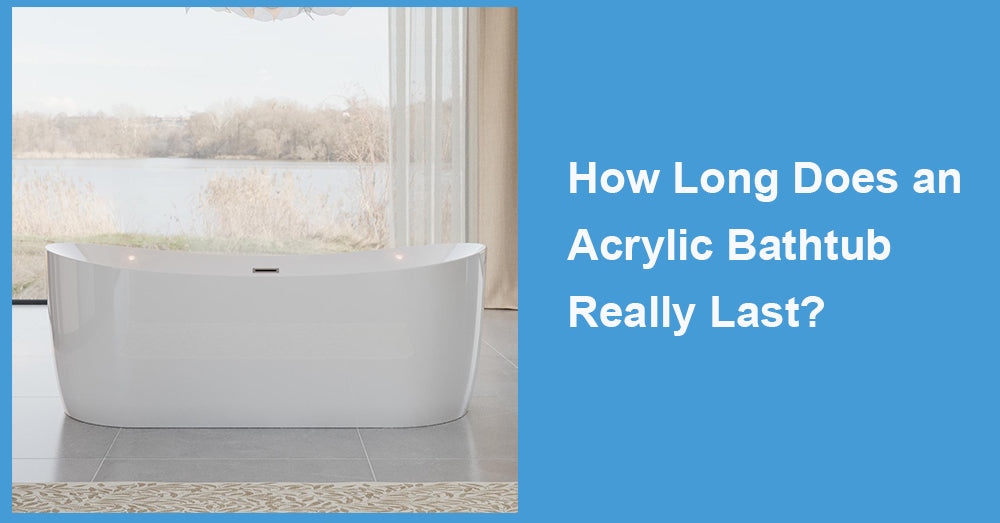
An acrylic bathtub is one of the most commonly installed bathtub types in modern bathroom renovations, largely because it balances cost, weight, and design flexibility. After working with bathroom fixtures for more than 20 years and seeing how different materials perform in real homes, I can say its lifespan is less about the material alone and more about installation quality, daily care, and structural support.
In most real-world conditions, an acrylic tub does not simply “wear out” at a fixed age. It degrades gradually depending on how it is used.
1. Typical Lifespan of an Acrylic Bathtub
In standard residential use, a well-made acrylic bathtub usually lasts between 10 and 20 years. I have seen units fail earlier in poorly supported installations, and I have also seen properly installed tubs remain in good condition beyond that range.
The acrylic surface itself is fairly resilient. It resists chipping better than enamel-coated steel and does not rust like metal tubs. The weakness is not usually the surface material—it is the structure underneath.
Most acrylic tubs are reinforced with fiberglass or composite backing. If that reinforcement is thin or uneven, the tub can flex over time. That flexing leads to stress cracks, surface dullness, or separation at the edges.
So the real answer is simple: lifespan depends more on support than on the acrylic sheet itself.
2. What Actually Causes an Acrylic Bathtub to Wear Out
Many homeowners assume discoloration or scratches are the main signs of aging. In practice, the bigger issues are structural.
The most common failure points include:
Flexing due to insufficient base support
Hairline cracks around stress zones
Surface dulling from abrasive cleaners
Silicone seal breakdown at edges
Creaking or movement during use
Acrylic is flexible by design. That flexibility is comfortable underfoot, but it becomes a problem if the tub base is not fully supported. I have often seen installers skip proper bedding material or fail to level the subfloor, which shortens lifespan significantly.
Water chemistry also plays a role. Hard water can leave mineral deposits that make the surface look older than it is. The material is not damaged, but the appearance changes over time.
3. Installation Quality Matters More Than Material Grade
A high-quality acrylic bathtub installed incorrectly will fail faster than a mid-range model installed properly. That is a consistent pattern in renovation projects.
A proper installation should include a fully supported base, typically using mortar or an approved bedding compound. This eliminates hollow spaces underneath the tub.
If the tub is left partially suspended, even small movements during use create long-term stress points. The damage is not immediate. It builds slowly, often over several years.
Drain alignment also matters. A misaligned drain connection can place uneven pressure on the tub floor, especially when filled with water. That stress concentrates in one area and eventually leads to cracking.
I always tell homeowners: the tub itself is only half the product. The installation is the other half.
4. Daily Use and Maintenance Habits
An acrylic bathtub can last significantly longer when treated with simple but consistent care.
Gentle cleaning is the most important factor. Acrylic surfaces do not tolerate abrasive pads, harsh powders, or strong solvents. These may not cause immediate damage, but they gradually reduce surface gloss.
Soft cloths and mild soap are usually enough. That alone prevents most cosmetic wear.
Temperature changes also matter. Extremely hot water followed by cold rinsing is not ideal, especially for lower-grade acrylic. It can gradually stress the surface layer.
Bath oils, shampoos, and soaps are generally safe, but leaving residue sitting for long periods can dull the finish.
This is not a high-maintenance material. It just responds better to steady, non-aggressive care.
5. Where Acrylic Bathtubs Perform Best
From a practical standpoint, acrylic tubs perform well in family bathrooms, guest bathrooms, and standard residential master baths.
They are lightweight, which makes installation easier in upper-floor bathrooms. That is one reason contractors prefer them during remodels where structural load is a concern.
They also retain warmth better than steel or cast iron alternatives, at least for short to moderate bath durations. The material does not feel as cold at first contact, which improves comfort.
Wellfor acrylic bathtub designs typically focus on ergonomic shaping and reinforced base structures, which improves long-term stability when installed correctly.
Where acrylic performs less well is in heavy-use commercial settings or households that expect extremely rigid, stone-like durability.
6. Common Misunderstandings About Acrylic Durability
One frequent misconception is that acrylic tubs are “fragile.” That is not accurate.
They are flexible, not fragile.
Flexibility is intentional. It helps prevent cracking from minor impacts that would chip enamel surfaces. The trade-off is that the tub must be supported properly.
Another misunderstanding is that scratches mean the tub is failing. Surface scratches are usually cosmetic. They do not necessarily affect performance or waterproofing.
Light scratches can often be polished out. Deeper ones may remain visible but still do not compromise structure.
Homeowners also sometimes assume that discoloration means permanent damage. In many cases, it is mineral buildup or cleaning residue, not material breakdown.
7. Signs an Acrylic Bathtub Is Reaching End of Life
There are clear indicators that a replacement should be considered.
Persistent flexing or “spongy” feel underfoot is one of them. This usually indicates failed support beneath the tub.
Visible cracking that continues to expand is another. Small hairline cracks can sometimes be monitored, but spreading fractures suggest structural fatigue.
If the surface has become permanently dull despite proper cleaning, the protective top layer may be worn.
Repeated sealing issues around the edges can also indicate movement in the structure that is no longer stable.
At that point, repair becomes temporary rather than practical.
8. Installation and Maintenance Best Practices
Proper installation starts with a level subfloor and full base support. Skipping this step is the most common cause of premature failure.
The tub should not rely solely on its perimeter frame. The entire base should be supported evenly.
Sealant around edges should be checked periodically. Silicone naturally degrades over time, especially in humid environments.
Avoid dragging heavy objects across the surface during cleaning or renovation work. Acrylic resists normal bathing use, but sharp force is still a risk.
Ventilation in the bathroom also indirectly affects longevity. Constant moisture buildup can weaken surrounding caulking and structural joints, even if the tub itself remains intact.

9. Making a Long-Term Choice
Acrylic bathtubs are not the longest-lasting option available, but they are one of the most practical for modern residential bathrooms. Their lifespan, when properly installed and maintained, is usually long enough to match typical bathroom renovation cycles.
The key decision is not whether acrylic is “forever material,” but whether it fits the way the bathroom will actually be used.
If the installation is done correctly, support is solid, and cleaning habits are reasonable, an acrylic bathtub can perform reliably for many years without major issues.
A well-made Wellfor acrylic bathtub is best viewed as a long-term but replaceable fixture—durable in daily use, predictable in maintenance, and dependable when installed the right way.








































Leave a comment
This site is protected by hCaptcha and the hCaptcha Privacy Policy and Terms of Service apply.