






















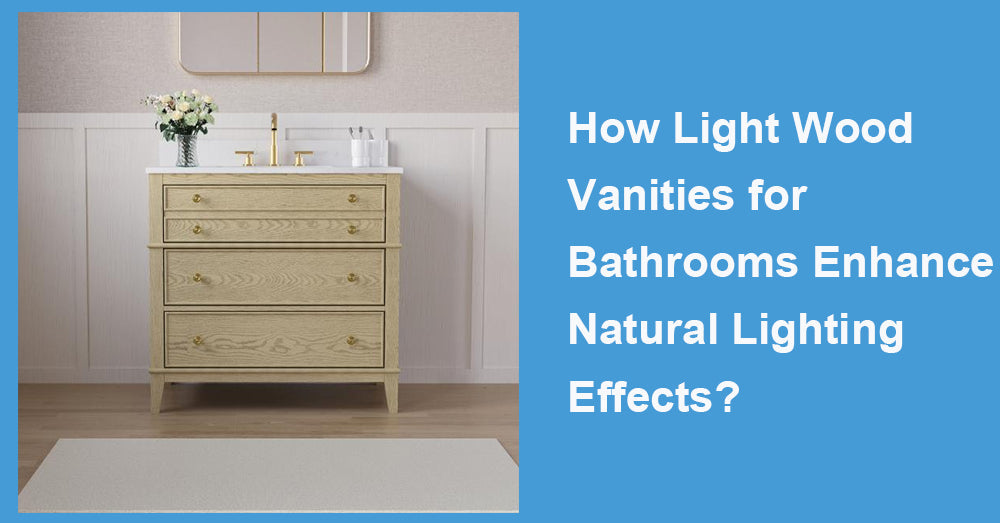
Light wood vanities for bathrooms are changing the way designers think about brightness. Traditionally, improving bathroom lighting meant adding more fixtures, larger windows, or brighter bulbs. However, the cabinet underneath the sink can quietly influence how the entire room feels. A light wood vanity does not create light, but it can guide how existing daylight and artificial lighting move across the space.
This is why light wood has become more than a decorative choice. It works as a visual tool, helping bathrooms feel warmer, wider, and more balanced. When paired with a large mirror, reflective countertop, and layered lighting, a light wood vanity can make a bathroom appear noticeably more open without changing the actual footprint.
Industry judgment: The next stage of bathroom design is not about adding more brightness. It is about using materials that help existing light perform better.
1. The Vanity Color Can Change the Way Light Moves
Many people focus on lighting fixtures first, but surfaces determine what happens after the light enters the room. A bathroom filled with dark cabinetry, heavy stone, and limited reflective surfaces can absorb light quickly. The result is often a space that feels smaller even when enough lighting is installed.
Light wood finishes create a different effect. Colors such as natural oak, maple, and ash have softer undertones that reflect surrounding brightness while maintaining texture. Instead of creating a sharp reflection like glossy white surfaces, wood provides a more comfortable diffusion of light.
A 36-inch vanity with a light oak finish, white quartz top, and a frameless mirror can create a layered visual effect. The countertop reflects overhead lighting, the mirror expands the perception of space, and the wood adds warmth underneath.
According to the U.S. Department of Energy, interior surface reflectance affects lighting efficiency because brighter surfaces can distribute more available light throughout a room. (Source: U.S. Department of Energy, Building Technologies Office)
This principle explains why changing materials can sometimes improve the feeling of brightness without increasing electrical usage.
2. Natural Wood Creates Balance Between Brightness and Comfort
A bathroom designed entirely with white surfaces can appear clean and spacious, but it may also lack depth. Designers have increasingly moved away from completely uniform spaces and toward interiors that combine different textures.
Light wood provides the missing layer.
The grain pattern creates visual movement, while the warm color prevents the room from feeling overly cold. This is especially useful in bathrooms where ceramic tile, glass, and metal already dominate the environment.
The National Kitchen & Bath Association (NKBA) has continued to identify natural materials, organic textures, and warmer finishes as important directions in kitchen and bath design. (Source: NKBA Kitchen & Bath Design Trends Reports)
The appeal is not simply based on appearance. A bathroom is used every day, often during early mornings and evenings when lighting conditions change. Materials that feel comfortable under different lighting conditions tend to remain attractive longer.
3. Light Wood Works With Both Daylight and LED Lighting
Modern bathrooms rarely depend on one light source. A typical design may include ceiling lighting, vanity lighting, LED mirrors, and natural daylight from windows.
Each source interacts with cabinet finishes differently.
Light wood surfaces can capture warm morning sunlight and maintain a soft appearance under LED lighting at night. For example, a vanity with a natural oak finish can look brighter under 3000K warm lighting while still appearing clean under neutral 4000K lighting.
The popularity of LED bathroom products has also changed expectations for vanity design. The U.S. Department of Energy notes that LED lighting offers longer service life and higher efficiency compared with traditional lighting technologies. (Source: U.S. Department of Energy, LED Lighting Research)
As LED mirrors and integrated lighting become more common, the relationship between cabinetry and lighting becomes more important. The vanity is no longer just storage below the sink. It becomes part of the room’s lighting composition.
4. Light Wood Helps Smaller Bathrooms Feel More Open
Not every bathroom has a large layout. Many powder rooms and guest bathrooms require careful planning because every inch matters.
A darker vanity can create a strong design statement, but it may visually divide itself from the rest of the room. Light wood creates a smoother transition between walls, floors, and surrounding furniture.
This effect becomes stronger when designers combine light wood vanities with:
* Large wall mirrors
* Light-colored countertops
* Glass shower enclosures
* Neutral wall finishes
For example, a 48-inch light wood vanity placed against a soft beige wall can create a continuous visual flow. The cabinet still provides contrast, but it does not interrupt the sense of openness.
According to the National Association of Home Builders (NAHB), bathrooms remain one of the most common areas considered during home improvement projects because homeowners often prioritize comfort, functionality, and updated appearance. (Source: NAHB Remodeling Market Data)
A successful bathroom layout is not only about fitting products into the room. It is about making every element support the overall experience.

5. The Finish Type Determines the Final Lighting Effect
Not every light wood vanity produces the same result. The final appearance depends on the wood species, finish, and surface texture.
A matte natural wood finish usually creates a softer look because it reduces harsh reflections. This makes it suitable for relaxing bathroom environments. A smoother finish may create a cleaner and more contemporary appearance.
The construction method also influences the visual quality. Solid wood frames, real wood veneer panels, and carefully matched grain patterns create more depth than printed surfaces that imitate wood.
However, bathroom performance depends on engineering as much as appearance. Bathrooms experience humidity changes, water splashes, and frequent cleaning. Proper sealing and moisture protection help maintain the cabinet’s appearance over time.
The USDA Forest Products Laboratory explains that wood naturally responds to changes in moisture conditions, making proper material selection and finishing important for long-term performance. (Source: USDA Wood Handbook)
The best lighting effect comes from a combination of attractive materials and reliable construction.
6. Why Designers Are Moving Toward Warmer Bathroom Materials
The shift toward light wood is part of a larger movement in interior design. Bathrooms are becoming less like purely functional rooms and more like personal spaces connected to the rest of the home.
Cold materials still have an important role, but too many hard surfaces can make a bathroom feel disconnected. Wood introduces a natural element that changes the atmosphere immediately.
A light wood vanity can support many styles:
* Modern minimalist bathrooms with clean lines
* Scandinavian-inspired spaces with natural textures
* Contemporary bathrooms with black fixtures
* Transitional designs with stone countertops
This flexibility is one reason wood finishes continue to appear in long-term bathroom projects. They do not depend on a single trend.
Industry judgment: The strongest bathroom designs are moving away from isolated product choices and toward complete visual systems where lighting, materials, and layout work together.
7. Storage Design Also Influences Brightness
Although lighting effects are often discussed through color and materials, storage design also plays a role.
A cluttered countertop can block reflective surfaces and make a bathroom feel crowded. Light wood vanities with organized drawers and functional storage help maintain cleaner visual lines.
Features such as soft-close drawers, full-extension slides, adjustable shelves, and built-in organizers allow daily items to stay hidden while keeping the vanity area open.
Houzz bathroom renovation research has shown that improved storage and upgraded cabinet features remain important priorities in bathroom projects. (Source: Houzz Bathroom Trends Study)
A bright bathroom is not only about what reflects light. It is also about reducing unnecessary visual distractions.
8. The Future Role of Light Wood in Bathroom Design
Light wood vanities are gaining attention because they solve several design challenges at the same time. They improve visual warmth, support lighting performance, and create a more comfortable atmosphere without requiring dramatic renovation changes.
The most effective bathroom designs do not rely on one feature alone. A mirror, countertop, wall color, lighting system, and vanity finish all influence each other.
Light wood works because it sits between two important needs: the desire for a bright modern bathroom and the desire for a space that feels natural and inviting.
Final Takeaway
Light wood vanities for bathrooms enhance the natural lighting effect by helping distribute brightness, softening reflections, and creating stronger visual balance. They show that lighting design is not only about fixtures. Materials themselves can influence how a room feels throughout the day.
As bathroom interiors continue moving toward warmer and more personalized designs, light wood remains a practical choice for creating spaces that feel brighter, calmer, and easier to live with.







































Leave a comment
This site is protected by hCaptcha and the hCaptcha Privacy Policy and Terms of Service apply.