














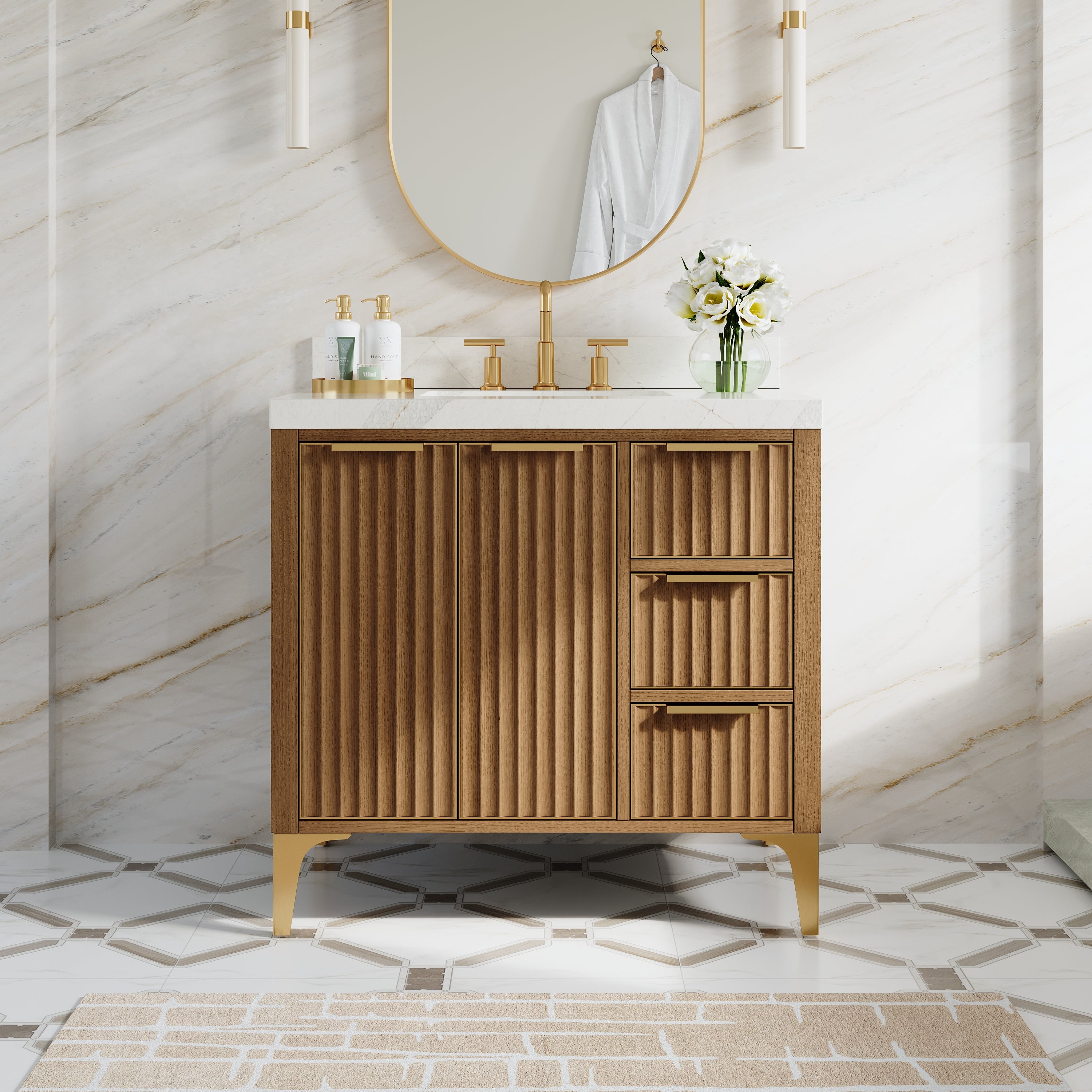


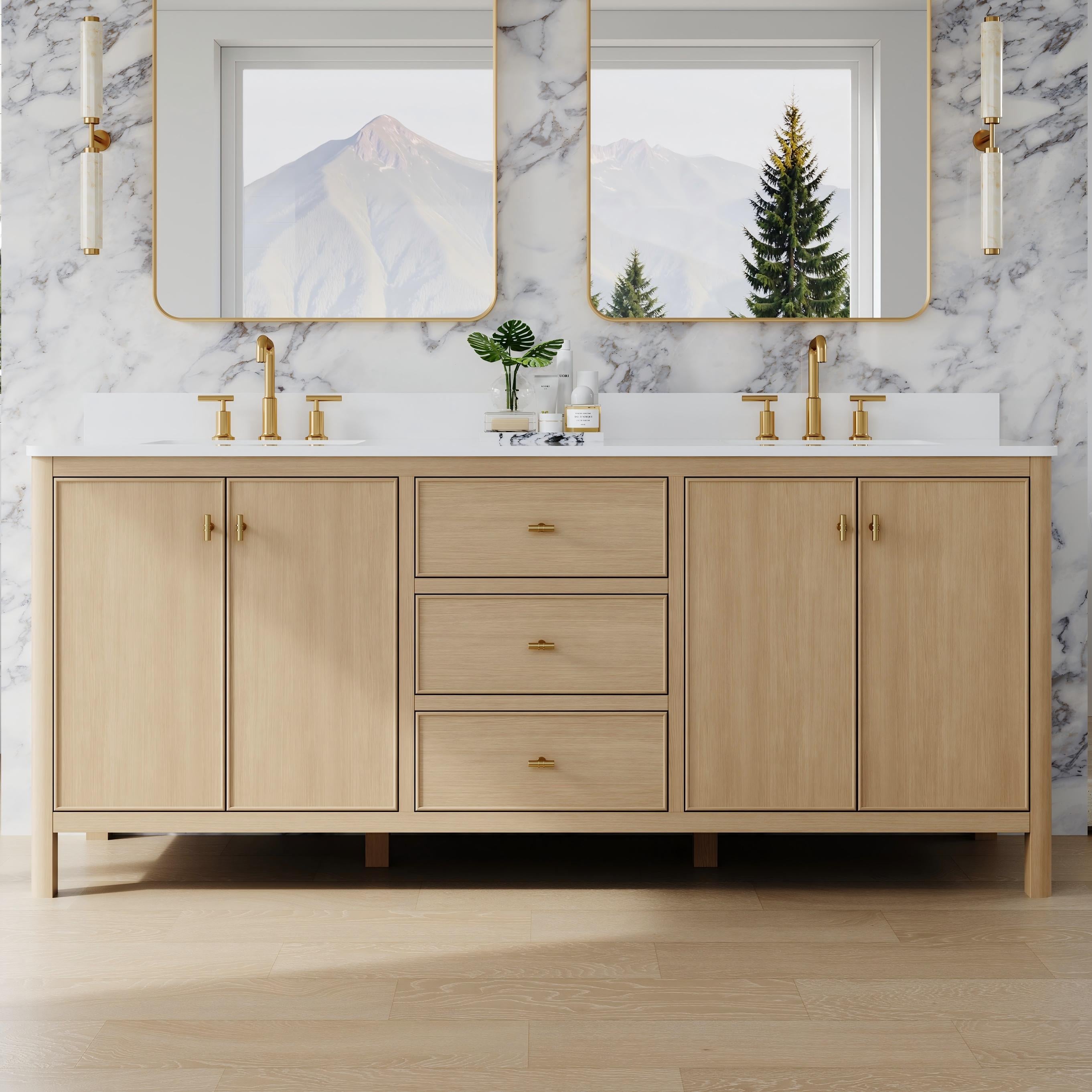


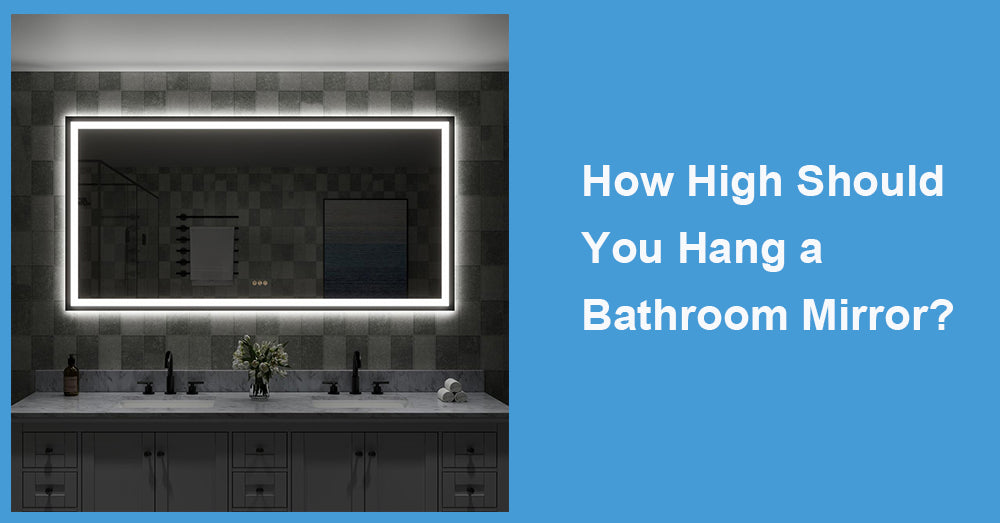
A bathroom mirror is one of the most-used features in the room, but it is surprisingly easy to hang it too high or too low. The right height should feel natural for daily routines like washing hands, shaving, skincare, and makeup, while also looking balanced with the vanity, lighting, and wall space. Instead of relying on a single “standard height,” it is smarter to use a few simple reference points and adjust for your vanity, sink style, and the people who use the space most.
1. The Goal: Comfortable Viewing and Clean Proportions
A well-placed mirror does two jobs at once. First, it should reflect faces comfortably without forcing anyone to tip their head down or step back awkwardly. Second, it should look visually anchored to the vanity and surrounding details like sconces, backsplash tile, and cabinets.
If your mirror feels “floating” or looks disconnected from the vanity, it is often a placement issue, not a design issue. The best height is usually the one that makes the mirror feel integrated into the whole vanity zone.
2. The Easiest Starting Point: Eye Level, Not Wall Center
Many people instinctively center the mirror on the wall. That often pushes it too high, especially in bathrooms with taller vanities, vessel sinks, or thick countertops.
A more reliable method is the “eye-level” approach:
1. Stand where you normally use the vanity.
2. Look straight ahead.
3. Place the mirror so your eyes land around the upper-middle area of the mirror, not near the bottom edge.
This creates a natural viewing angle and gives you reflection space above your head without feeling cramped.
Quick guideline
For many adults, a comfortable eye-level height is often somewhere around 57"–65" from the floor, depending on height. Instead of chasing a specific number, use your real eye level and build the mirror around it.
3. Use the Vanity as Your Visual Anchor
In most bathrooms, the vanity is the main “base” of the composition, so mirror placement should relate to it.
Common spacing between vanity and mirror
A widely used design range is to leave about 4"–8" between the top of the backsplash or countertop and the bottom of the mirror. This keeps cleaning easy, prevents a cramped look, and leaves room for faucet handles if needed.
If your faucet is tall or your sink is a vessel bowl that rises high, you may need more clearance. In those cases, it can look cleaner to raise the mirror slightly and compensate by choosing a taller mirror.
4. The Two Most Important Measurements to Check
4.1 Bottom edge height
The bottom edge should not be so high that shorter users only see their foreheads, and not so low that it collides visually with the faucet or backsplash.
A practical target is:
· Bottom of mirror: usually a few inches above the faucet or 4"–8" above the countertop/backsplash.
4.2 Top edge height
The top edge should feel aligned with nearby vertical elements, such as:
· the top of a medicine cabinet,
· a wall cabinet line,
· the height of a shower door frame,
· or the top of wall sconces.
If the top of the mirror is far below everything else, the wall can feel oddly empty. If it is too high, the mirror can feel disconnected from the vanity.
5. Single Sink vs. Double Sink: Different Hanging Logic
Single sink vanity
A single mirror can be centered over the sink and aligned to the vanity width. Hanging height should prioritize the primary user’s eye level, while still leaving enough space above the faucet and below light fixtures.
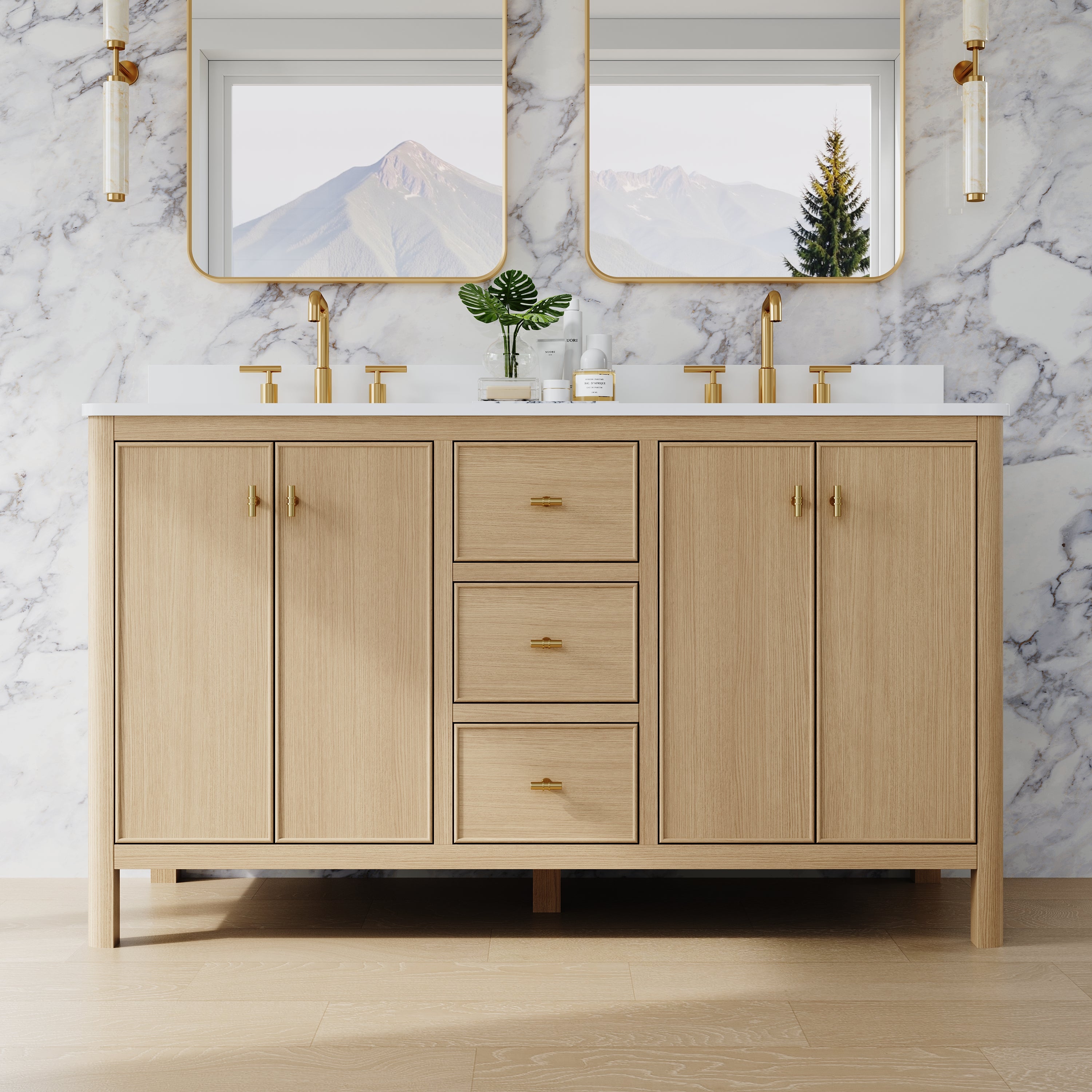
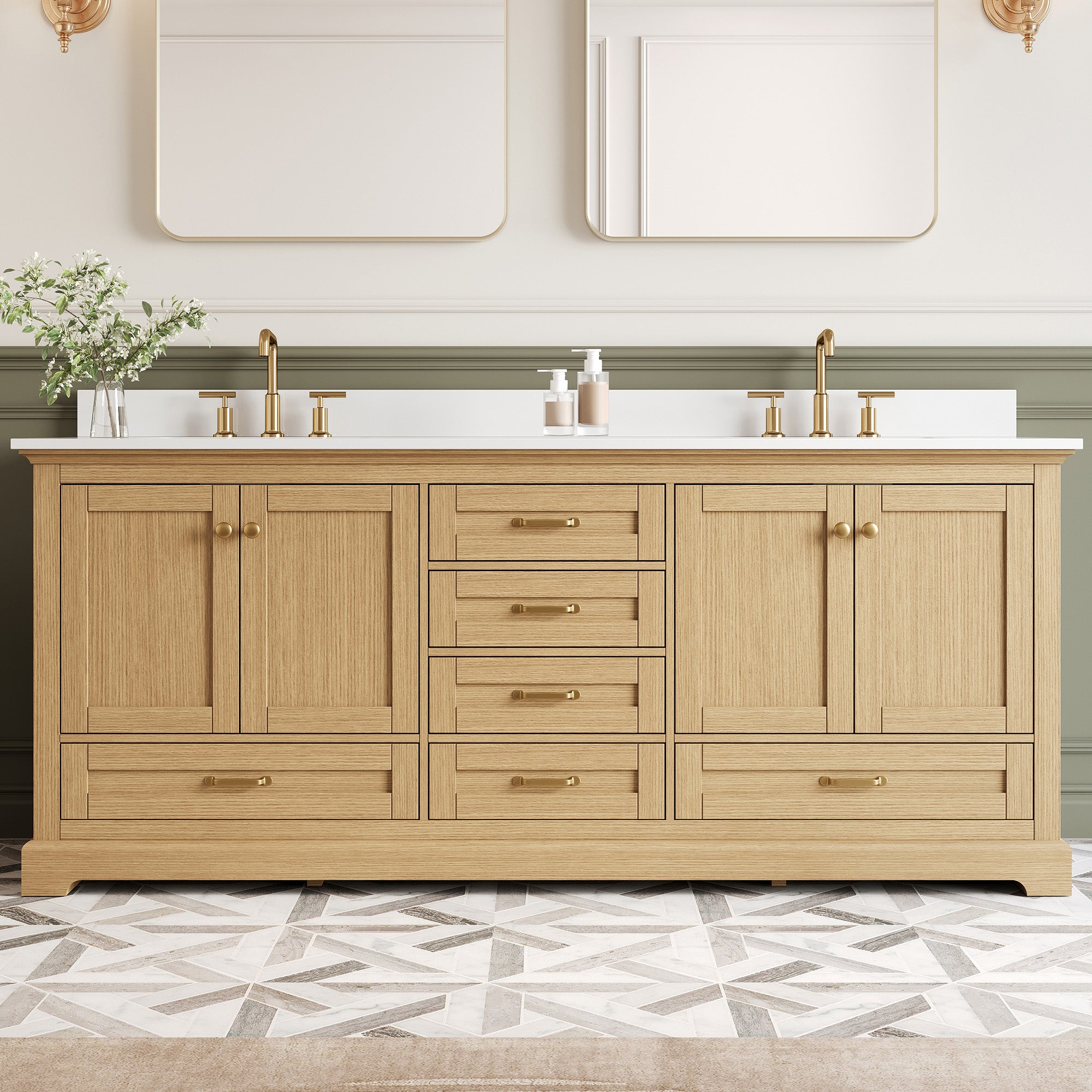
Double sink vanity
You typically have two options:
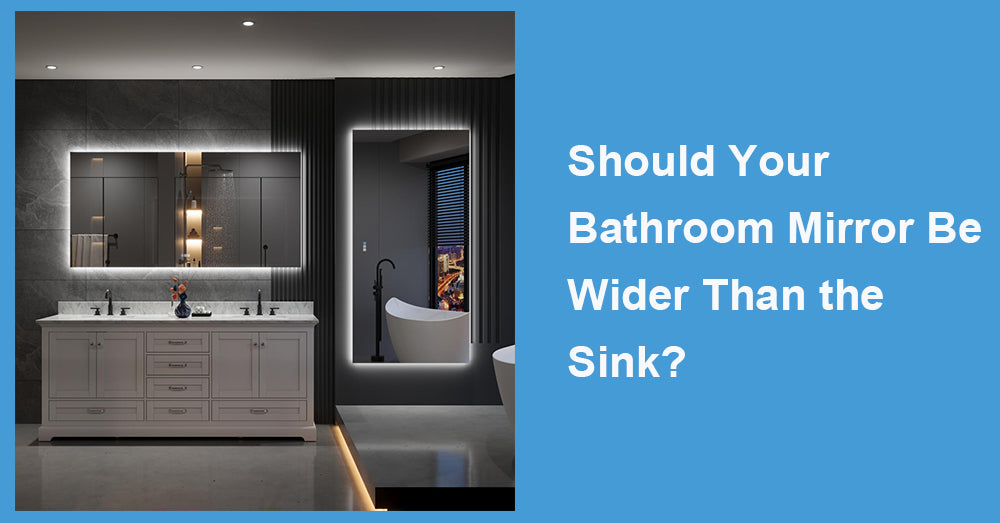
· One large mirror spanning most of the vanity width, or
· Two separate mirrors centered over each sink.
If you choose two mirrors, keep their bottom edges at the same height, and align them carefully with the sinks and lighting. Even small differences become noticeable when two mirrors sit side by side.
6. How Lighting Changes the “Correct” Height
Lighting is one of the most overlooked factors in mirror height, especially if you are using wall sconces.
If you have sconces beside the mirror
The mirror height must work with sconce placement. Ideally:
· Sconces sit around face height, not too high above the mirror.
· The mirror does not force sconces to be pushed upward into an awkward position.
A common mistake is hanging a mirror too high, then placing sconces too high to match it, which creates unflattering shadows and glare.
If you have an overhead light only
You have more freedom, but overhead-only lighting can create shadows under the eyes and chin. In that setup, many people prefer a slightly lower mirror placement so the reflection area aligns with the most-used viewing zone at the vanity.
7. Special Cases That Change the Rules
Vessel sinks
Vessel sinks raise the faucet area higher than normal, so you often need either:
· a slightly higher mirror bottom edge, or
· a taller mirror so you keep good face coverage.
Very tall users and very short users
If the bathroom is shared, choose a taller mirror and place it so it works for a wider height range. A tall mirror solves more problems than trying to “find the perfect height” for everyone.
Kids’ bathrooms
If children use the mirror daily, consider:
· a lower placement,
· a taller mirror, or
· a step stool plan that does not create safety issues.
Full-height or oversized mirrors
If the mirror is very tall, height becomes less sensitive. In that case, focus on clean spacing above the vanity and visually balanced alignment with lighting and cabinets.
8. A Simple Step-by-Step Hanging Method
Use this method to get a result that looks good and feels comfortable:
1. Measure vanity height and note sink style (undermount, drop-in, vessel).
2. Decide whether you will use sconces, an LED mirror, or overhead lighting only.
3. Mark a bottom edge point about 4"–8" above the countertop or backsplash.
4. Tape the mirror outline (or paper template) on the wall.
5. Stand at the vanity and confirm eye-level comfort for the primary user.
6. Step back and check overall wall balance and alignment with lighting and cabinets.
7. Adjust up or down slightly, then commit.
Small changes matter. Moving a mirror even 1"–2" can improve comfort and proportion.
9. Common Mistakes to Avoid
· Centering the mirror on the wall instead of anchoring it to the vanity.
· Hanging the mirror too high to “make room” for décor, then sacrificing daily comfort.
· Not planning for sconces, then being forced into awkward fixture placement.
· Choosing a mirror that is too short, which reduces flexibility for different user heights.

Conclusion
So, how high should you hang a bathroom mirror? The best answer is a practical combination of eye-level comfort and vanity-based proportion. Start by anchoring the mirror to the vanity with about 4"–8" of clearance above the countertop or backsplash, then adjust so the primary user’s eye level lands in the upper-middle of the mirror. If multiple people use the bathroom, choose a taller mirror and place it for the widest comfort range. When mirror height, lighting, and vanity scale work together, the whole bathroom feels more polished, functional, and effortless.



































Leave a comment
This site is protected by hCaptcha and the hCaptcha Privacy Policy and Terms of Service apply.