















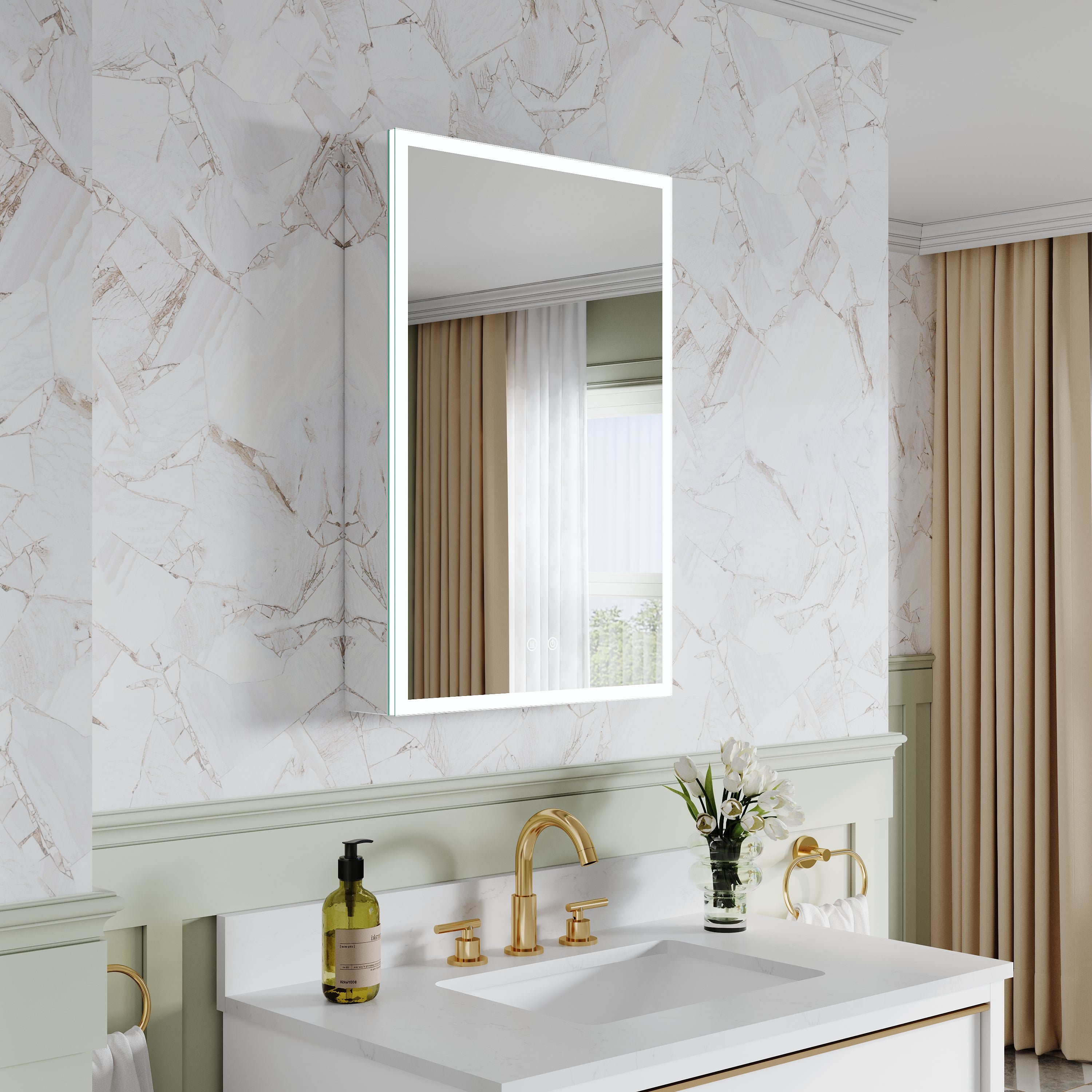
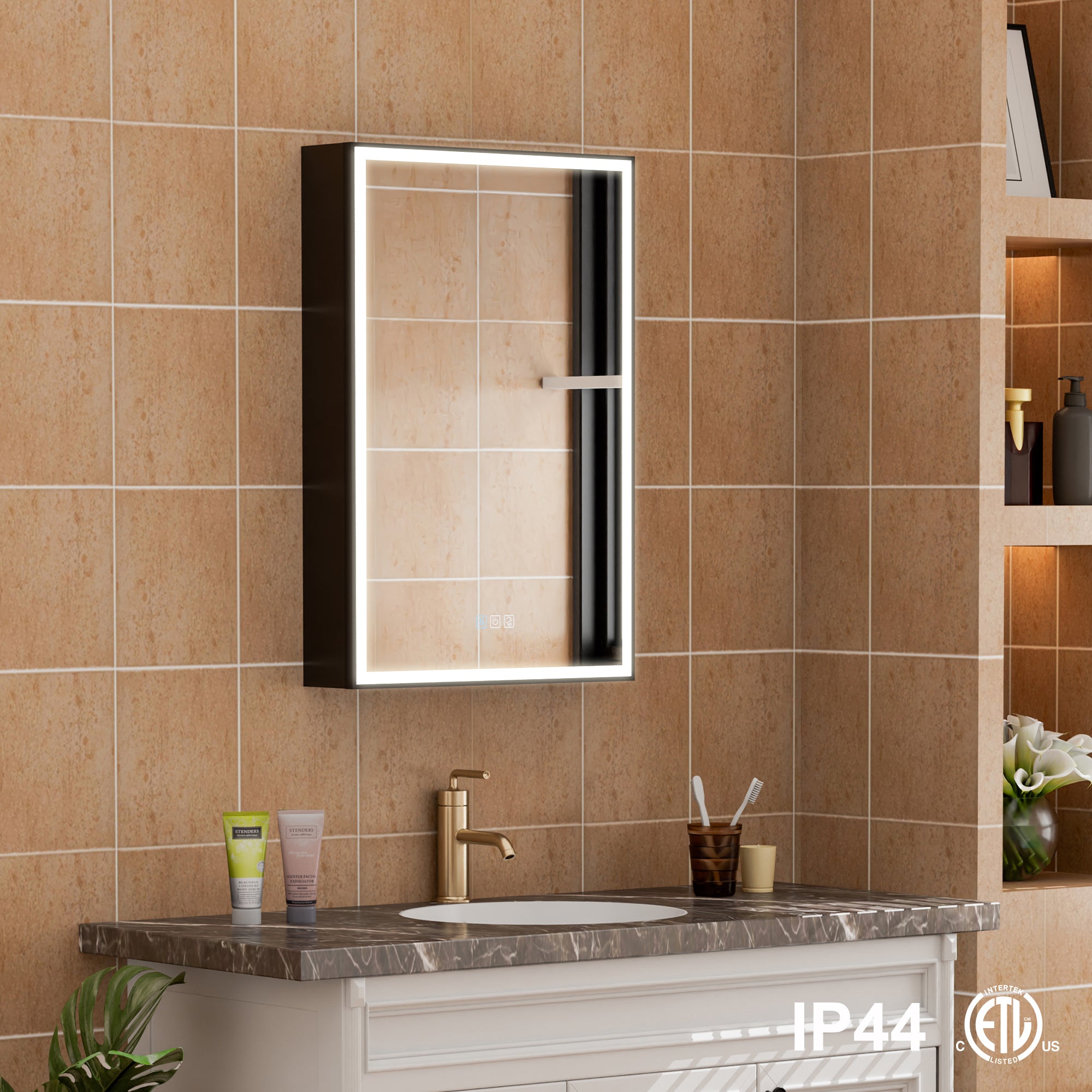










Let's be honest: doing your makeup in a dimly lit bathroom is a total gamble. You spend ten minutes blending your foundation under a single overhead bulb, step outside into the daylight, and realize your shade is completely off or your contour looks like a harsh stripe. A vanity mirror with lights takes the guesswork out of this daily routine by putting bright, accurate illumination right where you need it—at face level. However, these mirrors aren't just about being "extra bright." They actually solve specific lighting physics problems. If you know what specs to look for, you can find a mirror that genuinely helps you get a flawless finish instead of just collecting dust on your dresser.
The Real Issue with Bathroom Lighting
Think about where your light comes from in a standard bathroom. It's almost always from above—a recessed ceiling light or a fixture mounted over the medicine cabinet. When that light shines down, it casts annoying shadows right across your eye sockets, underneath your nose, and along your jaw. And ironically, those are the exact areas where you need the most precision. Trying to blend under-eye concealer or contour your jawline in that kind of lighting is a nightmare because you simply can't see the details.
This isn't just a common annoyance; it’s actually backed by science. A 2011 study published in the Journal of the Illuminating Engineering Society of Japan looked into this exact issue. They had twenty people evaluate their faces under 32 different lighting setups while applying both base makeup (like foundation) and point makeup (like mascara and lipstick). The results were clear: people performed significantly better and felt much happier with their point makeup when the light came from all four sides or vertical sides, rather than just from above or below. So, when a lighted vanity mirror surrounds your face with bulbs, it's essentially mimicking the lighting setup that science says works best.
Why Color Temperature Matters So Much
You've probably noticed that light has different colors, measured in Kelvin (K). Warm light sits around 2700–3000K and feels cozy, like a restaurant. Neutral white is around 4000K and looks like natural daylight. Cool white is 5000K and above, resembling harsh office fluorescents.
Here’s the catch: your makeup looks totally different in each of these environments. A foundation that looks completely seamless in your warm bedroom might suddenly look orange when you get to your cool-toned office. That is why adjustable color temperature is a game-changer. If a mirror lets you toggle between warm, neutral, and cool settings, you can check your look in multiple simulated environments before you even leave the house. It’s incredibly practical—especially if you're getting ready in the morning for a long day out.
CRI: Don't Buy a Mirror Without It
If there is one spec you should pay attention to, it is the Color Rendering Index (CRI). This number (up to 100) measures how accurately a light bulb shows the true colors of objects compared to natural sunlight. For makeup, a high CRI is non-negotiable. If the CRI is low, your reds (like blush and lipstick) will look dull, and you won't be able to accurately judge your skin's undertones.
Kohler, a major name in bathroom fixtures, actually requires a minimum CRI of 90 for their lighted mirrors. They state that this level allows users to see themselves "in the truest light for makeup application." Industry experts agree, generally recommending a CRI of 90 or higher for any space where you are matching colors. Cheap LED strips often have terrible CRI scores, leaving you guessing whether your bronzer is too dark or your concealer is too pink. If a product doesn't list its CRI, that’s usually a red flag.
Interestingly, testing from WIRED points out that while a high CRI is important, your room's ambient light still plays a role. Putting your mirror near a window or in a room with good overhead lighting can help make up for a slightly lower CRI. But ideally, you want to pair a high-CRI mirror with a decently lit room.
Brightness and Placement
Brightness is measured in lumens. You don't just want a mirror that is blindingly bright; you want one that distributes light evenly. According to Plumbworld's guide on illuminated mirrors, front-lit LEDs are the way to go because they light your face from the direction you are looking, getting rid of shadows. A mirror with LEDs around the entire border is much better than one with just a light bar at the top.
It's also highly recommended to get a mirror with a dimming feature. If it's too bright, you'll get glare; if it's too dim, you’ll strain your eyes. Being able to adjust the brightness (usually somewhere between 1,000 to 2,500 lumens for standard tasks) lets you customize it to your room.

Do You Need Magnification?
Most lighted mirrors come with a magnifying section, often 5x or 10x. This is actually super helpful for things like eyeliner, brow shaping, or applying false lashes. Usually, a 5x to 7x magnification is perfect for most tasks. Going up to 10x can sometimes be too intense and hard to focus on. Just remember, magnification is only helpful if the lighting is even. A 10x mirror with bad lighting will just show you every pore without helping you color-match.
The Bottom Line
At the end of the day, a good vanity mirror with lights perfects your makeup by fixing the three biggest lighting mistakes: it gets rid of downward shadows, it gives you accurate color rendering (high CRI), and it lets you preview your look in different light temperatures. When you're shopping, prioritize CRI 90+ and adjustable color modes over gimmicky features. The best mirror is the one that tells you the truth about your face—evenly, clearly, and in the same light the rest of the world will see you in.





































Leave a comment
This site is protected by hCaptcha and the hCaptcha Privacy Policy and Terms of Service apply.