






















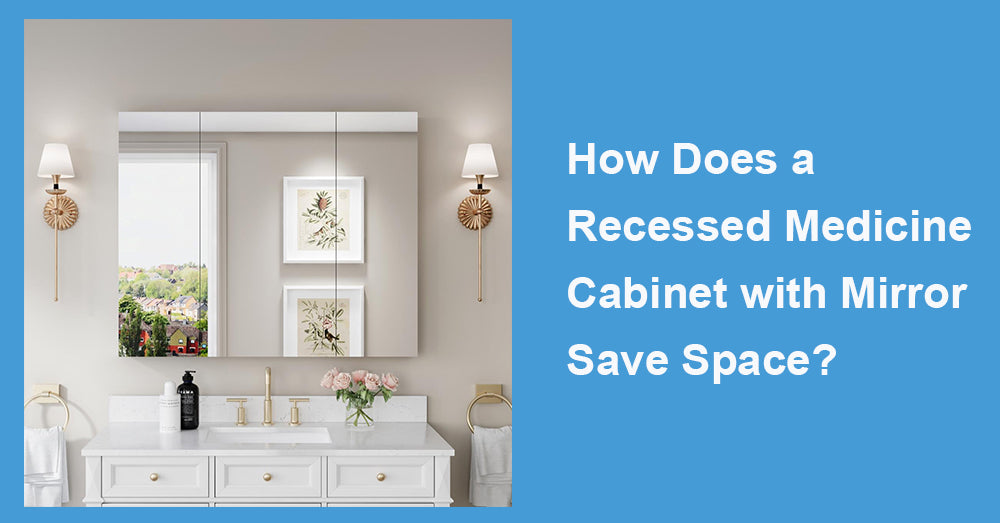
A recessed medicine cabinet with mirror is one of the most efficient storage choices you can make in a bathroom because much of the cabinet sits inside the wall rather than projecting into the room. You gain enclosed storage, a full-size mirror, and a cleaner vanity area without sacrificing valuable floor space. In small bathrooms, that difference can be significant. From a practical design standpoint, recessed storage works especially well when the goal is to make a room feel less crowded without giving up everyday convenience.
1. Why a Recessed Medicine Cabinet with Mirror Saves More Space
The basic idea is simple. Instead of mounting the entire cabinet onto the wall surface, the cabinet body fits into a framed opening between the wall studs.
That leaves only the door, mirror, and a small portion of the frame visible. Compared with a surface-mounted cabinet, the fixture feels flatter and less intrusive.
This matters in narrow bathrooms where every inch of clearance affects comfort. A cabinet that projects several inches from the wall can feel surprisingly bulky above a shallow vanity. A recessed model keeps the same storage closer to the wall.
It also combines two functions in one location. You do not need a separate mirror and a nearby wall-mounted storage cabinet.
2. It Moves Everyday Clutter Off the Vanity
Storage is most useful when it is close to where you need it.
Toothpaste, razors, skin care products, contact lens supplies, grooming tools, and small toiletries often end up scattered across the countertop because they are used every day.
A recessed medicine cabinet puts those items at eye level. They remain easy to reach, but the vanity stays open.
That is particularly helpful in a compact bathroom with a small sink or limited counter space. Once bottles and containers are moved off the countertop, the room usually feels larger and is much easier to clean.
Adjustable Shelves Make the Space More Useful
I usually recommend looking for adjustable shelving rather than fixed shelves.
Bathroom products come in too many different sizes for a rigid layout. A tall mouthwash bottle may need twice the clearance of a small moisturizer jar.
Adjustable glass shelves let you change the interior as your routine changes. They also make it easier to organize items by person or frequency of use.
More storage does not always mean deeper storage. Shallow shelves can actually work better because everything remains visible instead of disappearing behind another row of products.
3. The Built-In Look Reduces Visual Clutter
Space is not only about measurements. Visual weight matters too.
A bulky surface-mounted cabinet can make a small bathroom feel tighter even when it technically fits. Recessed installation creates a cleaner wall plane and allows the mirror to look more integrated with the room.
That is one reason this style works so well in modern and transitional bathrooms. The cabinet does its job without becoming the dominant feature.
A frameless mirrored door can make the effect even more subtle, while a metal or decorative frame adds definition without adding much physical bulk.
4. Recessed Cabinets Are Not Right for Every Wall
This is where buyers need to be realistic.
A recessed cabinet needs enough clear space inside the wall. Plumbing pipes, electrical wiring, ductwork, insulation, or structural framing may interfere with installation.
Never assume that the empty-looking wall above a sink is actually empty inside.
If the existing wall cavity cannot accommodate the cabinet, relocating utilities can turn a straightforward project into an expensive renovation. In that situation, a surface-mounted model may be the better choice.
Remodeling Can Be More Complicated Than New Construction
Recessed cabinets are easiest to plan during a renovation or new build, when the wall is already open.
Retrofitting one into a finished bathroom requires careful measuring and inspection before cutting begins. If you are unsure what is inside the wall, a professional installer can help avoid unnecessary damage.
For a simple bathroom refresh where you do not want to open the wall, surface mounting may save time and labor.
5. Choose the Right Size Instead of the Biggest Size
Another common mistake is buying the largest cabinet that fits between surrounding fixtures.
Width matters, but so do height, depth, door swing, and shelf configuration.
A wider cabinet may give you more storage, but its doors can interfere with sconces, side walls, or nearby shelving. A tall cabinet may also place the upper shelves beyond comfortable reach.
At Wellfor, I would recommend measuring the vanity first, then considering how the mirror should relate visually to the cabinet below it. The medicine cabinet should feel proportionate rather than oversized.
Check the manufacturer’s rough-opening dimensions carefully. Those measurements determine whether the cabinet will actually fit inside the wall.
6. Mirror Configuration Can Improve Daily Use
Single-door models are practical for smaller vanities and individual use. Double-door or three-door designs offer wider reflective surfaces and can divide storage more naturally in a shared bathroom.
Some recessed cabinets include mirrors on the interior as well. This can be useful because you can keep the door open while shaving or styling hair without losing access to a mirror.
Integrated lighting is another option. It can simplify the vanity wall further by reducing the need for separate fixtures, though it usually requires electrical planning.
Buy those features only when they match your routine. Storage and installation quality should still come first.
7. Maintenance Is Usually Simple
A recessed medicine cabinet does not need much special care.
Use a microfiber cloth and nonabrasive cleaner on mirrored surfaces. Spray the cleaner onto the cloth rather than directly around mirror edges or hinges.
Wipe the shelves periodically and remove expired or unused products. This keeps the interior from becoming overcrowded.
Bathroom humidity should also be controlled. Run the exhaust fan during and after showers to help protect hinges, mirror edges, and surrounding finishes.
Check the door alignment occasionally as well. If hinges become loose, tightening them early prevents unnecessary strain.

8. When Recessed Storage Makes the Most Sense
This type of cabinet is especially useful in small bathrooms, powder rooms, apartments, and shared family bathrooms where wall space needs to work harder.
It is also a strong choice for minimalist spaces where you want storage without visible bulk.
If your bathroom already has generous vanity drawers, linen storage, and a large decorative mirror, the added cabinet may be unnecessary. The same is true when wall construction makes installation unusually difficult.
A well-chosen recessed medicine cabinet with mirror works best when it solves both storage and layout problems at the same time. Measure the wall carefully, inspect what is behind it, and choose adjustable storage rather than chasing maximum size. When the installation is planned properly, the cabinet can make a bathroom feel cleaner, more open, and considerably easier to use every day.











































Leave a comment
This site is protected by hCaptcha and the hCaptcha Privacy Policy and Terms of Service apply.