






















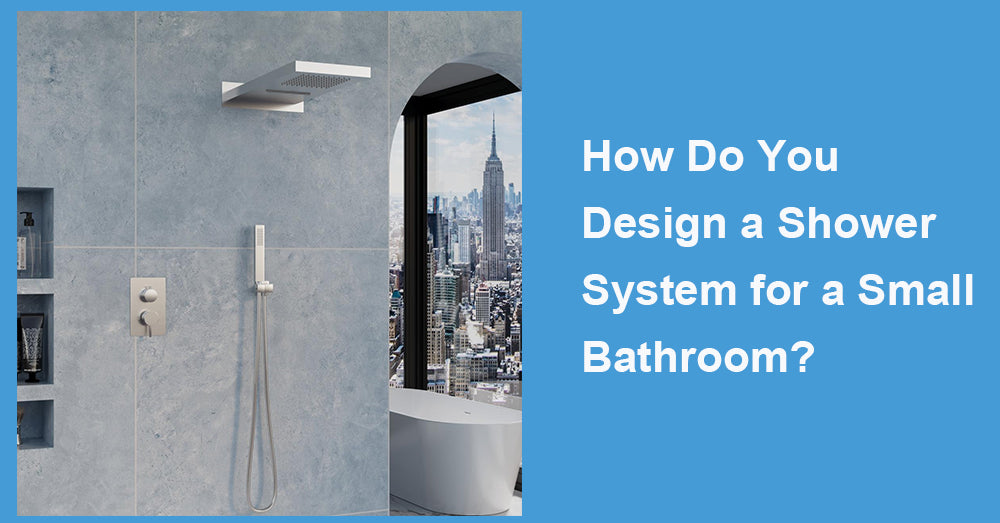
With changes in urban residential structures, small bathrooms have gradually become the mainstream configuration. Whether it's apartments, townhouses, or secondary bathroom spaces in renovation projects, the 'small bathroom' is no longer a temporary or secondary space, but a functional area that needs careful design. Balancing comfort, aesthetics, and practicality within a limited space has become an unavoidable challenge during the decoration phase.
Among the many bathroom elements, the design and selection of shower systems are particularly crucial. It not only determines the quality of the daily shower experience but also dramatically affects the visual order, flow efficiency, and long-term maintenance cost of the space. From an industry perspective, the shower system for small bathrooms is not simply about shrinking in size, but rather a systematic consideration of integration, trade-offs, and precise design.
1. Participate in the design of the Shower System from the spatial planning stage, rather than supplementing it later on
A common misconception in small bathroom design is to view the shower system as a "later optional" device. However, industry practice has repeatedly shown that the more space-limited a project is, the more necessary it is to incorporate the shower system into the overall planning at the initial layout stage.
Reasonable planning should start with the division of wet and dry areas and provide suitable installation conditions for shower systems by clarifying the locations of shower areas, access routes, and the distances to washbasins and toilets. This not only avoids being forced to compromise due to spatial conflicts in the later stage, but also makes the entire bathroom clearer and more efficiently distributed in terms of functionality.
2. The compact integrated Shower System is more suitable for small bathrooms
In a small bathroom, scattered parts often amplify the sense of clutter. The integrated shower system integrates the top spray, handheld showerhead, and control unit into a unified structure, effectively reducing visual and structural burden.
From the perspective of industry trends, integrated design not only helps save wall space but also reduces the complexity of installation and commissioning. For small bathrooms, this integrated solution is more likely to achieve a balance between complete functionality and simple appearance, and is widely adopted in current small space design.
3. Hidden or wall-mounted installation methods help to free up visual space
The hidden shower system is one of the critical trends in small bathroom design in recent years. By hiding the valve body and pipeline inside the wall, only the necessary water outlet and control interface can be retained, which can significantly reduce visual occupation.
In a small bathroom, visual "blank space" is significant. A hidden installation not only makes the wall cleaner but also makes the space appear more spacious and transparent. From a long-term usage perspective, this design also reduces the risk of exposed parts getting damp and scaling, balancing aesthetics and practicality.
4. Simplify the water outlet components to avoid the pressure caused by functional stacking
Industry research shows that overly complex shower systems in small bathrooms often do not provide a better user experience. Although the multi-head water outlet and side spray system may appear rich in display, it may cause space compression and inconvenient operation in practical use.
On the contrary, selecting high-frequency usage functions, such as the combination of top spray and handheld showerhead, is more in line with daily needs. By reducing unnecessary components, small bathrooms can achieve a fresher appearance and more efficient usage logic, which is also a reflection of the emphasis on "functional adaptability" in current industry design.
5. Emphasize water pressure stability and temperature control performance to enhance overall experience
In a small bathroom, due to the relatively concentrated pipelines, fluctuations in water pressure and unstable water temperature are more easily detected by users. Therefore, the core performance of the shower system is more important than its appearance and functionality.
A system with constant temperature control and a stable water outlet structure can effectively reduce the discomfort caused by switching between hot and cold water. From an industry perspective, this type of performance is not a "high-end add-on" but a basic configuration that ensures a good experience in small spaces, directly affecting users' overall evaluation of bathroom quality.

6. The appearance design should balance lightweight and durability
The shower system in a small bathroom is often in the visual focal point, so its exterior design needs to be remarkably restrained. Simple lines, understated surface treatment, and well-proportioned structures make it easier to create a clean and orderly spatial atmosphere.
At the same time, corrosion-resistant materials and high-quality surface finishes ensure the system remains stable in long-term, high-humidity environments. From industry experience, the balance between appearance and durability is the key to whether a small bathroom design can withstand the test of time.
7. Reserve design flexibility for future maintenance and upgrades
Even in small bathrooms, the need for later maintenance and updates should not be ignored. Choosing a shower system with a clear structure and high modularity can help complete repairs or functional upgrades without significantly changing the space.
More and more projects in the industry are paying attention to this, as good maintainability not only reduces long-term costs but also enhances the sustainable use value of space. For small bathrooms, this is a mature and rational design concept.
Conclusion
The design of a shower system in a small bathroom is never simply about reducing size, but rather a careful consideration of space efficiency, functional trade-offs, and experience optimization. Through scientific planning in the early stage, reasonable selection of system types, attention to core performance, and consideration of visual expression, small bathrooms can also have a comfortable, efficient, and modern shower experience. This refined design thinking is an essential direction for the continuous evolution of the bathroom decoration industry today.









































Leave a comment
This site is protected by hCaptcha and the hCaptcha Privacy Policy and Terms of Service apply.