
















In the process of bathroom renovation or an overall upgrade, the vanity mirror is often one of the most easily underestimated components that directly affect the daily user experience. It not only undertakes the most basic mirror function, but also plays a key role in spatial proportion, lighting quality, usage efficiency, and overall visual order. From an industry perspective, choosing the right bathroom mirror is not just about "similar size"; it requires careful consideration of multiple factors, including space conditions, frequency of use, lighting environment, and long-term stability.
1. Starting from the usage scenario, not from the appearance
In actual decoration decisions, many people are first drawn to the mirror's shape, border color, or lighting effect. Still, in industry practice, a more reasonable approach is first to clarify the usage scenario.
Bathroom mirrors are high-frequency components. On average, a primary bathroom mirror is used several times a day, much more than a bathtub, shower system, or storage cabinet. It is precisely because of the extremely high frequency of use that the mirror's height, width, and reflection range will be continuously amplified over the long term.
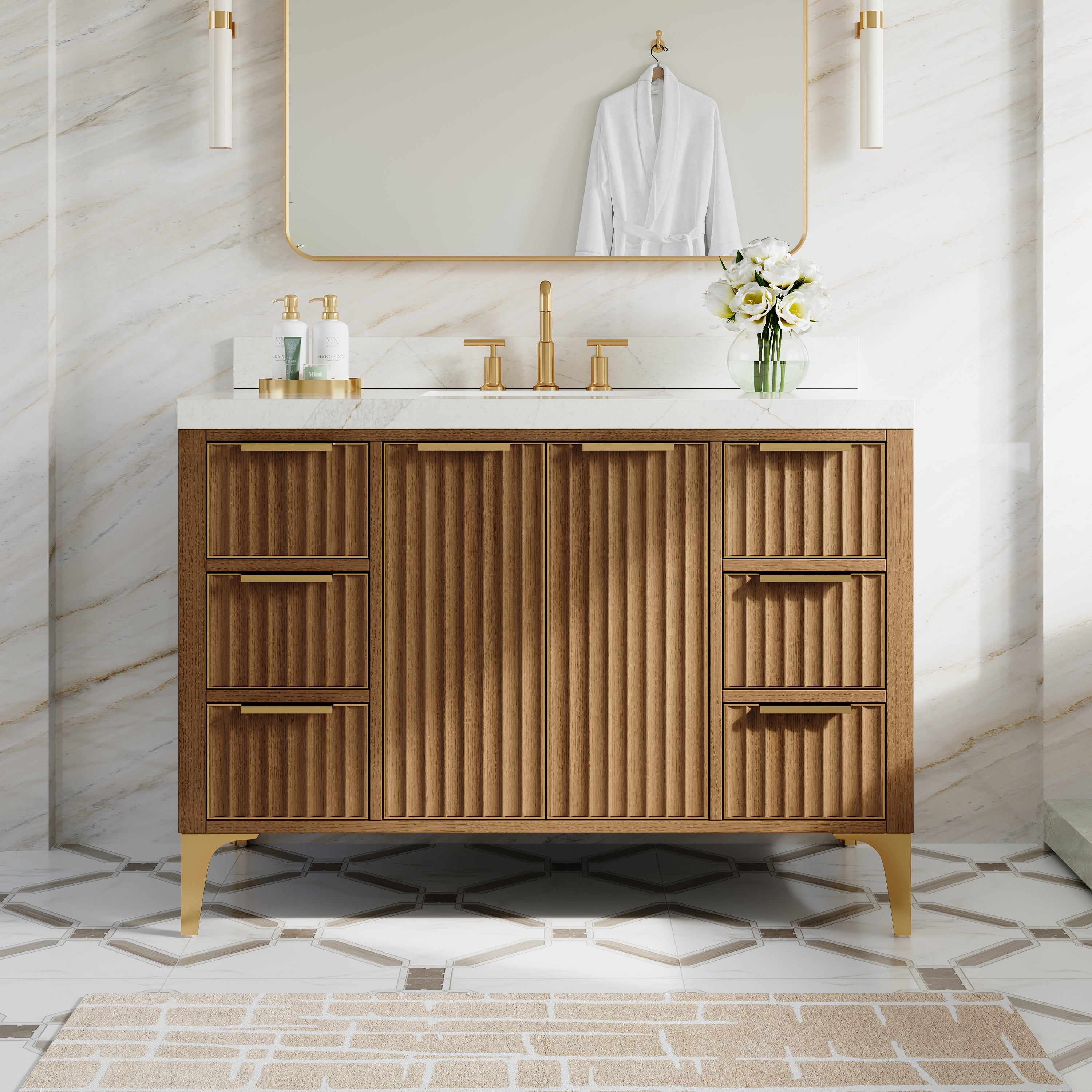
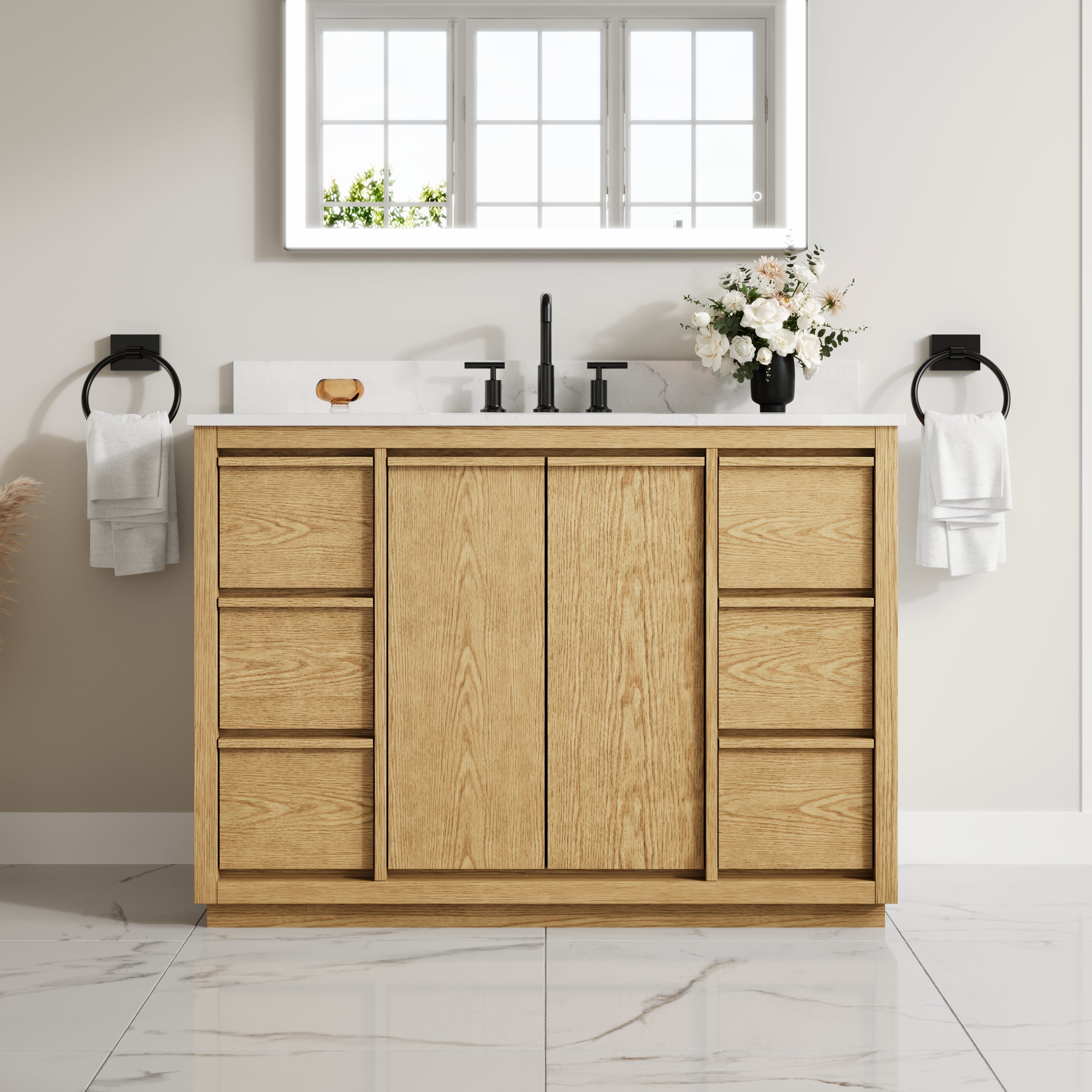
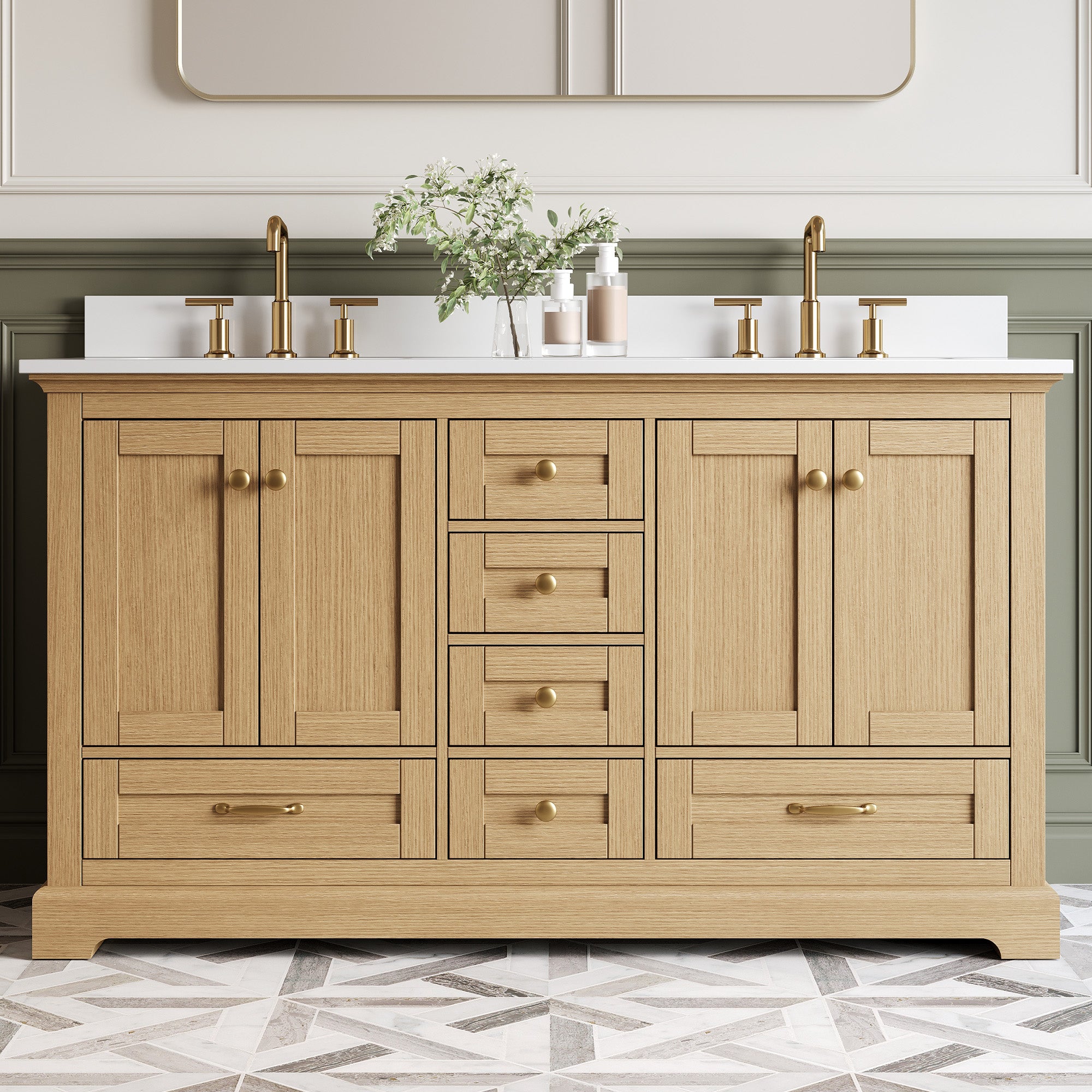
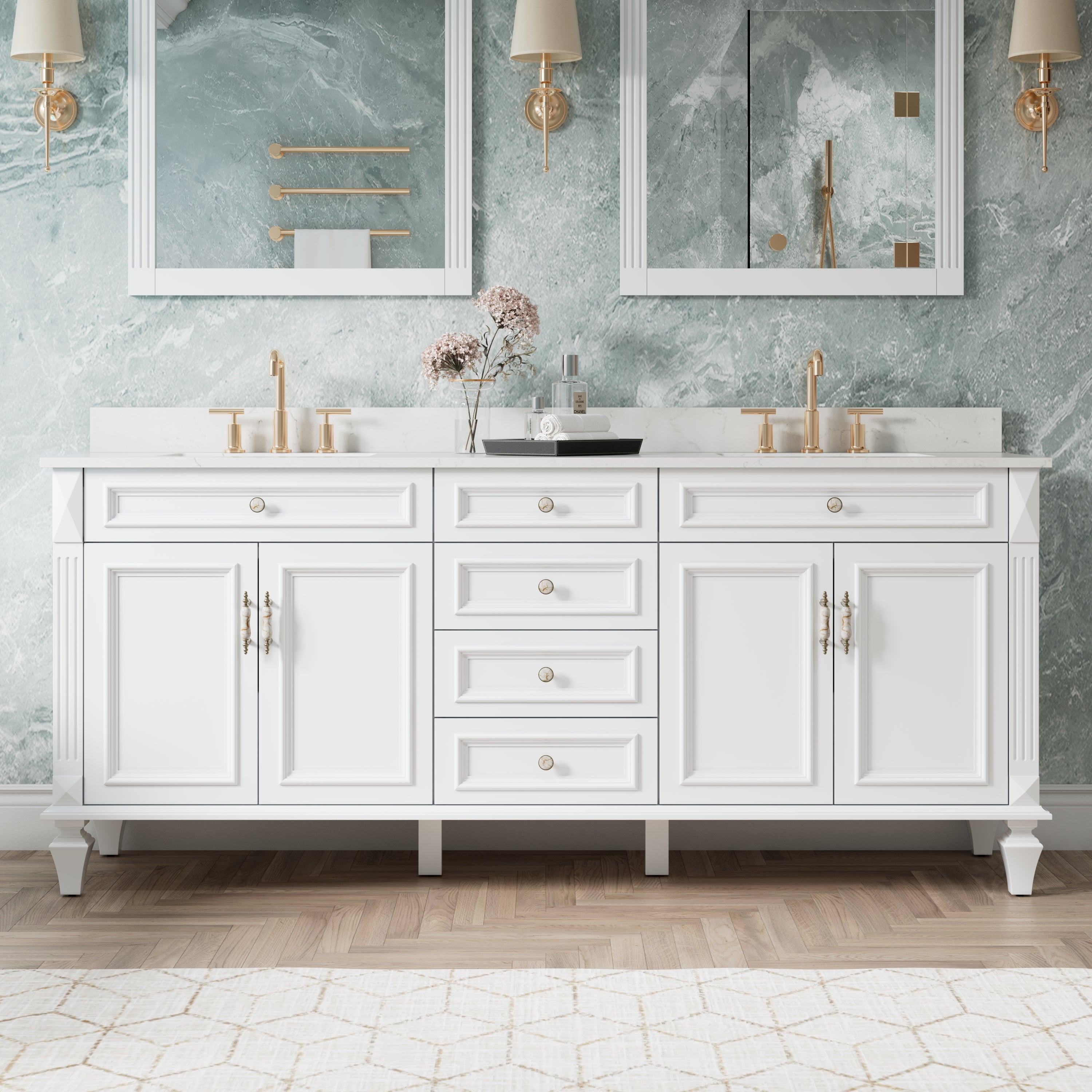
Typically, the countertop width in the main washing area ranges from 30 to 48 inches. Industry experience shows that the ideal mirror width should be close to or slightly smaller than the countertop width, providing a more stable visual and better alignment with daily usage habits. Being too narrow can appear disproportionate, while being too wide can easily create a sense of visual oppression.
2. Mirror size is not necessarily "bigger is better."
In recent years, large bathroom mirrors have frequently appeared in design drawings, but in practice, not all spaces are suitable for oversized mirrors.
From a structural and safety perspective, mirror heights are typically 26-32 inches, covering the visual needs of most standing users while avoiding installation and maintenance risks associated with excessively tall mirrors. For the main bathroom used by two people, increasing the mirror's width is more practical than simply raising its height.
In addition, the installation height must be considered. There is usually a 4-6-inch gap between the mirror's lower edge and the tabletop to prevent water vapor from directly corroding the mirror's back structure and to leave space for later cleaning.
3. The influence of lighting conditions on mirrors is often overlooked
In industry research, poor lighting is one of the main reasons for the decline in bathroom user experience. Even if the mirror itself is the right size, insufficient light or improper placement of the light source can still affect makeup, shaving, or detailing.
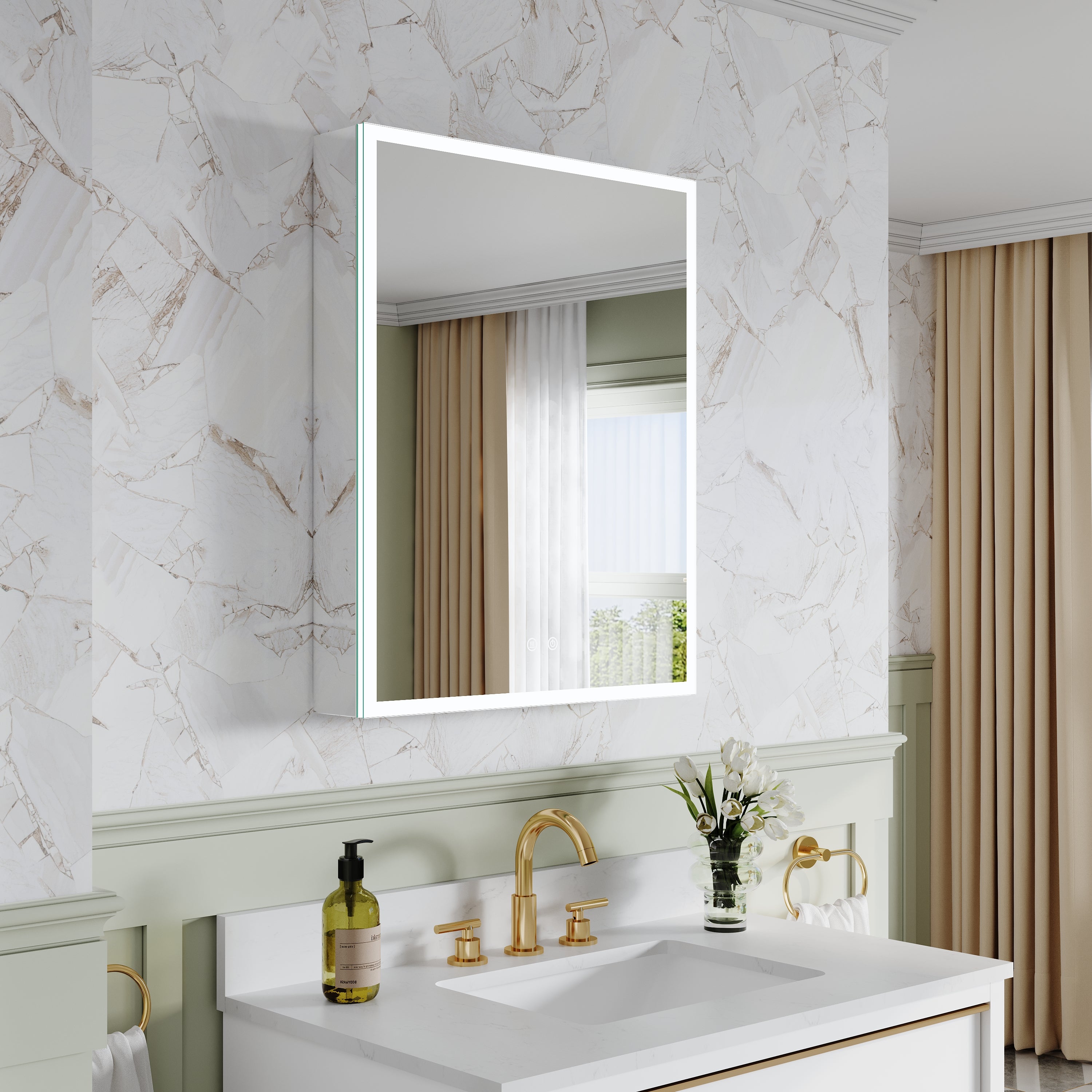
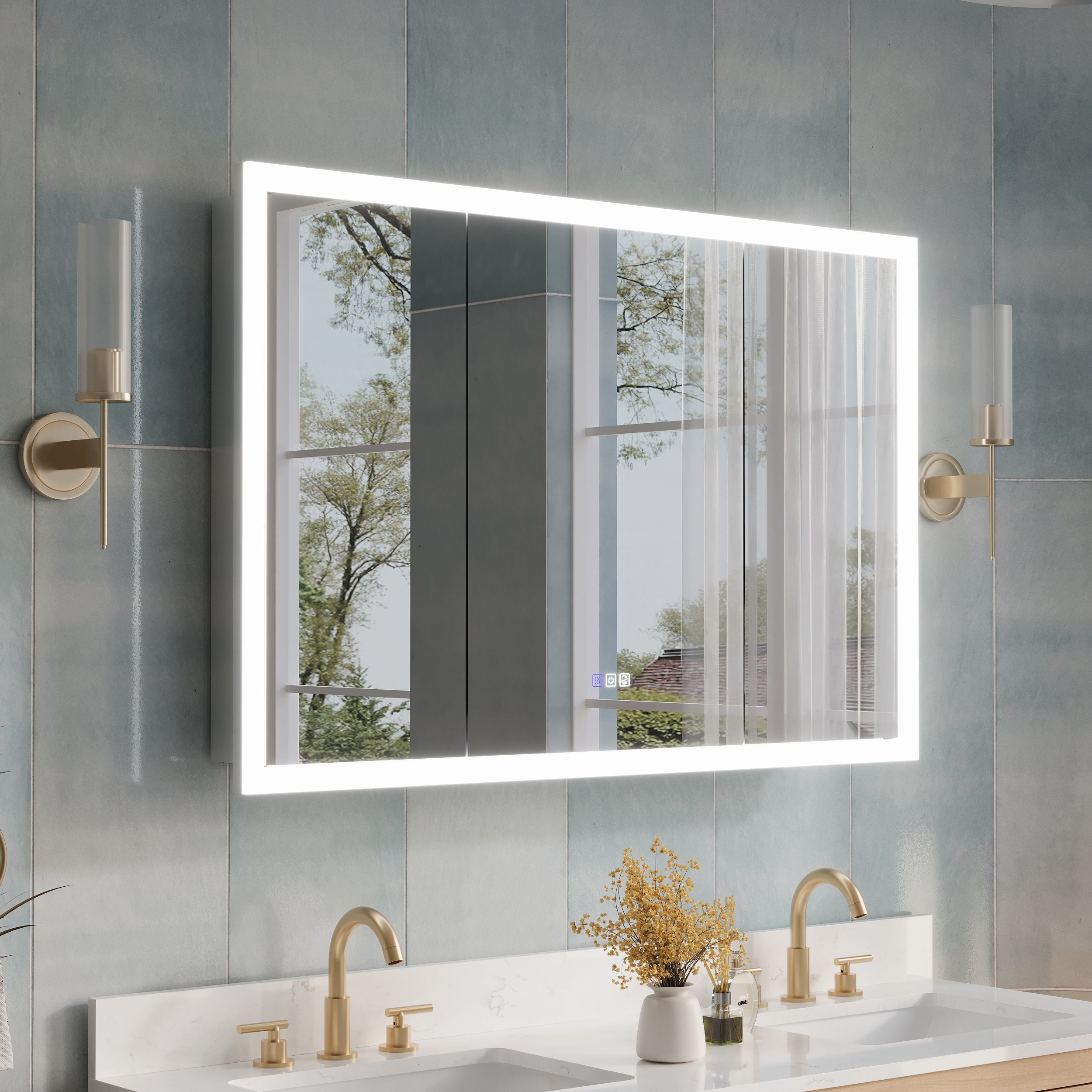
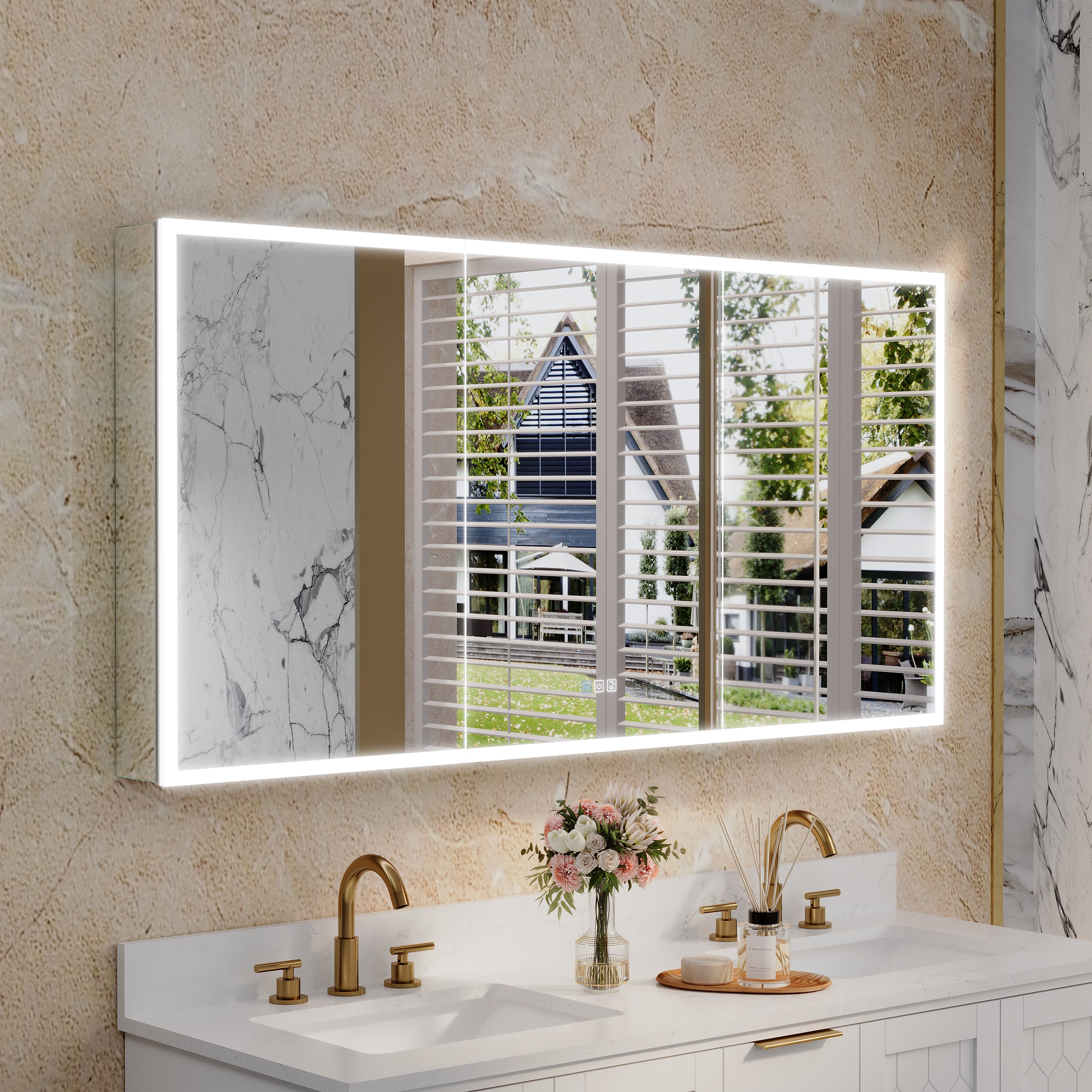
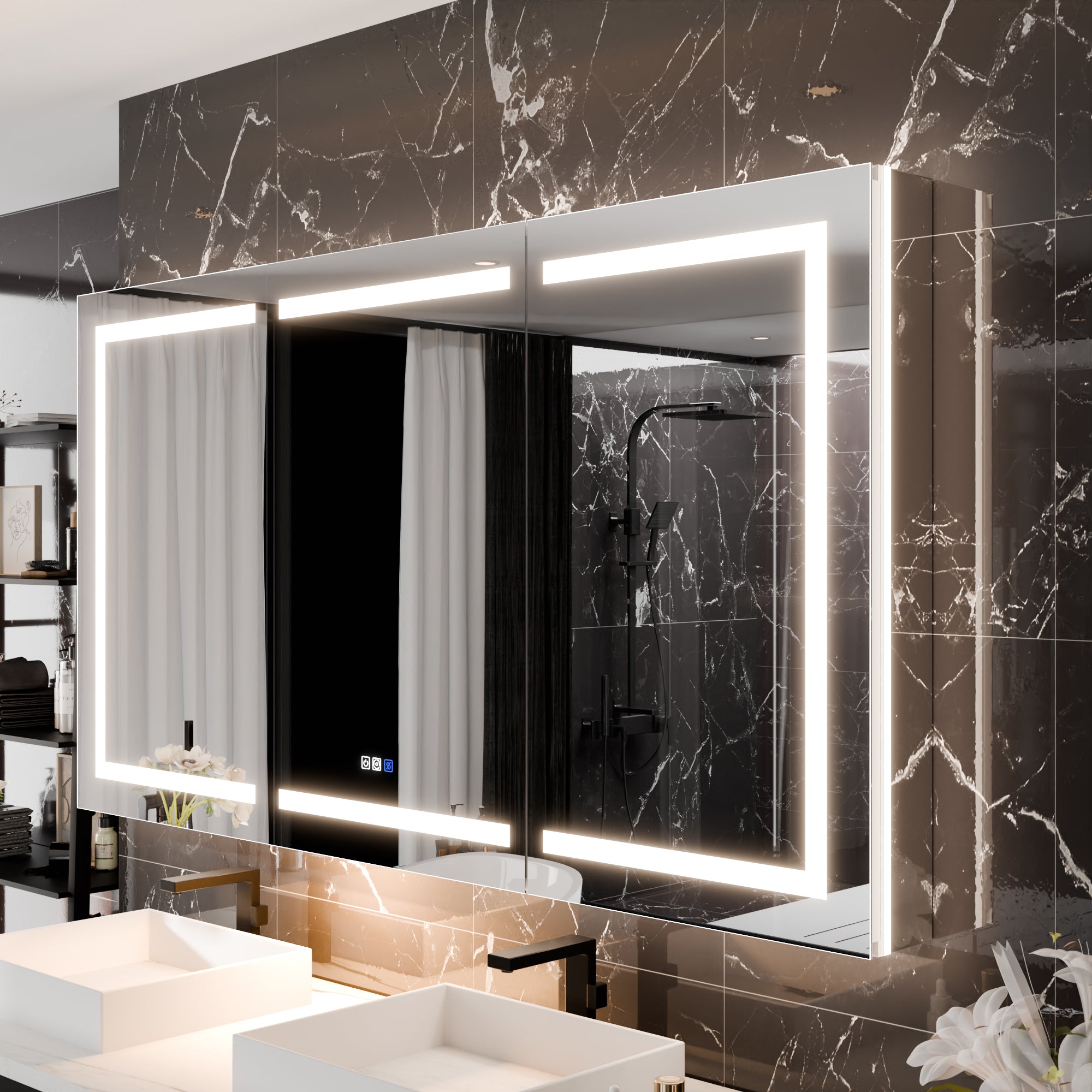
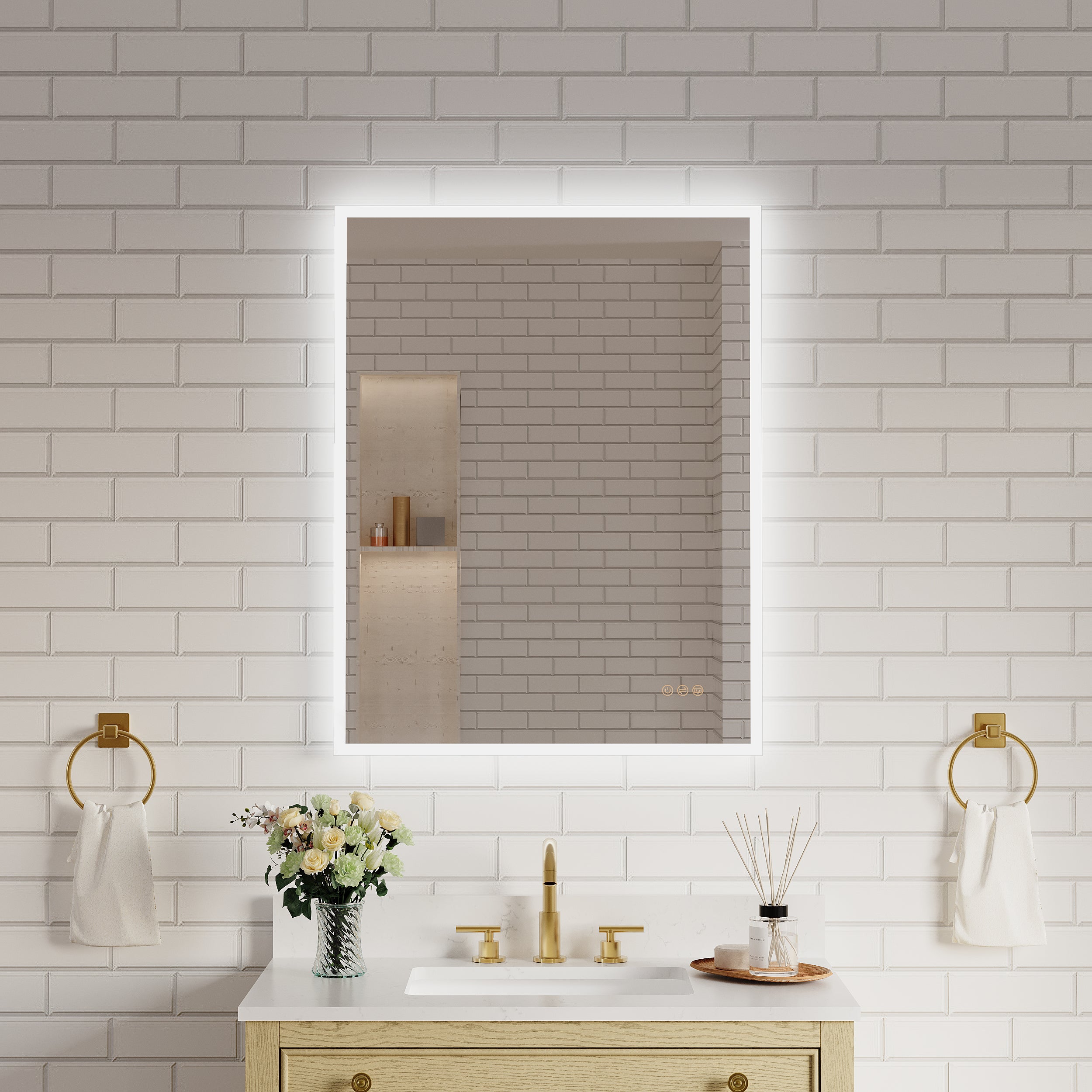
Traditional ceiling lights often cast shadows behind the user's head, which is another crucial reason for the increasing popularity of light mirrors in recent years. A light source evenly distributed around the mirror or on the back can effectively reduce facial shadows and improve lighting stability.
In practical applications, mirror lighting with a color temperature ranging from 3000K to 6000K is more easily adaptable to different time periods and usage needs. Warm light is suitable for relaxing in the morning and evening, while cool light is better for delicate operations.
4. The relationship between borders, thickness, and overall space
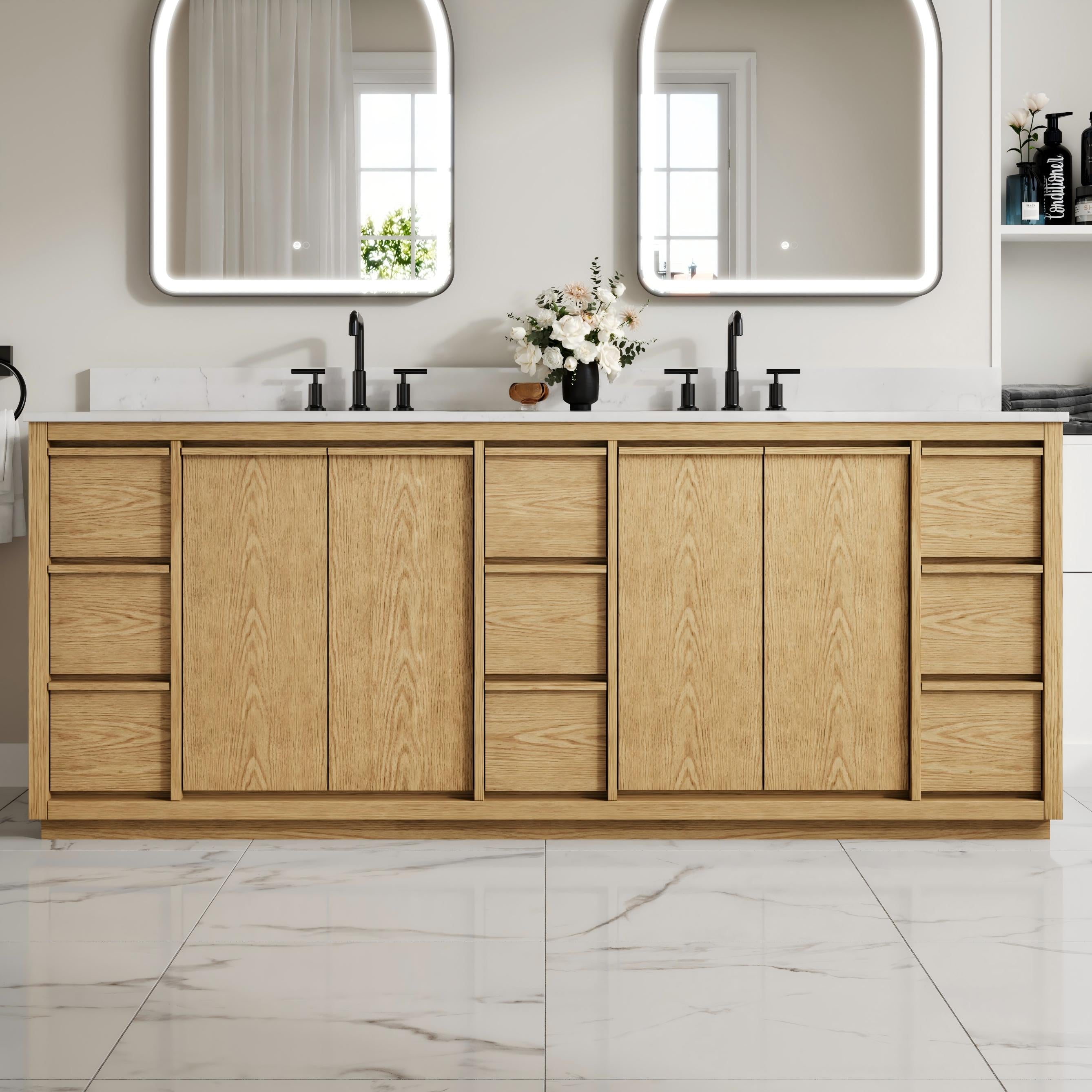
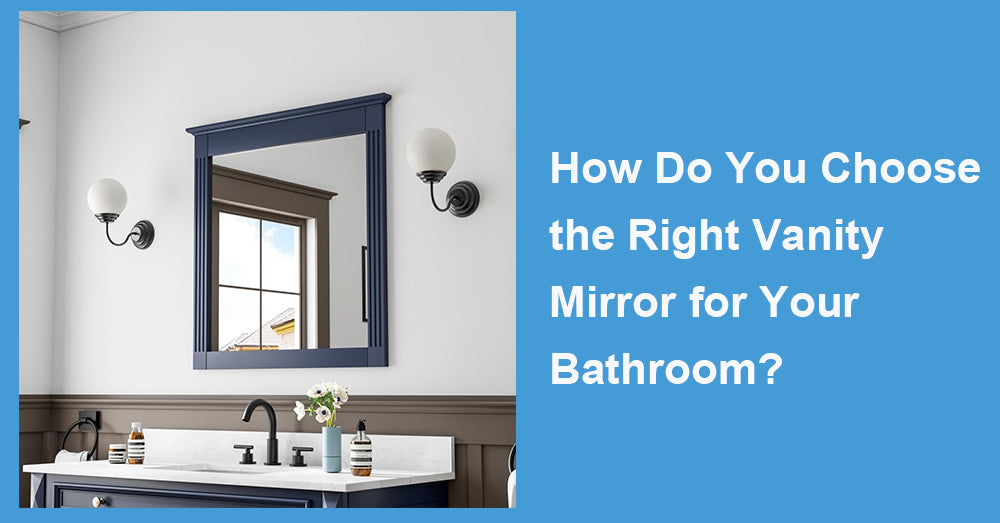
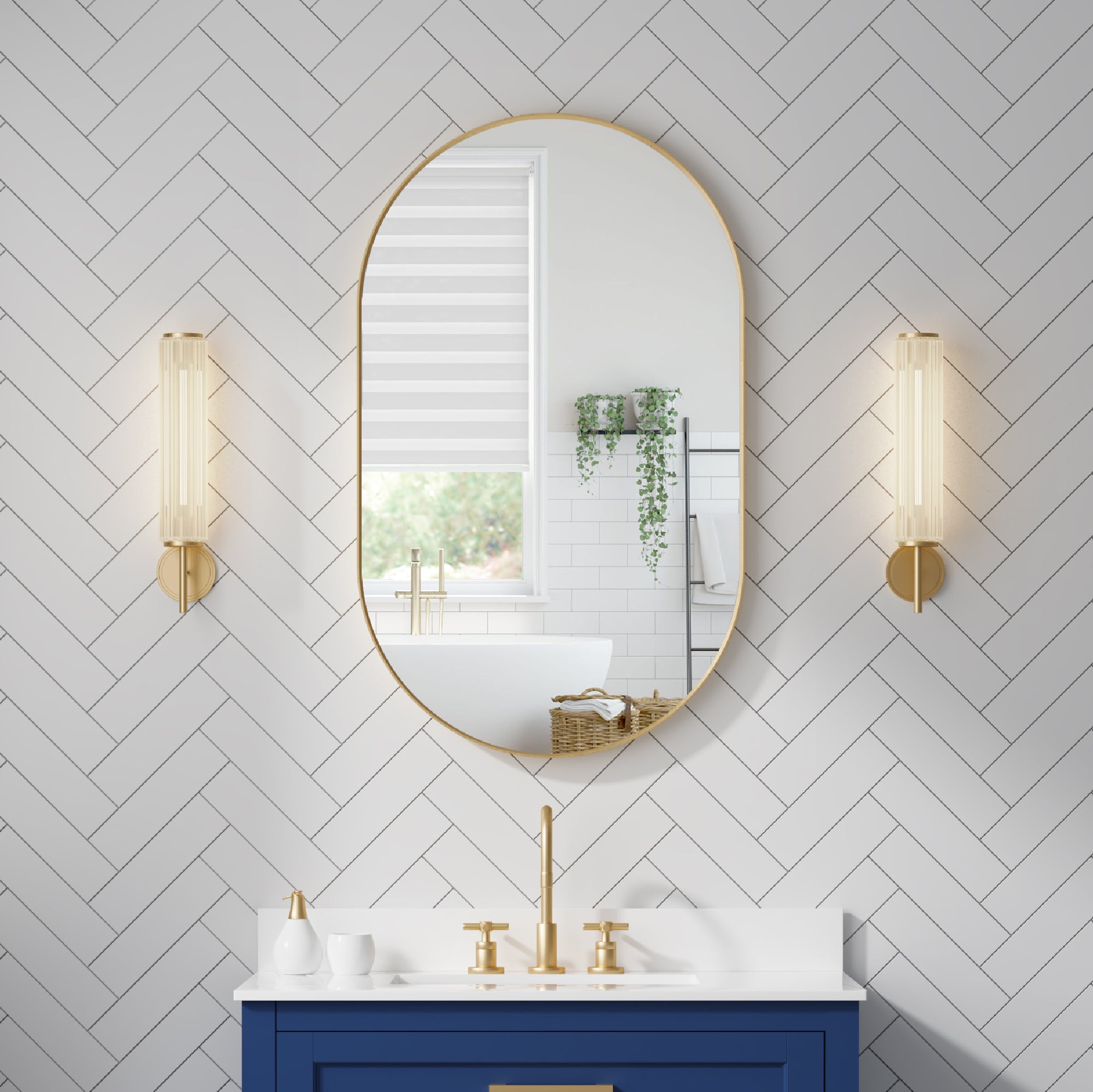
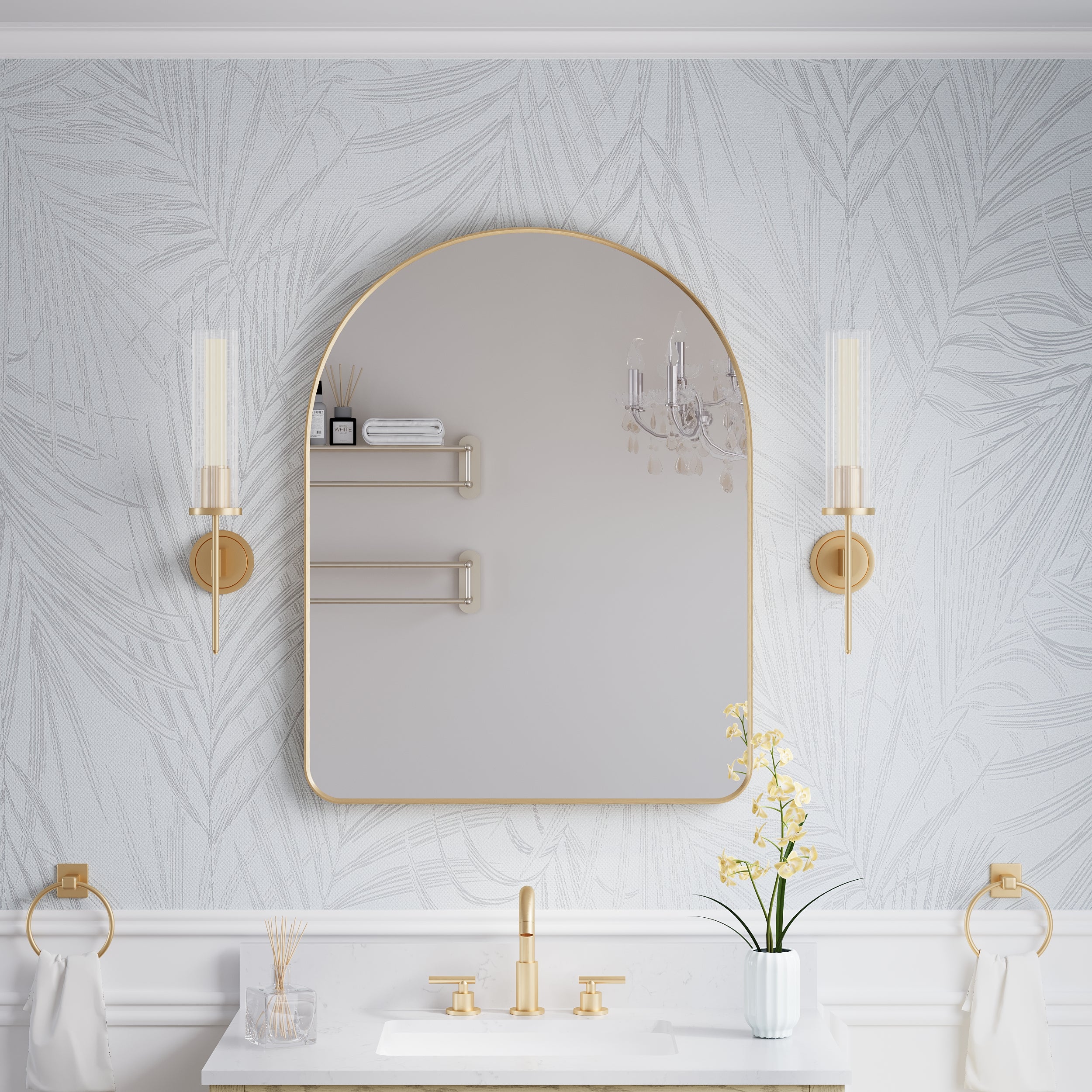
The border design of mirrors is not only an aesthetic issue, but also closely related to spatial adaptability. Borderless mirrors are visually lighter, suitable for compact bathrooms or for emphasizing modernity; mirrors with metal or wooden frames are more likely to become the visual focus and are ideal for spacious main bathrooms.
In terms of thickness, the depth of the mirror body is usually controlled within 1-2 inches, which is more conducive to the flatness and long-term stability of the wall. Thick mirrors can appear abrupt in small spaces, making installation more difficult.
5. Anti-fog and durability are not optional
In high-humidity environments, mirror durability is often more important than appearance. Industry data shows that the moisture-resistant structure and sealing process on the back of the mirror directly determine the mirror's service life.
The anti-fog function has become a standard feature for mid- to high-end bathroom mirrors in recent years. It is not for the sake of "technological sense", but to truly improve the efficiency of use. Especially when multiple people share a bathroom, anti-fog mirrors can reduce waiting time and enhance overall smoothness.
6. The selection logic of the single mirror and the combination mirror
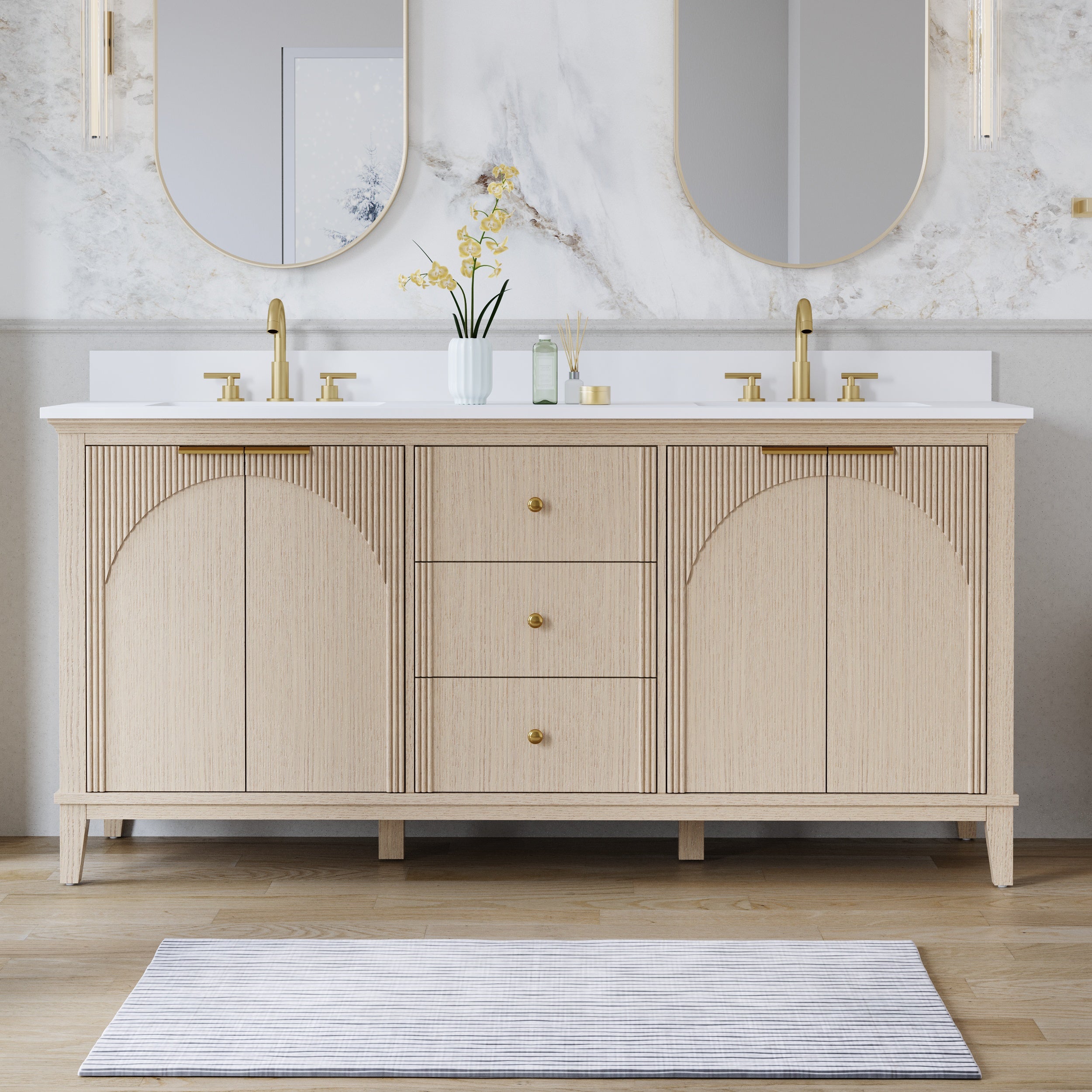
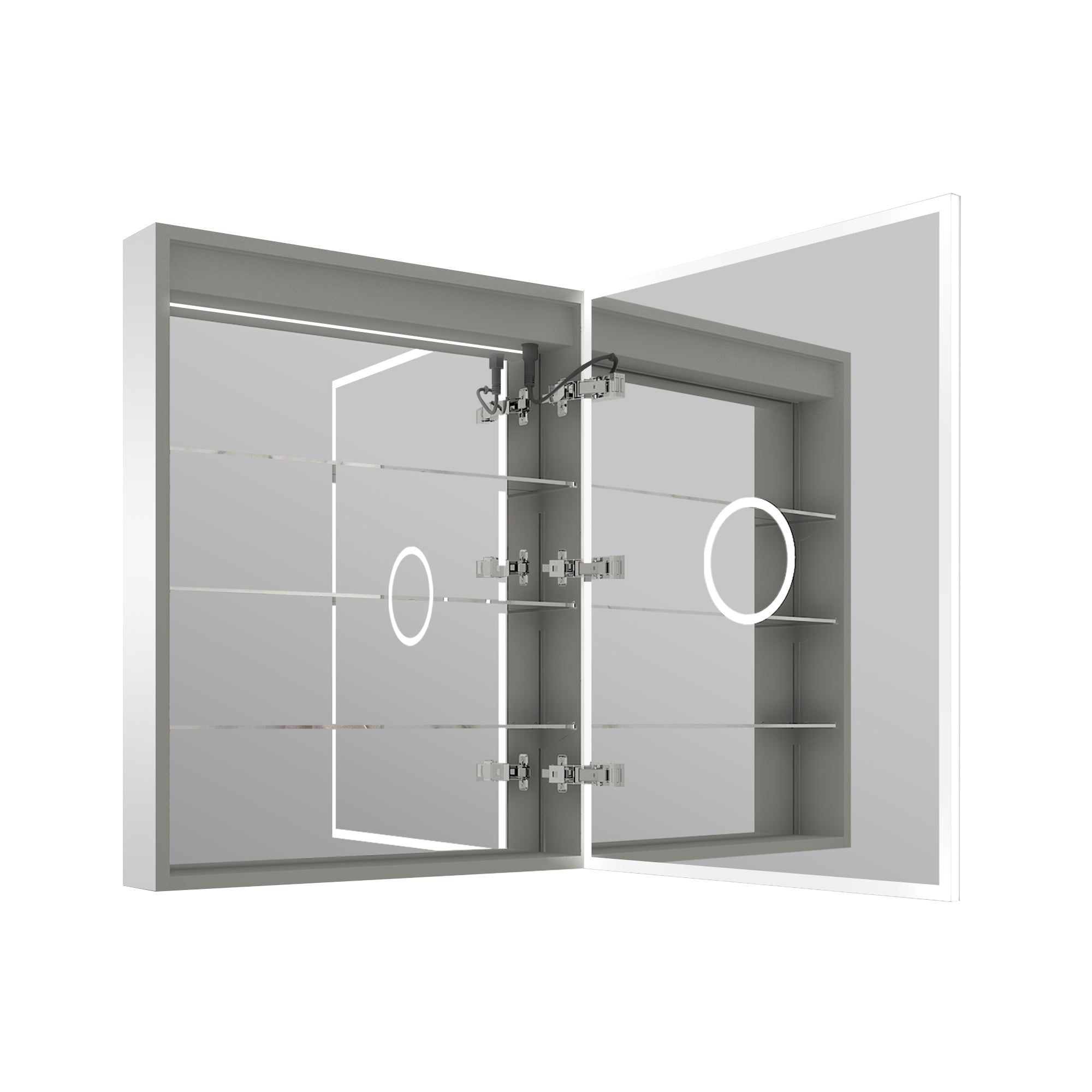
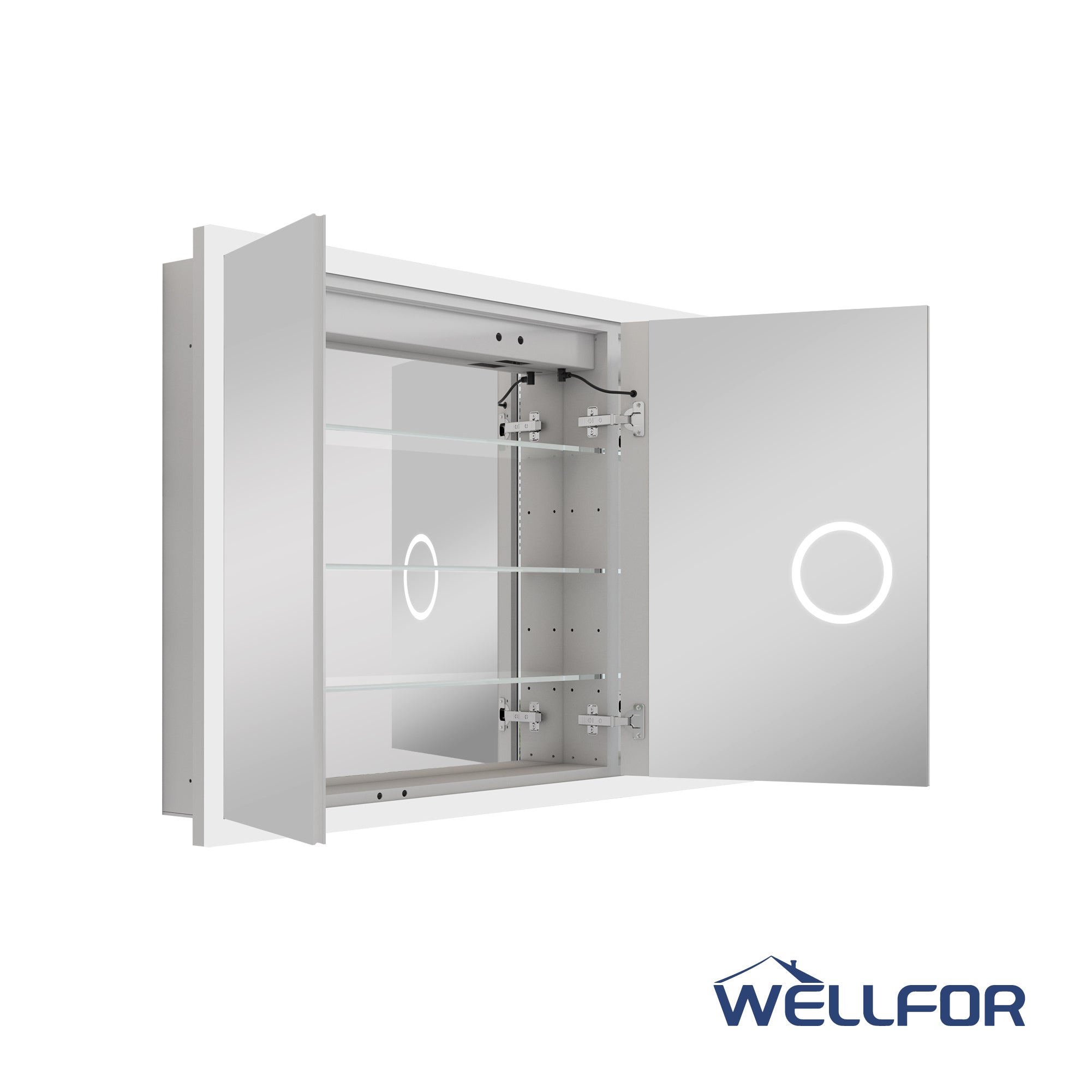
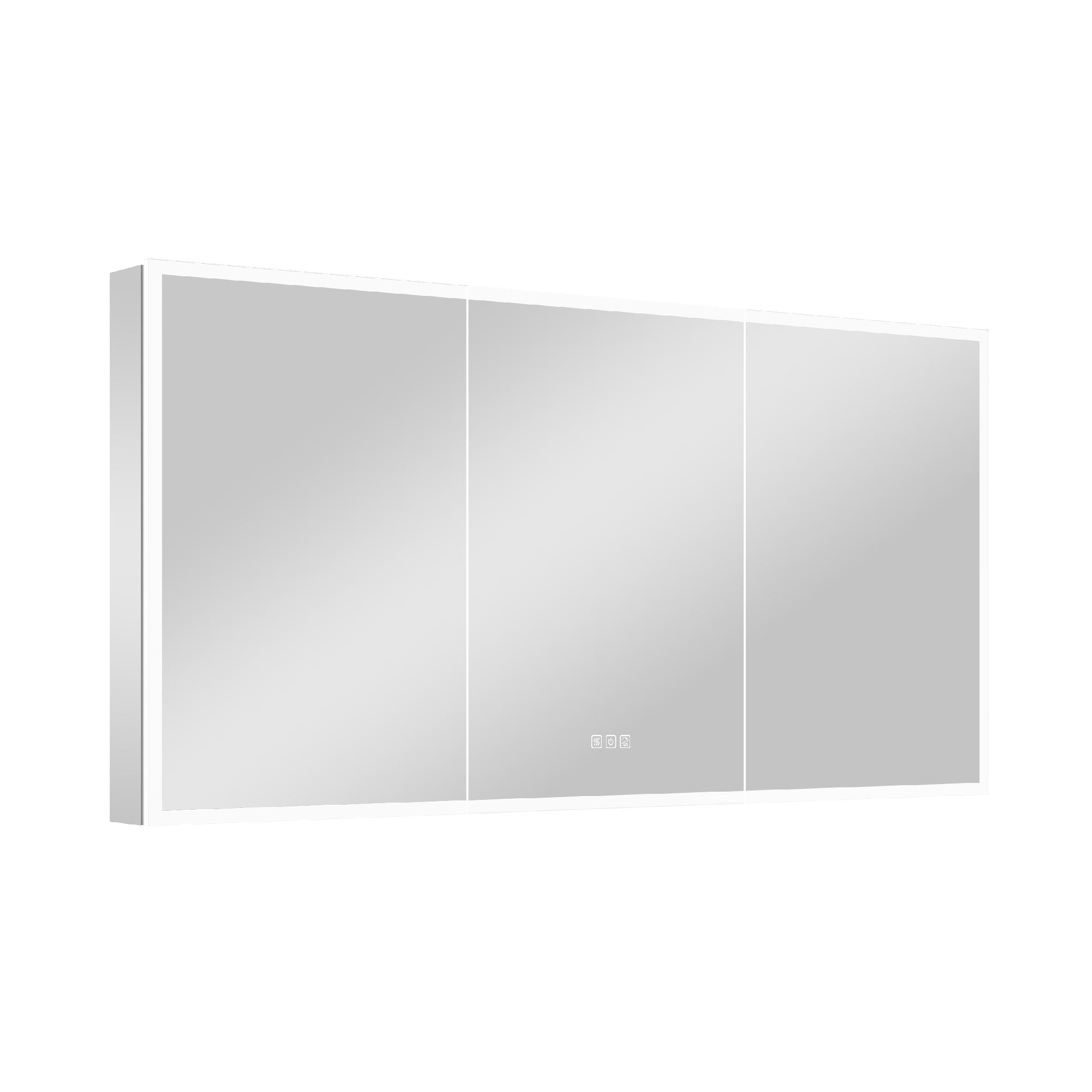
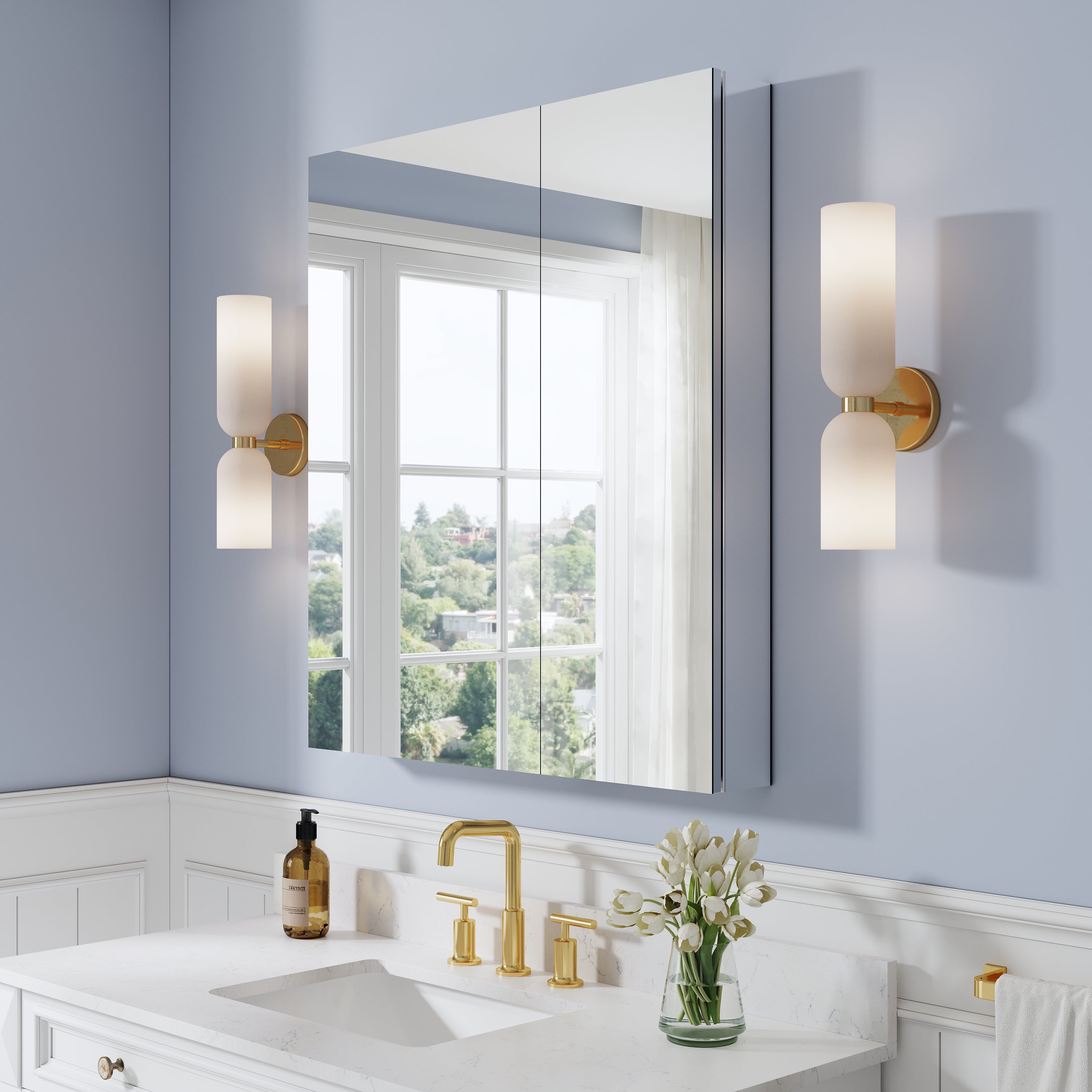
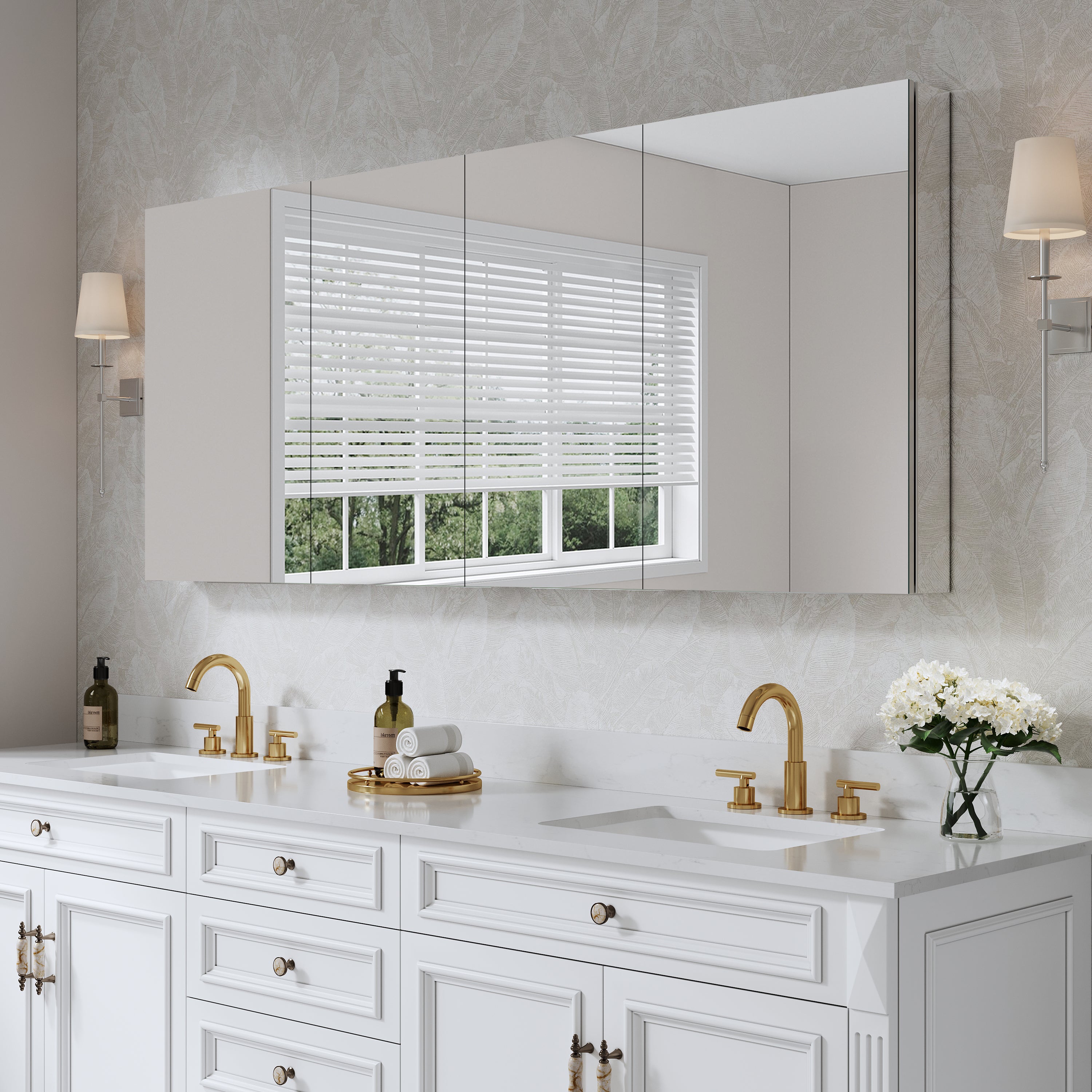
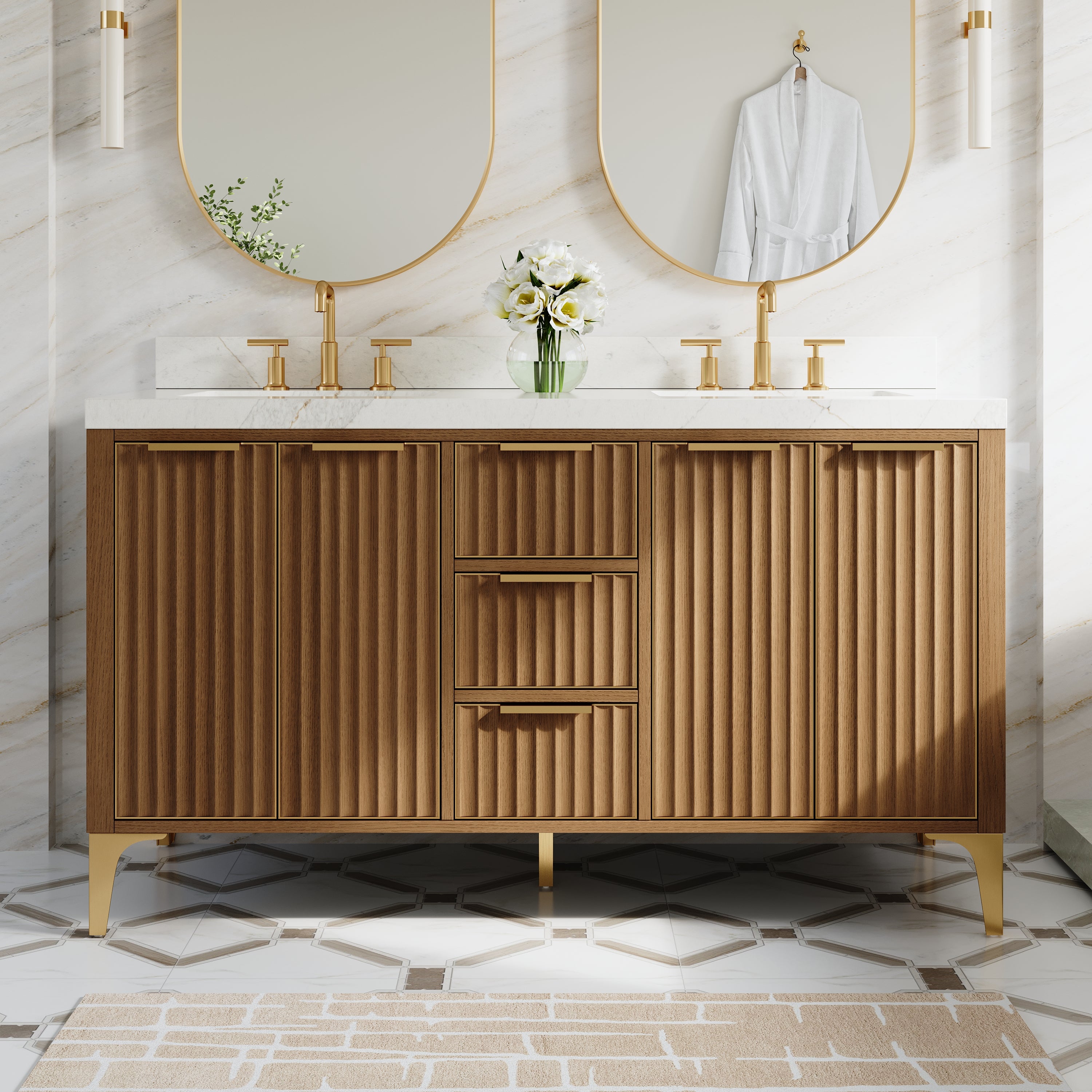
If space permits, some bathrooms may choose a combination of double mirrors or mirror cabinets. Dual mirrors are more suitable for a dual basin layout and can create visual balance; mirror cabinets with storage functions have significant advantages in storage efficiency.
Industry practice has shown that when bathroom storage space is limited, combining mirrors with storage functions is often more efficient than adding cabinets separately, and can also reduce wall fragmentation.
7. Rational choices from a long-term usage perspective
From an industry perspective, a suitable bathroom mirror typically lasts 8-12 years. Compared to short-term visual impact, long-term stability, maintenance costs, and coordination with the overall space, these factors are more worth paying attention to.
Choosing a bathroom mirror involves deciding for everyday usage scenarios. Whether the size is reasonable, the lighting is comfortable, and the structure is stable are far more critical than the design itself for long-term use.

8. Conclusion
The truly suitable bathroom mirror is not the one that looks best, but the one that best fits the space and usage conditions. Every detail, from size, lighting, structure, to long-term durability, will be magnified in daily use. Rationally and systematically selecting bathroom mirrors is often the most cost-effective way to enhance the overall bathroom experience.













Leave a comment
This site is protected by hCaptcha and the hCaptcha Privacy Policy and Terms of Service apply.