


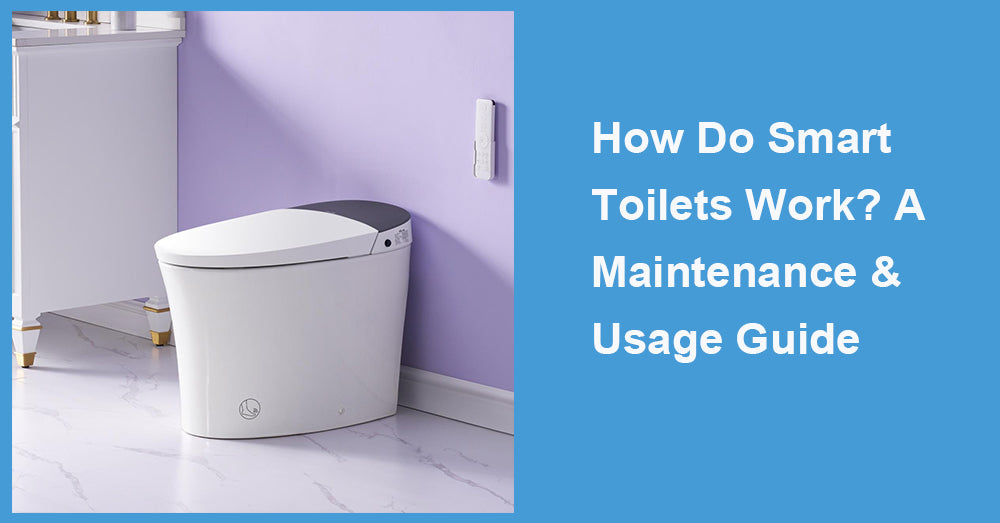
In the trend of bathroom upgrades in recent years, smart toilets are gradually shifting from "novel configurations" to daily equipment that has been carefully studied and used for a long time.
The biggest question many people ask before making a purchase is not the price, but how it actually works.
Should it be maintained frequently in daily life? If one does not understand its operating logic, smart toilets can easily be misunderstood as "complex, delicate, and difficult to maintain".
In fact, from an industry perspective, truly mature smart toilets are designed to reduce the burden of use.
1. The core working logic of smart toilets is actually not complicated
Structurally, traditional toilets do not merely power smart toilets. Instead, they integrate cleaning, control, and safety modules.
Its core can be divided into three parts:
One is the water supply and flushing system.
The second is the sensing and control system.
The third is the auxiliary comfort module, such as heating, deodorization, and drying.
These systems do not operate at high loads simultaneously. Instead, they are triggered by time and zone based on usage status, which is also the key reason smart toilets can maintain stability during daily use.
2. Flushing System: Intelligence Starting from "Water."
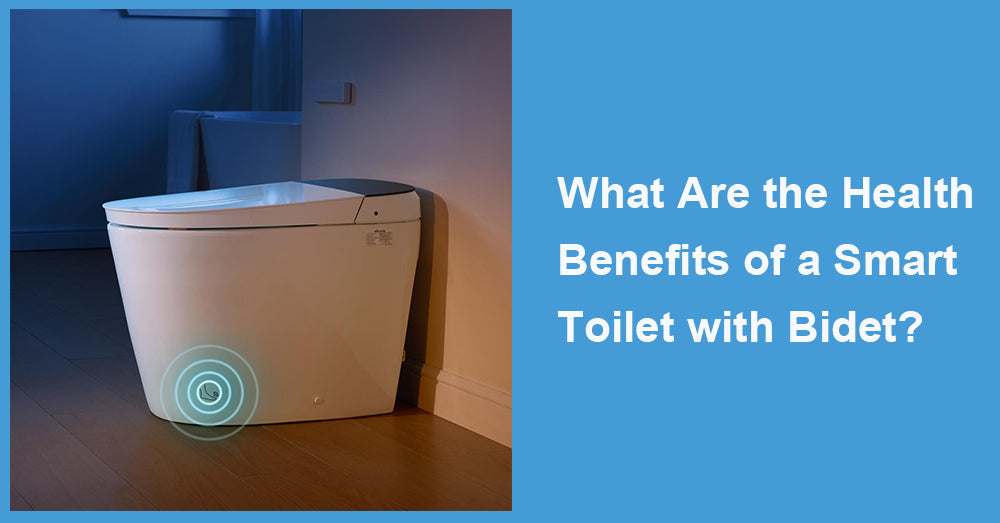
The core function of a smart toilet is the Bidet flushing system.
Unlike traditional external flushing, the intelligent toilet has an independent waterway within the bathroom for the nozzle to discharge water.
Industry data shows that mainstream smart toilets automatically clean their nozzles before and after each use to reduce residue accumulation.
The nozzle usually adopts a retractable design that retracts completely in the non-use state to avoid long-term exposure to the external environment.
Water temperature control is another key point. Smart toilets stabilize water temperature within a set range using built-in heating modules or instant heating systems, preventing discomfort from water pressure or supply fluctuations.
This control method is fundamentally different from the working principle of ordinary mixing valves.
3. Sensing and Control: Why It "Knows You're Coming."
Many people are curious about "automatic sensing" when using smart toilets for the first time.
In fact, seat ring sensing and human body detection are achieved through pressure sensing or infrared sensing.
The relevant functions will only be activated after the system confirms that someone is seated.
In unmanned mode, the vast majority of modules are in low-power or standby mode.
This design not only enhances safety but also significantly reduces energy consumption and the risk of accidental contact.
From industry testing, mature sensing systems have a very low false-trigger rate, an essential prerequisite for smart toilets to be gradually accepted by more families.
4. Size and Structure: It's Not Just "Looks Bigger."
Smart toilets, due to their integration of waterways, electronic controls, and heating modules, typically have a slightly larger overall size than traditional toilets.
The standard length of integrated smart toilets is 26–29 inches, while ordinary toilets are mostly 24–26 inches.
This difference is not just a matter of appearance, but also related to the space assessment before installation.
Industry experience shows that in bathrooms with a tight distance from the wall to the front edge, confirming the 2–3 inch difference in advance can avoid inconvenience in later use.
The seat height has also been ergonomically optimized, with standard seat heights approaching 15–16 inches, making the sitting and standing process more natural.
5. Daily use: does not require "learning for a long time."
Based on usage feedback, the learning cost of smart toilets is much lower than most people's expectations.
The core functions are usually completed through side knobs, physical buttons, or simplified remote controls, with clear operational logic.
Industry data shows that the vast majority of users fix their water temperature, water pressure, and drying settings within a week and rarely adjust them thereafter.
It is precisely because of this "set once, long-term use" feature that smart toilets are more like lifestyle habits than electronic products that require repeated research.
6. Maintenance focus one: nozzle and waterway
At the maintenance level, nozzle cleaning is the most crucial aspect to focus on, but it does not necessarily require complex operations.
Most smart toilets support automatic nozzle-cleaning programs, so users only need to check for scale or attachments once every few months.
Industry guidance recommends conducting manual inspections at regular intervals under normal water quality conditions, without the need for frequent disassembly.
If the water is too hard, lightly cleaning the nozzle surface can effectively prolong the system's stability.
7. Maintenance Focus 2: Filtering and Electrical Safety
Some smart toilets are equipped with a simple filtering structure at the inlet end to reduce impurities from entering the system.
According to industry maintenance data, regularly inspecting filter components can significantly reduce the risk of abnormal nozzle discharge.
The electrical part mainly relies on a stable installation environment.
As long as the power connection is standardized and the waterproof rating matches, the electronic control system of the intelligent toilet will not become a high-maintenance point under regular use.
8. Common Misconception: Treating Smart Toilets as "Fragile Electrical Appliances."
From a large amount of after-sales data, it can be seen that the real source of problems with smart toilets is often not the system itself, but rather improper installation or usage environments that exceed design expectations.
For example:
The power supply position is too exposed.
Insufficient installation space, affecting heat dissipation.
Neglecting size differences leads to discomfort during use.
Once these issues are avoided in the early stages, the stability of smart toilets is actually very high.

9. Conclusion: Understanding the working principle is the key to truly utilizing it effectively
Smart toys are not a stack of complex technologies, but a system repeatedly optimized for daily use.
It transforms the steps that previously required manual completion into a more labor-saving, stable experience through sensing, temperature control, and automated logic.
When you understand how it works, what needs to be maintained, and what you do not need to worry about, the intelligent toilet is no longer a "device that needs to be serviced", but a daily tool that has been used for many years and hardly requires you to worry about.
Accurate intelligence is not about increasing presence, but about gradually forgetting its existence.


















Leave a comment
This site is protected by hCaptcha and the hCaptcha Privacy Policy and Terms of Service apply.