

























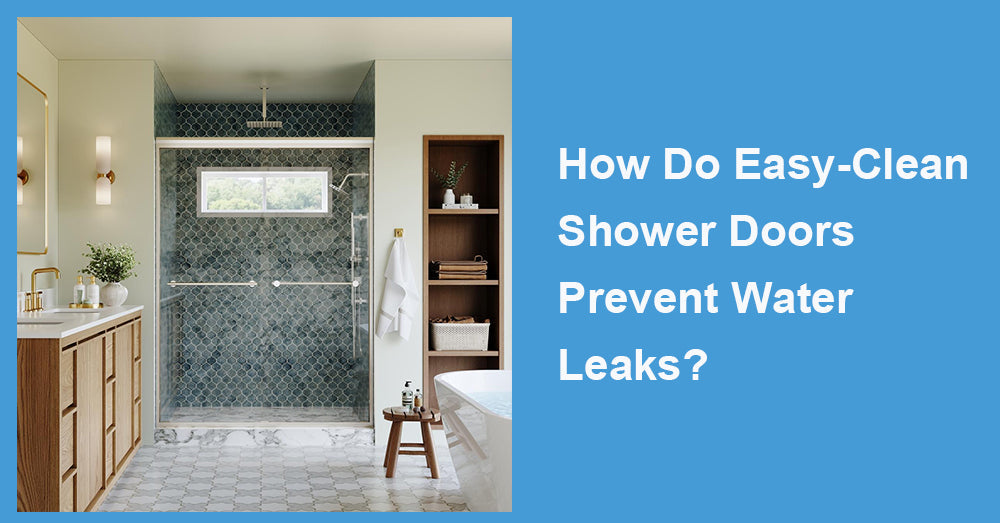
If you have ever stepped out of a shower onto a soggy bath mat, you know that a beautiful glass enclosure does not automatically guarantee a dry floor. The reality is that modern shower doors—specifically those marketed as "easy-clean"—address two distinct homeowner frustrations: the elbow grease required to scrub soap scum and the physics of keeping water inside the enclosure. While the "easy-clean" label typically refers to a surface treatment, the actual leak prevention relies on a combination of engineered seals, intentional geometry, and proper installation. Understanding how these components work together reveals that a dry bathroom is not about having a watertight box, but about managing water flow and drainage.
The Role of the Easy-Clean Coating: More Than Just Convenience
The primary feature that distinguishes an easy-clean shower door from a standard glass panel is a hydrophobic or nano-coating applied during manufacturing. This invisible layer does more than just repel water spots; it plays an indirect but crucial role in leak prevention by preventing the buildup of mineral deposits and soap scum on the door’s seals and tracks.
When soap scum accumulates on the bottom sweep or the vertical jambs, it creates a barrier that prevents the flexible vinyl or silicone seals from making full contact with the glass or the wall. A compromised seal is the number one cause of shower door leaks . By repelling water and grime, the easy-clean coating ensures that the rubber sweeps and magnetic strips can sit flush against their contact points, maintaining a continuous barrier against splashes. In this sense, the coating is not a seal itself, but a protector of the seals.
The Anatomy of Leak Prevention: Sweeps, Seals, and Magnetic Strips
The most common misconception about shower doors—particularly frameless models—is that the metal frame or the glass itself is responsible for waterproofing. In reality, the frame merely holds the glass in place; the waterproofing is handled by a discreet kit of wear parts at the door’s perimeter .
The most critical component is the bottom sweep. This flexible strip, usually made of clear PVC or vinyl, runs along the bottom edge of the door. Its job is to channel water that sheets down the glass back into the shower pan rather than allowing it to drip onto the bathroom floor. A properly functioning sweep is the first line of defense against puddles .
Vertical seals and magnetic strips handle the sides. On hinged doors, a magnetic strike seal pulls the door edge tight against the fixed panel, creating a clean meeting line that resists spray . On sliding doors, side bumper strips and jamb seals close the gaps where water might sneak out at the edges . These components are designed to be replaceable. If a door begins to leak after several years of service, the fix is almost always a fresh set of seals rather than a new door—a point worth noting for homeowners concerned about long-term maintenance costs.
Why the Gaps Are There on Purpose
One of the most counterintuitive aspects of shower door design is that frameless models intentionally include small gaps—typically a few millimeters at the hinges and panel edges. Homeowners often assume these gaps are the source of leaks, but they serve two essential functions: clearance for the glass to swing without grinding against metal, and ventilation to allow the enclosure to dry between uses .

These gaps do not leak because of basic geometry. They sit above the splash zone, and water obeys gravity. As long as the showerhead is not aimed directly at the door line, water sheets down the glass and into the drain rather than traveling sideways out of a three-millimeter slot . The top of the enclosure is also typically left unsealed to prevent condensation buildup and airlock, which can cause the door to stick or the bathroom to feel perpetually damp . The key is that these gaps are designed into a system that manages water through slope and drainage, rather than trying to create a pressurized submarine hatch.
The Critical Role of the Shower Pan and Installation
Even the best seals will fail if the underlying geometry is wrong. The shower curb or threshold must slope slightly inward toward the drain. If the pan is level or pitched outward—a common installation error—water will pool at the door line and eventually find its way past the sweep . According to industry data, a significant portion of bathroom leak incidents stem not from sealant failure but from underlying issues like uneven floors or unstable door tracks . This highlights that leak prevention is a system-wide effort, not just a function of the door itself.
Proper installation also dictates where caulk belongs and where it does not. Silicone should only be used on fixed joints—where a stationary glass panel meets a tiled wall or the floor. It should never be used on moving parts like the bottom of a swinging door or between sliding panels, as the flex of daily use will crack the caulk and create a new leak path . For easy-clean doors, this distinction is particularly important because harsh chemical cleaners used to remove scum can degrade silicone over time, which is why the protective coating helps extend the life of the installation by reducing the need for aggressive scrubbing.
Practical Takeaways for a Dry Bathroom
For homeowners dealing with a leaky enclosure, the solution is rarely a full replacement. The first step is to inspect the bottom sweep and vertical seals for stiffness, yellowing, or mineral buildup. A worn sweep is the most common culprit behind a suddenly leaky door, and replacing it takes only minutes and minimal expense . Second, check that the showerhead is angled toward the back wall or the drain, not directly at the door seam. Third, verify that the door closes fully and that the magnetic or strike seals engage properly .
The cost of ignoring a persistent leak is not trivial. Water damage from bathroom leaks can cost homeowners thousands of dollars per incident, and shower door leaks contribute to a measurable share of those claims . Given that the fix is often a inexpensive seal replacement, routine inspection is a high-value habit.
Ultimately, an easy-clean shower door prevents leaks not through magic, but through a sensible partnership between surface technology that protects the seals and a mechanical design that understands where water wants to go. When the coating, the sweeps, and the slope work together, the result is a shower that stays where it belongs—inside the glass.





































Leave a comment
This site is protected by hCaptcha and the hCaptcha Privacy Policy and Terms of Service apply.