






















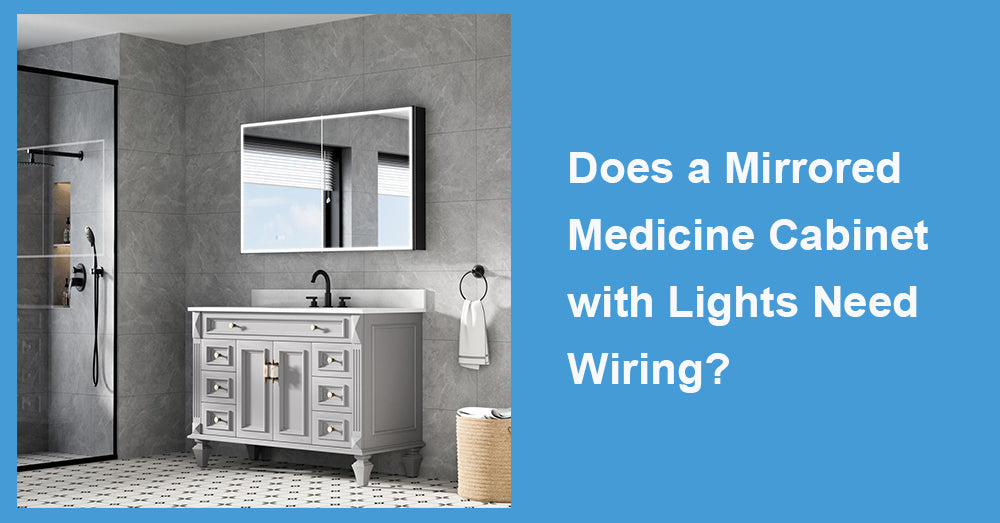
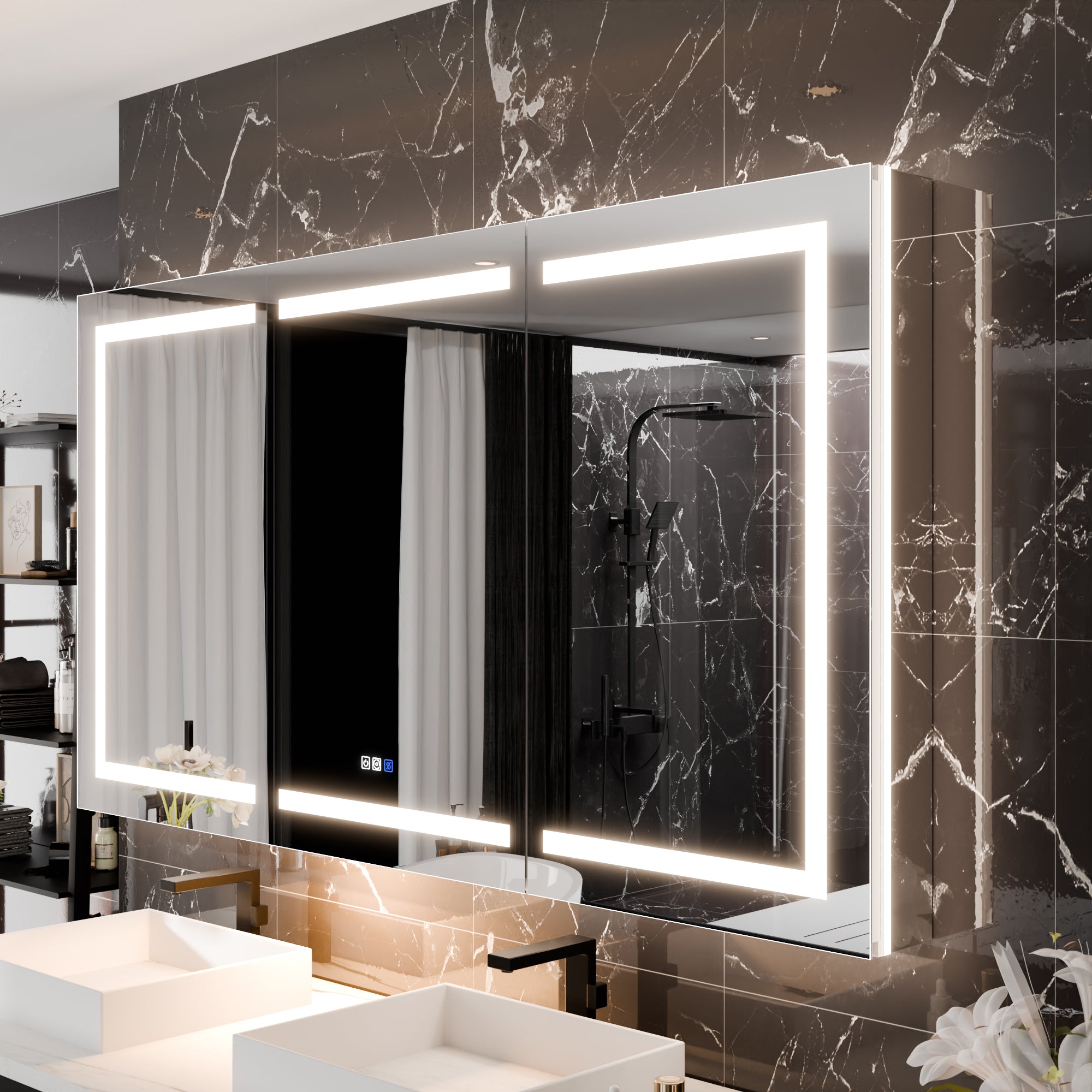
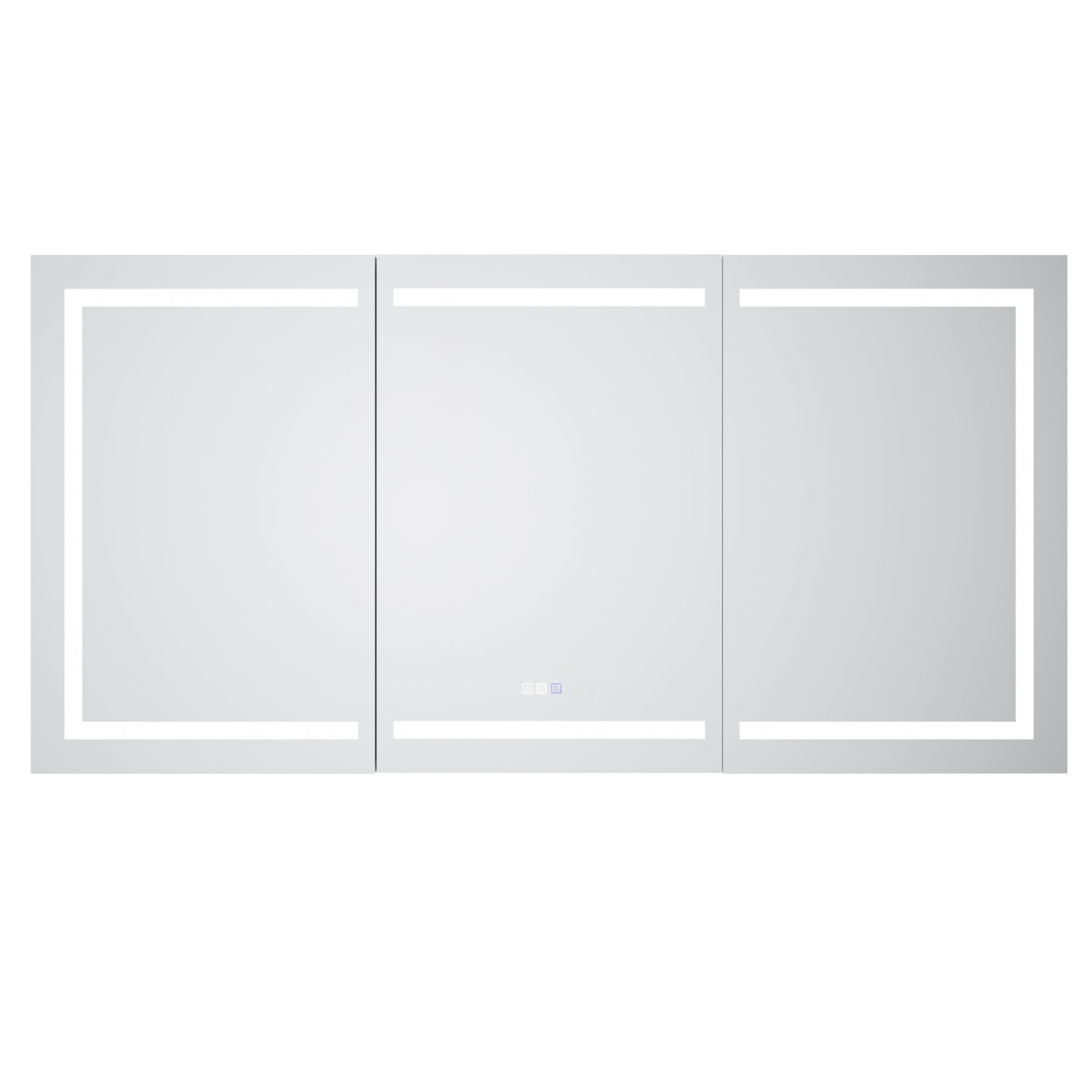
In recent years, as the smart home and high-end bathroom markets have continued to heat up in North America, the mirrored medicine cabinet with lights has quickly become the mainstream choice for mid- to high-end residential and commercial spaces. It not only integrates storage, lighting, and mirror functions but also enhances comfort and a sense of technology in the bathroom through intelligent control, ambient lighting, and energy-saving design.

However, many consumers and installers raise a key question during the purchasing process:
Does a Mirrored Medicine Cabinet with Lights Need Wiring?
This article will provide a systematic analysis of this issue from multiple dimensions, including product structure, power supply methods, building specifications, installation scenarios, and industry development trends.
1. Do mainstream mirror medicine cabinets with lights need wiring?
In the market, over 90% of mirror medicine cabinets with lights require hard-wired installation, meaning they must be directly connected to the 120V AC power lines inside homes or commercial buildings.
The main reasons include:
High power demand
LED mirror cabinets usually integrate:
Front lighting lamp
Backlit ambient light
night light
Touch control system
Anti-fog and defogging film
After multifunctional stacking, the requirement for a stable power supply is much higher than that of ordinary battery-powered equipment.
Higher stability and safety
Hardwiring ensures:
stable power supply
Avoid frequent battery replacement
Reduce brightness degradation or functional abnormalities caused by battery aging.
Compliant with the mainstream Building Electrical Code (NEC)
In residential and commercial buildings, fixed lighting fixtures generally require a hard-wired power supply to meet the safety and reliability requirements of the National Electrical Code (NEC).
2. Is there a mirror medicine cabinet without wiring?
Although mainstream products adopt a hard-wired design, there are still some wire-free solutions on the market, mainly including:
1. Plug in the power supply
This type of product comes with a power cord and plug, which can be directly plugged into the GFCI socket in the bathroom.
Advantages:
Easy installation
No electrician needed
Suitable for renovation projects or rental properties
Disadvantages:
Exposed power cord affects aesthetics
Restricted socket position
Not suitable for embedded installation
2. Battery-Powered Type
Usually, it only supports basic backlight or night-light functions, with limited brightness and functionality.
Applicable scenarios:
studio apartment
Temporary renovation
Transitional use of rental housing
Industry Trends:
In the mainstream market, battery products account for less than 5% and are mainly positioned as low-end or temporary solutions.
3. Why are high-end projects more inclined towards hard wiring?
Especially in mid to high-end residential, hotel, apartment, and furnished housing projects, hard-wired mirror cabinets have almost become industry standard configurations, driven by three core reasons:
1. Higher security level
Hardwired installation usually involves:
Terminal Box
earth leakage protection
Independent lighting circuit
Can effectively prevent:
Electric leakage in a humid environment
The socket is aging and catching fire
Equipment damage caused by unstable voltage
2. More advanced visual effects
The concealed wiring makes the mirror cabinet more concise, clean, and modern, in line with the current trend of minimalism and modern bathroom style in North America.
3. Meet the building acceptance standards
The general requirements for new residential and commercial projects are:
Fixed lighting fixtures must be hard-wired.
The exposed plug does not meet some state building acceptance standards
4. Is a hard-wired installation complicated? Is it necessary to hire an electrician?
From industry experience, it is recommended that the installation of most illuminated mirror cabinets be completed by certified electricians, mainly due to the following reasons:
Need to comply with NEC electrical specifications
Need to connect the lighting circuit, ground wire, and neutral wire
GFCI protection needs to be installed or connected to existing protection systems
The standard installation process includes:
Pre-embedded wire box positioning
Power outage construction
Wiring test
Insulation protection
Moisture-proof sealing
For consumers, although professional installation is slightly more expensive, it can significantly reduce the later failure rate and safety risks.
5. Industry Design Trend: The Rise of Modularization and Dual Power Supply Solutions
With the development of smart homes, mirror cabinet manufacturers have begun to launch dual power supply mode products, namely:
Hardwired
Plug in power supply
Through modular power supply design, the same product can adapt to different installation environments and has received good feedback in both B2C and B2B markets.
Future trends include:
Quick wiring terminal
Design of foolproof interface
Pre installed transformer
Plug in control module
These innovations will further lower the installation threshold and improve construction efficiency.
6. What electrical parameters should consumers pay attention to when making a purchase?
When purchasing mirror medicine cabinets with lights, consumers should pay close attention to their electrical safety parameters and power supply configuration to ensure long-term stability and safety.
Firstly, the input voltage and frequency of the product are 110-120V, 60Hz, which fully match the standard power supply systems of residential and commercial buildings, to avoid functional abnormalities or equipment damage caused by voltage mismatch.
Secondly, attention should be paid to the waterproof rating of the product. The bathroom environment is humid. It is recommended to choose a mirror cabinet with a protection level of IP44 or above to effectively prevent water vapor from entering and reduce the risk of short circuit and leakage.
Thirdly, it is necessary to check whether there are authoritative safety certifications such as UL, ETL, or cETL. These certifications represent that the product has passed rigorous electrical safety testing and meets market access and building acceptance standards.
In addition, high-quality products are usually equipped with safety isolation transformers, constant current drive power supplies, and overload protection systems, which can significantly improve electrical safety and extend the life of electronic components.
Finally, attention should also be paid to whether the product has a reliable grounding design and a compatible leakage-protection structure to ensure safe and stable operation in high-humidity environments.
7. Conclusion: Whether wiring is necessary depends on the positioning and application scenario
Overall:
Mid to high-end projects/new residential/commercial spaces → Recommended hard wiring
Renovation Project/Rental Apartment/Quick Installation → Optional Plug-in Type
Temporary use/low budget plan → optional battery option
In the market, hard wiring remains the mainstream and long-term trend, representing higher safety, stability, and quality.
8. Industry Outlook
With the continuous expansion of the residential renovation market and consumers' constant pursuit of intelligence, comfort, and design, mirror medicine cabinets with lights are evolving from functional products to core components of smart homes.
In the next 3-5 years, the industry will focus on:
Smart Touch
Voice linkage
Human Body Detection
Energy saving management
modular installation
Continuous upgrading, while optimizing electrical safety and power supply methods, will still be the core direction of product development.







































Leave a comment
This site is protected by hCaptcha and the hCaptcha Privacy Policy and Terms of Service apply.