




















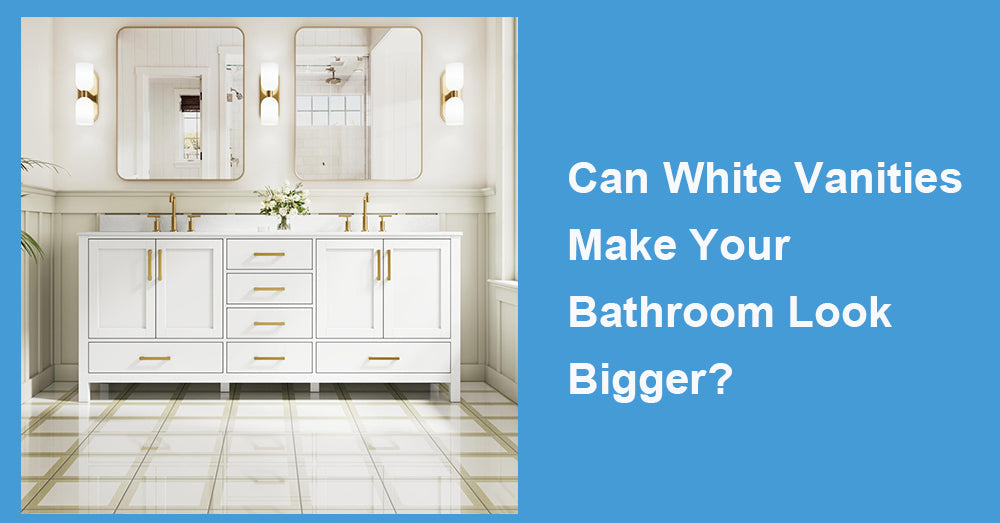
White vanities can make a bathroom feel brighter, cleaner, and visually more open, especially when they are combined with light walls, reflective mirrors, and well-planned lighting. They do not physically increase the room size, but they can reduce visual weight and help the vanity blend into its surroundings rather than dominate them. That matters in compact remodels, where nearly half of upgraded vanities measure 48 inches or less, according to Houzz’s 2025 Bathroom Trends Study. White also remains a major cabinet color, selected for 20% of upgraded vanities.
1. White Reduces the Visual Weight of the Vanity
A vanity is often one of the largest solid objects in a bathroom. Dark cabinetry tends to create a stronger boundary between the cabinet and the surrounding wall, while white cabinetry can visually recede when placed against white or pale surfaces.
This effect is particularly useful with:
· 24-inch powder-room vanities.
· 30-inch or 36-inch guest-bath cabinets.
· Narrow bathrooms with limited floor area.
· Vanities positioned directly opposite the entrance.
· Rooms without large windows.
A 36-inch white vanity may occupy exactly the same floor space as a navy or black version, but its edges are usually less visually dominant in a pale room.
Industry judgment: White does not create more square footage. It reduces the sense that cabinetry is consuming the available space.
2. Matching the Vanity to the Walls Creates Continuity
One of the simplest ways to make a compact bathroom feel larger is to reduce abrupt color changes.
A white vanity against a similarly toned wall creates a more continuous visual field. Instead of the eye stopping at a dark rectangular cabinet, the vanity becomes part of the broader composition.
The shades do not have to match perfectly. In fact, slight variation often looks better.
Useful combinations include:
· Bright white cabinetry with soft white walls.
· Warm white cabinets with cream walls.
· Off-white cabinetry with pale beige tile.
· White cabinets with light gray or greige walls.
Houzz reports that white remains the leading shower-wall color at 36%, while off-white accounts for another 18%. That continued preference for lighter surfaces gives white cabinetry plenty of opportunities to connect visually with the rest of the bathroom.
3. A White Countertop Strengthens the Effect
Cabinet color is only half of the vanity. A dark countertop creates a strong horizontal line, while a white or off-white top allows the entire fixture to read as one lighter volume.
Current remodeling choices support that approach. White is used for 48% of upgraded bathroom countertops, with off-white at 20%. Engineered quartz leads countertop materials at 45%.
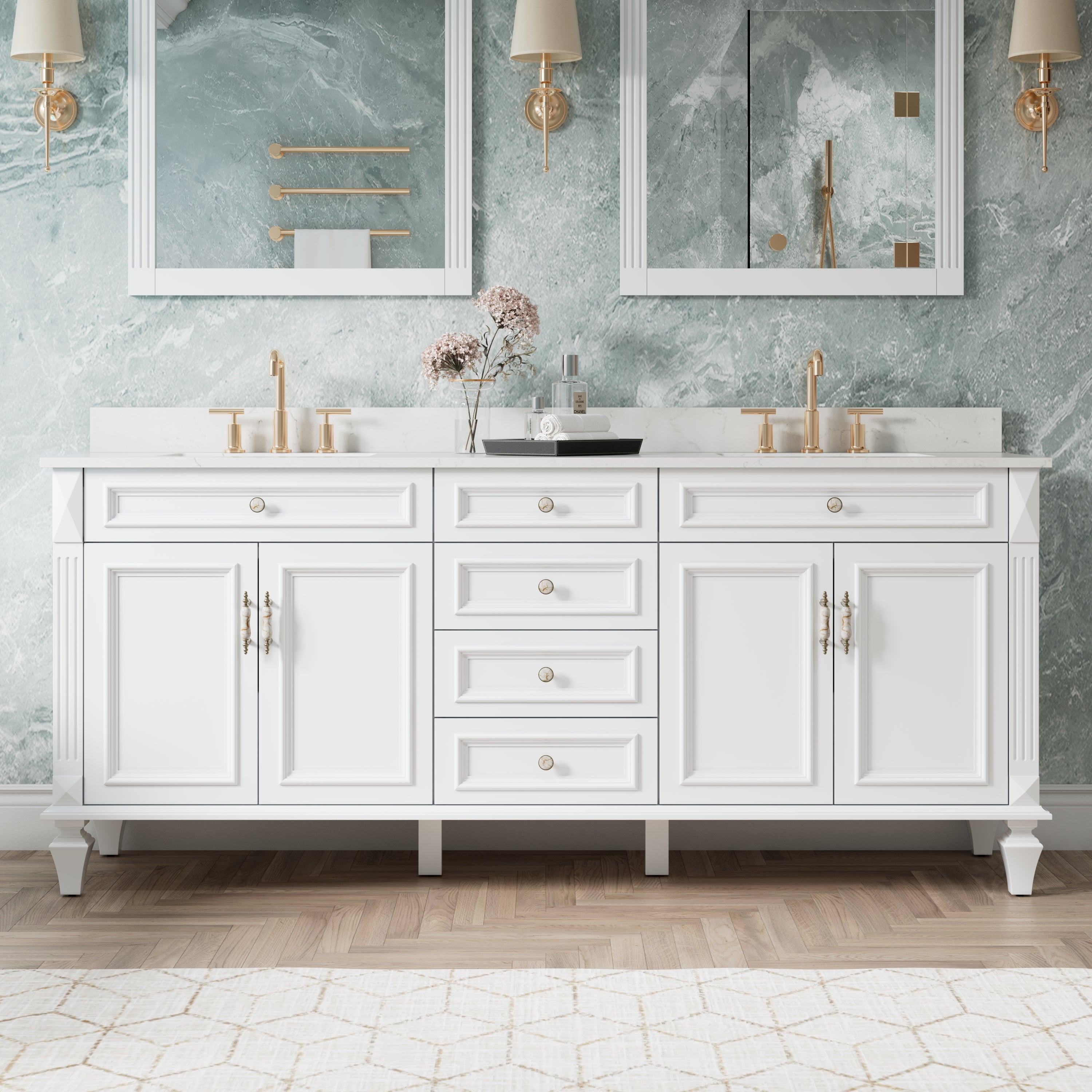
For a small bathroom, combinations such as white cabinetry with white quartz can make the vanity appear less bulky.
That does not mean every surface needs to be identical. Subtle veining can add depth without breaking the light palette. A lightly veined quartz top, for example, provides enough movement to keep the vanity from looking flat.

4. Floating White Vanities Reveal More Floor
A floating vanity can strengthen the illusion of space because the flooring remains visible beneath the cabinet.
The exposed floor changes how the room is perceived. Instead of seeing cabinetry extend from the countertop all the way to the floor, the eye can follow the flooring underneath it.
This approach works particularly well with:
· 30-inch and 36-inch wall-mounted vanities.
· Large-format floor tile.
· Continuous wood-look flooring.
· Narrow bathrooms.
· Frameless shower enclosures.
Floating models currently account for 11% of upgraded vanity installations, compared with 58% for built-in models and 30% for freestanding designs.
A floating vanity will not suit every remodel, especially when storage is the priority, but visually it can make a modest footprint feel considerably lighter.
5. Use Drawers to Keep the Counter Visually Clear
Clutter can make even a large bathroom feel smaller. Toothbrushes, cosmetics, bottles, hair tools, and towels create multiple small visual interruptions across the countertop.
A white vanity works best when its storage allows most of those objects to disappear after use.
Look for:
· Full-extension drawers.
· Adjustable drawer dividers.
· A shallow drawer for daily products.
· Deeper storage for towels and bottles.
· Interior outlets for grooming tools.
Houzz found that 78% of upgraded vanities include soft-close drawers, while 22% include built-in drawer organizers and 29% incorporate electrical outlets.
A clean countertop allows the eye to read the vanity as one simple shape rather than a collection of products and accessories.
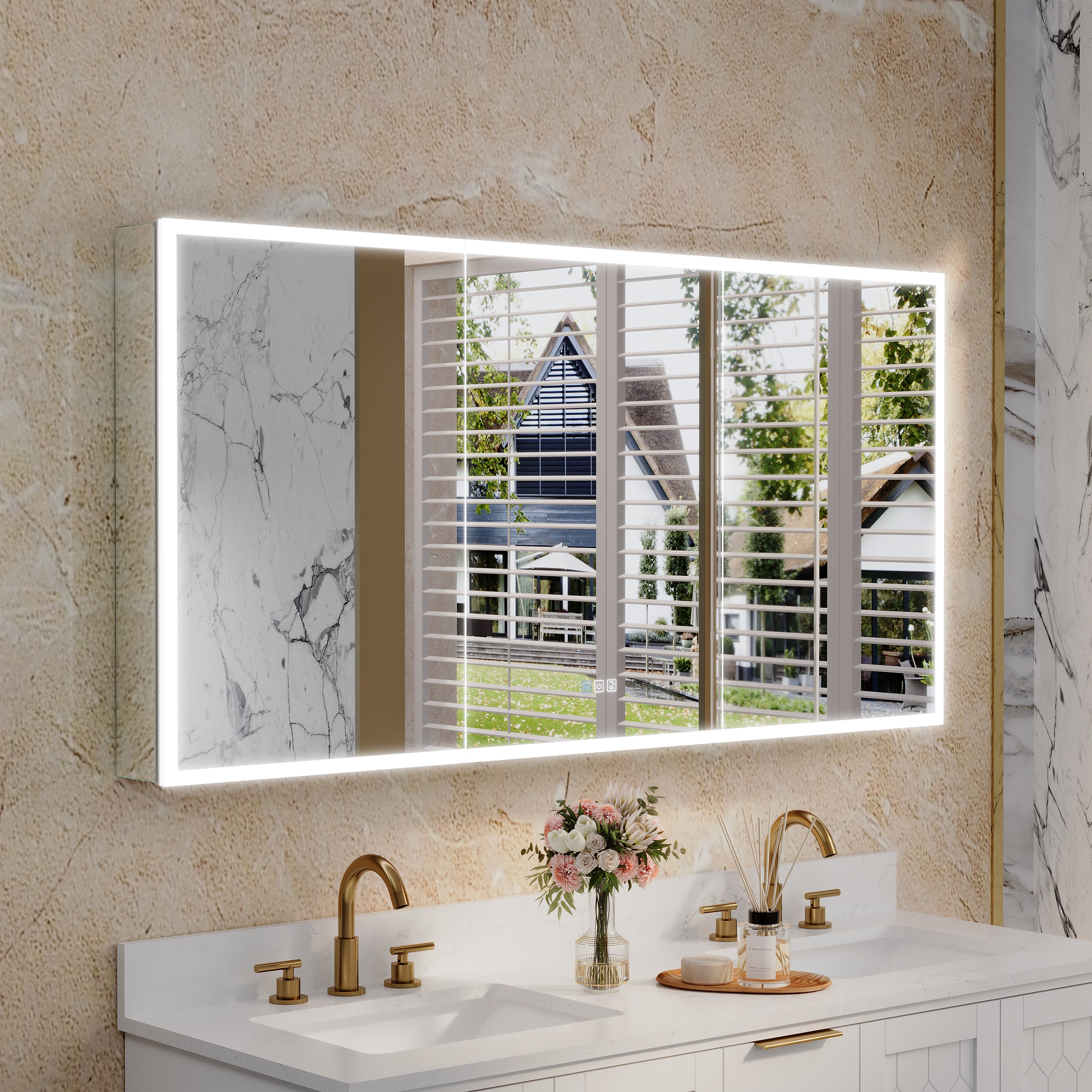
6. Mirror Size Has Almost as Much Impact as Vanity Color
A white cabinet alone will not make a dim bathroom suddenly feel spacious. The mirror above it plays an equally important role.
A mirror can reflect:
· Natural daylight.
· Wall finishes.
· Ceiling lighting.
· The opposite side of the room.
· Decorative materials that visually extend the space.
For a 36-inch vanity, a mirror around 30 to 36 inches wide often creates a balanced appearance, although the exact size depends on wall space, sconces, and faucet placement.
Going slightly wider can work in a contemporary bathroom, especially when the mirror has a thin frame or no visible frame at all.
The key is avoiding a mirror that looks undersized. A tiny mirror over a wide white vanity can visually divide the wall and reduce the sense of openness.
7. Lighting Determines Whether White Feels Bright or Flat
White cabinetry performs best when the bathroom has layered lighting rather than one ceiling fixture.
Houzz found that 82% of bathroom renovators upgrade lighting. Recessed lighting appears in 40% of projects, while lighted mirrors have risen to 22%.
NKBA’s 2026 Bath Trends Report also highlights lighting as a major design priority. Ninety-one percent of surveyed industry professionals identified lighting quality as a top consideration, and 92% said task lighting should always be included in primary bath design.
A useful lighting plan may include:
· Recessed ceiling lighting.
· Sconces beside the mirror.
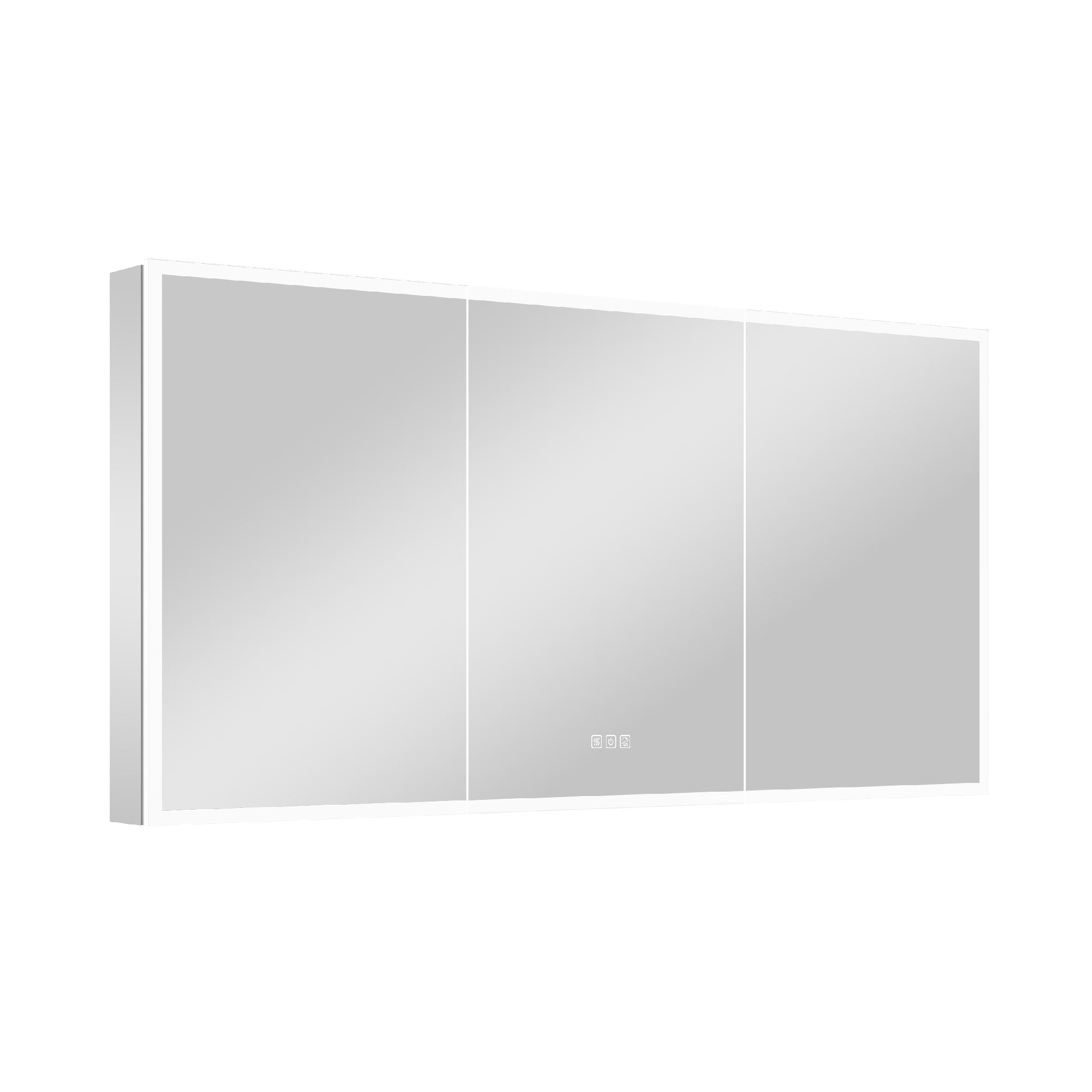
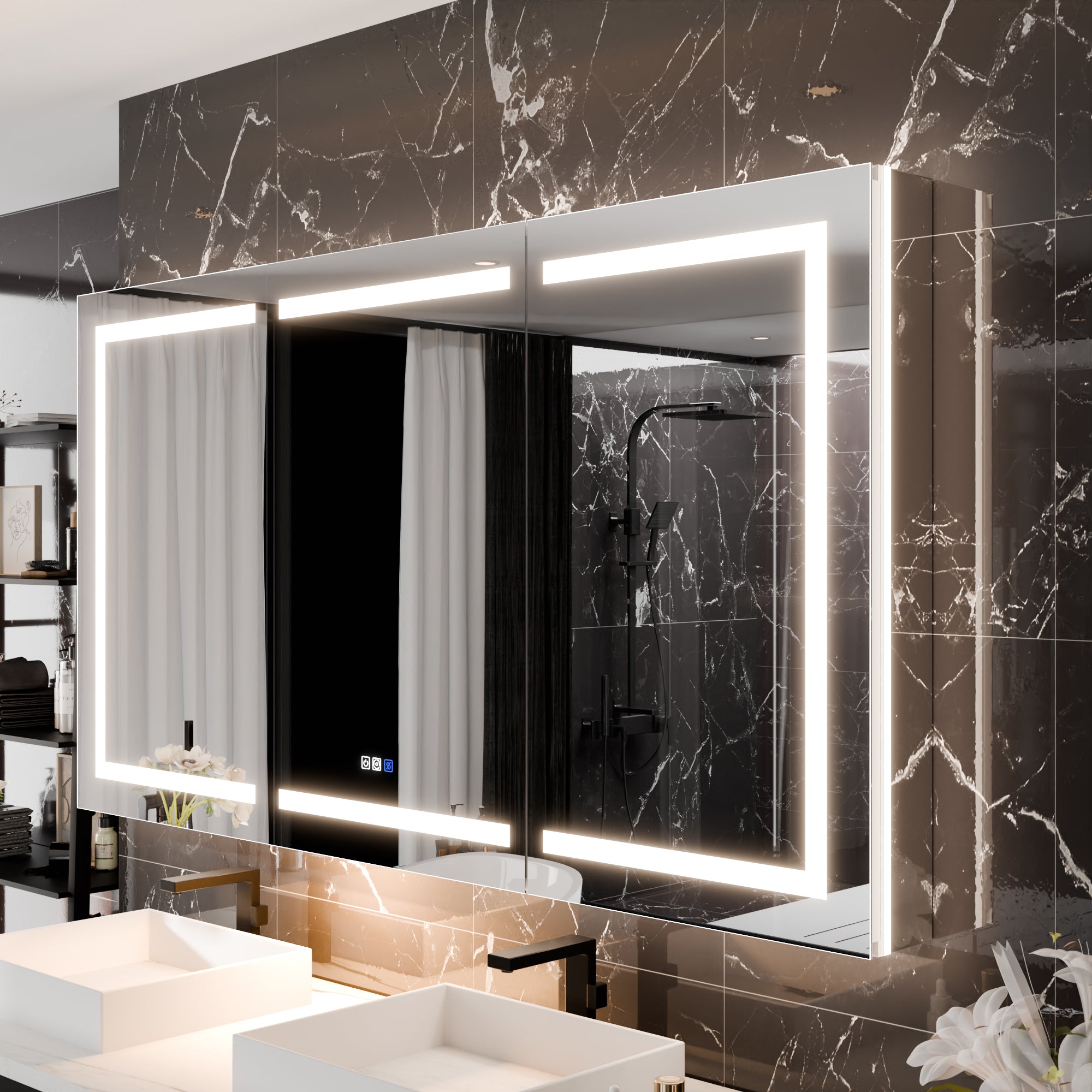
· An LED mirror.
· Under-vanity lighting on a floating cabinet.
· A softer nighttime light source.
Good lighting creates depth and prevents an all-white bathroom from becoming visually flat.
8. Cabinet Style Also Influences Perceived Size
The door profile changes how much visual detail the vanity introduces.
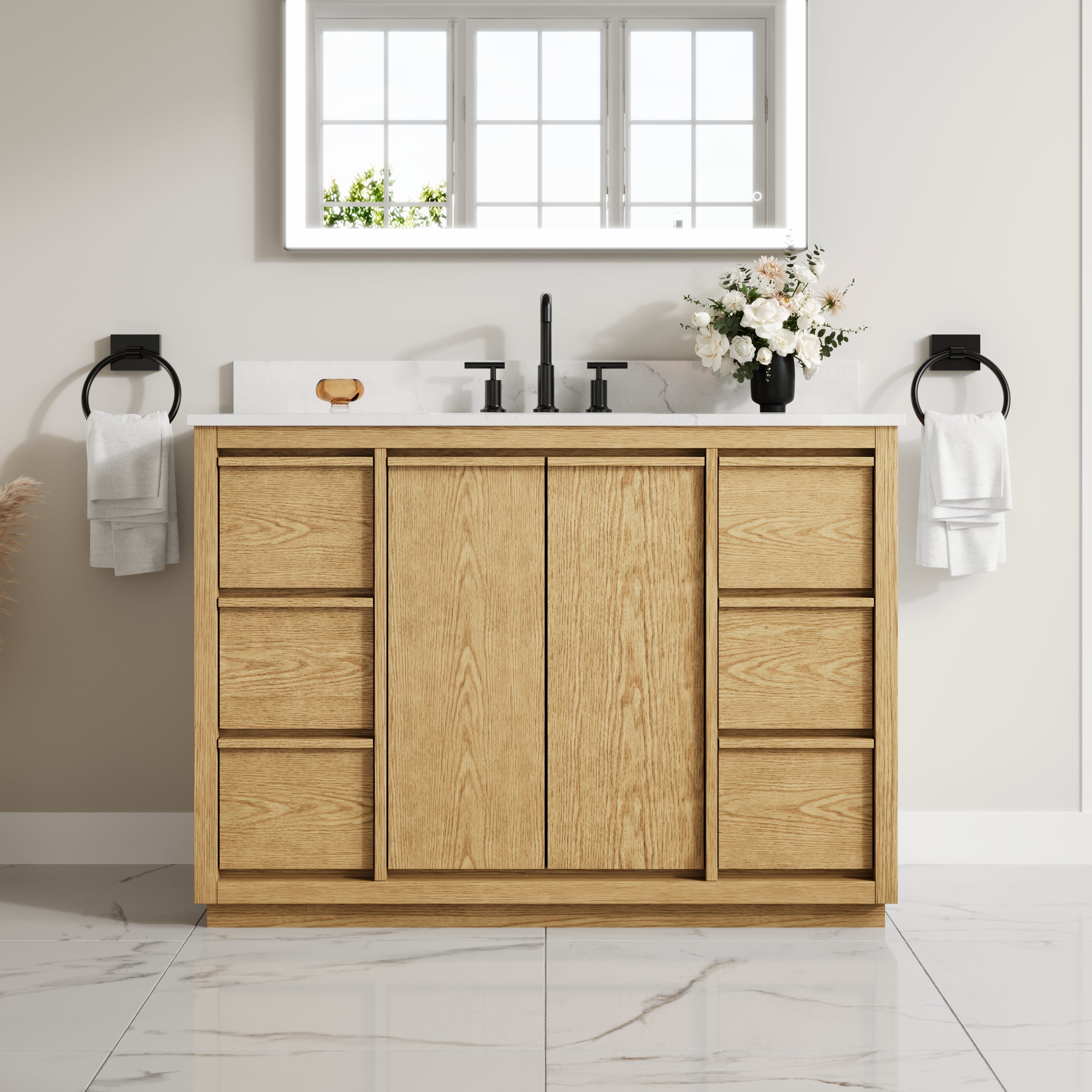
Flat-panel cabinetry creates the least visual interruption and works especially well in contemporary bathrooms. Shaker doors add more depth but remain relatively restrained. Highly carved fronts, heavy moldings, and furniture-style feet introduce additional lines that may make a small cabinet feel more substantial.
Houzz reports that Shaker doors remain the leading vanity style at 49%, followed by flat-panel doors at 26%.
For a bathroom where visual space is the priority, a white flat-panel vanity with simple pulls can be especially effective.
9. Choose the Right Size Before Relying on Color
White cannot compensate for an oversized cabinet.
A 48-inch vanity squeezed into a small bathroom will still restrict circulation, regardless of its finish. In some layouts, a 30-inch or 36-inch model with efficient drawers provides a better balance.
Before choosing the vanity, measure:
· Available wall width.
· Cabinet and countertop depth.
· Door swing.
· Drawer extension.
· Toilet clearance.
· Shower-door movement.
· Walking space in front.
Houzz’s finding that 47% of upgraded vanities remain 48 inches or smaller reinforces the importance of modest-width cabinetry in contemporary renovations.
A bathroom feels larger when the vanity is proportionate to the room, not simply because the cabinet is white.
10. White Works Best as Part of a Complete Space Plan
White vanities can absolutely help a bathroom look bigger, but the effect comes from several decisions working together. Pale walls reduce contrast, a white countertop keeps the vanity visually unified, a larger mirror reflects more of the room, and thoughtful lighting prevents shadows from making the space feel enclosed.
The strongest result usually combines a correctly sized vanity with restrained storage, visible floor area, light surfaces, and a few warmer accents. In that setting, white becomes more than a safe cabinet color. It helps the vanity fade into the architecture, allowing the bathroom itself to feel brighter, calmer, and more spacious.































Leave a comment
This site is protected by hCaptcha and the hCaptcha Privacy Policy and Terms of Service apply.