






















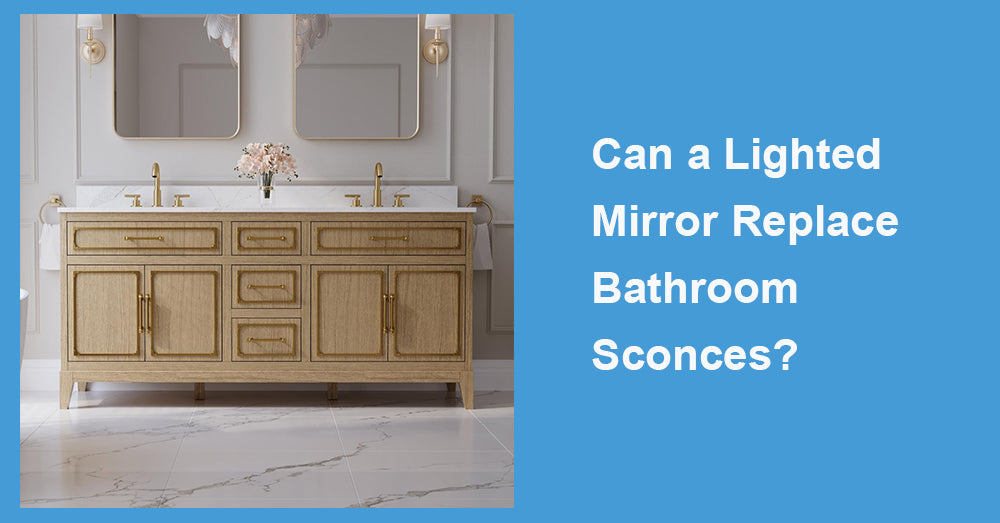
A lighted mirror has become one of the most debated upgrades in modern bathroom design. After two decades working with residential lighting layouts and renovation planning, I’ve seen this question come up repeatedly: can it fully replace traditional bathroom sconces, or is it just a partial substitute?
The honest answer is that it depends on the room, the lighting goals, and how the bathroom is actually used. In some spaces, a lighted mirror performs better than sconces. In others, it removes important layers of lighting that are difficult to replicate.
1. What Bathroom Sconces Actually Do in a Lighting Plan
Before replacing anything, it helps to understand what sconces are designed for.
Bathroom sconces are not just decorative fixtures. When placed correctly—usually on both sides of the mirror—they create cross illumination. This reduces shadows on the face, especially under the eyes, nose, and chin.
That side lighting is something overhead fixtures struggle with. Even a strong ceiling light tends to cast downward shadows that make grooming tasks less precise.
Sconces also contribute to layered lighting. In most professional bathroom layouts, there are three layers:
Ambient lighting (ceiling fixtures)
Task lighting (sconces or mirror lighting)
Accent lighting (optional decorative light)
Removing sconces without replacing their function changes how the entire room feels.
2. What a Lighted Mirror Actually Replaces
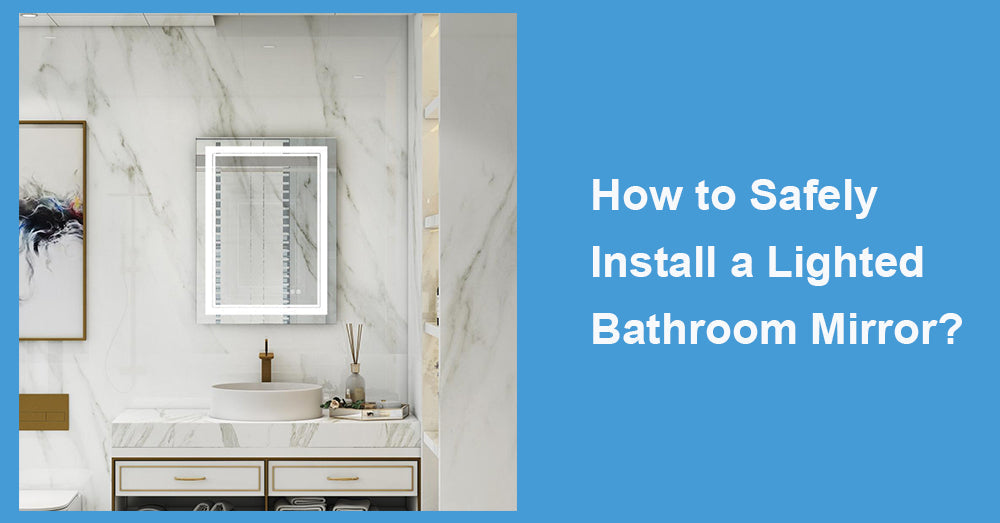
A modern lighted mirror typically uses LED strips placed behind or around the glass. These provide direct frontal lighting that sits at eye level.
This solves one major issue: facial shadows.
Because the light is coming from the front, not above or the sides, makeup application, shaving, and skincare routines become more visually accurate. In many real installations, I’ve found this improves usability more than expected.
Lighted mirrors also simplify wall design. Instead of installing two sconces, wiring them, and aligning them perfectly with the mirror, everything is integrated into one unit.
That is where they often outperform traditional setups—simplicity and consistency.
But there is a limitation. A mirror light alone does not always spread light across the full bathroom space.
3. Where a Lighted Mirror Works Better Than Sconces
There are specific bathroom layouts where sconces become unnecessary.
Small and medium-sized bathrooms benefit the most. When wall space is limited, sconces can feel visually crowded or physically impractical. A lighted mirror keeps the wall clean while still delivering task lighting.
It also works well in modern minimalist designs. Many homeowners prefer fewer visible fixtures and cleaner lines. In these cases, a lighted mirror becomes the main visual feature.
I’ve also seen strong results in guest bathrooms. These spaces are used briefly, so layered lighting is less critical. A well-designed mirror provides more than enough illumination for short use.
Wellfor lighted mirror designs often follow this approach—integrating lighting, defogging, and clean geometry into a single focal point rather than multiple fixtures.
4. Where Bathroom Sconces Still Matter
There are situations where removing sconces creates problems.
Large bathrooms are the clearest example. When the vanity is wide, light from a single mirror may not extend evenly across the entire space. Sconces help fill that gap.
They also matter in bathrooms with darker finishes. Deep-colored walls, stone textures, or heavy wood tones absorb light. Without side illumination, the space can feel visually flat.
Another factor is atmosphere. Sconces create softer ambient side glow that a mirror cannot fully replicate. This matters in spa-style or luxury bathrooms where mood lighting is part of the design intention.
In these cases, a lighted mirror becomes task lighting—but not the full lighting solution.
5. Common Misunderstandings When Choosing One Over the Other
A frequent mistake is assuming brightness alone determines lighting quality.
It doesn’t.
A very bright mirror can still create an unbalanced room if it lacks distribution. Similarly, sconces placed at the wrong height can cast more shadows than they eliminate.
Another misconception is that a lighted mirror automatically replaces all other lighting. It doesn’t replace ambient lighting. Ceiling fixtures are still necessary in almost every bathroom.
I’ve also seen buyers choose a mirror based only on appearance in product photos. In real installations, wall color, tile finish, and ceiling height all change how light behaves.
Lighting is a system, not a single product.
6. The Hybrid Approach: Often the Most Practical Solution
In professional design work, the most reliable solution is often a combination.
A lighted mirror provides consistent task lighting at face level. Sconces provide side illumination and help balance the room visually. Ceiling lights handle general brightness.
This layered approach avoids over-reliance on one source.
However, not every bathroom needs all three. A compact bathroom with good natural light can often function perfectly with only a lighted mirror and ceiling lighting.
The decision should be based on real usage, not design trends.
7. Installation Considerations That Affect Performance
Whether using sconces or a lighted mirror, installation details matter more than most people expect.
For sconces, height placement is critical. Too high or too low, and they create uneven shadows instead of reducing them. The ideal position is typically at eye level, flanking the mirror.
For a lighted mirror, wiring placement is key. Hardwired installations should align precisely with the mirror’s mounting system. Poor alignment can lead to visible gaps or awkward positioning.
Wall condition also matters. Uneven walls can distort light distribution or create unwanted shadow edges.
If defogging is included, the mirror should be installed with proper ventilation around the back panel to prevent overheating in enclosed spaces.
8. Maintenance and Long-Term Use
Sconces require bulb replacement and occasional cleaning of glass shades. Over time, this becomes part of routine maintenance.
A lighted mirror eliminates bulb replacement but introduces electronic components instead. LED drivers, touch sensors, and defogging pads are reliable, but not maintenance-free.
Cleaning is simple for both systems, but mirrors require more care around edges and control zones. Spray cleaners should always be applied to cloth first, not directly onto the surface.
In long-term use, the biggest difference is consistency. LEDs maintain a stable output for years, while traditional bulbs gradually shift in tone and brightness.
9. So—Can a Lighted Mirror Replace Sconces?
In smaller bathrooms or modern minimalist spaces, yes. A well-designed lighted mirror can fully replace sconces without sacrificing usability.
In larger or more atmospheric bathrooms, not completely. Sconces still provide depth, balance, and layered lighting that a mirror alone cannot replicate.
The key is understanding the role each fixture plays. A mirror provides direct task lighting. Sconces shape the room. Ceiling lights support everything else.

10. Choosing the Right Setup for Your Bathroom
If the goal is simplicity, a high-quality lighted mirror can be enough on its own—especially in compact or medium-sized bathrooms.
If the goal is a more refined or spa-like environment, sconces still have a place.
The most practical approach is to design lighting around behavior, not just aesthetics. Think about how often the bathroom is used, how much natural light it receives, and whether multiple people use the space at the same time.
A Wellfor lighted mirror can replace sconces in many real-world bathrooms, but the best result comes from choosing lighting based on function first, and style second.










































Leave a comment
This site is protected by hCaptcha and the hCaptcha Privacy Policy and Terms of Service apply.