














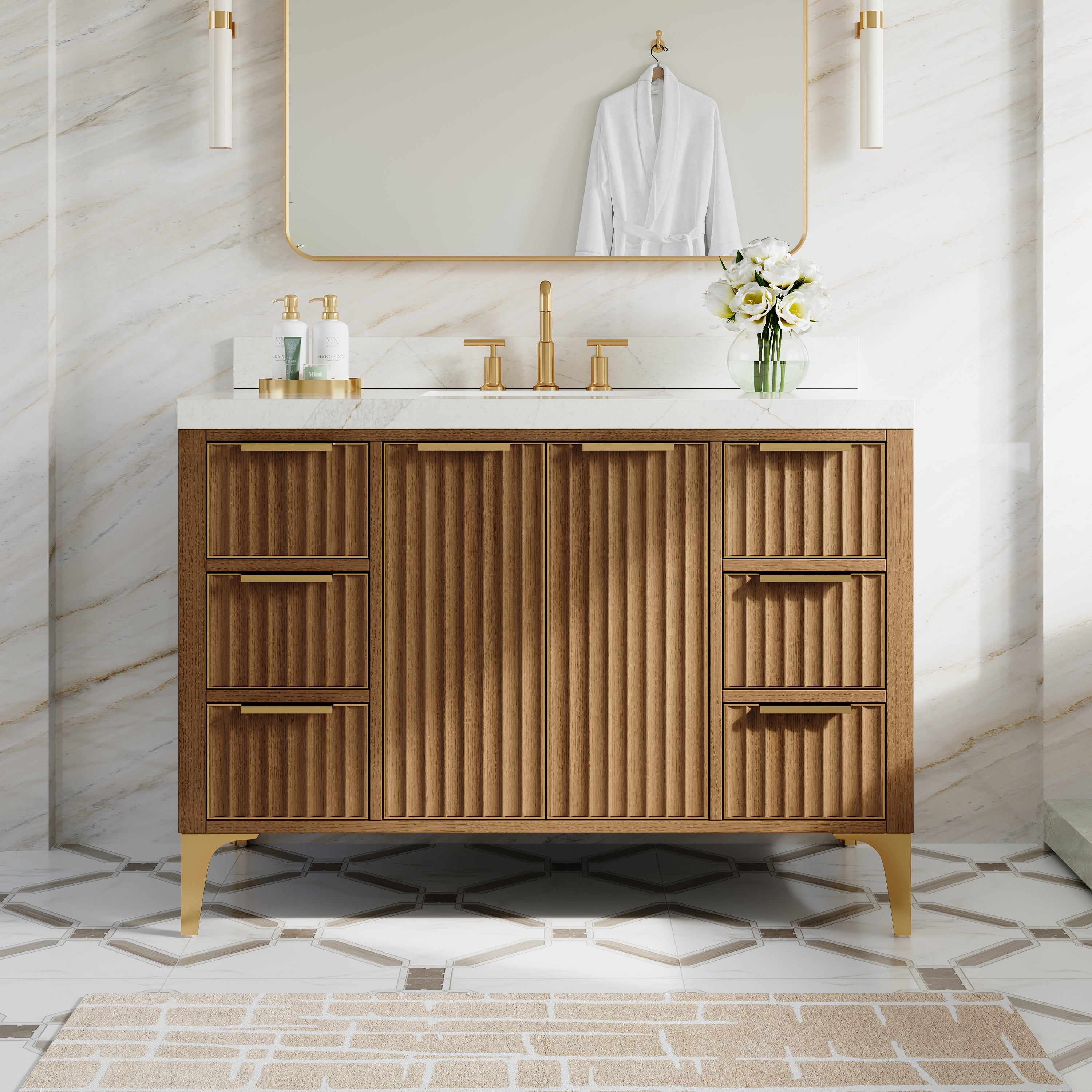


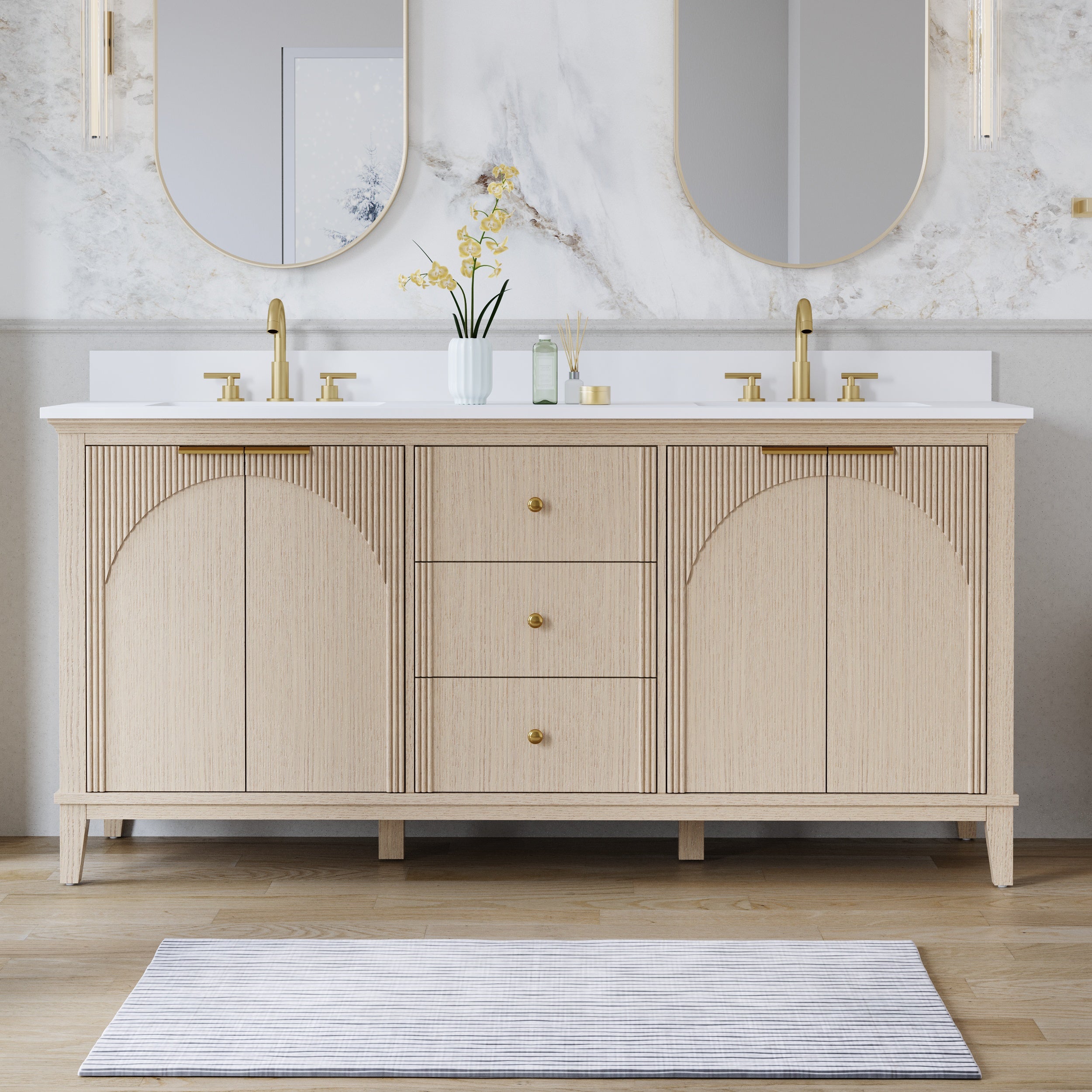
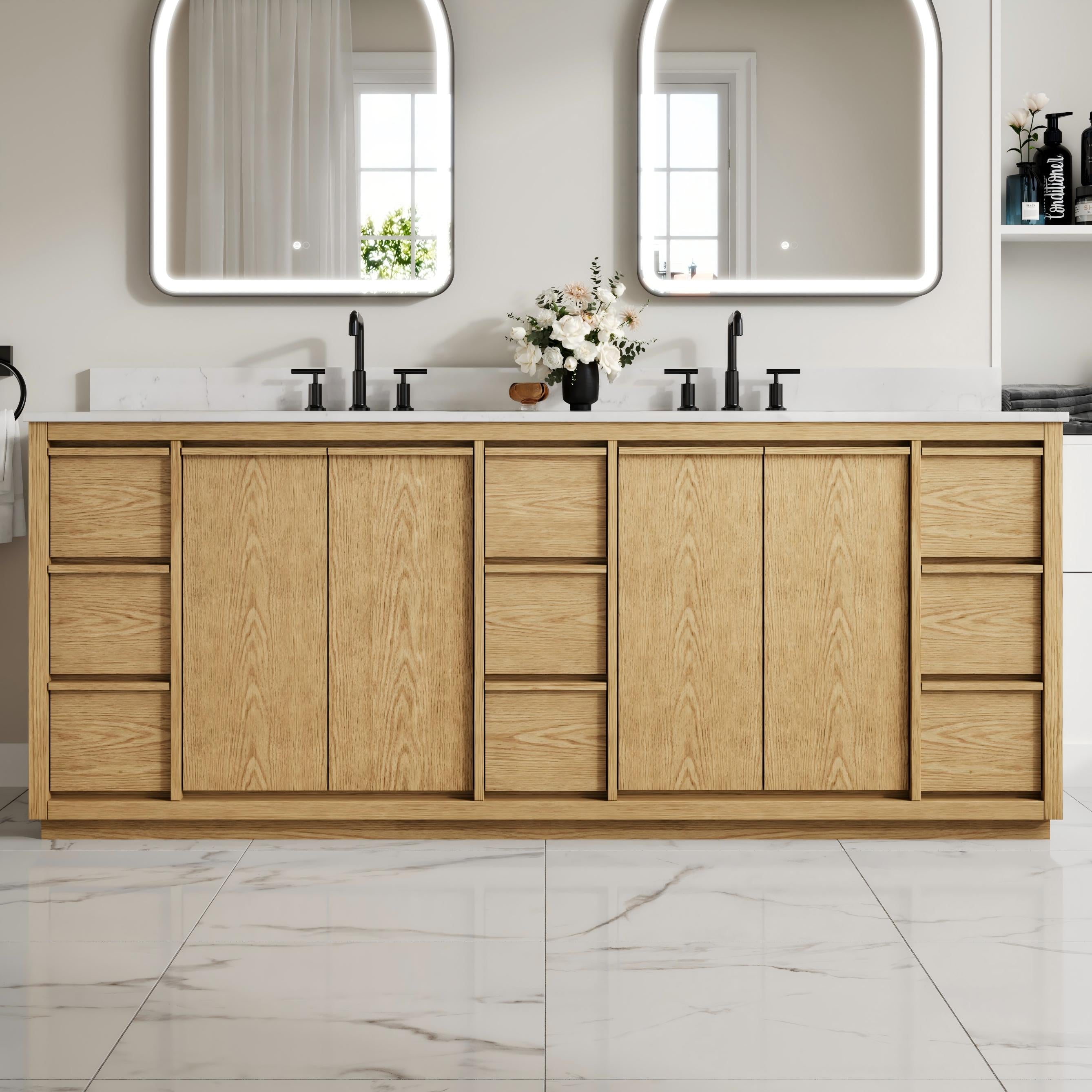

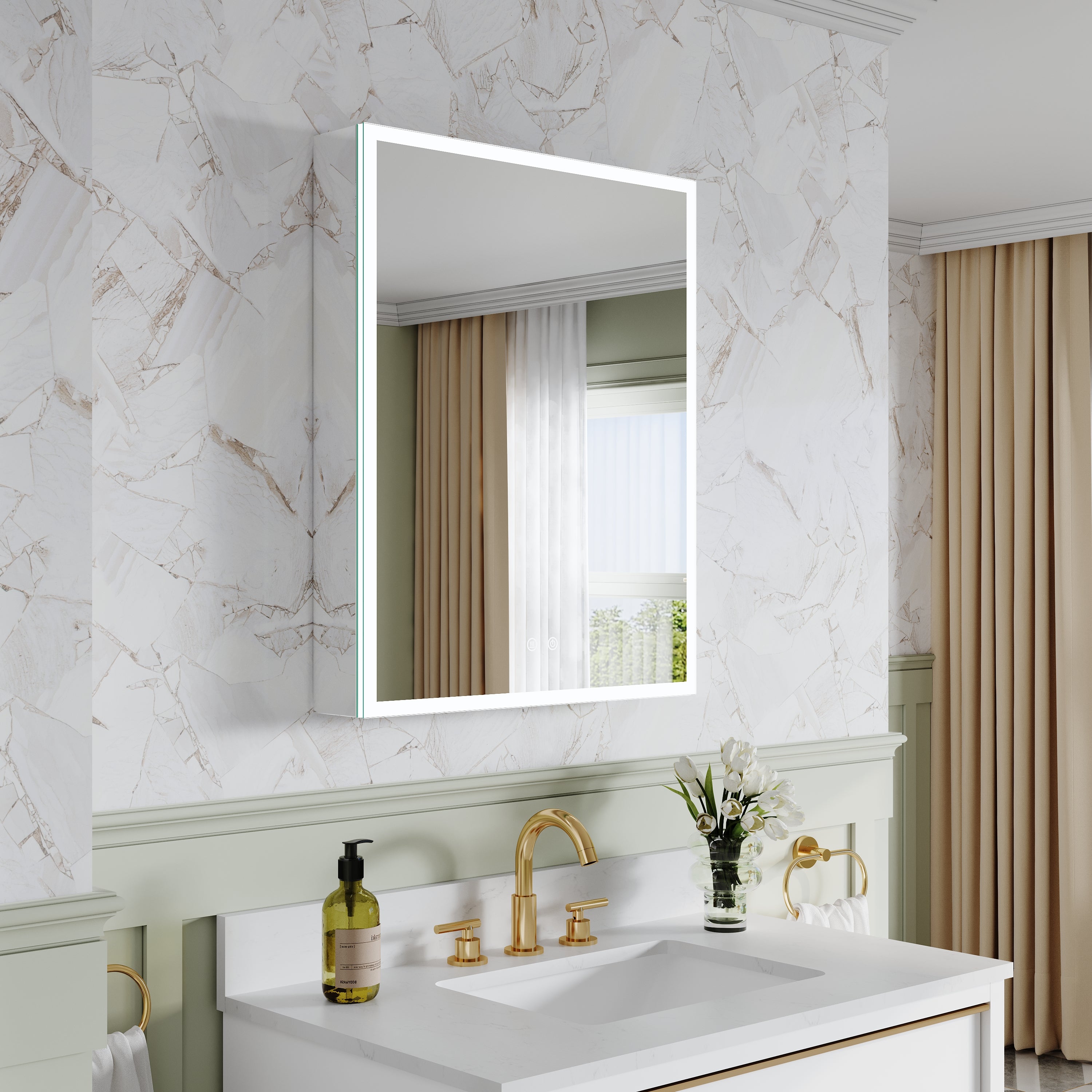
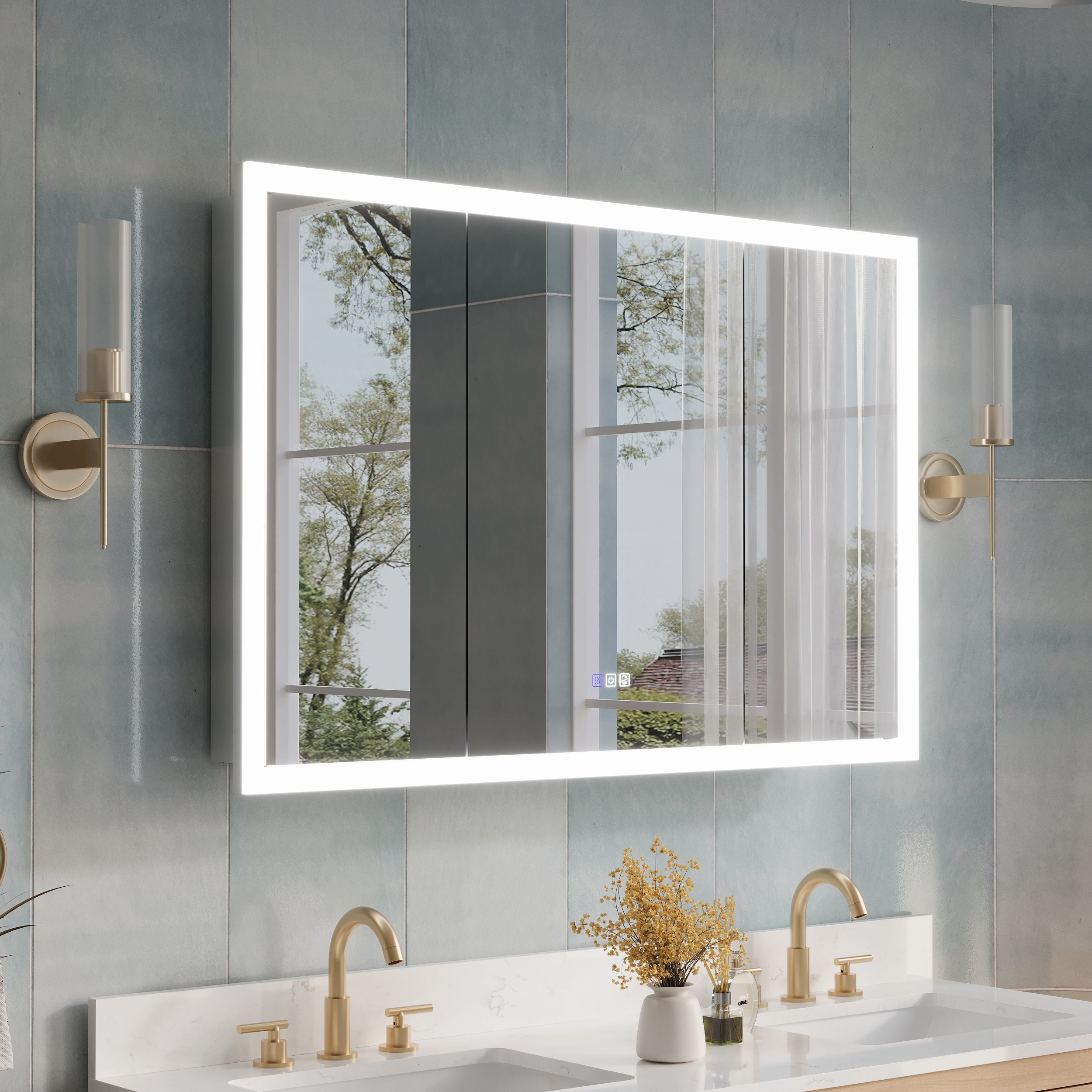
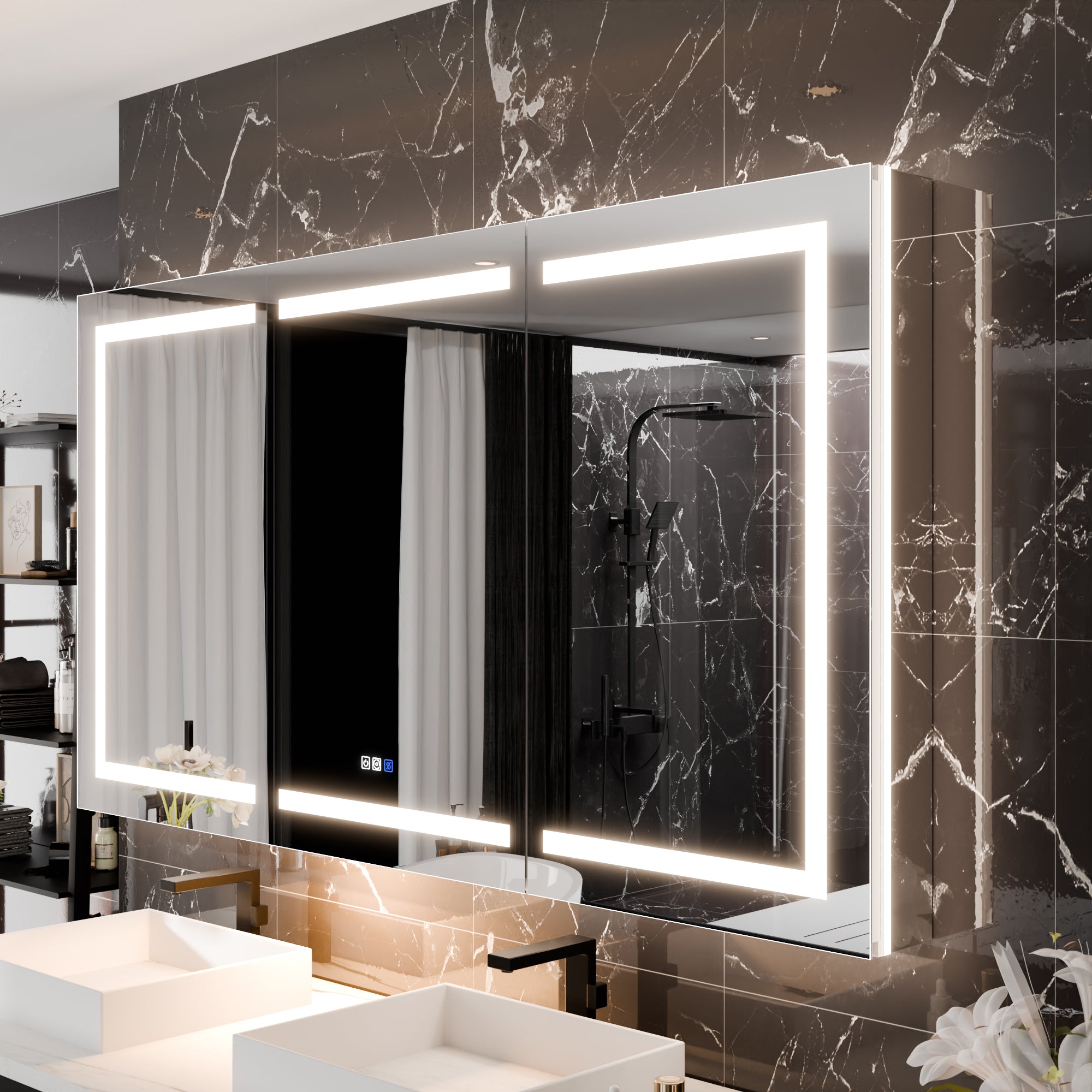
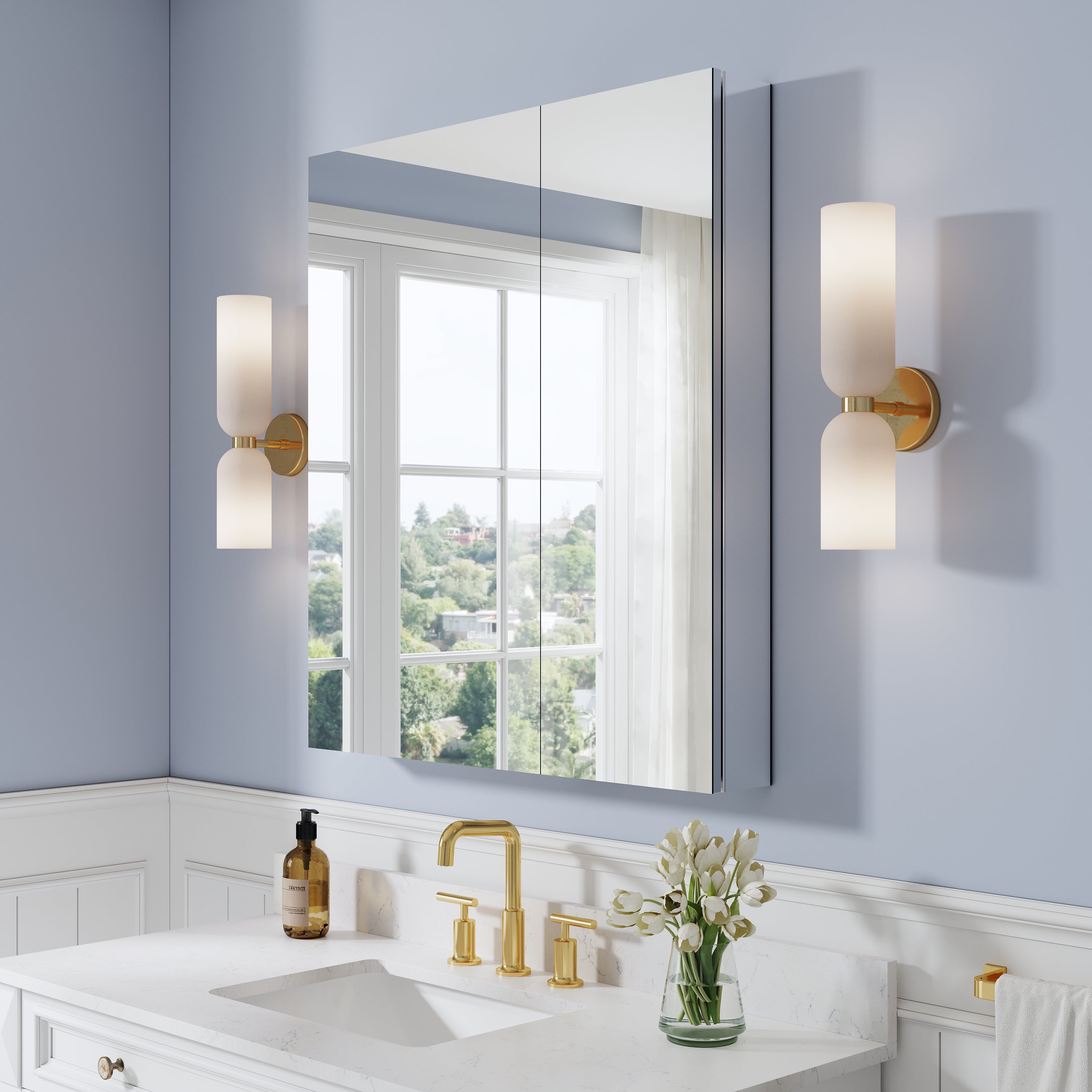
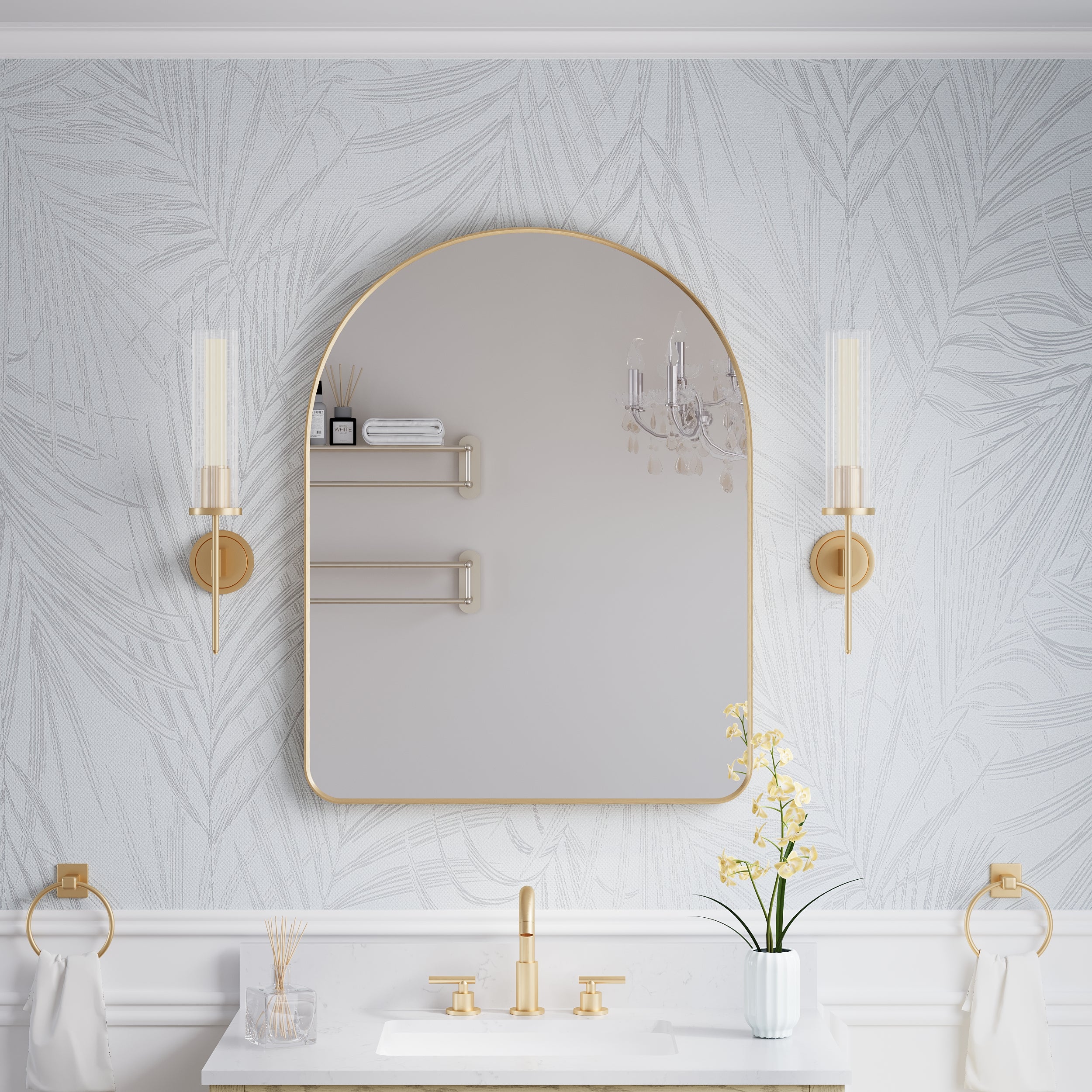
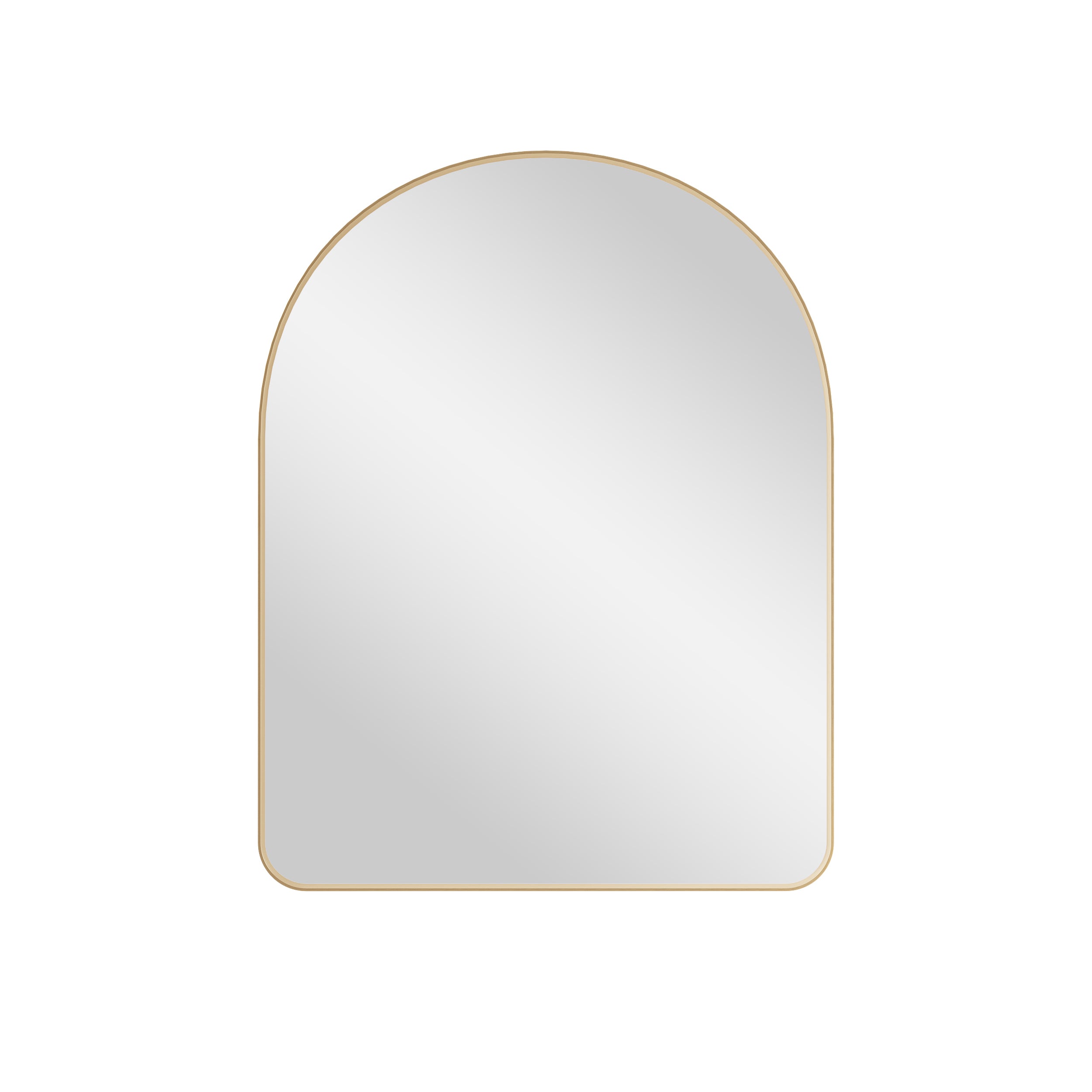
In modern bathroom renovation design, the bathroom mirror cabinet with light is increasingly an efficient solution that combines storage and lighting. Traditional layouts often separate mirrors, wall lights, and storage cabinets, which not only occupy wall space but also increase wiring and installation complexity. By combining mirror surfaces, LED lighting, and internal storage, the illuminated mirror cabinet can enhance functional density within a limited space. Industry data shows that in recent years, the proportion of mirror cabinets with lighting functions has continued to increase in high-end bathroom renovation projects, and the configuration rate in the main bathroom space has exceeded half. Whether such products can truly meet both storage and lighting needs requires analysis across multiple aspects, including size planning, lighting performance, and internal structure.
1. Integrating dual functions in limited wall surfaces
Standard bathroom walls typically need to accommodate both mirrors and lighting fixtures simultaneously. If a split structure is adopted, the 36-inch countertop usually needs to reserve a mirror width of about 30 inches and add wall lamp space on both sides.
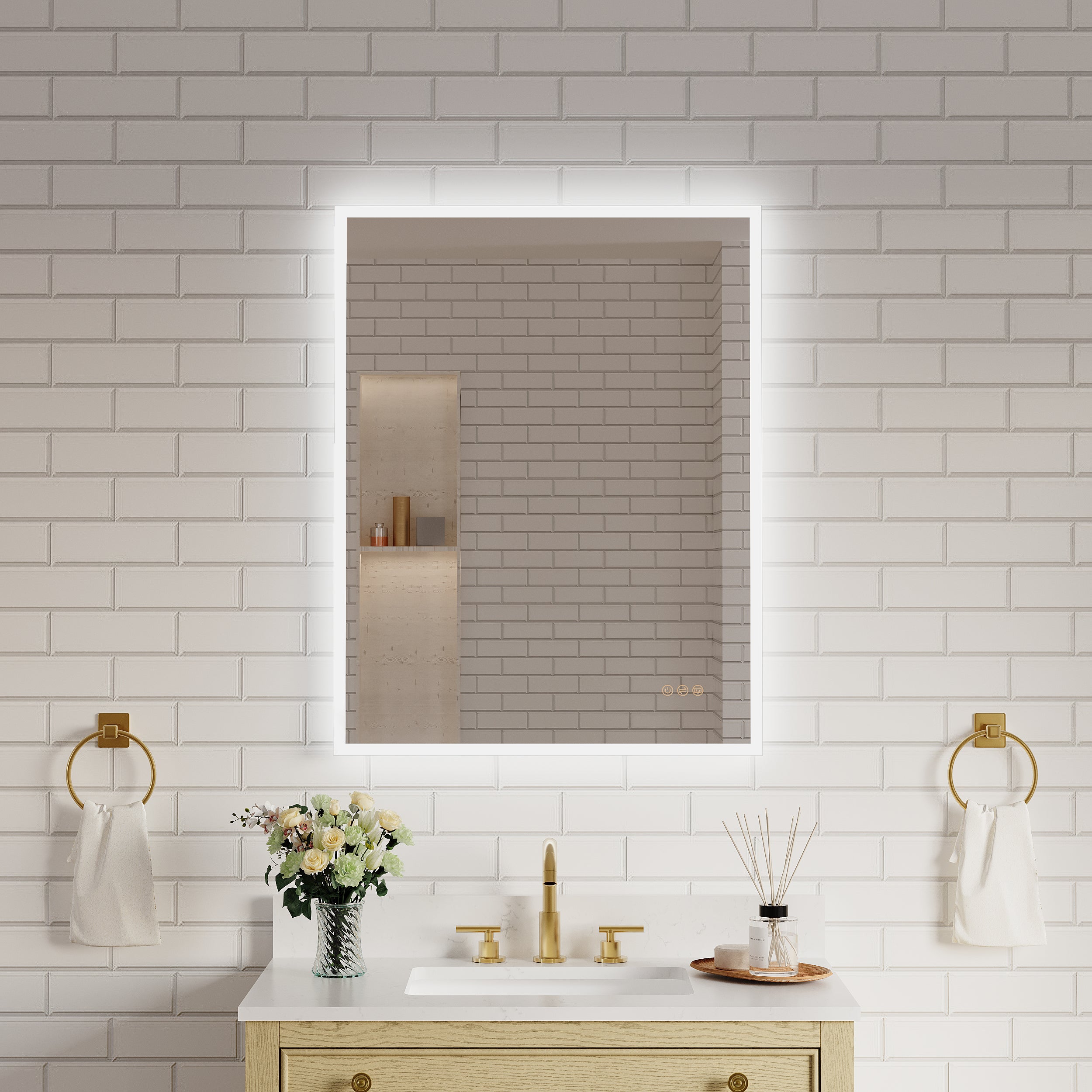
The mirror cabinet with lights embeds the light source into the edge of the mirror body, reducing the need for additional lighting fixtures. Common 30- to 36-inch mirror cabinets have a depth of 4 to 5 inches, providing storage while avoiding wall congestion.
Data shows that in bathrooms with an area of less than 90 square feet, an integrated mirror cabinet layout can increase wall utilization by about 15%.
2. Optimize facial task lighting
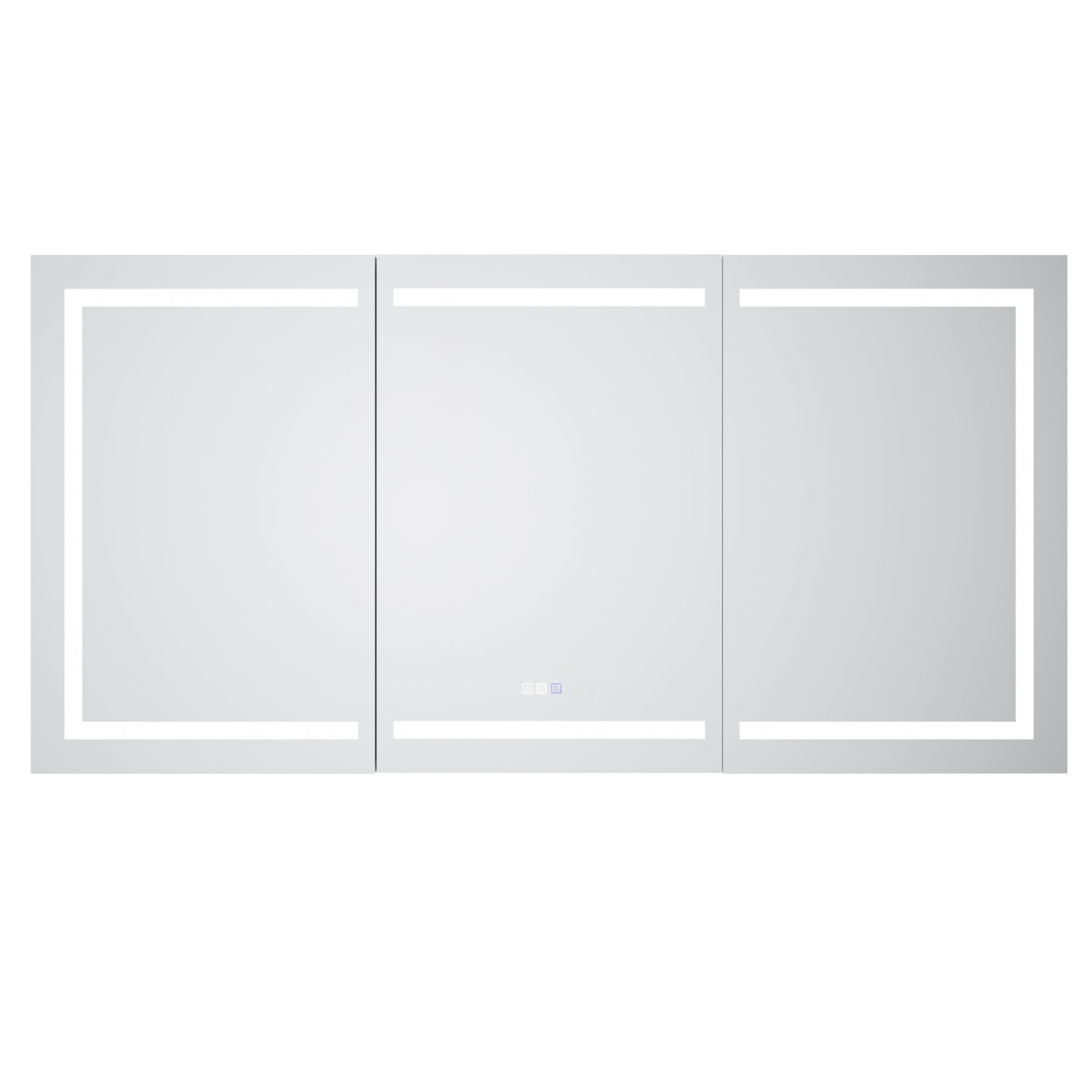
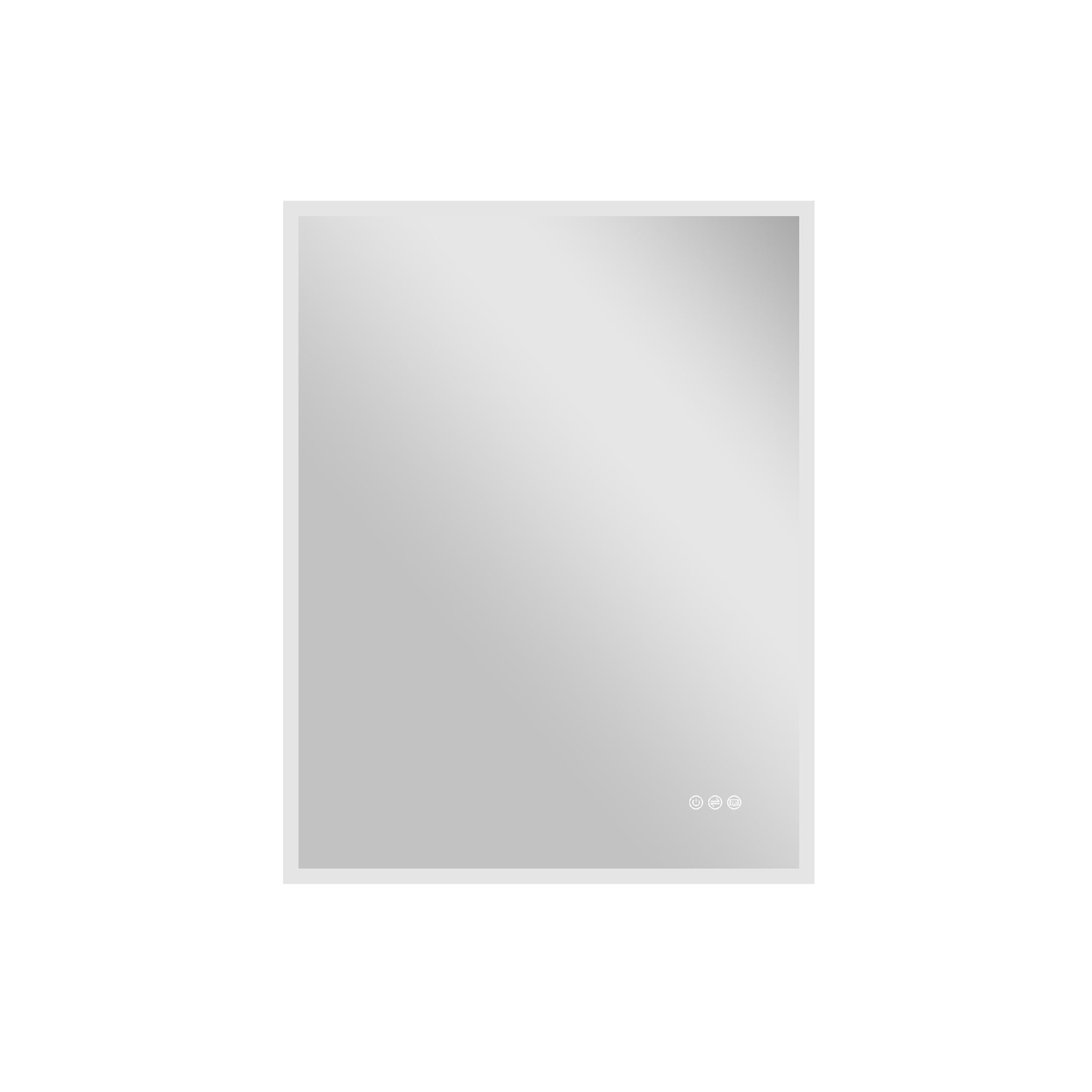
Top lights often create shadows on the face. Mirror cabinets with lights usually use surround or side LED light strips to make the light more uniform.
The output brightness of the 36-inch model is usually between 1200 and 2000 lumens; the 48-inch to 60-inch model can reach 2500 to 3000 lumens. Test data shows that when the color rendering index (CRI) reaches 90 or above, facial detail clarity improves by about 20%.
This uniform lighting structure makes daily shaving and makeup more precise.
3. Internal storage capacity assessment
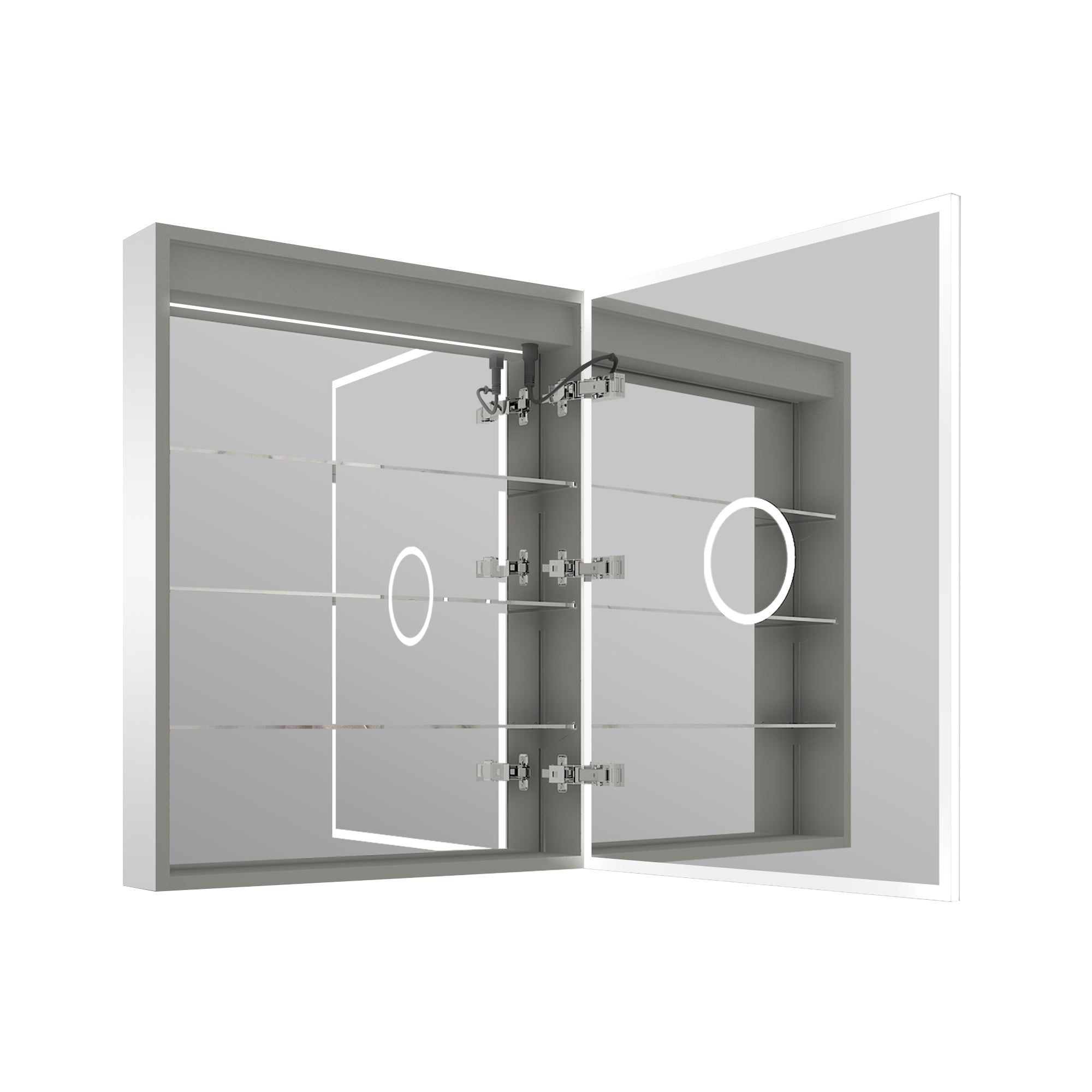
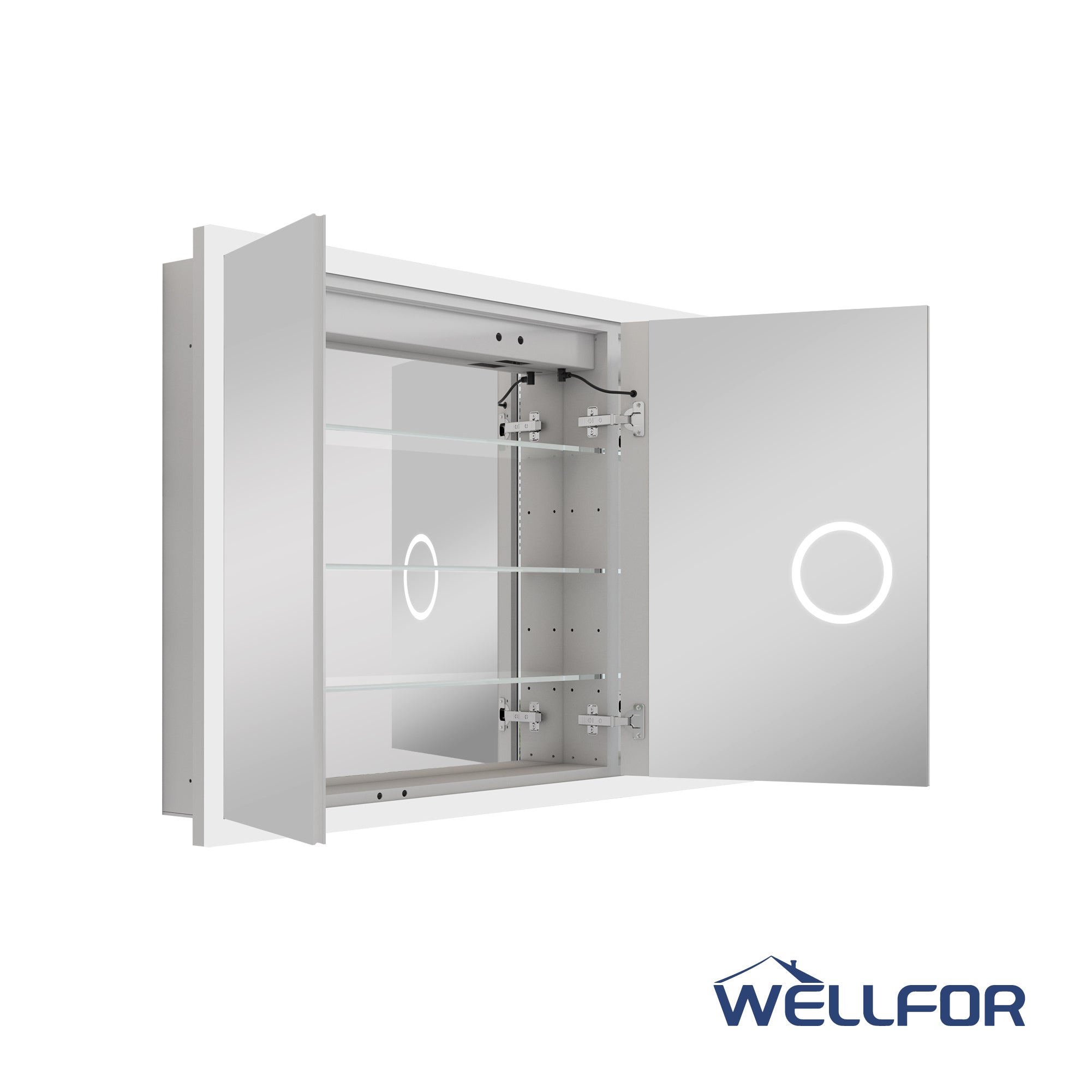
A mirror cabinet with a width of 30 inches and a height of 30 inches, with 2 to 3 adjustable shelves inside.
The data shows that, with reasonable layering, it can accommodate more than 20 small items per day. Compared to using only countertop storage, mirror cabinets can reduce countertop clutter by about 25%.
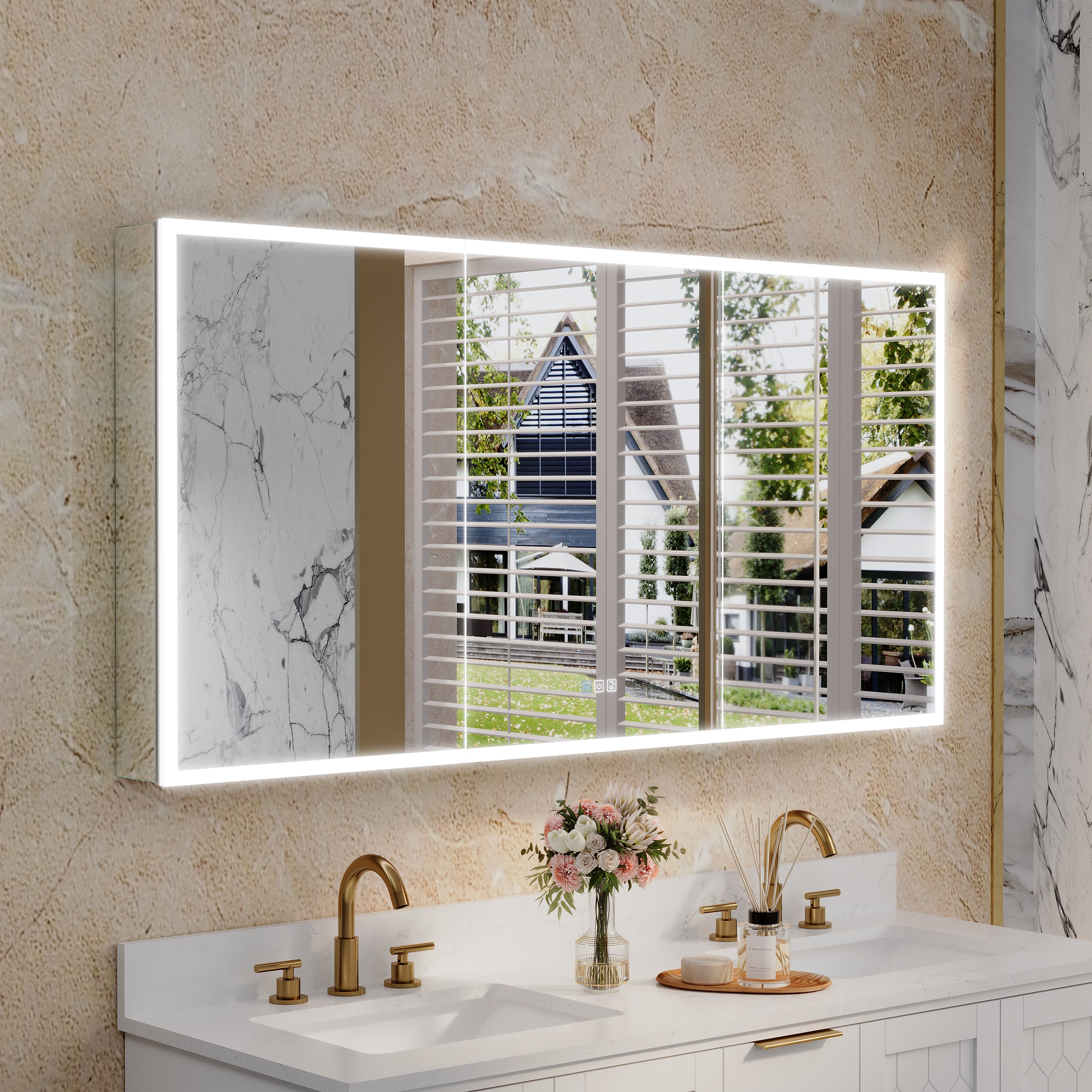
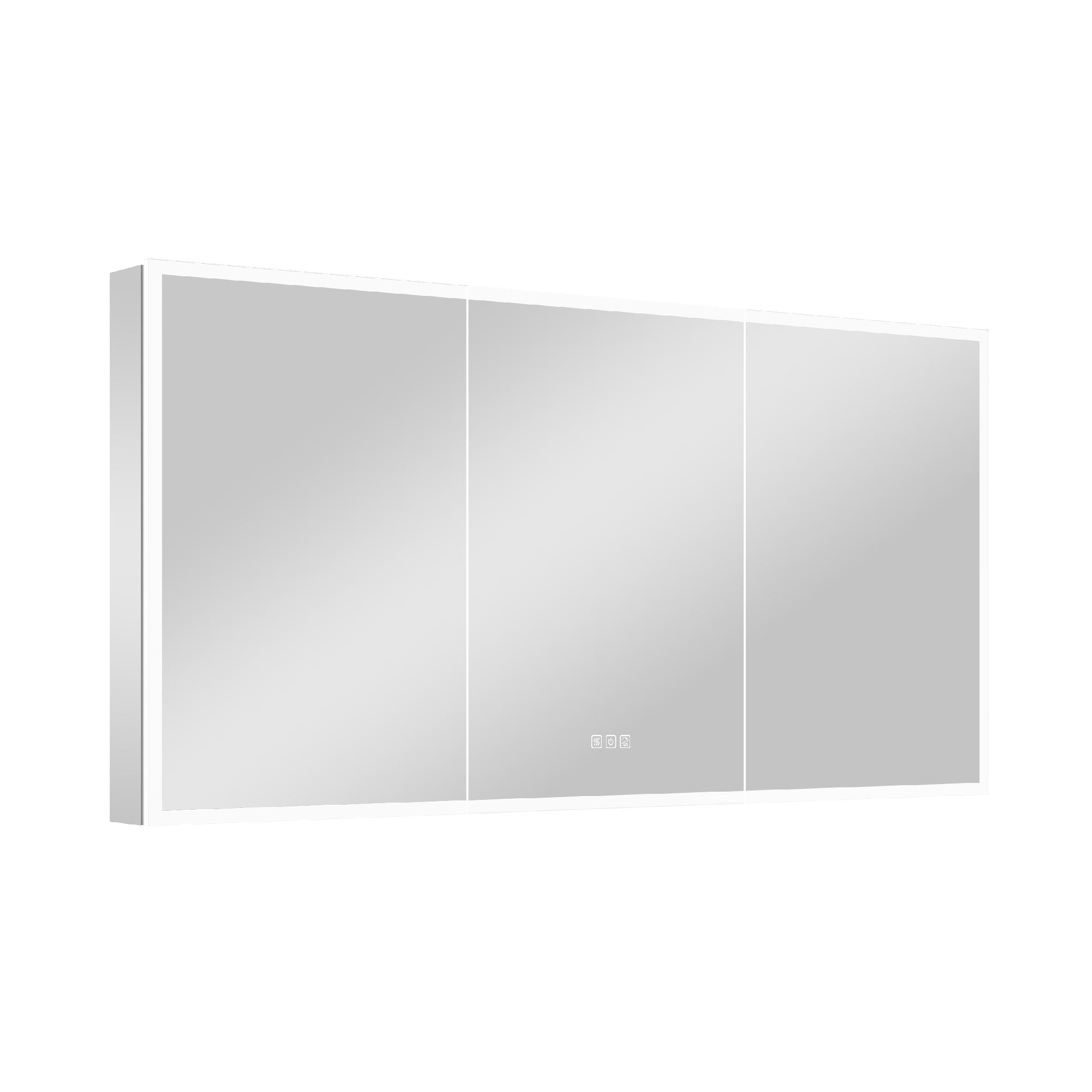
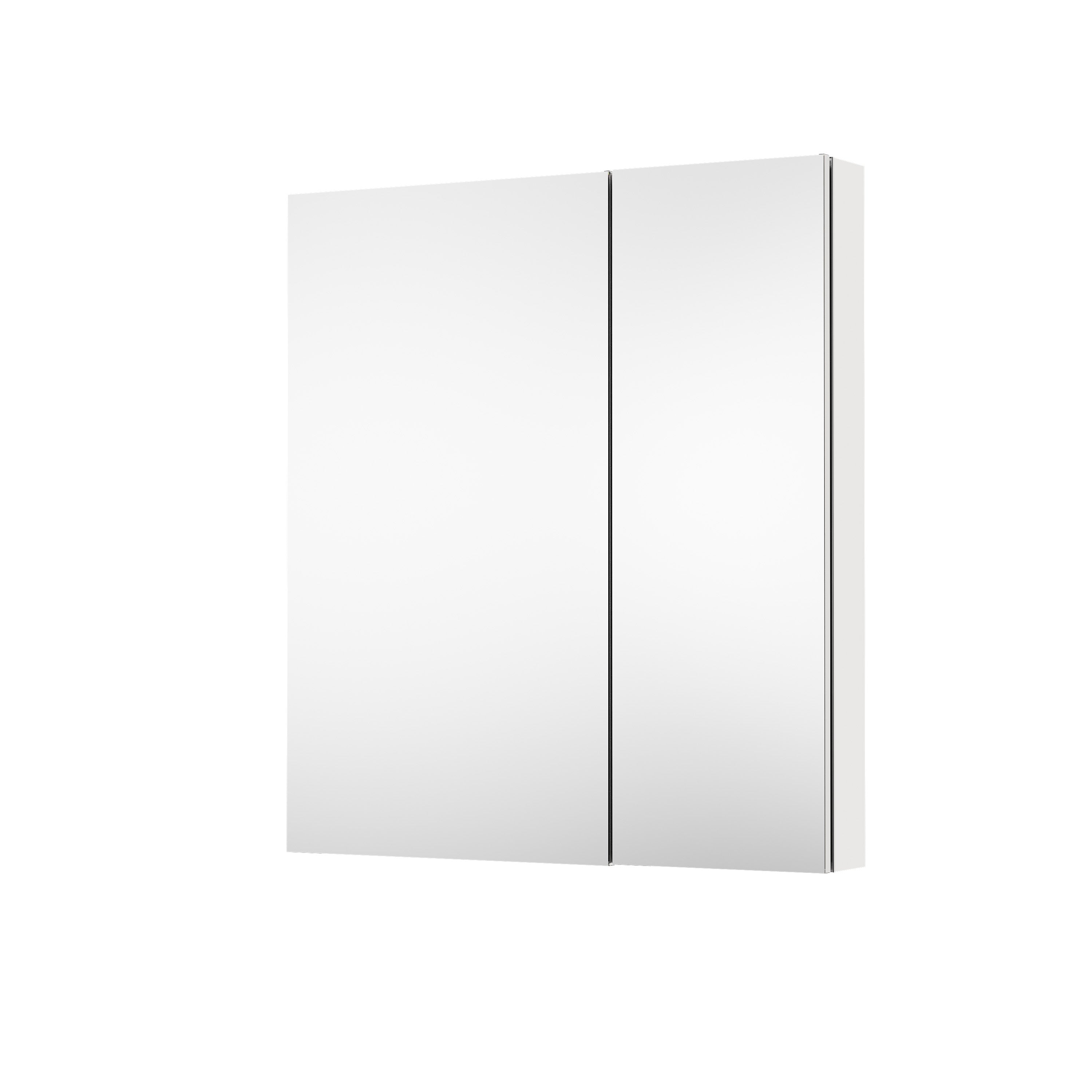
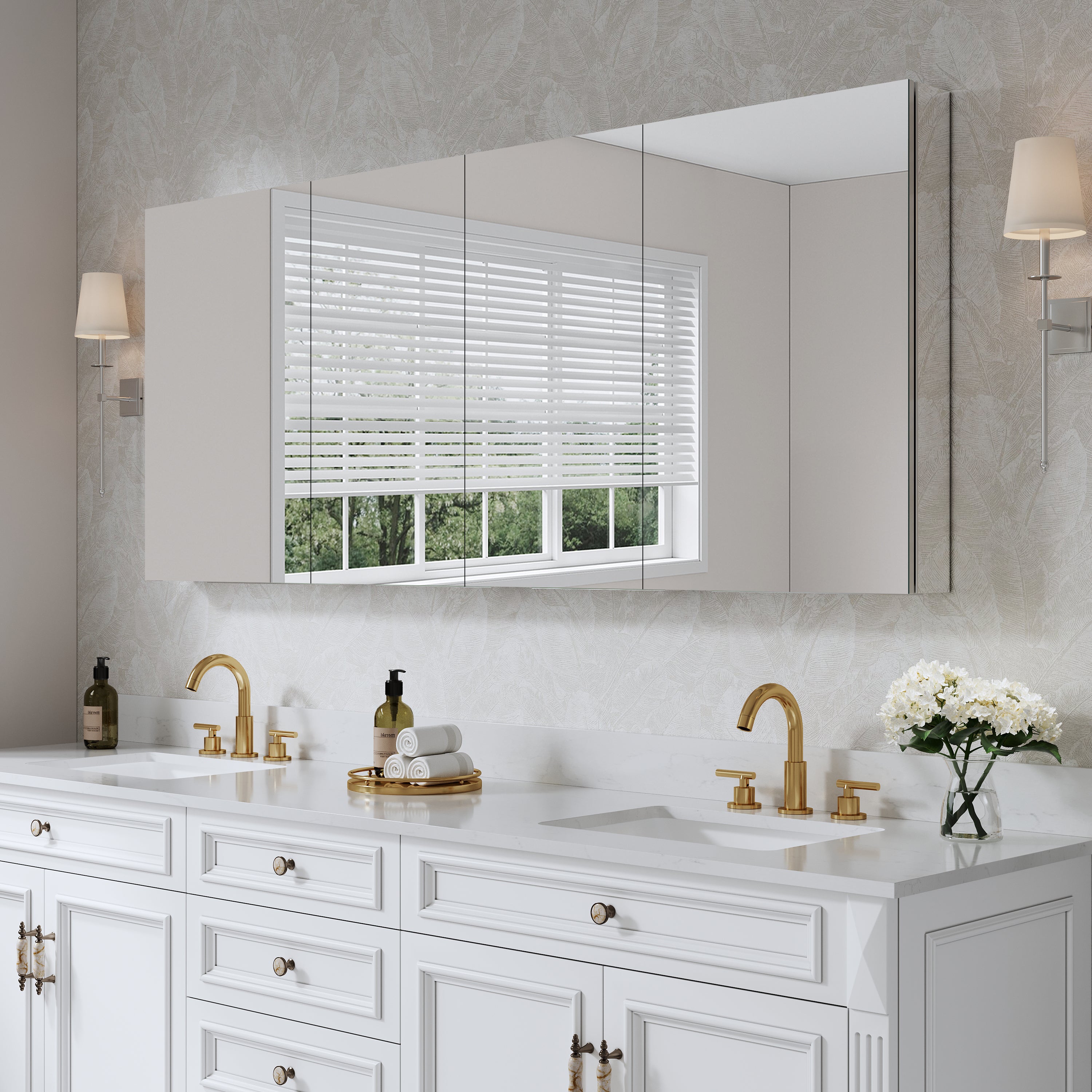
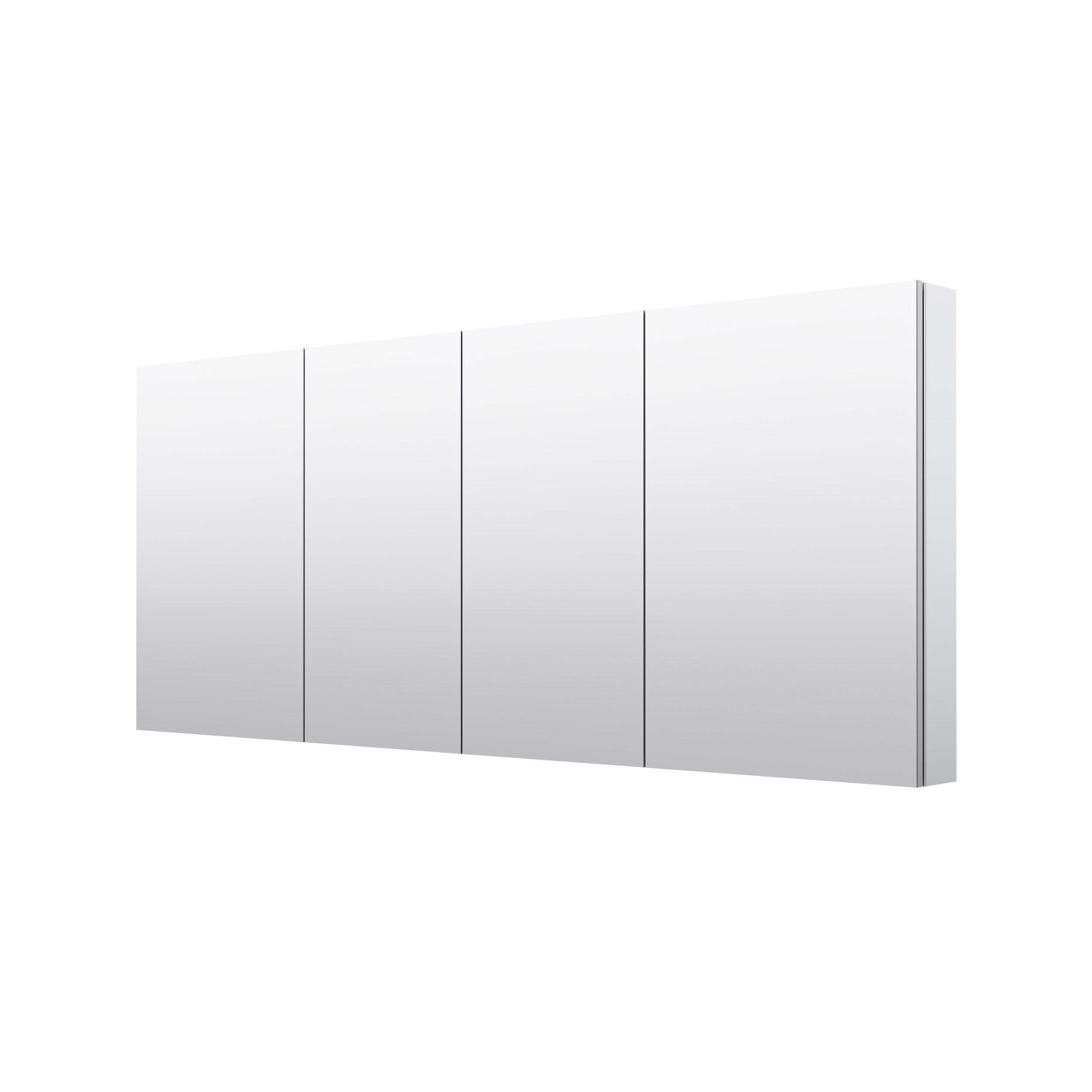
In the 60-inch double-basin layout, a double-door structure or two independent mirror cabinets can be selected to meet the needs of two people.
4. The spatial difference between embedded and surface-mounted systems
Mirror cabinets are usually divided into recessed and surface-mount types.
The embedded structure uses a 3.5-inch cavity in the wall to reduce the exposed depth to 1 inch. Compared to structures with outward protrusions exceeding 4 inches, embedded structures are more compact.
Data shows that in spaces with an area less than 100 square feet, embedded design can increase visual width by approximately 18%.
But an embedded installation requires confirmation that there is no pipeline interference inside the wall.
5. Ability to adapt to defogging and humidity
The humidity after showering usually exceeds 70%. The illuminated mirror cabinet often features a heating defogging film that can restore a clear mirror surface in 2 to 5 minutes.
Data shows that in environments with humidity exceeding 75%, the clarity retention rate of mirrors with defogging function exceeds 90%.
This feature reduces the need for wiping and improves daily convenience.
6. Color temperature adjustment and atmosphere control
Modern mirror cabinets typically support color temperature adjustment from 3000K to 5000K.
Warm-colored light is better for relaxing at night, while cool white light is better for organizing in the morning. Data shows that overall satisfaction increases by approximately 15% to 20% in adjustable-color-temperature environments.
The touch dimming function further enhances flexibility.
7. Installation height and proportion control
The lower edge of the mirror cabinet is usually installed 5 to 10 inches above the countertop, and the center height of the mirror surface is set between 60 and 65 inches.
In an 8-foot high floor space, this ratio ensures visual balance. The data show that in a reasonably proportioned layout, the spatial coordination score improves by about 15%.
The recommended width for the mirror cabinet is 70% to 90% of the tabletop width.
8. Energy saving and long-term operating costs
The average power of LED light sources is between 30W and 60W, with lower energy consumption than traditional halogen lamps.
Data shows that compared to traditional lighting fixtures, LED systems can reduce energy consumption by about 70% and have a longer lifespan.
The integrated design reduces the need for additional lighting fixtures and simplifies maintenance.
9. Is it suitable for all bathrooms?
In compact bathrooms, a mirror cabinet with lights can effectively integrate functions, but in the main bathroom with an area exceeding 120 square feet, some designs tend to favor separate mirrors and decorative lighting fixtures to enhance the sense of hierarchy.
Data show that in high-frequency use, the satisfaction score for the main bathroom's integrated mirror cabinet is about 10% higher than that for the guest bathroom.
Therefore, the choice depends on the spatial scale and usage habits.
10. Long-term design value
As bathroom design evolves toward integration and intelligence, illuminated mirror cabinets have become a solution that balances functionality and aesthetics.
Industry data shows that the proportion of light mirror cabinets in high-end renovation projects continues to increase. Its balanced storage and lighting make the space more concise and efficient.
In line with the trend of emphasizing space utilization and modern design language, such products have gradually become core configurations.

11. Conclusion
Whether the bathroom mirror cabinet with light can simultaneously meet storage and lighting needs depends on the size ratio, installation method, and functional configuration. From a 30-inch single-door structure to a 60-inch double-door layout, each inch size and unit brightness affects the actual experience. By planning wall space effectively, optimizing lighting, and controlling humidity, the illuminated mirror cabinet can achieve functional integration in a limited space, offering a more efficient, modern design solution for bathroom renovation.












Leave a comment
This site is protected by hCaptcha and the hCaptcha Privacy Policy and Terms of Service apply.