














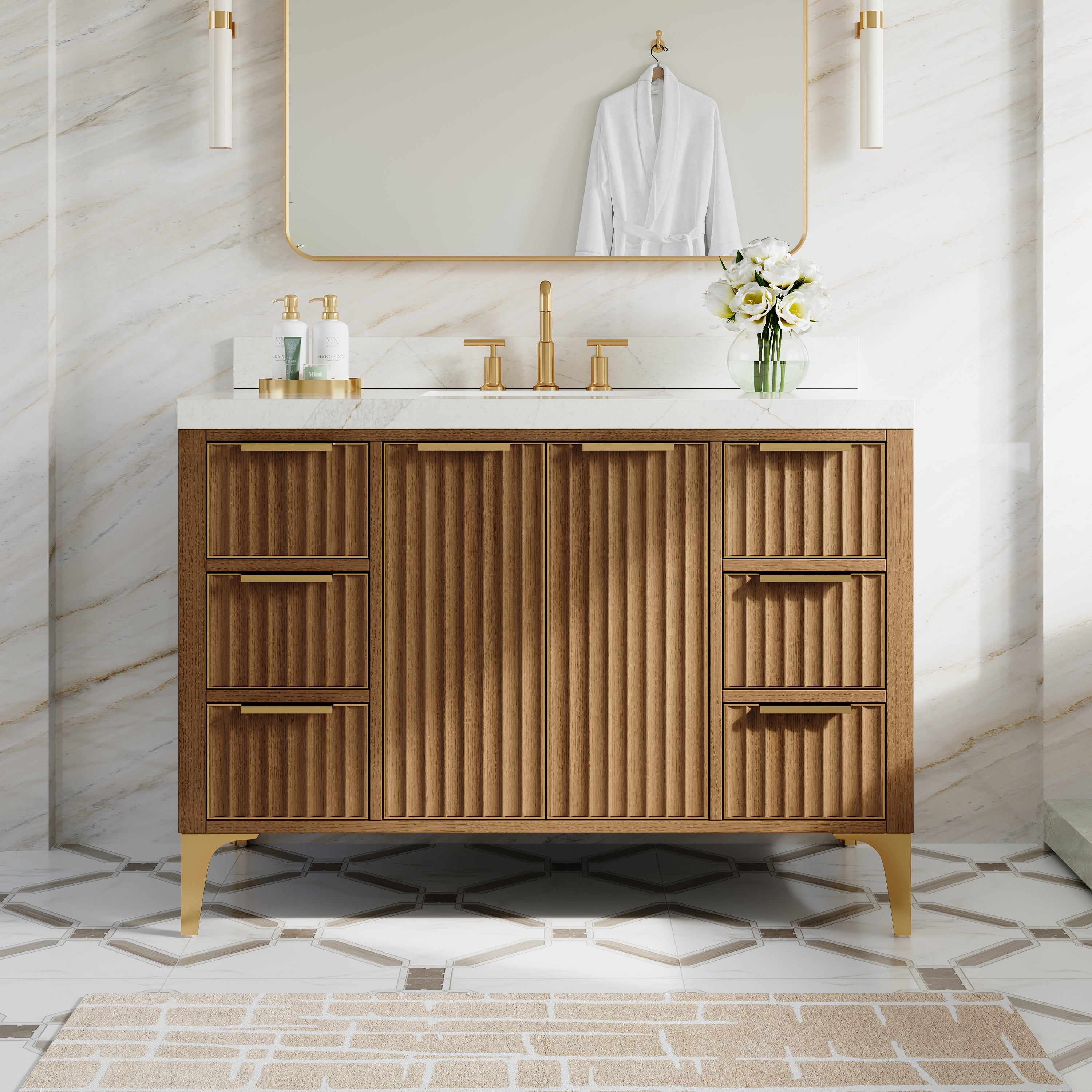


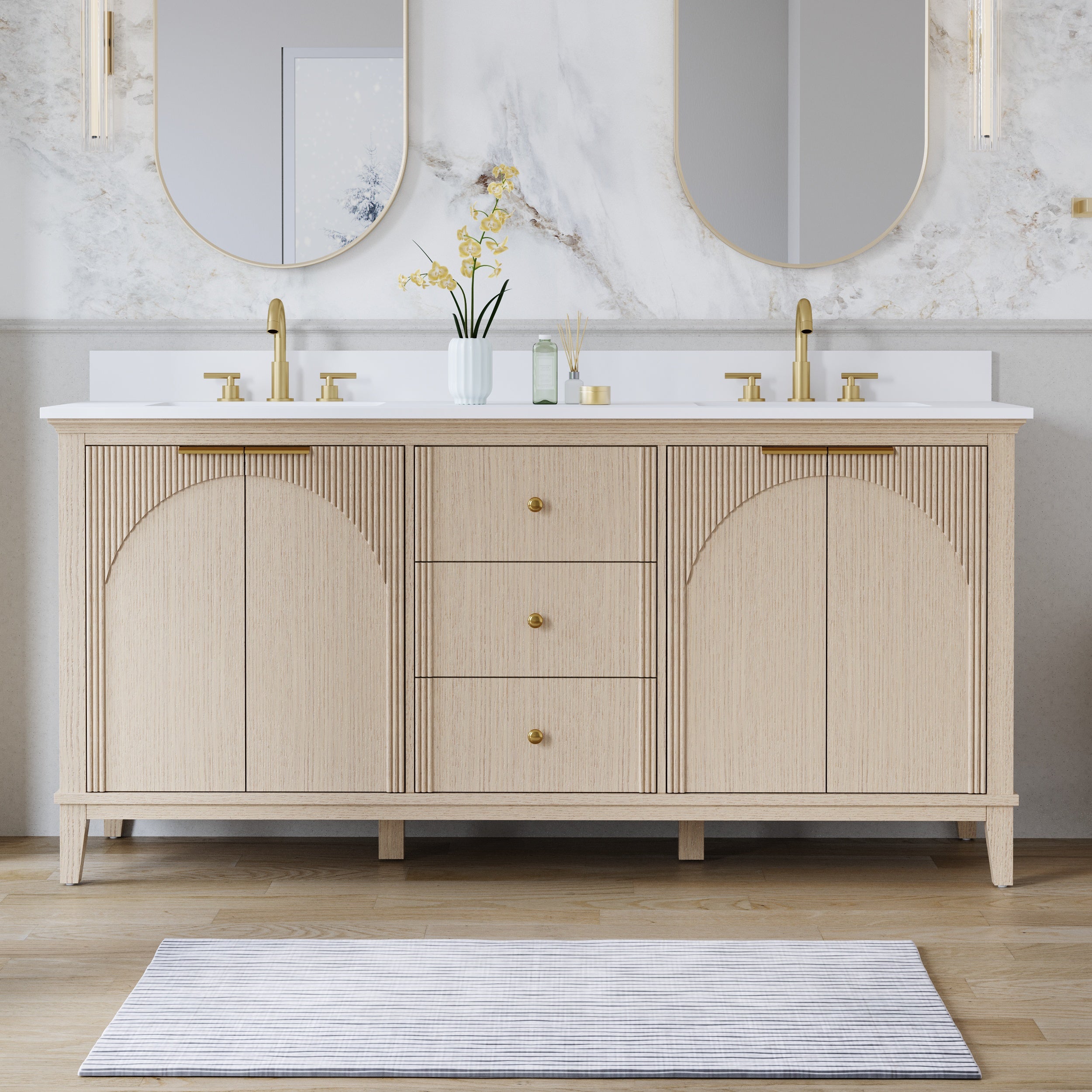
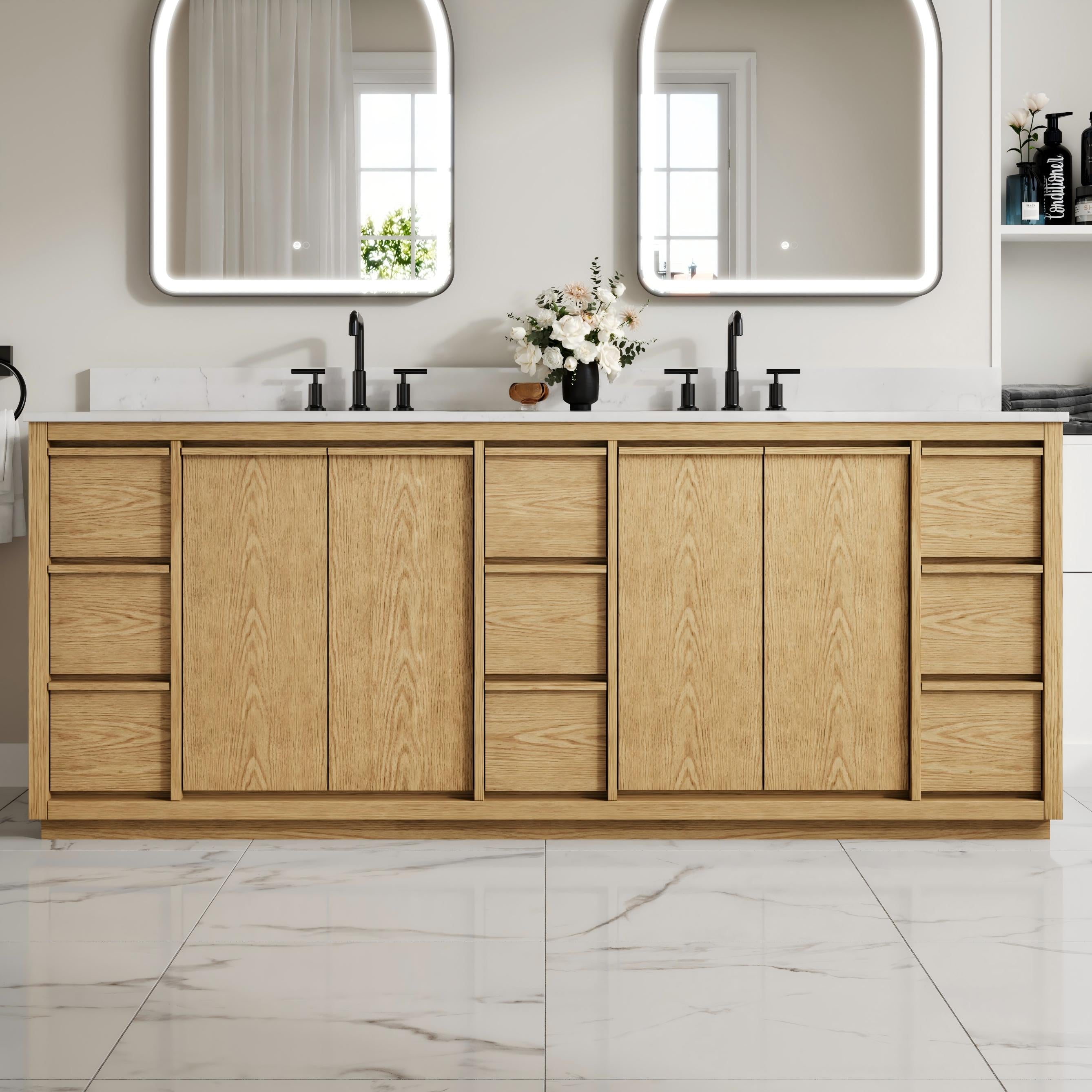
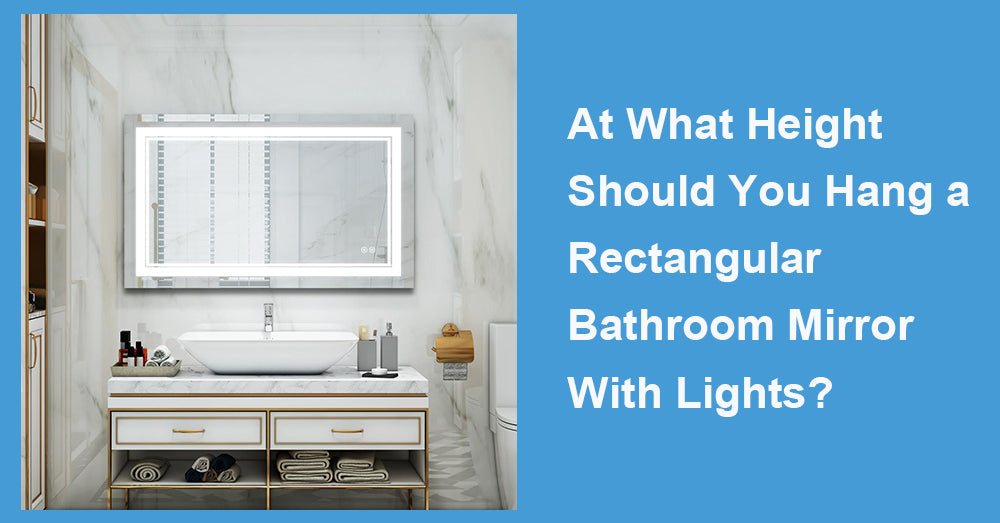
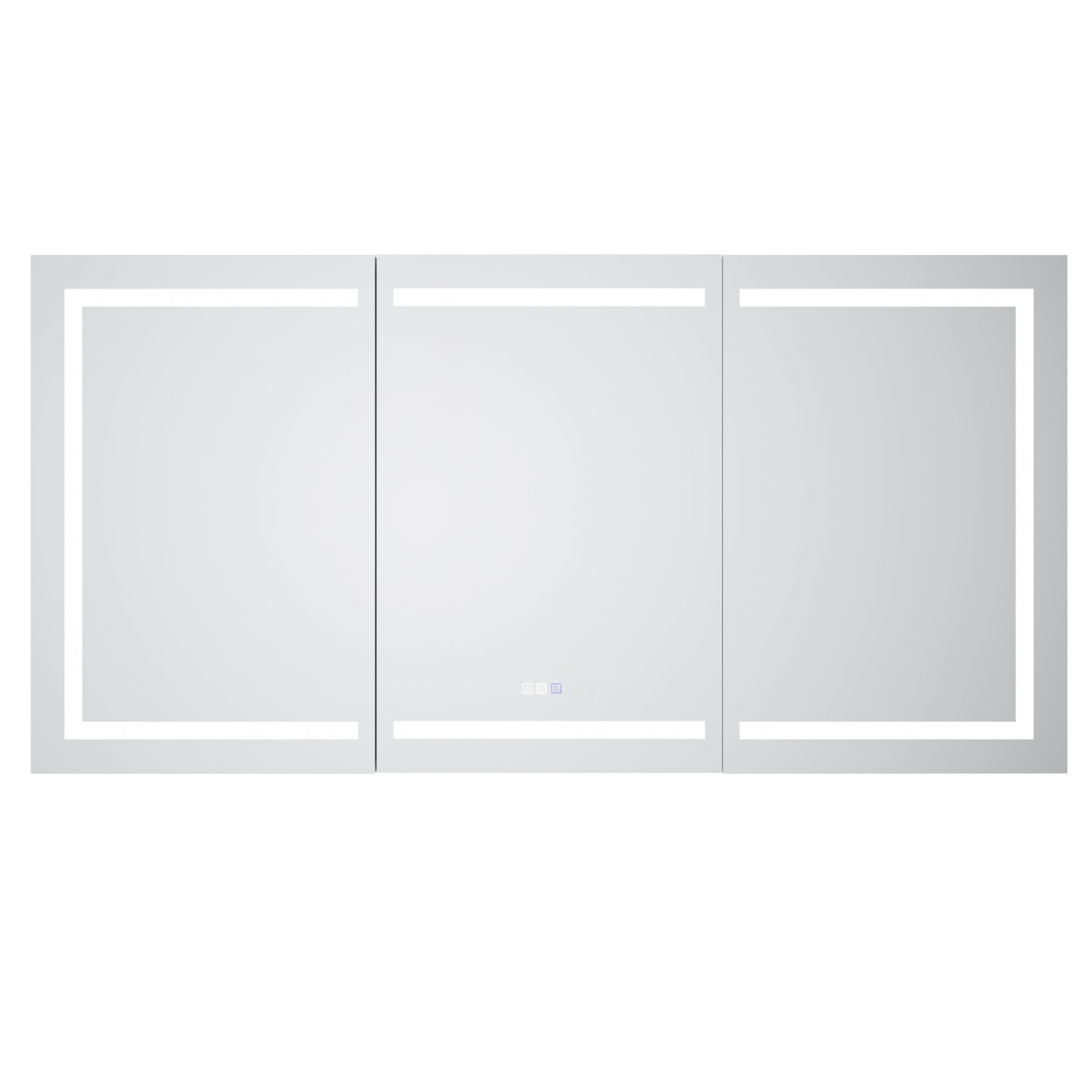
In the current trend of bathroom design,rectangular bathroom mirror with lights are no longer just simple functional accessories; they have gradually evolved into a core element of spatial vision and user experience. Especially after integrating LED lighting, defogging, intelligent touch, and other functions, the installation height of the mirror directly affects the lighting effect, comfort level, and overall spatial proportion. If the height is not set correctly, even if the mirror itself is configured high, it may be significantly discounted in practical use.
1. Why is mirror height more critical than imagined?
Industry research data shows that more than 30% of problems related to "visual fatigue" and "daily inconvenience" in bathrooms do not stem from insufficient lighting brightness, but from a mismatch between mirror height and line of sight. For rectangular bathroom mirrors with lights, the light usually diverges from the edge or back of the mirror. If the mirror is installed too high or too low, it can cause uneven facial lighting and obvious shadows on the lower jaw or eyes, which directly affects the shaving, makeup, and skincare experience.
In addition, rectangular mirrors themselves have clear upper and lower boundaries, and their geometric characteristics make it more likely that incorrect height selection will result in a "abrupt" appearance than with circular or irregular mirrors.
2. The widely recognized basic height range in the industry
According to the installation guidelines of mainstream residential projects and bathroom brands, there is no absolute, uniform value for the height of rectangular bathroom mirrors with lights, but a relatively stable interval consensus has emerged.
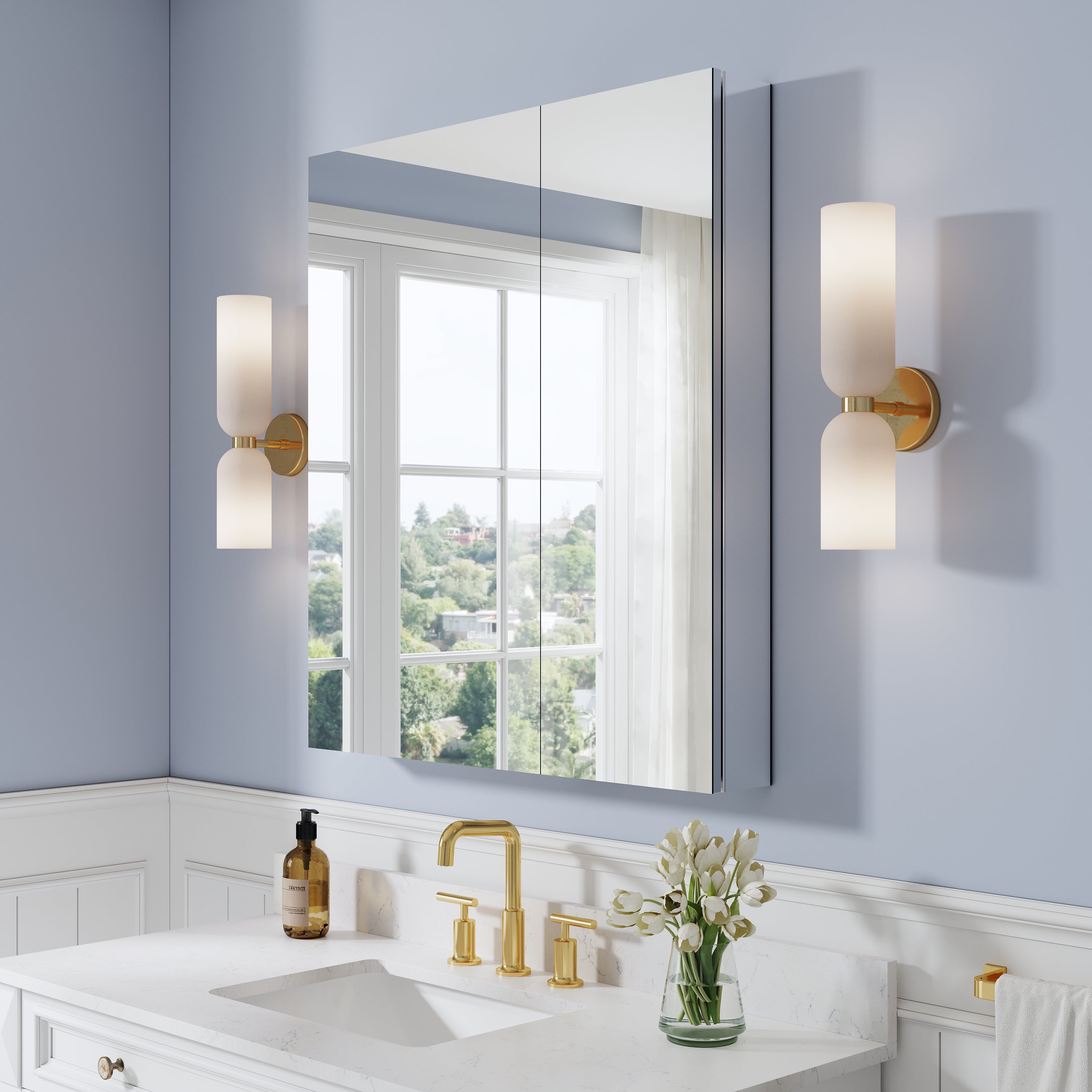
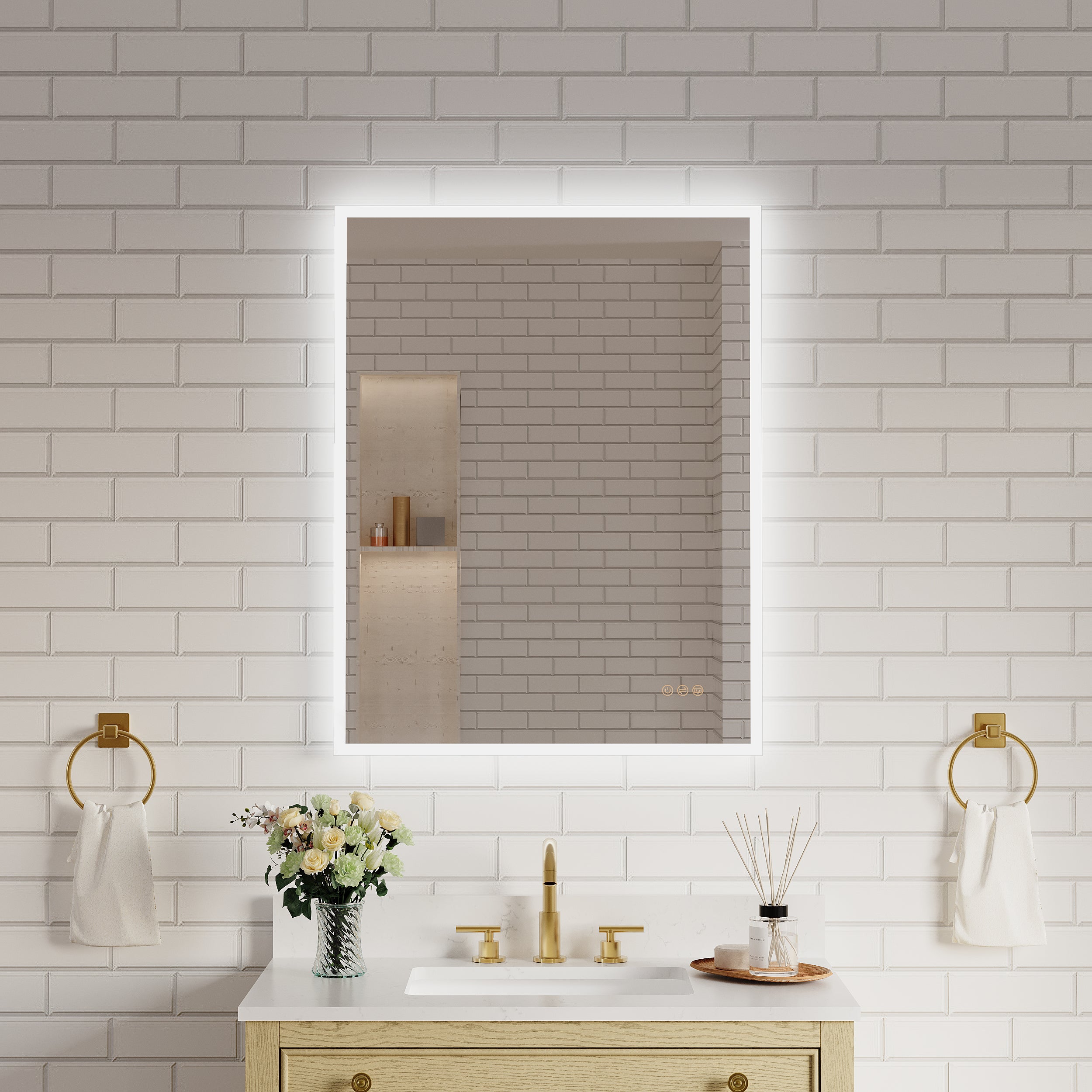
In most cases, the height of the mirror's lower edge from the ground is controlled between 38 and 42 inches. This height ensures that the mirror is located above the washbasin, while leaving sufficient visual buffer for the faucet and countertop.
The height of the mirror's center point is more useful for reference. The industry recommends placing the center of the mirror at 60-65 inches, which covers the visual height of the majority of adults in their natural standing position, placing the face in the core illumination area of the mirror.
As for the upper edge of the mirror, the standard installation height is generally 78-80 inches or less to avoid creating a sense of pressure from hanging cabinets, wall lights, or ceiling lines.
3. Matching logic with bathroom cabinet width and height
Rectangular bathroom mirrors with lights often pair well with bathroom cabinets, and whether the proportions of the two are coordinated directly affects the overall sense of luxury in the space.
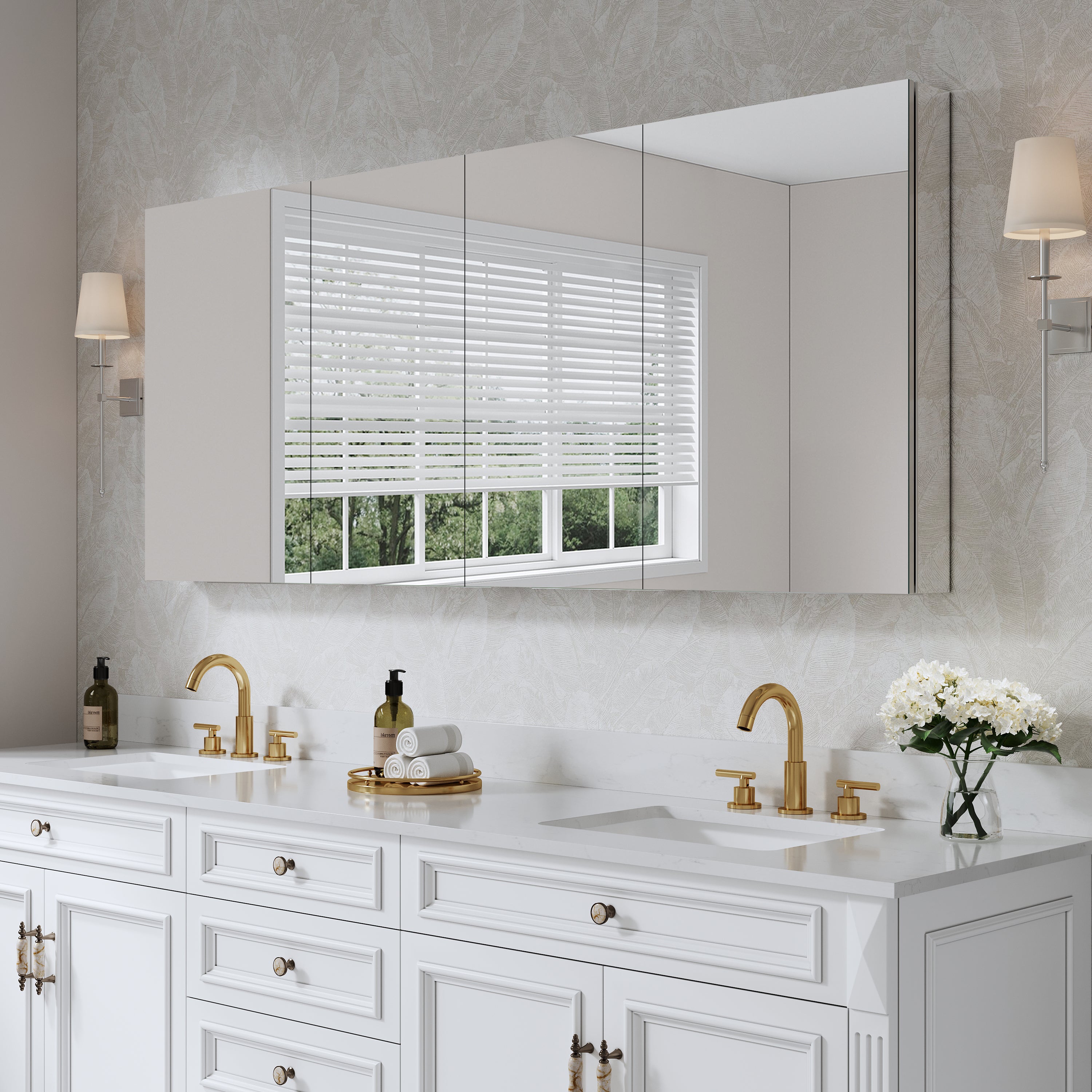
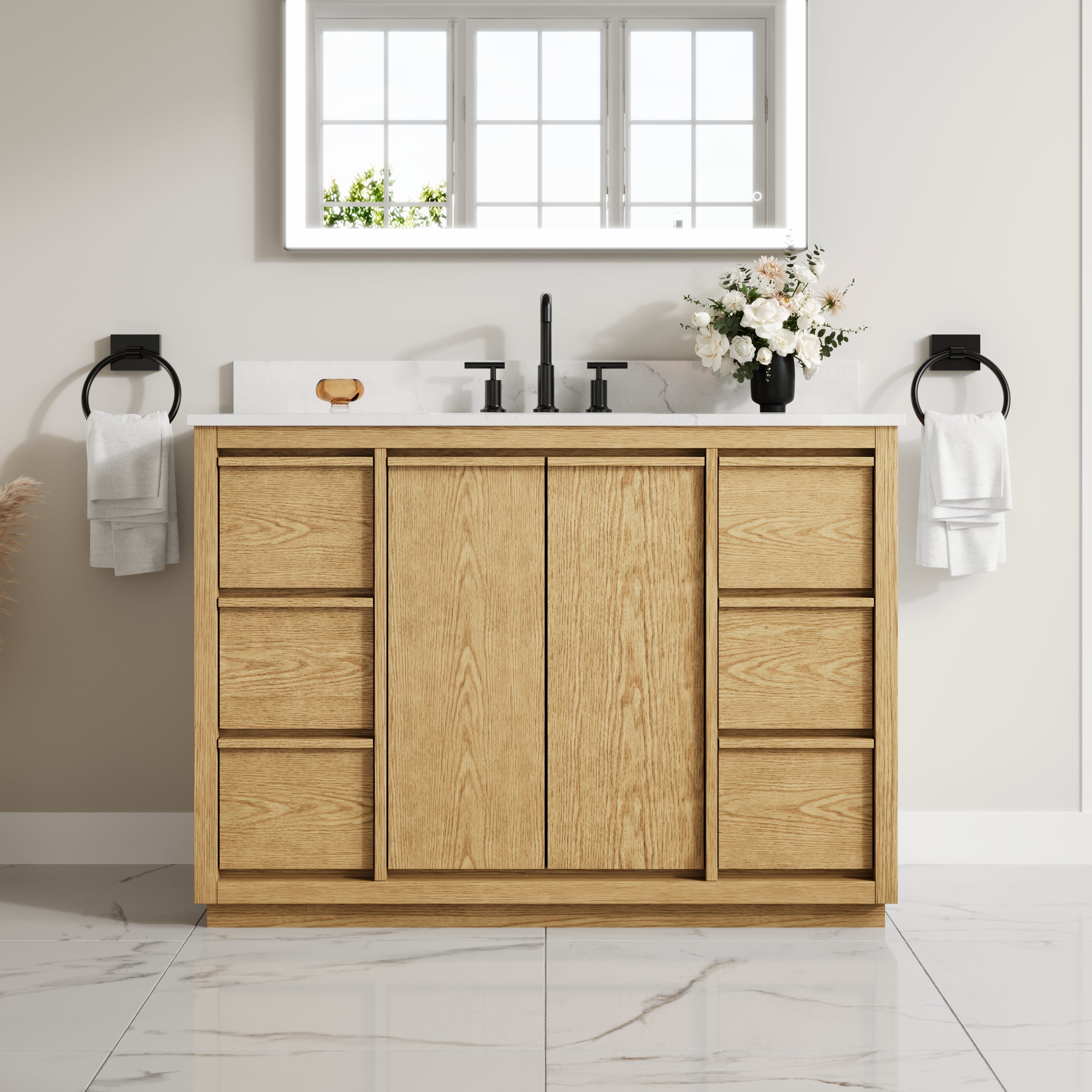
According to industry practice, it is ideal to keep the lower edge of the mirror 6-8 inches above the cabinet surface when the bathroom cabinet is 34-36 inches high. This distance not only prevents water vapor from directly hitting the mirror frame for a long time, but also allows natural lighting to cover the entire operating area.
In terms of width, although the height of the mirror is the focus of this article, there is often a linkage between height and width. Wide mirrors (such as 48 inches or more) may appear "floating" if installed too high; if the narrow mirror is installed too low, it will compress the visual proportion of the wall. Therefore, the wider the rectangular mirror, the more critical its vertical centering is.
4. The height difference between single-person use and multi-person sharing scenarios
In the main bathroom or suite bathroom, mirrors often serve a fixed crowd, and their height can be adjusted according to the height of the main users. For example, when the primary user is around 70 inches tall, raising the mirror center to 64-66 inches can achieve a more natural line of sight alignment.
In a bathroom shared by multiple people, the mirror height should accommodate a broader range of heights. The industry tends to adopt a "standardized center height," which fixes the center of the mirror at around 62-64 inches, allowing most users to complete daily operations without tiptoeing or bending over.
5. The influence of LED lighting structure on height selection
Unlike ordinary unlit mirrors, the lighting method for rectangular bathroom mirrors directly affects height determination.
When the LED strip is located at the front edge of the mirror, the relationship between the light and the line of sight is particularly critical. If the mirror is installed too low, the light may concentrate on the neck and chest; if installed too high, it is easy to create shadows under the eyes and the nose bridge.
Backlit mirrors are relatively tolerant, but it is still recommended to ensure the center of the mirror is at least 60 inches from the wall to keep the halo's diffusion within the visual comfort zone.
Some high-end models adopt a dual directional lighting design, which allows for greater freedom in height selection. However, the industry still recommends following the core principle of "face centering."
6. Height strategy when coexisting with wall cabinets and side cabinets
In modern bathrooms, mirrors are often paired with side or wall cabinets, which add to the height requirements.
When a hanging cabinet is above the mirror, a gap of 2-4 inches is usually required between the mirror's upper edge and the cabinet's bottom to avoid visual crowding and leave space for installation and later maintenance. In this case, the overall height of the mirror may need to be slightly lowered, while maintaining the center of the mirror surface within the industry-recommended range as much as possible.
If the mirror is at the same height as the side cabinet, it is more emphasized to align the vertical lines. At this time, the mirror height is often determined by the cabinet size, and the installation position is adjusted to ensure the cabinet does not block the light.
7. Neglecting common issues caused by height
In industry feedback, after-sales or user complaints caused by unreasonable mirror height mainly focus on three points: firstly, poor lighting angle, resulting in repeated posture adjustments during makeup or shaving; secondly, the proportion of mirrors to bathroom cabinets is unbalanced, resulting in an overall cheap appearance; thirdly, neck discomfort may occur after prolonged use.
These issues are often not product quality defects, but rather a lack of understanding during the installation phase.

8. Summary: The essence of height is the scale of "human."
From an industry perspective, the installation height of rectangular bathroom mirrors with lights is not a simple numerical issue, but a comprehensive judgment formed around the usage habits, line of sight height, and behavioral path of "people."
In the vast majority of scenarios, controlling the center of the mirror to be between 60-65 inches and the lower edge of the mirror to be between 38-42 inches, combined with adjusting the height of the bathroom cabinet, lighting structure, and spatial layout, can maximize the functional and design value of rectangular bathroom mirrors with lights.
When the height is chosen correctly, the lighting can truly serve people, and the mirror can become the most trusted "daily companion" in the bathroom.











Leave a comment
This site is protected by hCaptcha and the hCaptcha Privacy Policy and Terms of Service apply.