


















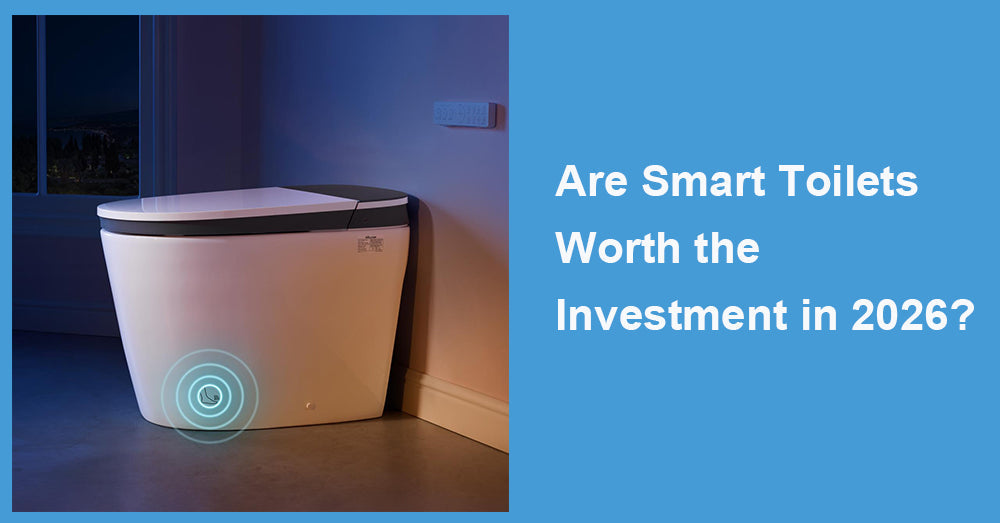
A smart toilet can look like an expensive luxury until you live with one. After working with bathroom products for more than two decades, I have seen buyers dismiss these fixtures as unnecessary, then change their minds after experiencing warm-water washing, a heated seat, and hands-free flushing. I have also seen the opposite: homeowners paying for a long list of functions they barely use. In 2026, the value of a smart toilet depends on practical performance, installation conditions, and the habits of the people using it.
1. Why Smart Toilets Are Becoming More Practical
Smart toilets have moved beyond novelty. Current models tend to have cleaner profiles, simpler controls, more dependable sensors, and better heating systems than earlier versions.
The core benefit is water-based personal cleaning. Users can usually adjust spray position, water temperature, and pressure. For people with sensitive skin, limited flexibility, or mobility concerns, this can make everyday hygiene easier and more comfortable.
There are smaller benefits, too. A heated seat is welcome during cold mornings. A night-light makes late bathroom visits less disruptive. Automatic flushing and touch-free lid operation reduce contact with commonly handled surfaces.
These conveniences are used every day, which is why a smart toilet can make more sense in a primary bathroom than in a rarely used powder room.
2. Which Smart Toilet Features Are Worth Paying For?
The washing system should be the first thing you evaluate. A good model delivers stable water pressure and allows easy adjustment of the nozzle position. Complicated controls are not a sign of better engineering.
Instant water heating is usually preferable to a small storage tank. It provides warm water throughout the wash cycle instead of relying on a limited supply that may cool during use.
Seat heating is another feature that owners tend to keep using after the novelty fades. Look for multiple temperature settings and an energy-saving mode. There is no reason to keep the seat at full heat when the bathroom is empty.
Warm-air drying can reduce toilet paper use, but expectations should be realistic. Drying often takes longer than people imagine, and many users still finish with a small amount of paper.
Nozzle hygiene also matters. A retractable nozzle with automatic rinsing before or after use is preferable. Separate front and rear wash settings are useful in shared bathrooms.
3. Automatic Functions Can Help or Frustrate
Automatic lids, foot sensors, and hands-free flushing can make a bathroom feel easier to use. They are especially helpful for older adults or people with limited hand movement.
Sensor quality is critical, though. A lid that opens whenever someone walks past the doorway quickly becomes annoying. A toilet that flushes before the user is ready is worse.
Choose a model that allows the sensor range or automatic functions to be adjusted. Simple manual backup controls are also valuable. Technology should support the user, not create another set of problems.
Remote controls deserve attention as well. Clear buttons and readable icons are usually better than a crowded touchscreen. In my experience, families use a smart toilet more confidently when the controls can be understood without opening the manual.
4. Where the Investment Makes the Most Sense
A smart toilet is easiest to justify in a primary bathroom used several times a day. Frequent use turns comfort features into practical ones.
It can also support aging-in-place plans. Water washing, automatic flushing, and a wall-mounted remote may help users maintain independence. For someone recovering from surgery or living with reduced mobility, the fixture may offer more than convenience.
Households that already prefer bidet washing are another good fit. An integrated unit creates a cleaner appearance than a separate bidet attachment and often provides better control over water temperature and spray position.
Wellfor smart toilet models are best approached as functional bathroom fixtures rather than electronic showpieces. The most successful products are those that make daily routines simpler without demanding constant attention.
5. The Limitations Buyers Should Understand
The purchase price is the obvious drawback, but it is not the only one. Installation may require electrical work, water-line adjustments, or changes to the existing outlet location.
Smart toilets also contain more components than conventional fixtures. Sensors, heaters, pumps, control boards, fans, and motors can eventually need service. A standard toilet is easier for most plumbers to repair because its parts are widely understood and readily available.
Power outages are another concern. Some models still allow basic manual flushing, while others lose most electronic functions. Ask how the toilet operates without electricity before buying.
Noise may matter in an en suite bathroom. Drying fans, deodorizing systems, pumps, and motorized lids are not silent. Light sleepers should pay attention to this detail.
A smart toilet may also be unnecessary in a guest bathroom that sees limited use. In that case, a standard toilet or electronic bidet seat may provide better value.
6. Common Buying Mistakes
The biggest mistake is choosing a model by counting features. Bluetooth sound, colored lighting, and complex digital displays may look impressive, but most owners rely on washing, seat heating, drying, and flushing.
Comfort is sometimes overlooked as well. Bowl shape, seat height, sitting position, and width still matter. Advanced controls cannot correct an uncomfortable design.
Buyers should also confirm the rough-in measurement. Many toilets are made for a 12-inch rough-in, measured from the finished wall to the center of the drain, but older bathrooms may differ.
Check the household water pressure requirements, too. Weak or inconsistent pressure can affect washing performance.
Warranty coverage should include electronic components, not just the ceramic body. Replacement-part availability and responsive support are equally important.
7. Installation Needs to Be Planned Early
Most smart toilets require a nearby grounded outlet with appropriate bathroom protection. Extension cords are not a safe permanent solution.
Have a qualified electrician confirm the outlet location before installation. The cord should reach naturally without crossing the floor or remaining visibly stretched behind the fixture.
The water supply valve must also remain accessible. Some units use filters, extra hoses, or larger fittings that need more clearance than a traditional toilet.
One-piece smart toilets can be heavy and awkward to position. Professional installation is often worth the cost because it reduces the risk of damaging the toilet, drain seal, or finished floor.
Before purchasing, verify that the remote has a convenient wall location and that service panels will remain accessible.
8. Maintenance Is Straightforward but Necessary
Use mild, nonabrasive cleaners on the seat, ceramic surface, and controls. Strong chemicals may damage coatings, plastic parts, or electronic components.
The nozzle should still be cleaned periodically even when the toilet has a self-rinsing cycle. Hard-water deposits can alter the spray pattern and reduce water flow.
Filters may need cleaning or replacement. Ignoring them can reduce performance and put extra strain on the internal system.
Do not force a motorized lid or seat by hand. This can damage the gears. Follow the manufacturer’s shutdown instructions if the fixture will remain unused for an extended period.

9. Making the Right Choice for Your Bathroom
A smart toilet is a sensible investment for a frequently used bathroom, a household that values bidet washing, or a renovation designed around comfort and long-term accessibility. It is less practical when electrical access is difficult, the room is rarely used, or the budget should first address plumbing, ventilation, or structural repairs.
Focus on reliable washing, instant heating, simple controls, nozzle cleanliness, manual operation during outages, and dependable service support. Skip features that do not match your routine.
The best Wellfor smart toilet is not the model with the most impressive specification sheet. It is the one that fits your bathroom, works comfortably for every user, and continues to make daily life easier long after the first week.























Leave a comment
This site is protected by hCaptcha and the hCaptcha Privacy Policy and Terms of Service apply.