
















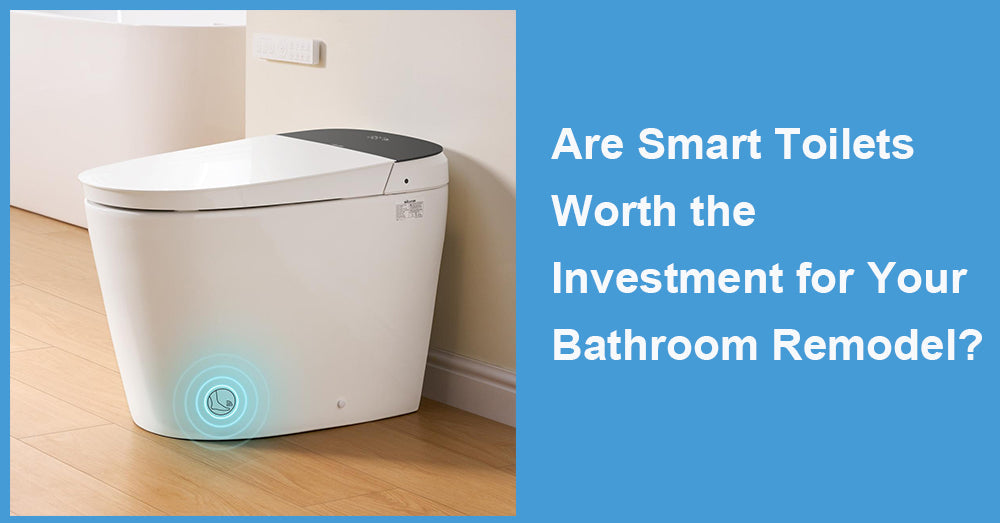
In recent years, smart toilets have gradually moved from "novel configurations" to mainstream options in bathroom renovation discussions. With improvements in living comfort and health awareness, more and more renovation projects are re-examining the long-neglected core components of toilets. Compared with traditional toilets, smart toilets exhibit significant differences in cleaning methods, comfort, water efficiency, and long-term operating costs. So, in a rational bathroom renovation, is a smart toilet worth the investment?
1. Value from frequency of use: High-frequency devices determine the lower limit of experience
Among all bathroom equipment, the toilet is the most frequently used and an irreplaceable presence. Industry research shows that the daily use of a single toilet in a household is much higher than that of a shower system, a bathtub, or a bathroom cabinet. This also means that any slight differences in experience will be continually amplified over the long term.
The smart toilet transforms the originally "functional" toileting process into a more comfortable and stable experience through features such as automatic flushing, warm-water cleaning, and warm-air drying. This improvement is not a one-time visual upgrade, but is repeatedly perceived every day.
2. The change in cleaning methods: from paper to water
From a technical perspective, the core upgrade of smart toilets lies in their cleaning methods. Compared to the traditional paper-only mode, the water-washing method offers significant advantages in cleaning coverage and consistency.
Related studies have shown that under the same conditions, the effective coverage area of water washing cleaning is significantly higher than that of dry wiping, which is also one of the essential reasons why smart toilets are widely used in high-end residential and wellness spaces. For families with elderly, children, or members with higher hygiene requirements, this change not only improves comfort but also provides a long-term, stable improvement in quality of life.
3. Size and Installation: Is it suitable for the existing bathroom space?
Many renovation decisions stop at "worrying about not being able to fit". In fact, the length of most integrated smart toilets falls within 27-30 inches, which is close to the height of traditional toilet sizes. The split-type intelligent toilet lid solution changes the original footprint only slightly.
When planning, what really needs to be paid attention to are the following points:
Does the pit spacing for rear or ground drainage match
Can the power socket be reasonably placed behind the toilet on the side?
Is there at least 21 inches of usable space reserved ahead
As long as reasonable planning is carried out in the early stages of renovation, smart toilets will not add additional pressure to the spatial layout.
4. Water and energy consumption: not necessarily "more resource intensive."
A common misconception is that having more functions in a smart toilet necessarily means higher water and electricity consumption. But the actual data show the opposite.
Many smart toilets use precise control flushing systems, and the amount of water flushed each time is usually lower than that of traditional old-fashioned toilets. Meanwhile, seat heating and instant hot water systems often operate on demand rather than continuously. In the long-term use cycle, comprehensive water-use efficiency is actually more stable.
In water-saving renovation projects, smart toilets are often regarded as representative products that combine functional upgrades with resource efficiency.
5. Comfort details: overlooked long-term benefits
The value of smart toilets is primarily reflected in the details that are difficult to quantify but persist:
The thermostatic seat ring reduces seasonal discomfort.
Night soft lighting enhances safety.
Automatic deodorization reduces odor accumulation in the space.
Contactless operation reduces cross-contamination.
These features may not be "shocking" at first, but gradually become a habit difficult to let go of in daily use.
Another practical consideration in smart toilet adoption is user adaptability and the learning curve. Unlike many bathroom upgrades that require behavioral adjustment, smart toilets tend to integrate seamlessly into daily routines. Most functions are intuitive, and users can selectively enable features based on comfort levels rather than changing habits entirely. This gradual adaptability lowers resistance to adoption, especially in multi-generational households, and helps ensure that the upgraded functionality is consistently used rather than ignored as the initial novelty fades.
6. Maintenance and durability: Will it increase the burden in the later stage?
From an industry perspective, the reliability of smart toilets has significantly improved. The modular level of core components is higher, and routine maintenance is no more complex than that of traditional toilets. On the contrary, due to its more precise control system, there are fewer scale and residue issues in the internal flushing path in many cases.
Under normal use conditions, the service life of key components of smart toilets can span a complete bathroom renovation cycle, providing an essential foundation for their gradual acceptance in the mainstream market.
7. Cost perspective: one-time investment in exchange for long-term experience
If bathroom renovation is seen as a long-term use decision lasting 10-15 years, then the evaluation method for equipment selection should change accordingly. The initial cost of smart toilets is indeed higher than that of basic products, but when used long-term and frequently, the per-use cost is not prominent.
More importantly, it enhances the "underlying experience" of quality of life, rather than just a decorative upgrade at the visual level.

8. Conclusion: Whether it is worth it depends on how you view "upgrading."
Smart toilets are not a must-have for all bathroom renovations, but for families who prioritize comfort, hygiene standards, and long-term stability, they have shifted from optional to worth considering seriously.
When the bathroom evolves from a simple, functional space to a high-frequency-use, comfortable, and healthy lifestyle space, the value of smart toys often becomes increasingly apparent over time.















Leave a comment
This site is protected by hCaptcha and the hCaptcha Privacy Policy and Terms of Service apply.