
















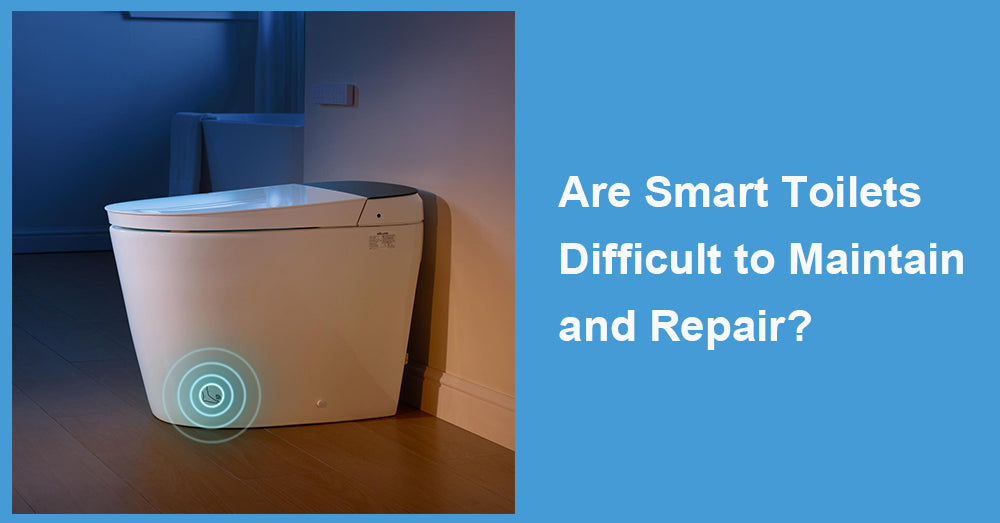
Smart toilets tend to spark the same two reactions. People either love the idea of heated seats, automatic flushing, bidet washing, and cleaner day-to-day use, or they worry the product will become a maintenance headache the minute something electronic stops working. After seeing these units specified for remodels, installed in real homes, and used over time, I would say the truth sits somewhere in the middle: smart toilets are not difficult to maintain if you buy the right model and install it properly, but they are less forgiving than a basic gravity toilet when corners get cut.
1. Why smart toilets seem harder to maintain than they really are
A standard toilet is simple. Fill valve, flapper, flush handle. Most homeowners have seen the inside of one. Smart toilets feel different because the technology is visible from the start: wash functions, dryers, sensors, remote controls, night lights, seat heating, sometimes even auto open and close.
That added functionality makes people assume every repair will be expensive and complicated. In practice, routine maintenance is usually straightforward. The most common tasks are cleaning the nozzle area, wiping sensors, descaling if you have hard water, changing filters on certain models, and making sure the power connection stays dry and secure.
None of that is especially hard. It is just a different routine.
The bigger issue is not maintenance. It is expectations. Some buyers treat a smart toilet like a standard toilet with bonus features, when it really should be viewed more like a bathroom fixture with light appliance-level components built in.
2. Daily care for smart toilets is easier than many homeowners expect
In regular household use, many smart toilets are actually easier to keep clean than traditional models. The seat and bowl design is often more streamlined. Some have rimless bowls, self-cleaning nozzles, UV sanitation, or pre-wet functions that reduce waste sticking to the surface.
That matters in real life. If you have children, older family members, or a busy shared bathroom, anything that cuts down on deep cleaning helps. A well-designed smart toilet can save time week after week.
Still, they are not maintenance-free. The mistake I see most often is homeowners using harsh cleaners without checking what the manufacturer recommends. Strong bleach-based chemicals, abrasive pads, or overly aggressive descalers can damage finishes, sensors, seals, and plastic components faster than people expect.
Common maintenance habits that help
Use a soft cloth for the seat and control surfaces. Clean the bidet nozzle area gently and regularly. If your water is mineral-heavy, descale on schedule instead of waiting until spray performance drops.
It is also smart to keep the outlet area dry and inspect the cord placement now and then. Bathrooms are humid spaces, and good electrical housekeeping matters more here than it does with a conventional toilet.
Where people get into trouble
Neglect is one problem. Over-cleaning with the wrong products is another.
I have also seen homeowners ignore small warning signs, like slower nozzle movement, weaker spray pressure, or inconsistent flushing, because the toilet still “mostly works.” With a standard toilet, that kind of delay is often harmless. With a smart toilet, early attention can prevent a larger service issue later.
3. Repairs are not impossible, but they are more specialized
This is where the conversation needs some honesty. Smart toilets are usually not difficult to maintain, but they can be more specialized to repair.
If the problem is basic, such as a clogged filter, scale buildup, loose seat fitting, or a simple power reset, the fix may be manageable for a homeowner or a capable installer. If the issue involves the circuit board, sensor system, heating element, solenoid valve, or integrated bidet controls, that is a different level of repair.
A standard plumber may handle the water-side issues with no trouble at all. Once electronics are involved, brand support and parts availability start to matter much more. That is why I always tell buyers not to shop smart toilets as if they are commodity products. The support behind the unit is part of the product.
Repairs tend to be easier when the model is well supported
A well-supported model from an established brand is much less stressful to own. Parts diagrams are clearer. Troubleshooting steps are better documented. Customer service is usually more familiar with the product. That is where choosing a brand like Wellfor can make more sense than chasing the cheapest feature list online.
Buying from an unknown seller with limited support may save money upfront, but it often creates a dead end if a part fails outside the return window.
4. Smart toilets are not right for every bathroom
They are a strong fit in primary bathrooms, aging-in-place renovations, luxury remodels, and homes where comfort and hygiene matter enough to justify the upgrade. They also make a lot of sense for homeowners who already appreciate bidet use and want an integrated design instead of an add-on seat.
They are less suitable in some other situations. I would hesitate to recommend them for rough rental environments, vacation properties that sit unused for long stretches, or remodels where the electrical setup is still an afterthought. If there is no convenient outlet, poor ventilation, or unreliable water quality, the ownership experience gets less pleasant.
There is also the human factor. Some buyers want smart toilets because the features sound impressive, then use only the flush button for the next three years. In that case, the added complexity brings little real value.

5. Installation and long-term buying advice
Most maintenance and repair complaints can be traced back to the beginning. Bad installation causes more frustration than the toilet itself.
Make sure the rough-in size is correct. Confirm the outlet placement before purchase. Check that the bathroom has a properly located GFCI outlet. Do not force a plug extension across the room and call it done. Have the water pressure verified if the model depends on consistent wash performance.
For long-term ownership, I recommend choosing features you will genuinely use instead of buying the most loaded model on the page. Heated seat, adjustable wash, warm air dry, and dependable flushing usually matter more than extra gimmicks. Fewer unnecessary features can mean fewer things to troubleshoot later.
Maintenance is also easier when the design is accessible. Removable filters, clear controls, and serviceable components are worth paying attention to.
If you want a smart toilet because you expect a cleaner, more comfortable bathroom routine, that is a reasonable upgrade. Just buy it with the same mindset you would use for any higher-function fixture: proper installation, a reputable brand, realistic expectations, and basic care. Treated that way, smart toilets are usually not difficult to live with, and they are much easier to justify when the model you choose still feels dependable a few years after installation.














Leave a comment
This site is protected by hCaptcha and the hCaptcha Privacy Policy and Terms of Service apply.