






















Introduction
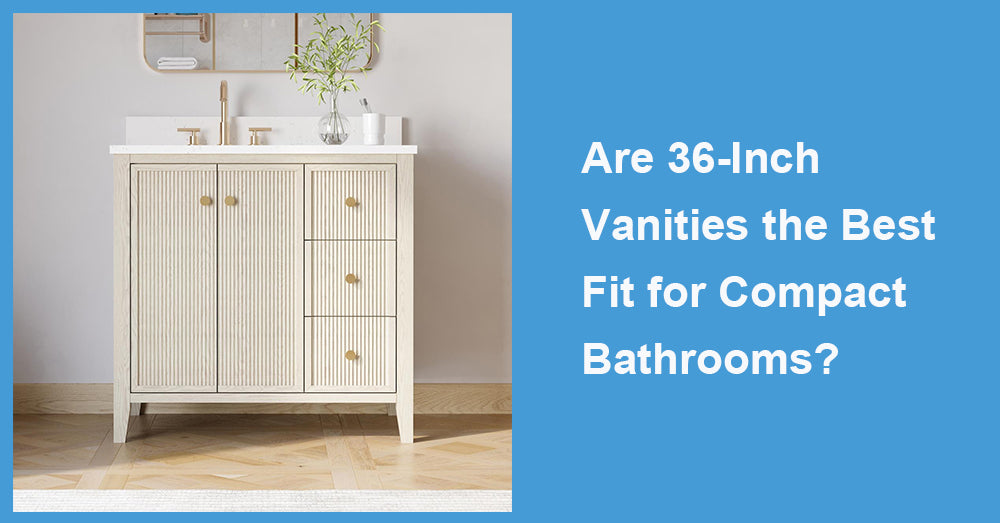
36-inch vanities are often the first size I recommend when a compact bathroom needs to feel useful without feeling crowded. After years of looking at real remodels, not just showroom layouts, I’ve found that this size lands in a very practical middle ground. It gives homeowners enough counter space for daily routines, enough storage for the basics, and enough visual presence to make the room feel finished, but it usually stops short of overwhelming a tight floor plan.
That does not mean a 36-inch vanity is automatically the right answer. In some bathrooms, it is exactly the size that makes the room work better. In others, it is just a little too deep, a little too wide, or simply the wrong shape for the way the door, toilet, and shower all compete for space.
1. Why 36 Inches Often Feels Like the Sweet Spot
In compact bathrooms, every fixture has to justify itself. A vanity that is too small can leave the room feeling under-equipped. One that is too large creates daily frustration, even if it looks impressive in a product photo. That is why 36 inches works so well so often. It usually gives you a full sink base, some usable countertop, and better storage options than the smaller 24-inch or 30-inch models that tend to feel limiting in daily use.
I see this most often in hallway bathrooms, condo bathrooms, and smaller primary baths where homeowners want one sink, not two, but still need the room to support real routines. Brushing teeth, setting down skincare, storing extra hand towels, keeping cleaning supplies out of sight. A 36-inch vanity can handle those jobs better than many people expect.
There is also a visual advantage. In a compact bathroom, scale matters as much as square footage. A vanity that is too narrow can make the room feel pieced together, like everything was chosen as an afterthought. Thirty-six inches usually has enough presence to look intentional.
2. Where 36-Inch Vanities Perform Well in Real Life
This size tends to shine in bathrooms used by one person at a time. Guest baths are an obvious example. So are many family bathrooms where space is limited but the vanity still has to carry everyday function. I also like 36-inch vanities in renovation projects where the homeowner wants better storage without moving plumbing too aggressively.
In real use, they usually offer a better balance than people get from smaller vanities. You can set down soap, a toothbrush holder, maybe a tray for hand lotion or a candle, and still have the room look orderly. That matters more in compact bathrooms because clutter becomes visible immediately.
A good 36-inch vanity can also help a smaller room feel more grounded. The bathroom looks planned, not improvised.
A common mistake buyers make
A lot of people focus only on width. That is where they get into trouble.
A 36-inch vanity with excessive depth can choke a small bathroom faster than a slightly wider vanity with a slimmer profile. I’ve seen homeowners buy the correct width and still regret it because the drawers hit the toilet clearance zone or the front edge made the walkway feel tight. In compact spaces, depth, legroom, and door swing matter just as much as the headline measurement.
3. The Advantages, and the Trade-Offs You Should Expect
The advantages are real. A 36-inch vanity often gives you better storage, more counter space, and a more balanced look than smaller alternatives. It also tends to be easier to style. You have room for a proper mirror above it, better lighting placement, and enough visual weight to anchor the room.
Budget is another reason it stays popular. In many collections, 36-inch vanities give homeowners a meaningful step up from entry-level small-bath solutions without pushing them into the pricing of oversized or double-sink units. That is a practical sweet spot, not just a design one.
Still, there are limits. If two adults use the bathroom at once every morning, this size may feel cramped. If the bathroom has a difficult layout, with a nearby swing door or a toilet too close to the vanity wall, 36 inches may still be too much. And if the vanity is poorly designed inside, the extra width does not always translate into better storage.
I’ve seen 36-inch vanities with one false drawer front, awkward plumbing intrusion, and barely usable cabinet space. On paper, they looked practical. In daily life, they disappointed.
When this size is not the best fit
If the bathroom is extremely narrow, or if the vanity has to sit between a tub apron and a door casing with almost no margin, a 30-inch model may be the smarter choice. The same goes for powder rooms where storage is less important than movement.
There are also bathrooms where 42 inches would have been better. Some homeowners get so focused on keeping things compact that they undersize the vanity and lose function they could have had without harming the room.
4. How to Choose the Right 36-Inch Vanity for a Compact Bathroom
The first thing I tell homeowners is to measure beyond the obvious opening. Check the door swing. Check the distance to the toilet. Check whether drawers can open fully. Check whether your knees and feet will feel cramped when you stand at the sink. These are not small details. They determine whether the vanity improves the room or simply fits inside it.
Style matters too. In compact bathrooms, floating vanities or models with open leg space can feel lighter than bulky furniture-style bases. Light finishes often help the room feel more open. Darker finishes can work, though usually only when the room has enough light and contrast to support them.
Storage layout deserves a hard look. Deep drawers are often more useful than a big cabinet void with one shelf. If you use a hair dryer, backup toiletries, cleaning products, or extra paper goods in that room, imagine exactly where those items will go.

5. Installation and Maintenance Advice That Saves Regret Later
Installation can make or break a compact bathroom. A 36-inch vanity should be centered carefully, leveled properly, and placed so the sink does not feel awkward in relation to the mirror and light fixture. Even small alignment mistakes feel more obvious in tight rooms.
Pay attention to plumbing location before ordering. I have seen people choose the right vanity size, then discover the internal drawers or shelf design conflicted with existing plumbing. That leads to modifications, lost storage, or unnecessary delays.
For maintenance, simple is best. Wipe water from the sink edge and cabinet top. Use non-abrasive cleaners. Do not let moisture sit at the base if the bathroom floor stays wet after showers. Compact bathrooms trap humidity more easily, so ventilation matters. A good exhaust fan will do as much for vanity longevity as a premium finish.
For homeowners shopping brands like Wellfor, my practical advice is this: choose 36-inch vanities when your bathroom needs one solid sink zone, useful storage, and a footprint that respects the room. Measure carefully, prioritize interior layout over marketing photos, and do not assume every compact bathroom needs the smallest possible cabinet. Quite often, a well-chosen 36-inch vanity is the size that makes the whole room feel smarter.








































Leave a comment
This site is protected by hCaptcha and the hCaptcha Privacy Policy and Terms of Service apply.