














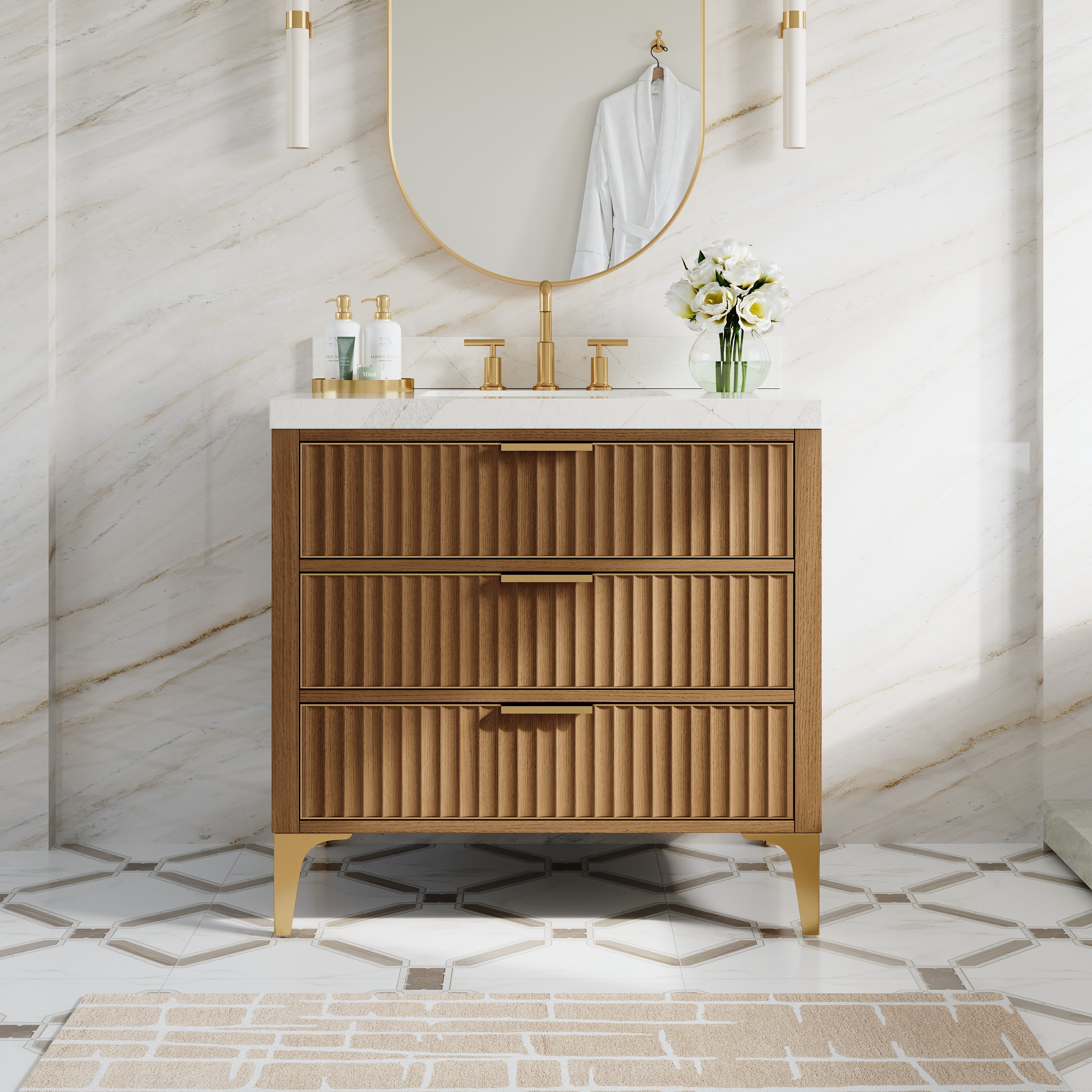
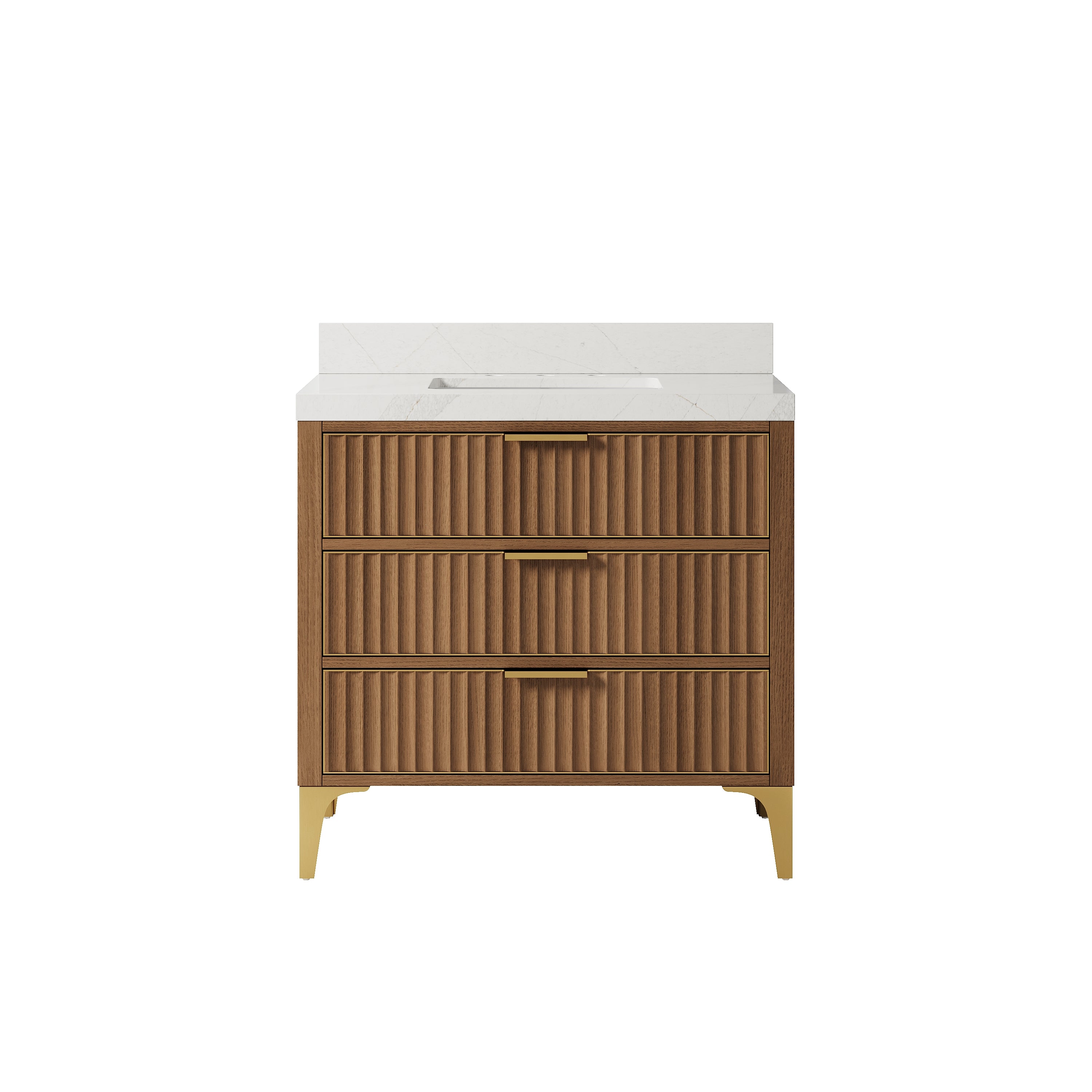
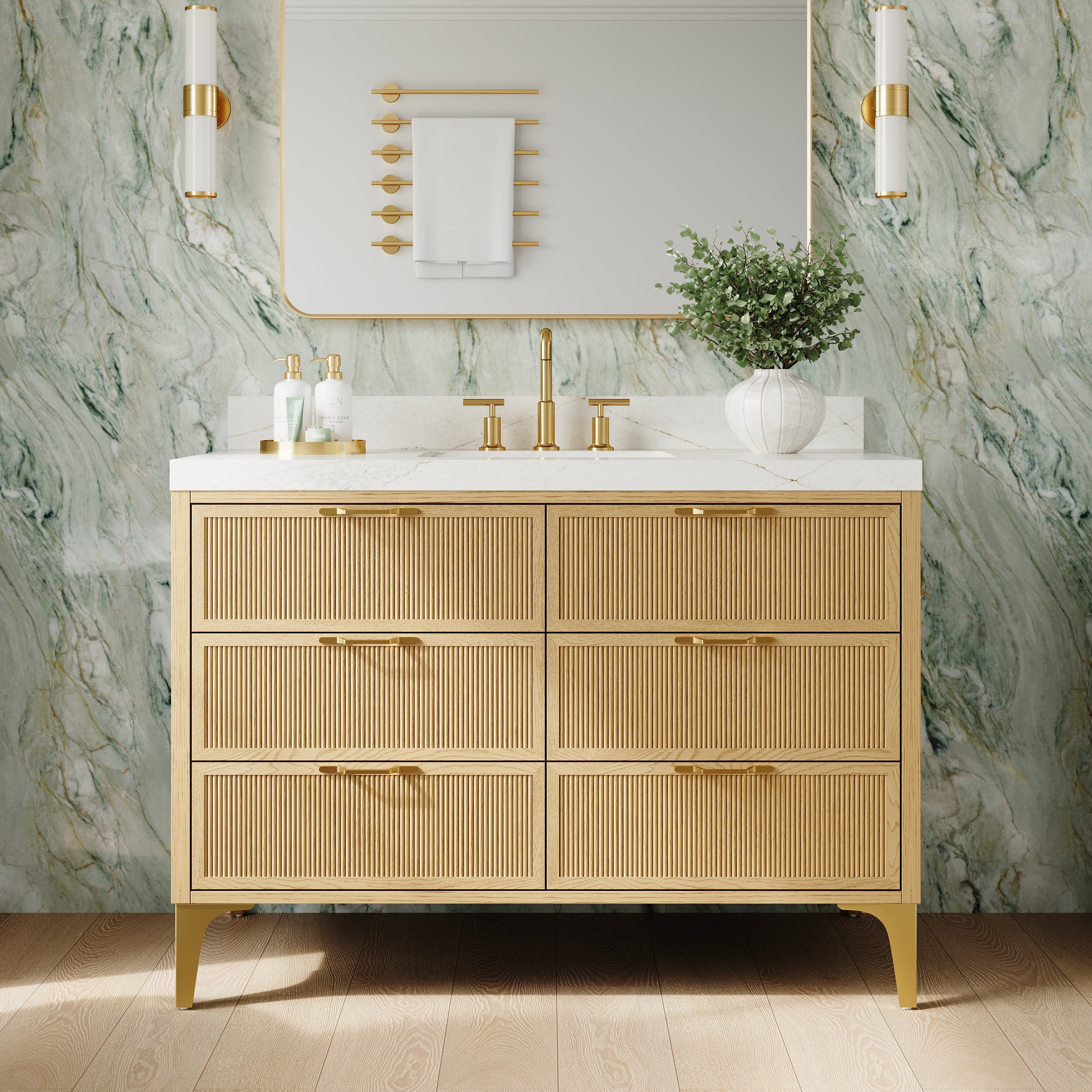
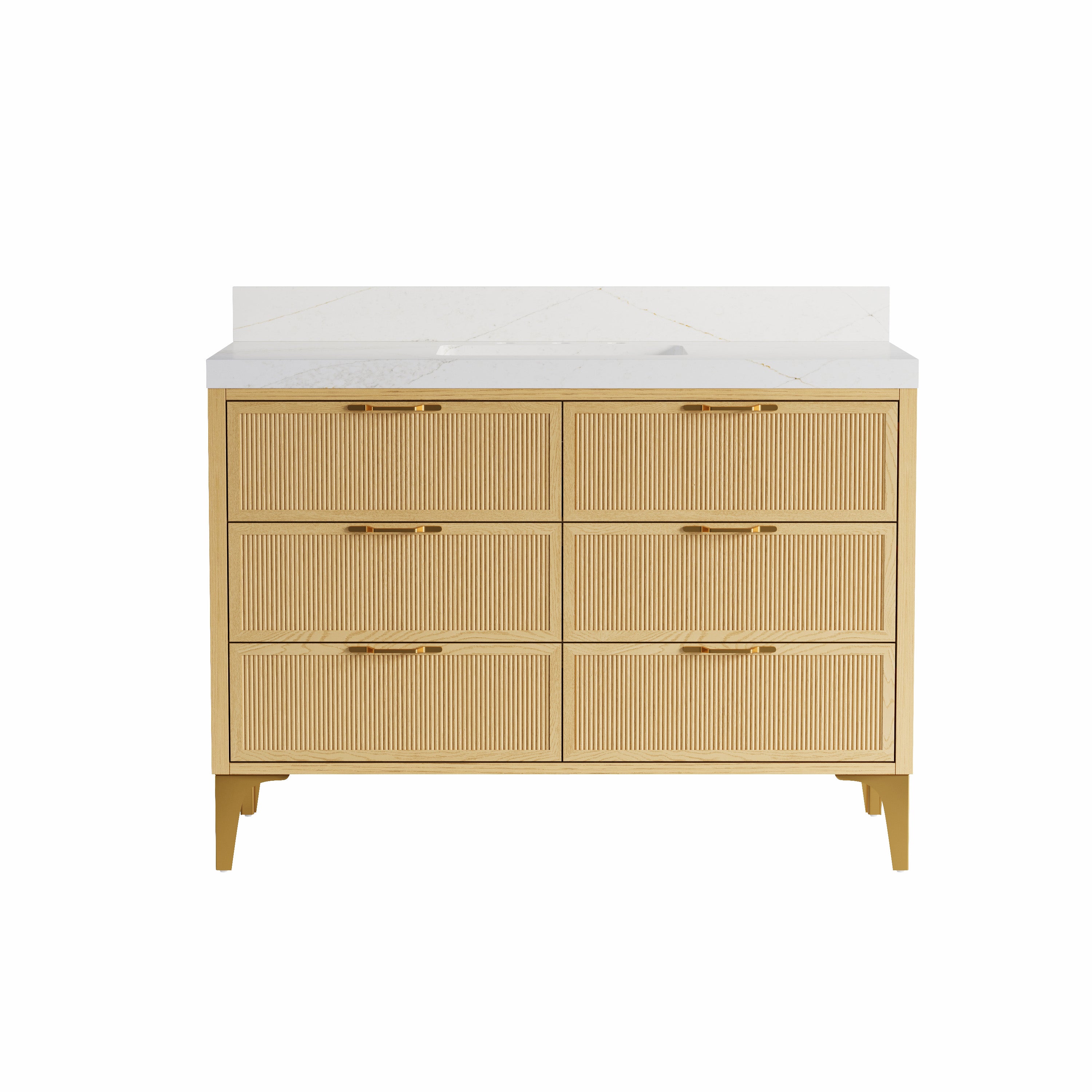


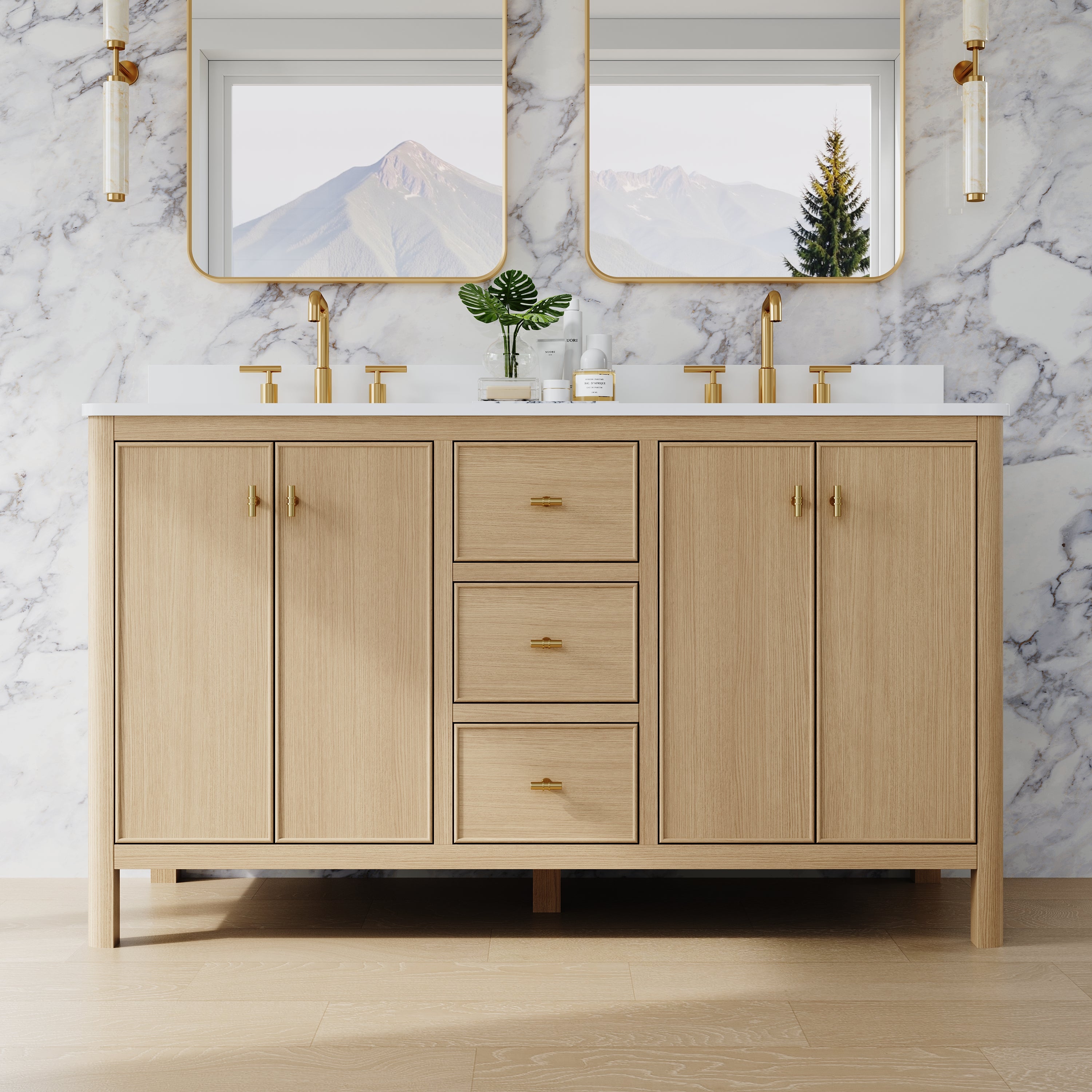
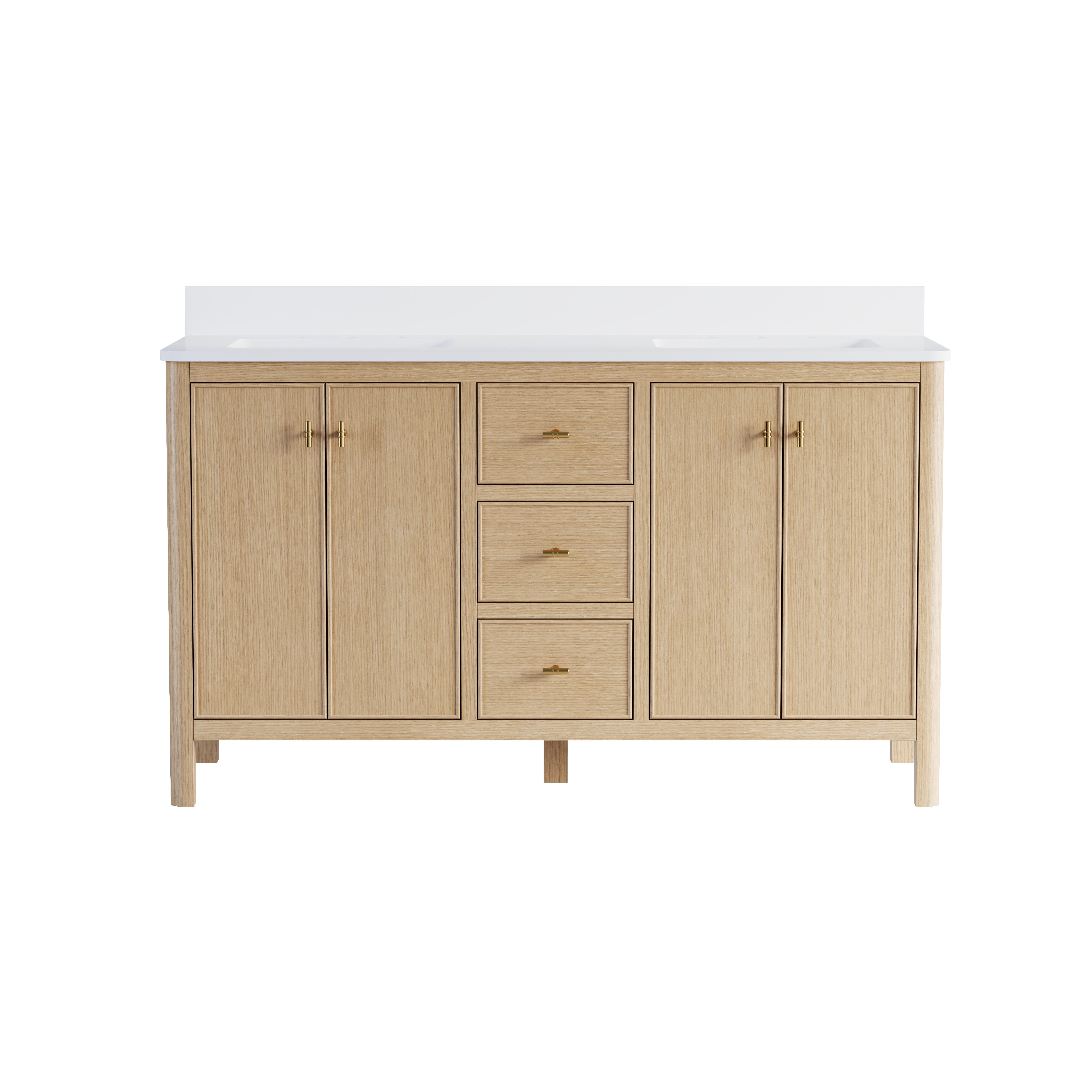
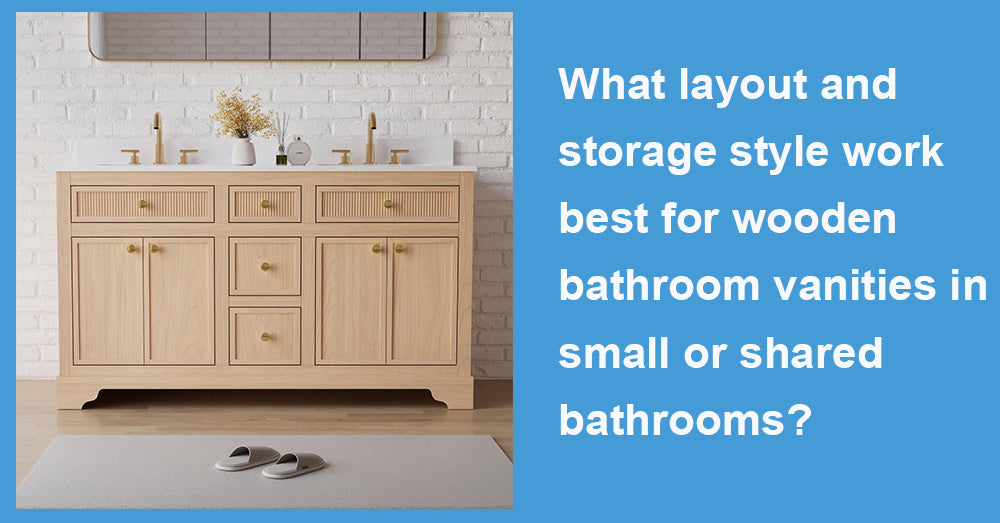
In small or shared bathrooms, wooden bathroom vanities work best when the layout protects your walking path and the storage is organized by how people actually use the room: fast morning routines, frequent handwashing, and limited counter space. The winning formula is usually a shallower footprint, clear “personal zones,” and drawers that keep items visible and separated, so the vanity stays tidy even when two people are using it back-to-back.
1. Start with the one measurement that decides everything: clearance in front of the vanity
A vanity can be the perfect width, but still feel cramped if it steals the space you need to stand comfortably.
· A common code minimum in front of a lavatory is 21 in.
· A widely recommended planning target is 30 in. of clear space from the front edge of fixtures to the next obstacle.
(Source: NKBA Bath Planning Guidelines.)
Practical takeaway: If your bathroom is tight, prioritize a layout that preserves that front clearance even if it means choosing a narrower or shallower vanity. It will “feel” bigger every day.
2. Choose the right depth first (small bathrooms usually lose to depth, not width)
Depth is what most often blocks circulation. Many standard vanities average around 21 in. deep, while compact options can be 18 in. deep (sometimes even less), which can noticeably improve walk-by space. (Source: Home Depot measuring guide; general vanity depth guidance.)
Best depth choices by situation
· Tight walkway or door swing nearby: aim for 18 in. depth.
· More room, want more storage: 20 to 21 in. depth is the common “balanced” zone.
(Source: Home Depot vanity measuring guide; standard depth references.)
3. Layout options that consistently work in small or shared bathrooms
A. Single sink with “landing zones” beats double sinks in many shared baths
Two sinks sound ideal, but in smaller rooms they often sacrifice drawer storage and counter landing space. If two people are sharing one bathroom, a well-designed single-sink vanity with defined storage zones can be more functional than squeezing in a double.
When single sink wins
· You need more drawer space for two people.
· The room cannot comfortably keep the recommended clearance in front of fixtures.
(Source: NKBA clearance guidelines.)
B. Offset sink layouts maximize storage for two users
If a vanity has one sink, an offset sink (sink shifted left or right) can create a larger uninterrupted cabinet section. That section often becomes the “shared storage core” (hair tools, extra towels, backup supplies), while the sink-side drawers hold daily items.
C. Corner vanities are a real solution when the entry path is tight
Corner vanities can free up the center of the room and improve circulation. They are not always the most storage-efficient, but they can be the best layout move when a door swing or narrow aisle makes a traditional vanity feel like a traffic jam.
4. Storage style that works best: drawers first, then doors
In shared bathrooms, clutter happens when items stack behind each other and nobody can see what they have. Drawers reduce that problem.
A. Full-extension drawers outperform cabinet doors for daily-use items
· Drawers keep toiletries visible and prevent “lost item piles.”
· Full-extension drawers let you use the back space instead of forgetting it exists.
· They also make it easy to assign zones: top drawer for daily, middle for grooming, bottom for bulk.
If you have to choose, choose more drawers over deeper cabinet cavities.
B. Door cabinets still matter, but only for tall or awkward items
Cabinet doors are still useful for:
· Cleaning sprays (stored safely and upright).
· Toilet paper bulk packs.
· Hair dryers and tall bottles (if you add organizers).
Best practice: Put a pull-out tray or a simple basket system behind doors so the space is not a dark cave.
5. The “shared bathroom” storage blueprint: design like a locker room, not a pantry
Shared bathrooms run smoother when you separate storage by ownership and frequency.
A simple 3-zone system
1. Daily zone (top drawer): toothbrush items, face wash, deodorant, daily skincare.
2. Personal zone (second drawer, split): left side person A, right side person B, or use dividers.
3. Shared + bulk zone (bottom drawer or door section): extra soap, backup toothpaste, tissues, spare razors.
This reduces morning friction because nobody has to move the other person’s stuff to get ready.
6. Size and configuration rules that usually prevent regret
Common vanity sizing ranges are widely standardized in retail planning guides, which helps you choose quickly:
· Typical widths include 24, 30, 36, 48, 60, 72 in.
· Typical heights are often around 31 to 32 in.
· Depth often averages around 21 in. (with compact options available).
(Source: Home Depot measuring guide.)
What tends to work best
· Small bathroom, 1 user: 24 to 30 in. vanity with drawers.
· Small bathroom, 2 users: 36 to 48 in. single sink, offset if possible, heavy on drawers.
· Shared kids bath: 48 to 60 in. if the room allows clearance, but prioritize durable organization and easy-clean surfaces.
7. Don’t forget moisture management, because wood storage is only “good storage” if it stays stable
Wood and finishes last longer when the bathroom clears humidity efficiently. Practical guidance suggests keeping indoor humidity roughly 30% to 50% to reduce mold risk. (Source: U.S. EPA indoor air quality guidance.)
Ventilation sizing also matters. A common rule is roughly 1 CFM per sq. ft. of bathroom area, with 50 CFM minimum for smaller bathrooms. (Source: Home Ventilation Institute.)
Why this matters for layout and storage
· Better ventilation reduces damp drawers and musty cabinets.
· It protects finishes and keeps doors/drawers operating smoothly long-term.
8. Smart add-ons that make small or shared vanities feel twice as organized
You can “upgrade” storage without changing the vanity size.
High-impact, low-effort add-ons
· Drawer dividers for two-person zones.
· A vertical hair-tool bin in a lower drawer.
· A shallow top drawer insert for dental and grooming tools.
· Under-sink U-shaped organizers around plumbing.
· A labeled backup basket system (soap, dental, shaving, first aid).
These add structure, which is the real difference between “storage exists” and “storage works.”

Bottom line
For small or shared bathrooms, the best wooden bathroom vanity setup is usually a space-saving depth, a layout that preserves at least 21 in. minimum and ideally 30 in. clearance in front of fixtures, and a drawer-forward storage plan that creates personal zones and keeps daily items visible. Combine that with proper humidity control and ventilation capacity to protect wood and finishes, and you get a vanity that stays organized, comfortable to use, and good-looking for the long haul.














Leave a comment
This site is protected by hCaptcha and the hCaptcha Privacy Policy and Terms of Service apply.