
















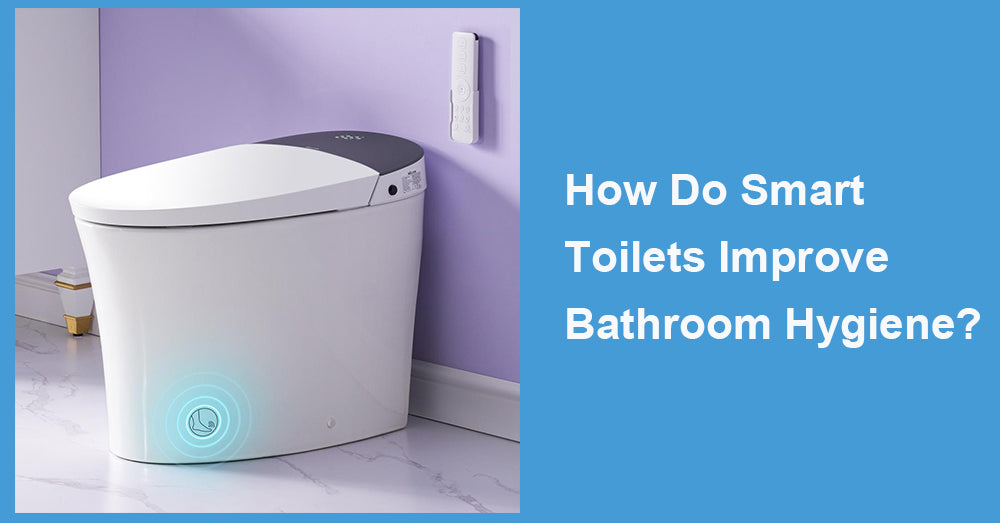
Smart toilets are becoming a quiet but steady upgrade across modern bathroom design, especially as hygiene expectations shift from “clean-looking” to “self-maintaining” systems. Smart toilets are no longer just about comfort features—they are increasingly positioned as sanitation devices that actively reduce contact, residue buildup, and post-use contamination risks.
In product planning terms, this category is moving closer to a “touch-minimized bathroom core,” where flushing, washing, and cleaning functions are automated rather than manual.
1. Fewer contact points means fewer contamination risks
The biggest hygiene advantage of smart toilets is simple: fewer things need to be touched.
Traditional toilets rely on flush handles, lids, and sometimes separate bidet controls. Each of those becomes a repeated contact surface. Smart toilets replace most of those interactions with sensor-based or button-minimized controls.
This shift matters in shared bathrooms. The CDC consistently highlights that high-touch surfaces increase cross-contamination risk, especially in environments with frequent use and limited cleaning intervals. Source: CDC
In practical terms, reducing hand contact is one of the fastest ways to improve baseline bathroom hygiene without changing user behavior.
2. Automatic flushing reduces leftover waste exposure
Manual flushing depends on user consistency. Smart toilets remove that variable.
Most modern units use auto-flush sensors that activate when the user stands up. That reduces the risk of incomplete or delayed flushing, both of which can leave residue exposed in the bowl.
Industry testing standards for residential toilets often reference 1.28 gallons per flush (gpf) as a water-efficiency benchmark for EPA WaterSense-certified fixtures, balancing performance and consumption. Source: EPA WaterSense
While water efficiency is the headline benefit, the hygiene impact is equally important: waste is removed immediately rather than sitting exposed.
3. Built-in bidet systems improve cleaning consistency
One of the biggest hygiene gaps in traditional setups is inconsistent cleaning after use. Smart toilets with integrated bidet functions address this directly.
Water-based cleaning reduces reliance on paper-only cleaning methods, which can vary widely in effectiveness depending on user behavior. Adjustable water pressure, nozzle positioning, and temperature control make the cleaning process more repeatable.
From an industry standpoint, this is where adoption is accelerating fastest: once users experience consistent cleaning performance, bidet integration becomes a baseline expectation rather than a premium feature.
Typical modern units offer adjustable wash duration and spray positioning, often within a controlled range of a few seconds per cycle, designed to balance comfort and cleanliness.
4. Heated seats and controlled environments reduce moisture issues
It may not look like a hygiene feature at first, but temperature control affects bacterial comfort zones.
Cold ceramic surfaces tend to discourage prolonged contact cleaning routines, while heated seats encourage quicker use cycles and reduce condensation buildup in colder environments.
Moisture control matters because damp surfaces can indirectly support bacterial persistence. A stable, dry post-use environment helps reduce residual contamination on the bowl surface and seat area.

5. Self-cleaning nozzles and bowl rinsing systems
One of the more important engineering upgrades in smart toilets is the automation of internal cleaning.
Many systems now include:
· self-rinsing bidet nozzles before and after each use
· UV or electrolyzed water cleaning cycles in higher-end models
· Pre-rinse bowl misting to reduce adhesion before use
These functions are not cosmetic. They reduce buildup on internal surfaces where manual cleaning is inconsistent.
DOE efficiency discussions around household systems often emphasize that automated cycles reduce user dependency, which directly improves long-term performance consistency. Source: DOE
In other words, hygiene improves not just because the system is better, but because it is more consistent.
6. Odor control improves perceived and real cleanliness
Air quality is part of the perception of hygiene. Many smart toilets now integrate deodorizing systems using carbon filters or ion-based neutralization.
This does not just improve comfort—it also reduces airborne odor compounds that signal the presence of contamination. In shared or compact bathrooms, that changes how frequently users feel the need to clean surfaces.
While odor control is often marketed as a comfort feature, industry data show it strongly influences perceived cleanliness, which in turn affects cleaning frequency.
7. Touch-free lids and motion sensors reduce shared contact
Automatic lid opening and closing is another small but meaningful hygiene improvement.
Lids are among the most frequently overlooked contact surfaces in traditional bathrooms. Motion sensors eliminate the need to touch them entirely.
In multi-user environments, this reduces repeated contact cycles across different users throughout the day. Even small reductions in shared surface contact can have compounding effects over time.
8. Industry direction: bathrooms moving toward “self-managed hygiene”
Industry judgment is fairly consistent here: smart toilets are no longer evolving into luxury devices but into infrastructure-level hygiene systems.
The direction of product development is moving toward:
· reduced manual cleaning frequency
· fewer exposed contact surfaces
· automated sanitation cycles
· integrated wash-and-dry systems
As bathroom layouts become more compact and usage becomes more frequent across shared spaces, automation is becoming less of a premium upgrade and more of a practical design response.
Final takeaway
Smart toilets improve bathroom hygiene not through a single feature, but through system-level changes: less touching, more automatic flushing, consistent washing, and self-cleaning components that work together.
The real shift is behavioral. Instead of relying on users to maintain perfect hygiene habits every time, the system handles most repetitive sanitation tasks.
In modern bathroom design, that is becoming the defining advantage—hygiene that does not depend on memory, effort, or consistency, but is built directly into the fixture itself.

















Leave a comment
All comments are moderated before being published.
This site is protected by hCaptcha and the hCaptcha Privacy Policy and Terms of Service apply.