






















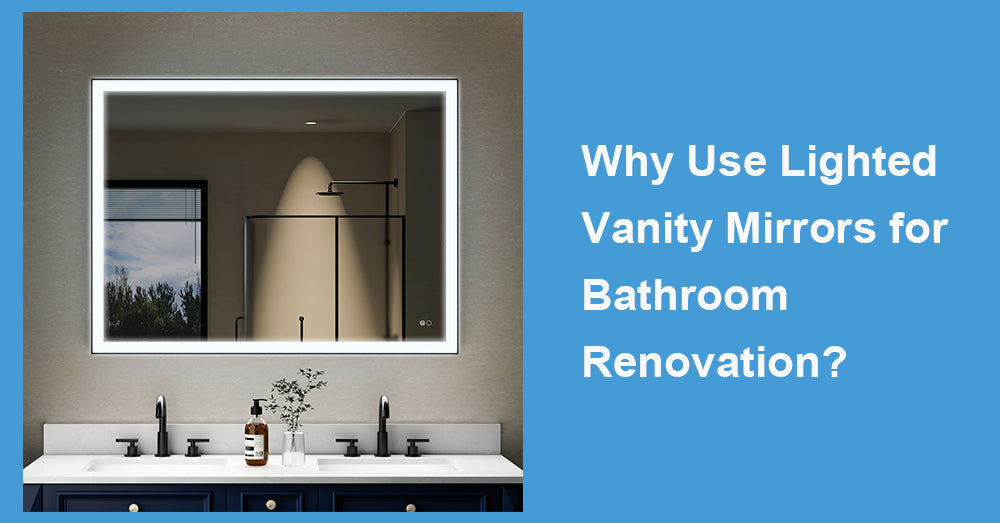
Lighted vanity mirrors for bathroom renovation are becoming more than a decorative upgrade. They combine reflection and task lighting in one fixture, helping simplify the vanity wall while making everyday grooming easier. The 2025 Houzz Bathroom Trends Study found that 82% of bathroom renovation projects included lighting upgrades, while lighted mirrors appeared in 22% of renovated bathrooms, up from the previous year. NKBA's 2026 Bath Trends Report also found that 91% of surveyed industry professionals consider lighting quality a major bathroom design priority. These figures show why integrated mirror lighting is becoming an increasingly practical part of renovation planning.
They Put Light Where It Is Actually Needed
Traditional ceiling fixtures illuminate the room, but they do not always illuminate the face evenly.
Lighted vanity mirrors position illumination closer to eye level, which can reduce shadows around the nose, eyes, and chin.
That makes them useful for:
· Shaving
· Applying makeup
· Skin-care routines
· Hair styling
· Contact lenses
NKBA's 2026 research found that 92% of industry professionals believe task lighting should be included in the primary bathroom.
For renovation projects, this means the mirror can become part of the functional lighting plan rather than simply a reflective surface.
They Can Simplify a Crowded Vanity Wall
A conventional vanity setup may include a mirror, two sconces, decorative trim, and electrical outlets.
In a smaller bathroom, all of those elements can make the wall feel busy.
A lighted mirror can combine the mirror and task-lighting functions into one cleaner fixture.
This works particularly well with:
· 30-inch vanities
· 36-inch single vanities
· 48-inch floating vanities
· Narrow en-suites
· Minimalist bathrooms
Removing bulky side fixtures can also leave more usable wall space around the mirror.
Dimming Makes One Mirror Work Throughout the Day
A bathroom rarely needs the same brightness at every hour.
Bright lighting may be useful during morning grooming, while a softer setting feels more comfortable before bed.
Dimmable mirrors make it possible to adjust the light without installing several separate fixtures.
NKBA's 2026 Bath Trends Report found that 80% of surveyed professionals are incorporating lighting intended specifically for nighttime use.
That trend reflects a broader shift toward flexible bathroom lighting rather than simply maximizing brightness.
Industry judgment: In a renovation, lighting control can be more useful than choosing the brightest mirror available.
Adjustable Color Temperature Changes the Atmosphere
Many newer mirrors allow users to change the color temperature.
Typical settings may include:
· Around 3000K for warm light
· Around 4000K for neutral light
· Around 5000K to 6000K for cooler light
Warm illumination pairs naturally with light oak, beige tile, and brushed gold. Neutral light works well with white quartz, natural wood, and brushed nickel.
Cooler settings create a crisper appearance and may be useful for detailed grooming.
A mirror with several settings allows the bathroom to shift between practical morning lighting and a softer evening atmosphere.

Lighted Mirrors Can Make Small Bathrooms Feel More Open
Mirrors already help compact bathrooms by reflecting surrounding space and available light.
Integrated illumination strengthens that effect.
For a 36-inch vanity, a mirror around 30 to 36 inches wide often creates a balanced relationship between the cabinet and wall. A wider reflective area can make a narrow bathroom feel less enclosed, particularly when paired with pale finishes.
Useful combinations include:
· White cabinetry
· Light wood vanities
· White quartz tops
· Frameless shower glass
· Warm neutral walls
The room does not become physically larger, but the vanity wall can feel lighter and less fragmented.
Front Light and Backlight Create Different Effects
Not all lighted mirrors work the same way.
Front-lit mirrors direct more light toward the user, making them especially useful for grooming.
Backlit mirrors throw light against the wall, creating a soft halo around the glass.
Dual-light mirrors combine both approaches.
A backlit design can look particularly effective against textured tile or stone-look wall panels, while front lighting is usually more important when facial visibility is the priority.
For renovation projects, the best choice depends on whether the mirror is expected to provide task lighting, decorative lighting, or both.
Anti-Fog Features Add Everyday Convenience
Steam can make an ordinary mirror temporarily unusable after a shower.
Some lighted mirrors include a heated anti-fog area that helps keep part of the glass clear.
This is particularly useful in:
· En-suites
· Windowless bathrooms
· Small bathrooms
· Shared family bathrooms
The feature does not replace ventilation. The exhaust fan still needs to remove moisture from the room.
Anti-fogging simply makes the mirror usable sooner, which can be valuable during busy morning routines.
Good Color Rendering Matters for Grooming
Brightness alone does not determine lighting quality.
Color Rendering Index, commonly called CRI, describes how accurately a light source displays colors. For grooming, a CRI of 90 or higher is a useful target.
Better color rendering helps users judge:
· Skin tone
· Makeup colors
· Hair color
· Clothing
· Facial details
This becomes particularly important in bathrooms with little natural daylight.
A mirror that produces very bright but poor-quality light may be less useful than one with slightly lower output and better color accuracy.
Renovation Is the Best Time to Plan the Wiring
Lighted mirrors often require more installation planning than standard mirrors.
Depending on the model, the mirror may be hardwired or connected to a nearby outlet.
Before the wall is finished, confirm:
· Electrical connection location
· Mirror mounting position
· Vanity centerline
· Mirror dimensions
· Switch arrangement
· Anti-fog power requirements
Planning these details before tile or drywall is complete can prevent visible cords and awkward electrical placement.
A 36-inch or 48-inch mirror should also be securely mounted according to the manufacturer's installation instructions.
They Fit Naturally With Current Bathroom Design
Current renovation trends are moving toward cleaner lines, layered lighting, and fixtures that perform more than one job.
Houzz reports lighting upgrades in 82% of bathroom renovations and lighted mirrors in 22%. NKBA's 2026 research shows that 91% of professionals prioritize lighting quality and 92% support task lighting in the primary bath.
That helps explain the appeal of lighted vanity mirrors for bathroom renovation.
They reduce the need for additional wall fixtures, improve grooming visibility, add adjustable lighting, and can make compact vanity areas feel more open. Features such as dimming, color-temperature control, anti-fogging, and memory settings can also make the mirror more useful throughout the day.
For a successful renovation, the goal is not simply to add another piece of technology. The best lighted mirror should match the vanity width, provide comfortable facial illumination, fit the electrical plan, and support the way the bathroom is actually used.









































Leave a comment
This site is protected by hCaptcha and the hCaptcha Privacy Policy and Terms of Service apply.