






















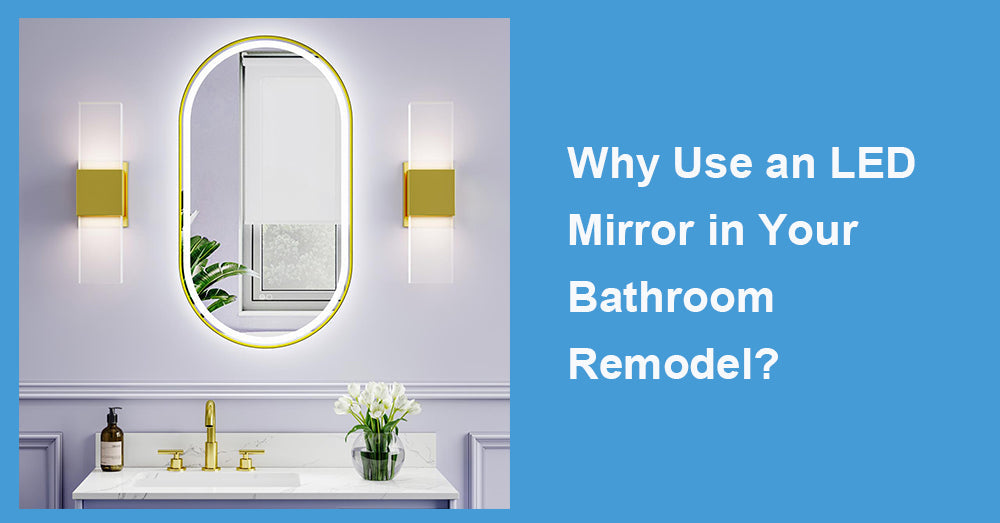
In contemporary bathroom renovation projects, LED mirror are gradually transitioning from a "design option" to a crucial component that shapes the user experience. Compared to traditional mirrors or standalone lighting, LED mirrors integrate reflection and illumination into a single system, directly influencing people's most frequent daily grooming, care, and tidying-up routines. Industry research reveals a strong correlation between the quality of bathroom lighting and user comfort, as well as operational accuracy, further highlighting the value of LED mirrors in renovation decisions.
1. Bathroom lighting: from an "auxiliary role" to a core configuration
In traditional bathroom design, mirrors primarily serve a reflective function, while lighting often relies on ceiling fixtures or wall sconces. This configuration may be acceptable in terms of overall brightness, but in practical use, shadows tend to form on the face, affecting delicate tasks such as shaving, makeup, and skincare.
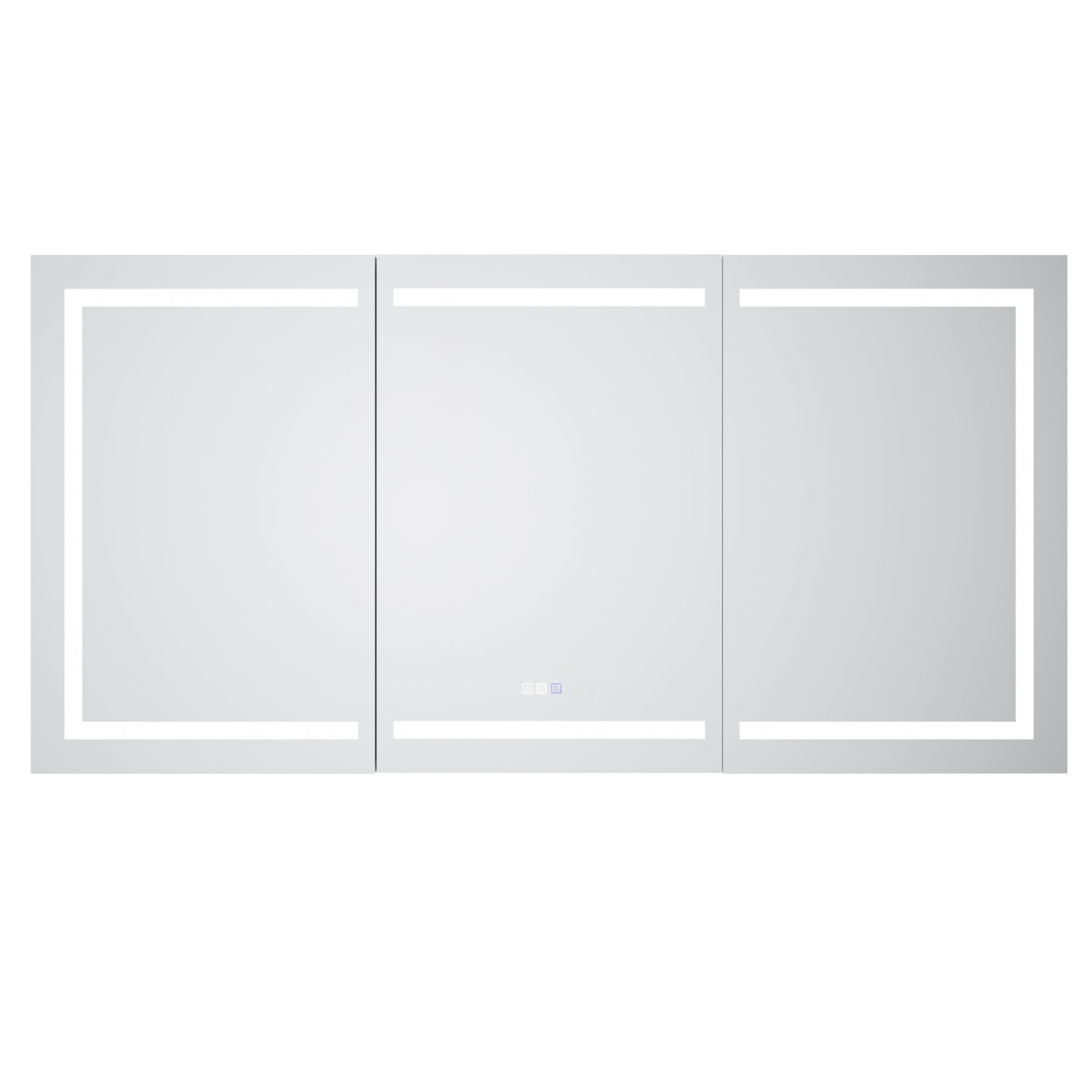
LED mirrors embed light sources around or inside the mirror surface, making the light closer to the user's eye level. Industry research shows that this forward, uniform lighting method is more effective at enhancing the visibility of facial details than single-top lighting, thereby improving the daily usage experience.
2. The direct impact of size and proportion on lighting effects
In bathroom renovations, the mirror size typically needs to be in a reasonable proportion to the vanity width. Common vanity widths are normally 30–48 inches. If the LED mirror width matches it and is close to or slightly smaller than the countertop width, the overall visual effect will be more stable, and it will also help distribute light evenly in the horizontal direction.
The height of the mirror is usually between 24 and 36 inches. For LED mirrors, a minimal mirror surface can easily lead to concentrated light, while a huge one may increase unnecessary energy consumption and costs. A reasonable size ratio can strike a balance between lighting effects and space control.
3. Uniformity of light is more important than brightness
When choosing an LED mirror, brightness is often the most intuitive parameter, but industry experience shows that light uniformity is more crucial than pure brightness. An overly strong local light source can easily cause glare, while uneven light distribution can create noticeable shadows on the face.
Most high-quality LED mirrors use multi-point light sources or continuous light strips to achieve a smoother, more stable light distribution. The color temperature is typically concentrated within the 4000K–5000K range, which is closer to natural light conditions and helps reduce skin tone deviations and visual fatigue.
4. The practical significance of energy efficiency and long-term usage cost
The energy efficiency advantage of LED technology is a key reason for its widespread use in bathroom mirrors. Compared to traditional light sources, LEDs consume less energy under the same brightness conditions and have a longer lifespan. Industry data shows that under typical usage, LED light sources often last the entire bathroom renovation cycle, reducing the need for later replacements and maintenance.
From a long-term usage perspective, this stability not only reduces maintenance costs but also diminishes uncertainties during use.
5. The magnifying effect of mirror quality on LED performance
The overall effect of an LED mirror depends not only on the light source but also on the mirror's craftsmanship. Multi-layer silver-plated mirrors exhibit greater stability in terms of reflection clarity and oxidation resistance, maintaining consistent visual effects even in high-humidity environments.
Industry experience indicates that poor mirror quality tends to amplify light distortion, thereby diminishing the benefits of LED lighting. Therefore, when evaluating LED mirrors, it is essential to consider the mirror and lighting as an integrated system, rather than treating them separately.
6. The practical value of anti-fog and integrated functions
In practice, the anti-fog function is one of the most useful additional features of LED mirrors. By reducing water vapor condensation through back heating, it ensures that the mirror surface remains clear after bathing, avoiding the inconvenience of frequent wiping. This function is vital in bathrooms with high-frequency use.
Some LED mirrors also include features such as touch dimming, brightness memory, and a time display. However, from an industry perspective, the value of these configurations should be established on the condition that they do not affect the stability of core lighting.
7. System considerations for installation and electrical safety
Bathrooms are high-humidity environments, thus demanding higher safety standards for electrical equipment. High-quality LED mirrors typically incorporate enhanced sealing and moisture-resistant measures into their structural design to minimize moisture's impact on internal components. Planning the power supply location during the renovation phase not only facilitates installation efficiency but also maintains the overall visual simplicity.
Compared to adding lighting equipment later, incorporating LED mirrors into the overall renovation plan makes it easier to achieve a balance between safety and aesthetics.

8. Judges value based on long-term experience rather than short-term effects
LED mirrors are typically fixed configurations with low replacement frequency, and once installed, the adjustment cost is relatively high. Industry data shows that LED mirrors with a stable structure and reasonable lighting can serve for more than ten years under normal use conditions. Compared to short-term visual changes, this long-term stable usage experience often has more practical value.
From an industry perspective, choosing an LED mirror for a bathroom renovation is not a mere pursuit of technological trends, but rather the result of systematic optimization for high-frequency daily use. The value of an LED mirror truly becomes apparent in long-term use when lighting, reflection, and spatial proportions are optimally matched.







































Leave a comment
This site is protected by hCaptcha and the hCaptcha Privacy Policy and Terms of Service apply.