























A light wood bathroom vanity has moved from a niche Scandinavian-inspired choice into one of the most visible directions in current bathroom design. The appeal is fairly straightforward: pale oak, maple, ash, and similar finishes add warmth without making a room feel dark or crowded. Houzz’s 2025 Bathroom Trends Study found that wood tones were the leading vanity color category at 28%, ahead of white at 20%. Light wood alone accounted for 11% of upgraded vanity colors. At the same time, solid wood remained the leading vanity material at 74%, with white oak representing 23% of solid-wood choices.
1. Light Wood Fits the Shift Toward Warmer Bathrooms
For several years, bathroom design leaned heavily on bright white cabinetry, cool gray tile, and polished finishes. The current direction is softer.
NKBA’s 2026 Bath Trends Report found that 96% of surveyed design professionals expect neutrals to dominate bathroom color palettes. Off-white reached 58%, light brown and tan reached 54%, and white reached 40%. Organic and natural styling was identified by 65% of respondents, while contemporary, modern, and minimalist design was identified by 57%.
Light wood fits naturally into both directions. It feels warm enough for an organic bathroom but still clean enough for a minimalist space.
That makes it useful with:
· Warm white walls
· Beige or greige tile
· White quartz countertops
· Soft stone patterns
· Matte black fixtures
· Brushed nickel or brushed gold hardware
The result feels less clinical than an all-white room without becoming visually heavy.
2. White Oak Has Become a Key Vanity Material
White oak is one of the clearest examples of this trend.
Houzz reports that among solid-wood vanity choices, maple leads at 29%, while white oak follows closely at 23%. Birch accounts for 12% and walnut for 9%.
White oak works particularly well because its grain is visible without being excessively busy. In a simple 36-inch vanity with flat drawer fronts, the grain itself can provide enough decoration that the cabinet needs very little additional detailing.
Common light-oak treatments include:
· Natural clear finishes
· Pale beige stains
· Slightly warm honey tones
· Soft neutral washes
· Matte protective topcoats
For modern bathrooms, the most successful versions usually avoid heavy orange or red undertones.
Industry judgment: Light wood is popular not because buyers want more decorative cabinetry, but because natural grain can replace decoration while keeping the room visually simple.
3. It Makes Smaller Vanities Feel Less Bulky
Vanity size remains an important part of bathroom planning. Houzz found that 47% of upgraded vanities were 48 inches wide or smaller. Nineteen percent measured 60 inches, while 14% were 72 inches.
On a 30-inch or 36-inch cabinet, light wood provides visual character without creating the strong block of color associated with black, navy, or dark walnut.
That matters in guest bathrooms and narrower spaces.
A 36-inch pale oak vanity can stand out from a white wall while still allowing the room to feel open. A dark cabinet of the same dimensions creates a much stronger visual boundary.
For larger 60-inch or 72-inch vanities, light wood can also help prevent a long run of cabinetry from looking too massive.
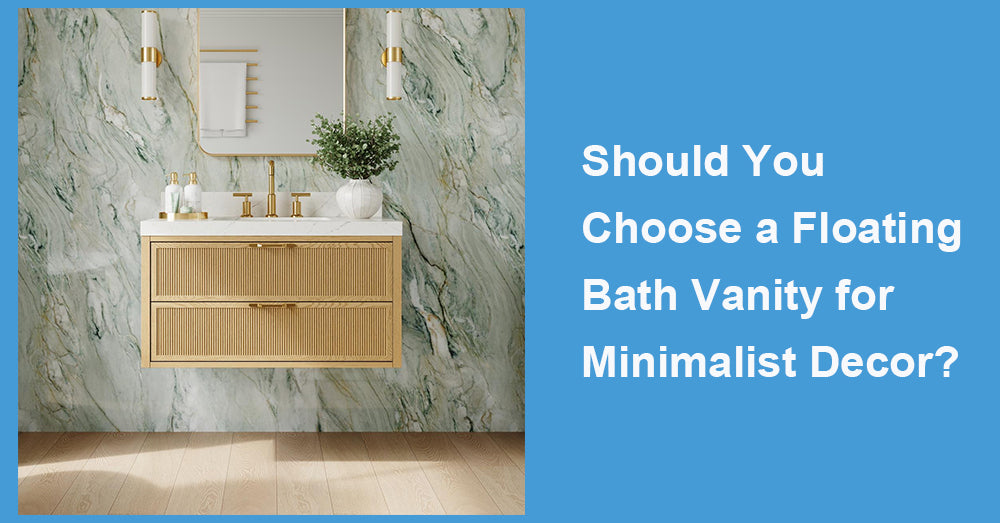
4. Floating Vanities Make Light Wood Even More Effective
The combination of pale wood and wall-mounted construction has become closely associated with modern bathroom design.
Houzz found that floating vanities represented 11% of upgraded vanity installations. Freestanding models accounted for 30%, while built-in designs remained the largest category at 58%.
Although floating designs remain a smaller segment, light wood works particularly well in this format because both features reduce visual weight.
Exposing the floor underneath a 36-inch or 48-inch vanity makes the cabinet appear lighter. On wider models, continuous horizontal grain can reinforce the long, clean lines associated with contemporary interiors.
A freestanding vanity can achieve a similar look when it uses:
· Slim legs
· Flat drawer fronts
· Minimal hardware
· A light countertop
· A simple base profile
The wood tone matters, but proportion matters just as much.
5. White Countertops Make the Combination Easy to Use
One reason light wood vanities are showing up in so many remodels is that they pair easily with the countertops already favored in bathroom projects.
Houzz found that white accounted for 48% of upgraded bathroom countertop colors, with off-white at another 20%.
That creates an easy design formula: a pale wood cabinet beneath a white or softly veined countertop.
White quartz keeps the room crisp and contemporary. Off-white stone creates a warmer look. Beige veining can connect directly with the natural undertones of oak or maple.
On a 36-inch vanity, a quieter countertop also preserves usable visual space. Heavy stone patterns can overwhelm a smaller cabinet, while subtle surfaces allow the wood grain to remain the main feature.
6. Matte Hardware Complements Natural Grain
Polished finishes are no longer the only default in bathrooms.
NKBA’s 2026 research found that matte faucet finishes were favored by 54% of respondents, brushed finishes by 51%, and satin finishes by 46%, compared with 39% for polished finishes.
Those softer metal treatments work naturally with light wood.
Matte black creates sharper contrast against pale oak. Brushed nickel keeps the room understated. Brushed gold brings out warmer tones in the grain.
The cabinet pulls do not necessarily need to match every metal element. A bathroom can combine brushed nickel plumbing fixtures with black vanity hardware, for example, provided the palette remains controlled.

7. Light Wood Bridges Modern and Transitional Styles
Perhaps the biggest reason for its popularity is that light wood does not belong to one style category.
NKBA found transitional and timeless design leading current style expectations at 70%, followed by organic and natural design at 65%.
A single light wood vanity can move between those styles depending on its construction.
Flat-panel doors and concealed pulls create a contemporary appearance. Shaker fronts move the same oak tone toward transitional design. Fluted drawer fronts can create a more decorative look on furniture.
This flexibility matters during remodels because homeowners may change mirrors, lighting, wall colors, and hardware long before replacing the vanity itself.
8. Natural Wood Still Needs Bathroom-Ready Protection
The natural look should not be confused with unfinished wood.
Bathroom cabinetry is exposed to sink splashes, steam, cosmetics, cleaners, and occasional plumbing leaks. A light wood cabinet should have properly sealed edges and a coating designed for humid conditions.
Look for:
· Finished drawer and door edges
· Protected plumbing cutouts
· Coated cabinet interiors
· Sealed sink areas
· Properly finished lower panels
The EPA recommends keeping indoor relative humidity below 60%, ideally between 30% and 50%, and drying wet areas quickly when leaks or spills occur.
Good ventilation is especially important around wood cabinetry. An exhaust fan that vents outdoors helps remove moisture created by showers.
9. Light Wood Has More Staying Power Than a Short-Term Color Trend
The popularity of a light wood bathroom vanity is tied to several trends happening at the same time: warmer neutrals, natural materials, matte hardware, cleaner cabinet profiles, and greater interest in organic interiors.
That gives the style more staying power than a single fashionable paint color.
The strongest light wood vanities avoid exaggerated grain, overly yellow stains, and unnecessary ornament. They rely instead on good proportions, practical drawers, a protective finish, and a countertop that complements rather than competes with the wood.
For current remodels, that balance is difficult to ignore. Light wood brings warmth without heaviness, texture without clutter, and enough flexibility to work with modern, transitional, or organic interiors. That combination explains why the category has moved from a design accent to a mainstream vanity choice.










































Leave a comment
This site is protected by hCaptcha and the hCaptcha Privacy Policy and Terms of Service apply.