














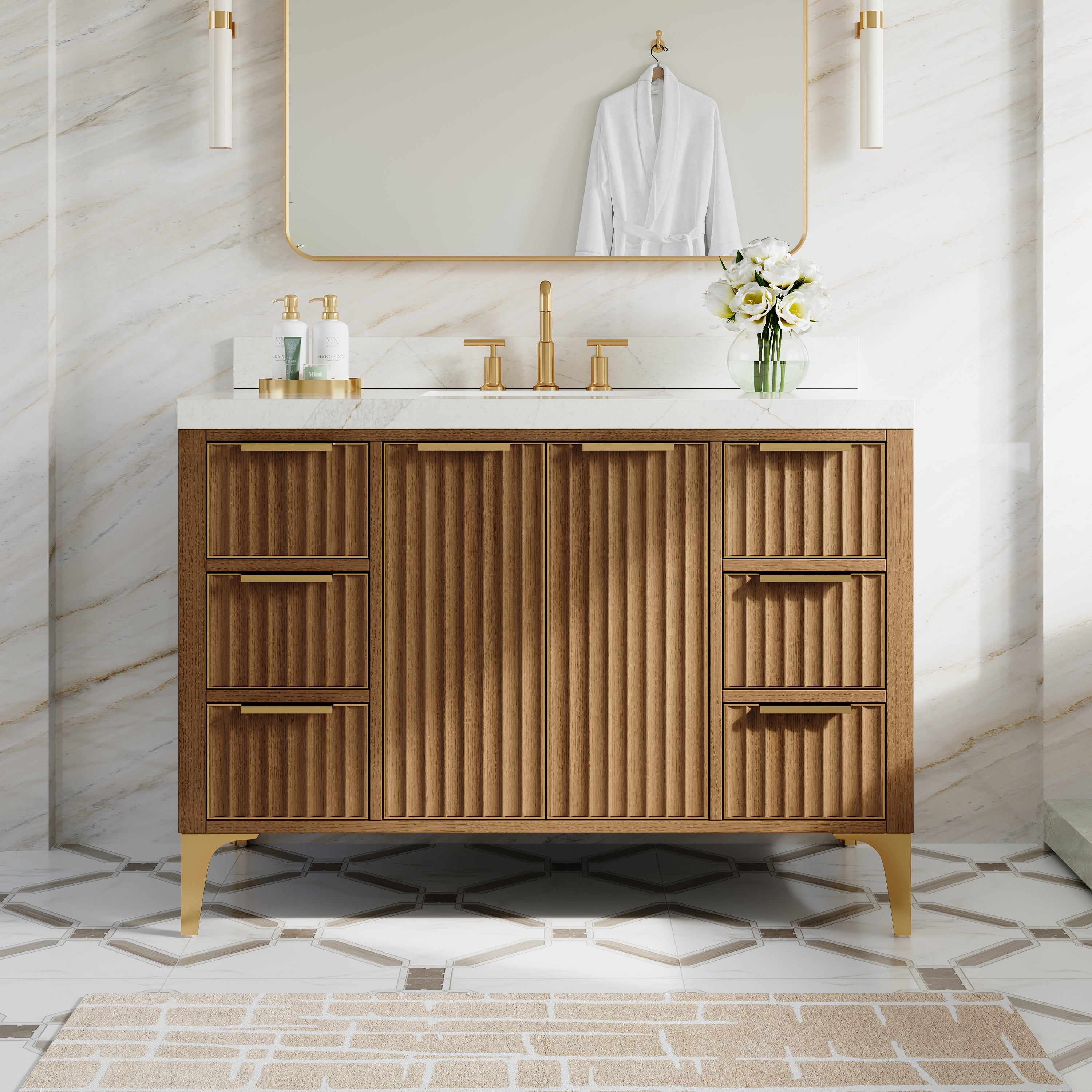
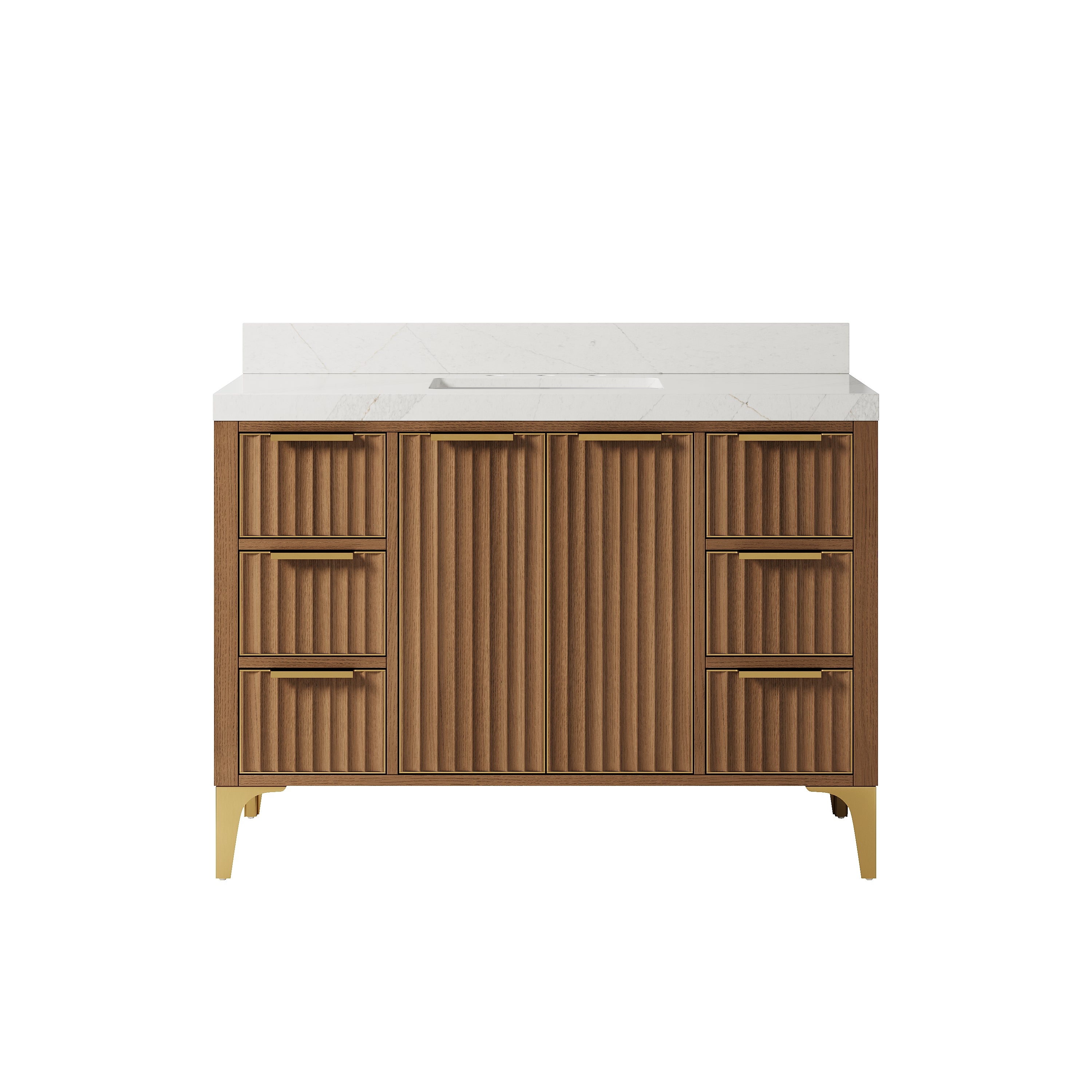


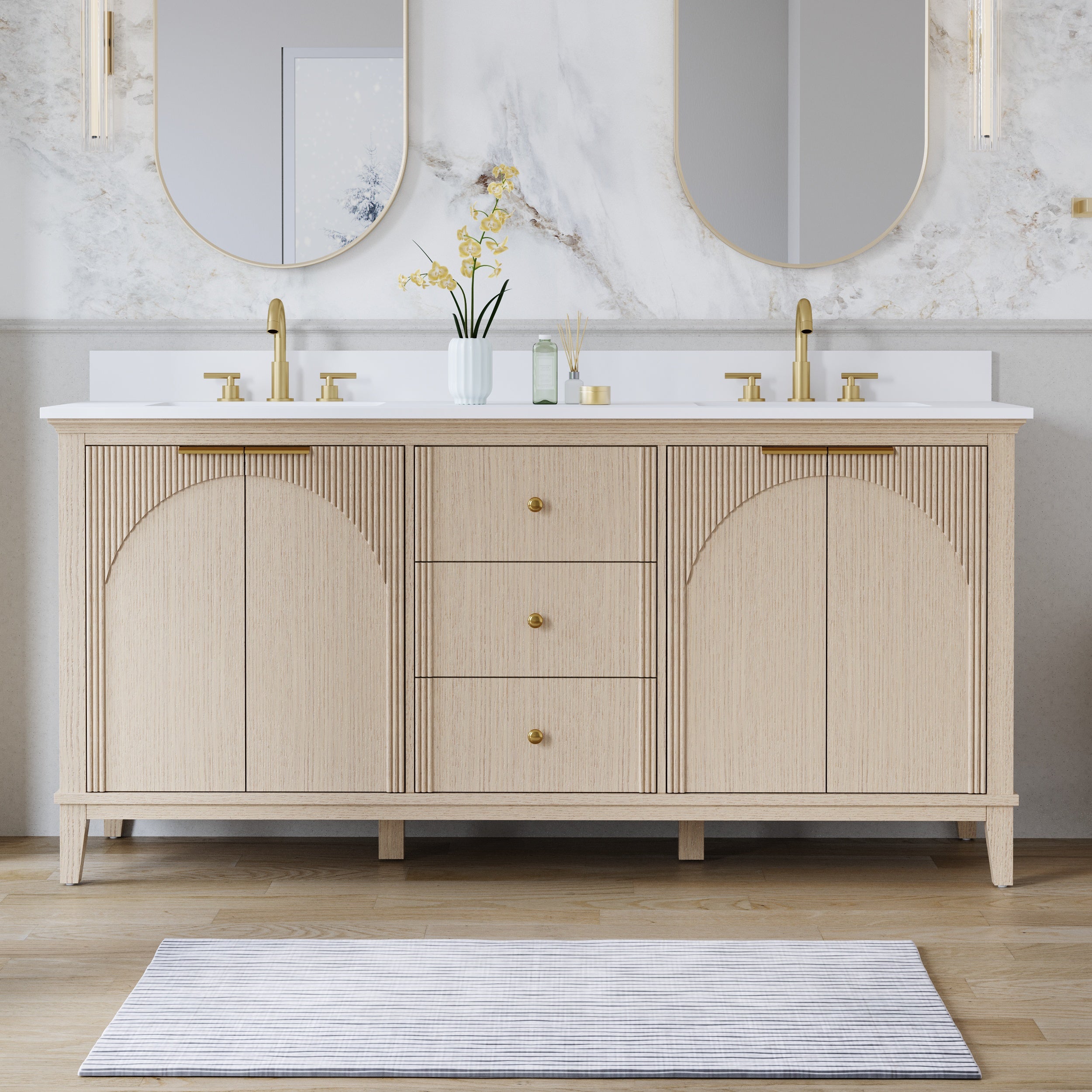
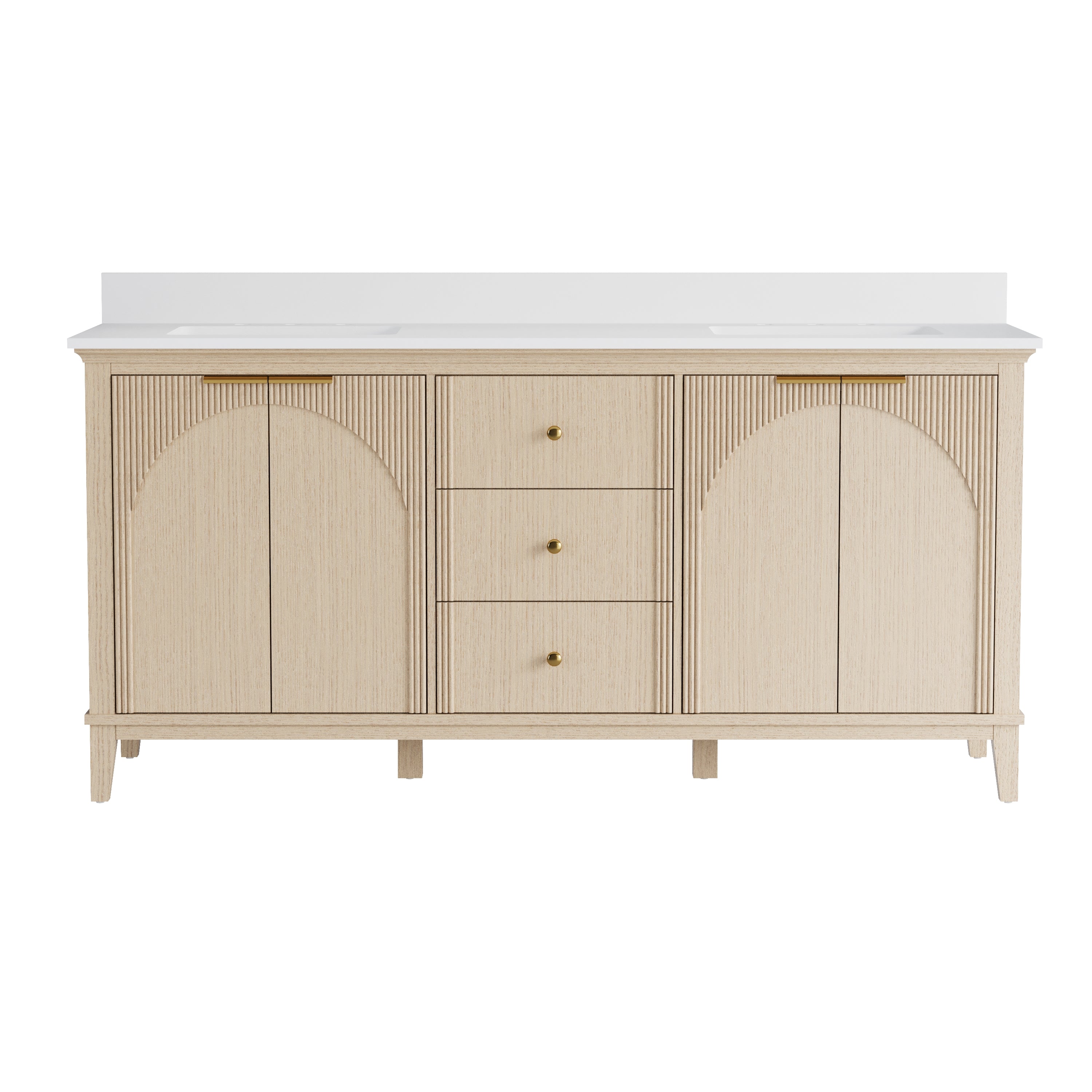
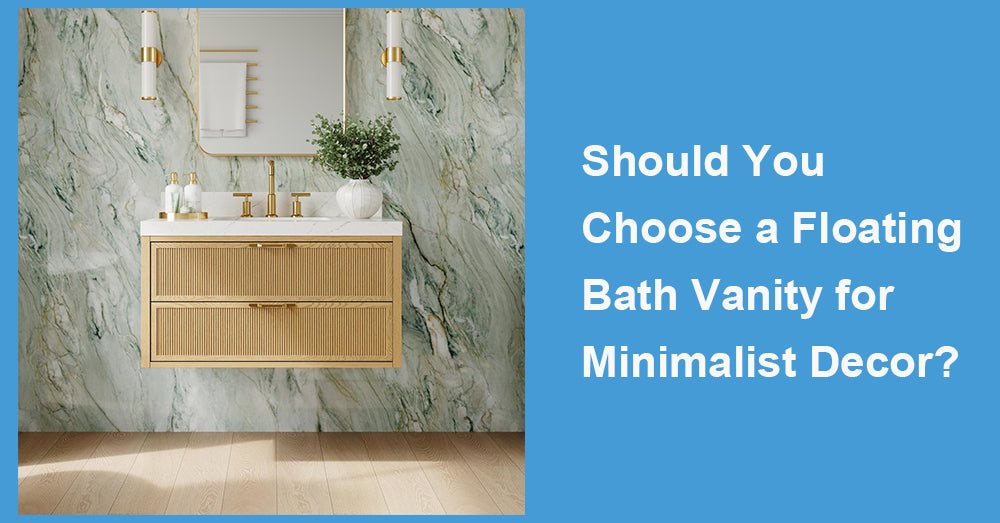
A floating bath vanity has become one of the clearest ways to give a bathroom a lighter, more architectural look. By lifting the cabinet off the floor, the design exposes more flooring, reduces visual bulk, and creates the clean horizontal lines associated with minimalist interiors. It is still a more selective choice than conventional cabinetry: Houzz’s 2025 Bathroom Trends Study found that floating designs accounted for 11% of upgraded vanities, compared with 30% for freestanding models and 58% for built-in vanities. That smaller share is not necessarily a weakness. Floating cabinetry tends to be chosen when space, proportion, and visual simplicity are deliberate parts of the remodel.
1. Floating Cabinets Make the Floor Feel More Open
The most immediate advantage is visual space. Because the cabinet does not extend to the floor, tile or other flooring continues underneath it.
This works especially well in:
· Narrow guest bathrooms
· Compact primary bathrooms
· Powder rooms
· Bathrooms with large-format tile
· Spaces with frameless shower glass
A 30-inch or 36-inch floating vanity can provide functional storage while appearing less bulky than a floor-standing cabinet of the same width. On larger 48-inch or 60-inch models, the effect becomes even more noticeable because a substantial section of cabinetry appears to hover above the floor.
Industry judgment: Floating vanities do not create more floor area, but they make more of the existing floor visible, which can change how spacious the room feels.
2. The Style Fits Current Minimalist Design Direction
Minimalism in bathrooms is becoming warmer and less sterile. Instead of relying entirely on glossy white surfaces, current designs increasingly mix restrained cabinetry with wood grain, matte finishes, soft neutrals, and natural stone.
NKBA’s 2026 Bath Trends Report found that contemporary, modern, and minimalist design was identified as a popular direction by 57% of respondents. Organic and natural styling followed closely at 65%, while transitional and timeless design led at 70%.
That combination explains why floating cabinetry works in more than ultra-modern interiors.
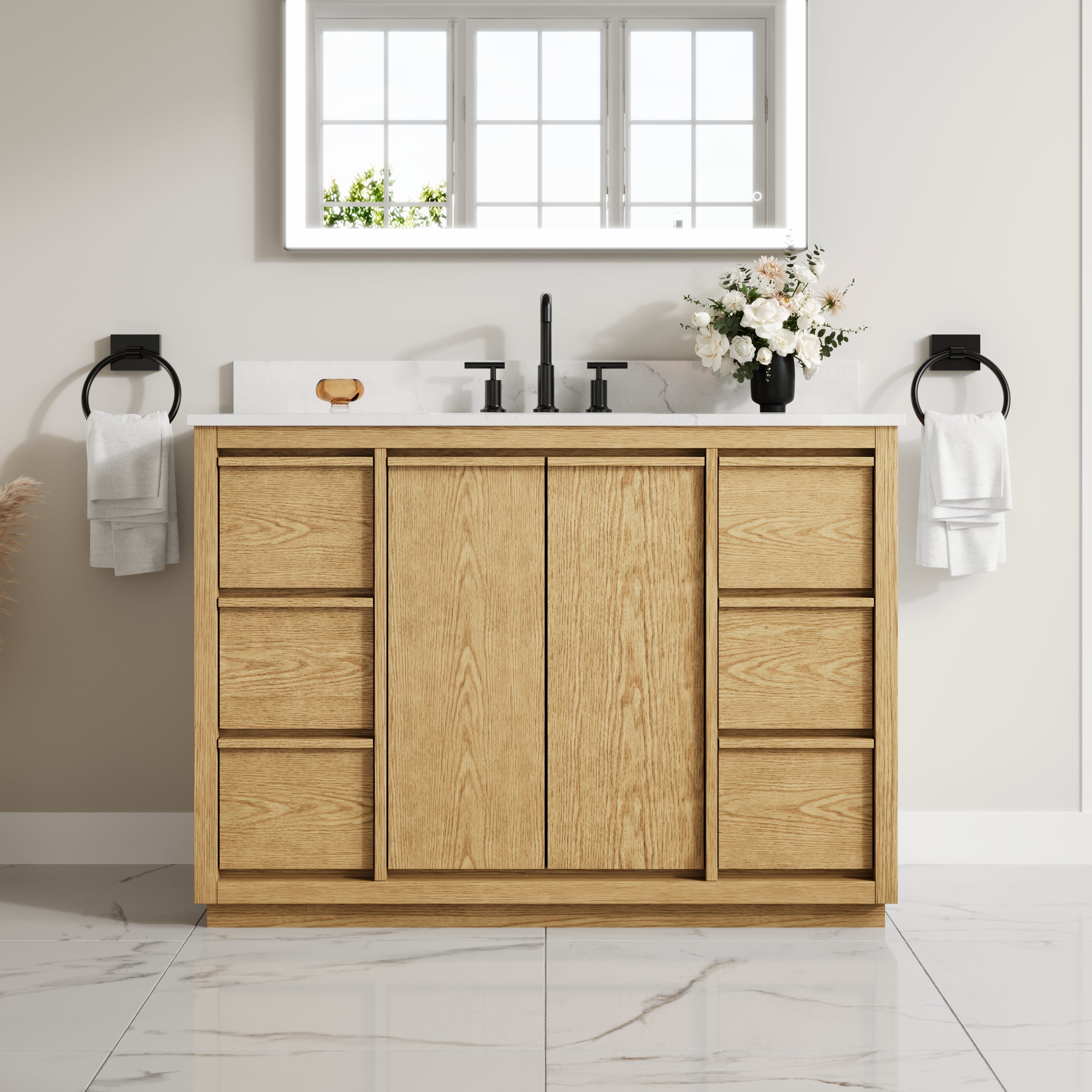
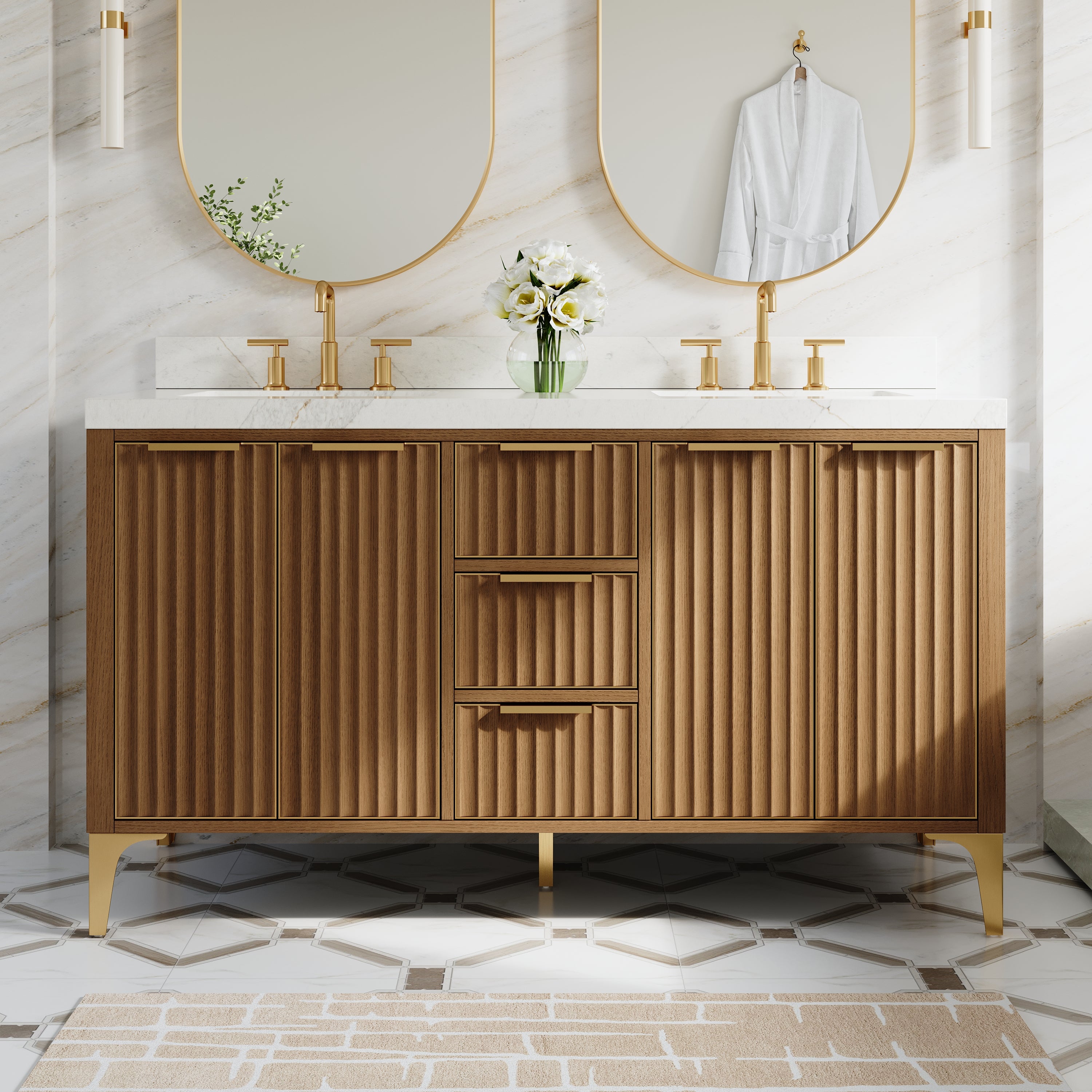
A light oak floating vanity can feel organic and calm. A white flat-panel cabinet creates a cleaner architectural effect. Walnut introduces warmth, while black or charcoal cabinetry can create stronger contrast in a bright room.
The cabinet does not need to look futuristic. The wall-mounted construction itself provides much of the modern character.
3. Flat-Panel Drawers Give the Cleanest Result
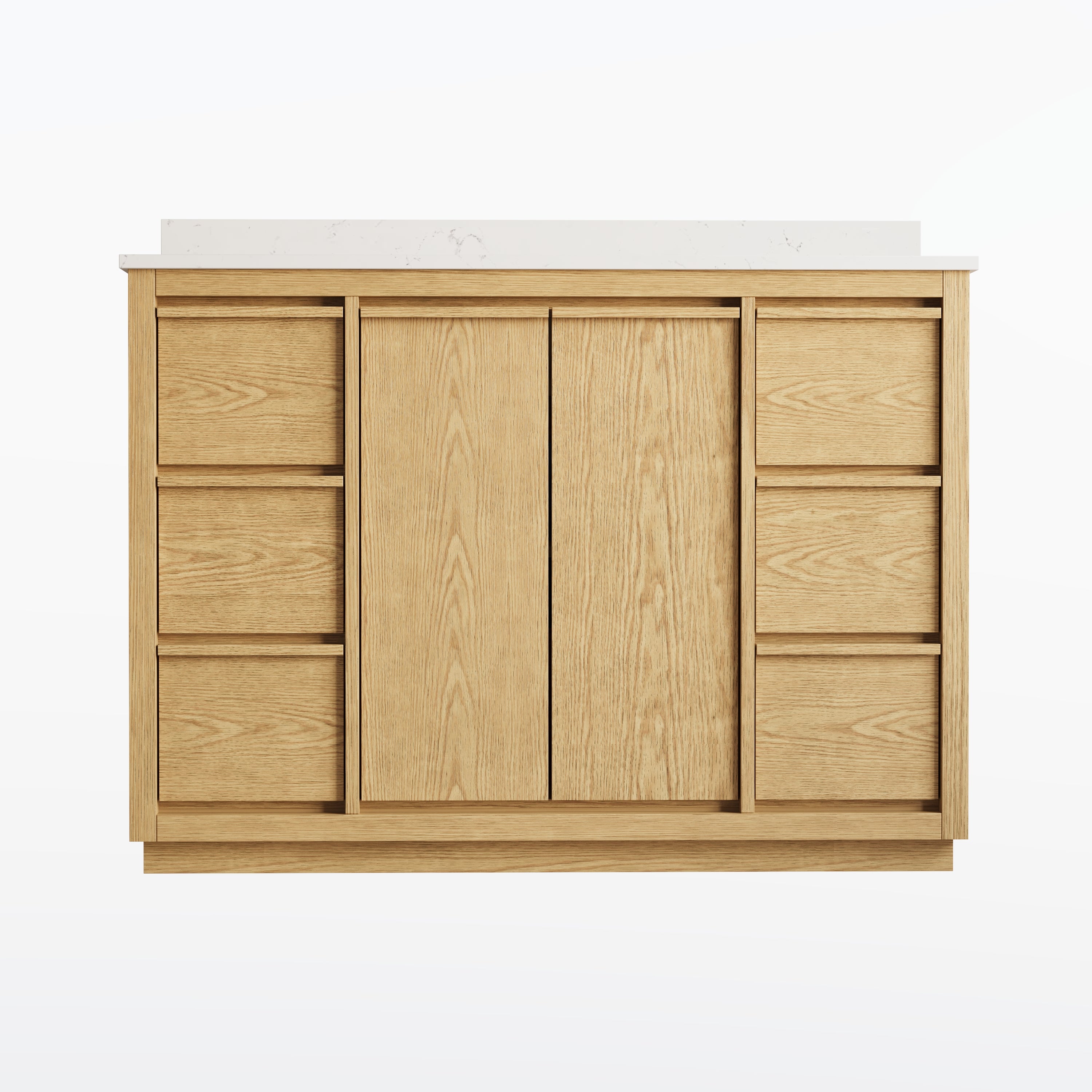
Minimalist cabinetry usually benefits from fewer visible details. Flat drawer fronts, narrow gaps, and concealed or understated hardware allow the vanity to read as one simple volume.
Useful design choices include:
· Slab drawer fronts
· Integrated finger pulls
· Slim bar pulls
· Handle-free push-to-open drawers
· Continuous horizontal wood grain
· Matte cabinet finishes
Storage should still remain practical. A beautiful cabinet with poorly planned drawers quickly becomes frustrating.
Full-extension slides are particularly valuable because floating vanities often have less vertical cabinet space than floor-standing models. Being able to access the back of every drawer helps recover some of that lost capacity.
4. Storage Is the Main Trade-Off
The strongest argument against a floating vanity is simple: lifting the cabinet off the floor usually reduces available storage.
A freestanding cabinet may use almost the full height beneath the countertop. A floating design leaves an open gap below, so every remaining drawer needs to work harder.
Look for layouts with:
· A shallow top drawer for daily toiletries
· U-shaped drawers around the drain
· Deep lower drawers for bottles or towels
· Removable organizers
· Interior outlets for grooming tools
NKBA reports growing interest in configurable vanity storage, including custom dividers, medication storage, hair-tool compartments, charging areas, and electrical integration.
For a minimalist bathroom, this matters because effective concealed storage keeps the countertop visually quiet.
5. Wall Construction Matters More Than It Does with Freestanding Vanities
A floating cabinet transfers its load to the wall. The vanity, countertop, sink, stored products, and normal forces from daily use all depend on secure attachment.
Before installation, confirm:
· Stud locations
· Structural blocking
· Manufacturer mounting requirements
· Plumbing position
· Finished wall thickness
· Cabinet mounting-rail location
Heavy quartz or natural-stone tops increase the load. A 60-inch wall-mounted vanity with a stone top requires more structural planning than a compact 24-inch cabinet.
Drywall anchors alone should not be assumed to provide adequate support. The manufacturer’s fastening method and local construction requirements should guide installation.
This is one reason floating vanities are easiest to plan during a larger renovation, when the wall can be opened and blocking added before tile or drywall is finished.

6. Installation Height Becomes More Flexible
One advantage of wall mounting is that the installer can position the cabinet at a height appropriate for the users, within the limits of the product design and plumbing.
For standing adults, the finished countertop often falls somewhere around 34 to 36 inches, depending on cabinet dimensions, sink style, and preference.
A vessel sink changes that calculation. If the bowl rises several inches above the countertop, the cabinet may need to be installed lower.
Accessibility requirements need separate consideration. Access Board standards specify a maximum height of 34 inches to the higher of the lavatory rim or counter surface in covered accessible installations. Required clear floor space is at least 30 by 48 inches, along with appropriate knee and toe clearance.
A standard floating storage vanity does not automatically meet these requirements simply because it is wall mounted.
7. Continuous Flooring Strengthens the Minimalist Effect
The exposed area beneath a floating vanity makes flooring more important.
Large-format tile works especially well because fewer grout lines help create a continuous visual field. NKBA’s latest research found that 89% of respondents expect a preference for smaller or no visible grout lines, while 80% believe large-format flooring will remain popular over the next three years.
For the cleanest result, continue the same floor beneath the vanity rather than stopping it at the cabinet.
Good pairings include:
· Light stone-look porcelain
· Warm beige tile
· Soft gray concrete-look surfaces
· Wood-look porcelain
· Large-format neutral flooring
Under-vanity lighting can also emphasize the floating effect, although it should remain subtle rather than becoming a decorative distraction.
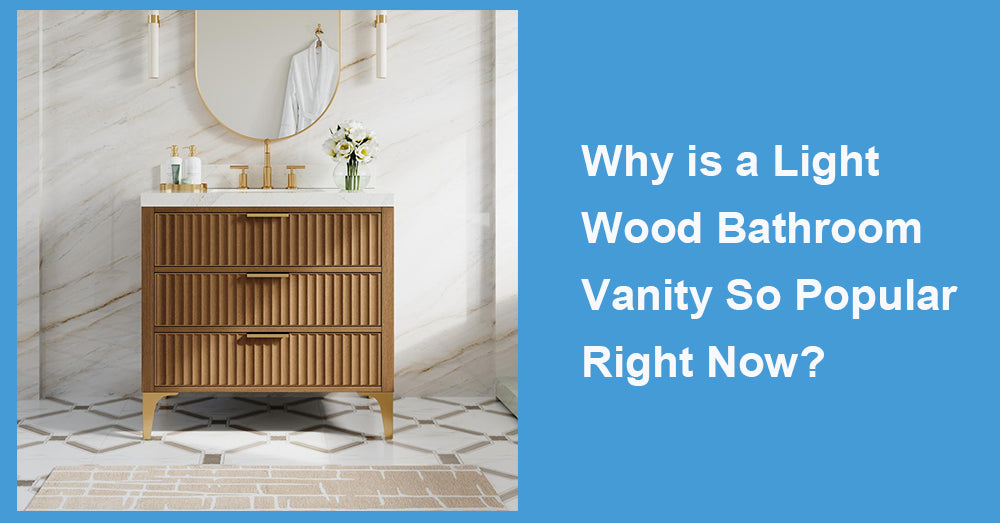
8. Natural Wood Keeps Minimalism from Feeling Cold
Minimalist does not have to mean white-on-white.
NKBA found that wood-faced vanities reached 62% in popularity, ahead of painted cabinetry at 53%. Neutrals were identified as the leading bathroom color family by 96% of respondents, with off-white at 58%, light brown or tan at 54%, and white at 40%.
This makes light oak, natural maple, and muted walnut particularly useful for floating vanities.
A light wood cabinet paired with a white quartz top can soften large expanses of tile. Matte black hardware adds definition, while brushed nickel keeps the palette quieter.
The strongest minimalist interiors usually limit the number of competing materials rather than eliminating texture altogether.
9. Choose Floating When Simplicity Matters More Than Maximum Storage
A floating bath vanity is a strong choice for minimalist decor when the goal is to reduce visual weight, expose more flooring, and create a cleaner architectural line. It works especially well with flat fronts, natural wood, light countertops, large-format tile, and restrained hardware.
It is less compelling when maximum storage is the main priority or when the existing wall cannot easily support the cabinet.
The best decision comes from balancing appearance with construction. Measure the room, check the plumbing, confirm wall reinforcement, calculate the finished height, and compare usable drawer space before buying. When those practical details are handled correctly, a floating vanity can deliver the uncluttered appearance of minimalism without sacrificing the everyday function a bathroom still needs.













Leave a comment
This site is protected by hCaptcha and the hCaptcha Privacy Policy and Terms of Service apply.