






















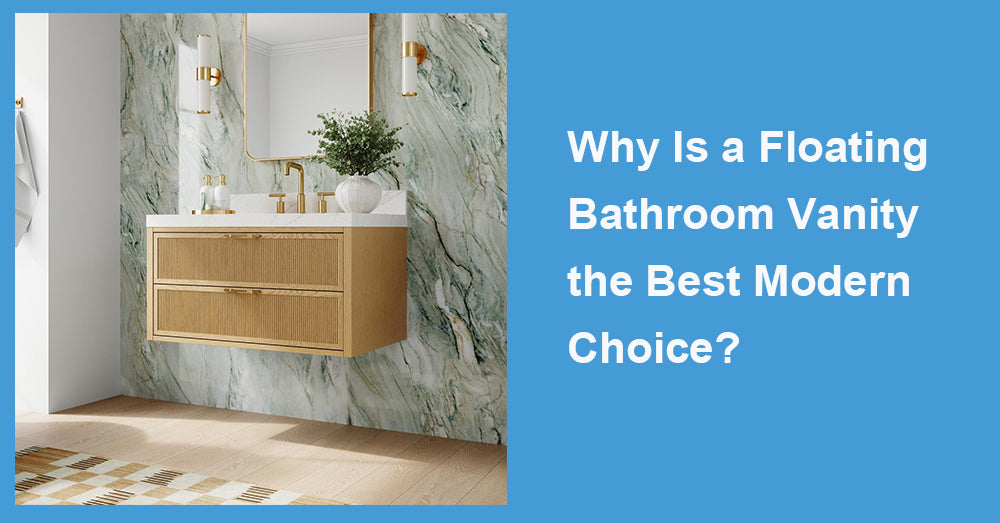
A floating bathroom vanity has become a defining feature of modern bathroom design because it combines clean architecture with practical everyday benefits. After more than 20 years of working with bathroom cabinetry, I have seen wall-mounted vanities transform rooms that once felt heavy or cramped. By lifting the cabinet off the floor, they create a lighter visual footprint, make cleaning easier, and allow more flexibility in installation height. Their advantages are real, but they also require better planning than a conventional floor-standing vanity.
1. A Floating Bathroom Vanity Creates More Visual Space
The open area beneath the cabinet changes how the room is perceived.
In a compact guest bathroom, exposing more flooring makes the floor plane feel continuous instead of interrupted by a large cabinet base. The room is not physically bigger, yet it often feels less crowded.
This effect is particularly useful in apartments, narrow hall baths, and small primary bathrooms. Light-colored flooring combined with a wall-mounted vanity can reinforce that sense of openness.
A floating design also gives larger bathrooms a cleaner architectural appearance. Rather than resembling a piece of furniture placed against the wall, the vanity feels integrated into the room.
2. Modern Styling Becomes Easier
Wall-mounted cabinetry naturally supports the simple lines that define many contemporary bathrooms.
Slab-front drawers, concealed pulls, thin countertops, and large mirrors all pair comfortably with a floating cabinet. Light oak can create a Scandinavian or organic-modern look, while walnut makes the room richer without introducing traditional detailing.
White works particularly well when the goal is visual simplicity.
Modern Does Not Have to Feel Minimalist
A common misconception is that floating vanities belong only in stark gray or white interiors.
The cabinet can be warm, textured, and highly personal. Natural wood, veined stone, warm brass, textured tile, and soft lighting can all sit comfortably around a wall-mounted vanity.
The floating structure provides the modern framework. The surrounding materials determine the atmosphere.
3. Cleaning Becomes Noticeably Easier
This is one advantage homeowners appreciate after installation rather than in the showroom.
Hair, dust, and moisture tend to collect around traditional vanity legs and toe kicks. With a floating unit, a mop, vacuum, or cleaning cloth can move underneath without obstruction.
Robot vacuums may also have easier access, depending on the mounting height.
There is a downside. Because the floor remains visible, damaged tile, uneven grout, or unfinished flooring beneath the cabinet cannot be hidden. During a full remodel, finish the floor properly before installation.
4. Mounting Height Can Be Adjusted
A freestanding vanity generally determines its own countertop height. A floating model gives you greater flexibility.
This can be useful for taller adults who find standard cabinets slightly low. It may also help when adapting a bathroom around particular household needs.
Height Still Needs Careful Planning
More flexibility does not mean there is no wrong position.
Mount the cabinet too high and shorter users may find the sink uncomfortable. Install it too low and the open space beneath the vanity can look awkward.
Mark the proposed countertop height on the wall before installation. Then consider the sink. A vessel basin raises the effective washing height considerably, while an undermount sink does not.
5. Storage Can Be Efficient, but There Is a Tradeoff
Floating vanities generally sacrifice some vertical cabinet space to create the gap beneath them.
In a guest bath, that loss may be irrelevant. A few drawers can easily hold toiletries, hand towels, and cleaning supplies.
Family bathrooms are different.
Deep full-extension drawers are useful for skincare, grooming tools, brushes, and cosmetics. U-shaped drawers can work around plumbing while preserving useful space. Still, a similarly wide freestanding cabinet may provide greater total capacity.
One mistake I often see is choosing the floating style first and considering storage later. Reverse that process. List what needs to be stored, then decide whether the cabinet can handle it.
6. The Wall Must Be Structurally Ready
A wall-mounted vanity has no legs transferring weight to the floor.
The wall must support the cabinet, countertop, sink, stored products, and the forces created during everyday use. Heavy stone tops increase that load.
Drywall alone should not be relied upon for a substantial vanity.
During a full renovation, adding structural blocking before closing the wall is often the cleanest approach. Existing bathrooms may require additional reinforcement, which can increase labor costs.
This is one area where professional installation is often worthwhile.
7. Plumbing Becomes More Visible and Less Forgiving
Freestanding cabinets can hide awkward plumbing fairly easily. Floating vanities provide less room for improvisation.
Drain and supply lines should enter the cabinet cleanly without dropping below it. Plumbing that conflicts with drawer boxes may require relocation.
Before ordering, measure the drain and supply-line positions and compare them with the interior cabinet drawing.
If the bathroom requires major plumbing changes simply to accommodate the floating design, include that expense in the buying decision. A visually simple vanity can require surprisingly detailed preparation behind the wall.
8. Know When a Floating Vanity Is Not the Best Choice
A wall-mounted design is well suited to modern primary bathrooms, compact guest baths, condos, and spaces where floor visibility matters.
It may not be ideal in an older home with difficult wall construction or where maximum storage is essential. Traditional bathrooms built around furniture-style cabinetry may also feel more natural with a freestanding vanity.
The style is not automatically superior because it looks contemporary.
A good renovation choice needs to work after the photograph is taken.

9. Installation and Maintenance Protect the Design
Precision matters because the horizontal lines of a floating vanity make crooked installation easy to notice.
Install the cabinet perfectly level and follow the mounting requirements for the wall structure. Seal the sink, faucet openings, countertop, and backsplash carefully. Test all plumbing connections before filling the drawers.
For maintenance, wipe standing water promptly and use a mild, non-abrasive cleaner. Run the exhaust fan after showers, and periodically inspect the plumbing for slow leaks.
Also clean the floor beneath the cabinet regularly. The open space is part of the design, so dust accumulation becomes more visible than it would beneath a traditional vanity.
When comparing Wellfor options, start with wall structure, plumbing position, cabinet depth, storage needs, countertop weight, and installation height. Then choose the finish and sink configuration. A floating bathroom vanity is one of the strongest modern choices when the room benefits from visual openness and easy floor access, but it performs best when the hidden structural and plumbing details receive as much attention as the visible design.










































Leave a comment
This site is protected by hCaptcha and the hCaptcha Privacy Policy and Terms of Service apply.