






















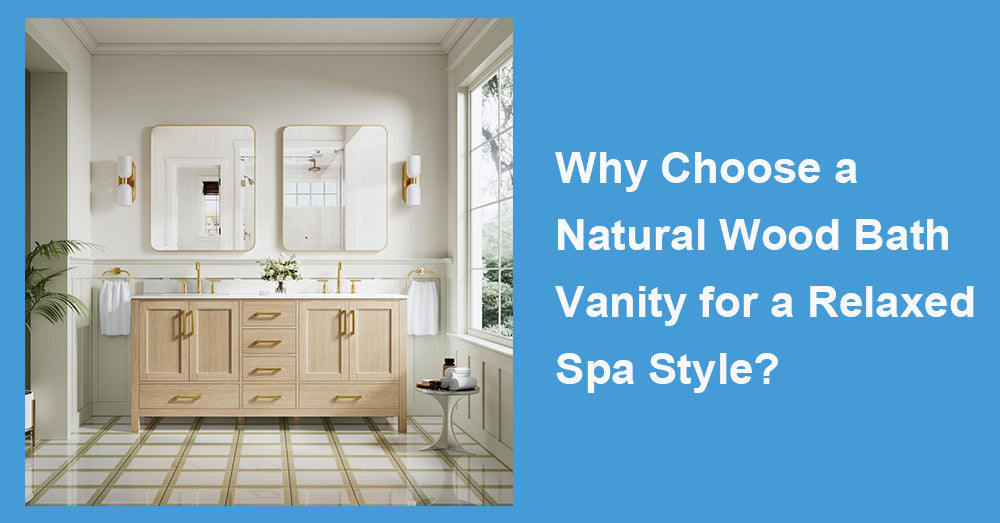
The bathroom design market is shifting from "functional spaces" to "home healing spaces". In recent years, consumers have increasingly valued comfort, natural elements, and relaxing experiences similar to hotels and spas in bathroom decoration. Under this trend, natural wood bath vanities are becoming an important element in creating spa-style bathrooms with their warm colors, natural textures, and strong spatial adaptability.
According to Houzz's 2025 U.S. Bath Trends Study, the median cost of bathroom renovation projects has reached $13000, and the median cost of large bathroom renovations has reached $22000. At the same time, more and more consumers are beginning to view the bathroom as a part of their long-term living experience, rather than just a functional space to meet their grooming needs.

Natural wood is becoming an important choice for bathroom vanities.
In bathroom spaces, vanities usually occupy a large visual area, so the material and color will directly affect the overall atmosphere. According to Houzz's 2025 survey, 74% of bathroom renovation consumers choose solid wood as the material for bathroom vanities, with Maple accounting for 29%, White Oak accounting for 23%, Birch accounting for 12%, and Walnut accounting for 9%. This means that solid wood is no longer just a niche design choice, but a representative mainstream material in the bathroom renovation market.
This trend is not sudden. According to the 2024 Houzz survey, wood has become the most popular color choice for bathroom vanities, accounting for 26%. Compared to traditional bathroom tones such as pure white and gray, wooden colors can add visual warmth to the space and are also easier to form layers with common bathroom materials such as stone, tiles, metal, and glass.
This balance is especially crucial for homeowners looking to cultivate a spa-like atmosphere. A truly soothing spa environment avoids an overreliance on cold, stark materials—instead, it layers wood, stone, soft lighting, and warm natural tones to create a serene, harmonious retreat.
Why is natural wood particularly suitable for SPA style?
The core of SPA style is not just 'luxury', but tranquility, naturalness, and comfort.
Bathrooms are naturally dominated by hard materials like tile, glass, ceramic, and metal. Without balance, an all-cool color palette can easily make the space feel sterile. Wood vanities counterbalance these cold surfaces with rich textures and warm tones, infusing the space with a softer, more inviting atmosphere.
The recent trend in interior design has also clearly shifted towards natural materials and warm tones. Design media have observed that natural wood is becoming an important element in bathroom design again, especially light oak, warm oak, and dark wood, which can be paired with different styles of bathrooms.
For consumers, this design also has a practical advantage: wood color has strong cross-style compatibility. It can be paired with modern minimalist bathrooms or combined with Transitional, Modern Farmhouse, or even more traditional designs.
Currently, Transitional remains one of the most popular styles in master bathroom renovations, accounting for approximately 23%; Contemporary and Modern account for approximately 16% and 15%, respectively.
Therefore, a natural wood-toned vanity is far from limited to traditional aesthetics; instead, it serves as a versatile anchor connecting diverse design languages.
From 'good-looking' to 'easy to use', SPA bathrooms are increasingly emphasizing details.
Modern SPA-style bathrooms are not simply stacked with high-end materials. Consumers are increasingly concerned about comfort during use.
For example, Houzz data shows that 78% of bathroom renovation projects have added soft-close drawers, and 75% have added soft-close cabinet doors. The quiet opening and closing experience may seem like a small detail, but it can reduce the noise in daily use and make the bathroom closer to the quiet environment emphasized by the hotel SPA.
Meanwhile, 68% of bathroom renovation owners will consider special needs and accessibility factors, an increase of 4 percentage points year-on-year.
This indicates that the bathroom market is forming a clearer direction: consumers hope that bathrooms are not only visually beautiful, but also able to be used for a long time, and provide better experiences in terms of storage, lighting, circulation, and convenience.
WELLFOR: Integrating natural materials into modern bathroom design
Against this market backdrop, WELLFOR remains focused on consumer demand for natural materials and modern bathroom functionality.
WELLFOR’s solid wood vanity series harmonizes natural wood grain with modern design, infusing spaces with warmth through premium woods like oak. Featuring clean lines and smart storage layouts, these vanities seamlessly integrate into a wide range of residential interiors.
For consumers who pursue SPA style, bathroom vanities do not necessarily require complex decorations. A bathroom vanity with natural wood grain, paired with light colored stone countertops, soft lighting, simple mirrors, and matte metal hardware, can create a more relaxed visual effect.
Particularly in modern homes, bathrooms vary significantly in size and layout. Unlike furniture bound to specific decor styles, natural wood bathroom vanities offer greater design versatility, effortlessly adapting to spaces ranging from compact powder rooms to spacious primary baths.
SPA style is shifting from a "decoration trend" to a lifestyle
Notably, the shifts in bathroom design extend far beyond simple variations in color and materials.
According to a 2025 Houzz study, 39% of homeowners renovating their bathrooms choose to expand the shower area, while 16% adopt a wet room design. Key drivers for opting for a wet room include better space utilization, enhanced aesthetics, and improved accessibility.
At the same time, soaking tubs still have a clear advantage, with 74% of relevant consumers choosing Soaking Tubs.
These data collectively reflect a trend: consumers are turning bathrooms into relaxation areas in their daily lives.
Therefore, the focus of spa-style bathrooms has gradually shifted from simply pursuing "size" and "luxury" to natural materials, a quiet experience, comfortable lighting, reasonable storage, and long-term use experience.
Natural wood vanities sit right at the heart of this trend.
They infuse spaces with natural textures and warm tones, creating a striking balance against the stone, glass, metal, and smart technology of modern bathrooms. For homeowners seeking a relaxing, comfortable sanctuary with enduring design value, solid wood vanities are becoming a compelling choice.
From purely functional spaces to private spa-like sanctuaries, and from sleek, cool surfaces to warm, natural textures, bathroom design is undergoing a human-centric evolution. Solid wood vanities have become an indispensable focal point in this transformation.









































Leave a comment
This site is protected by hCaptcha and the hCaptcha Privacy Policy and Terms of Service apply.