






















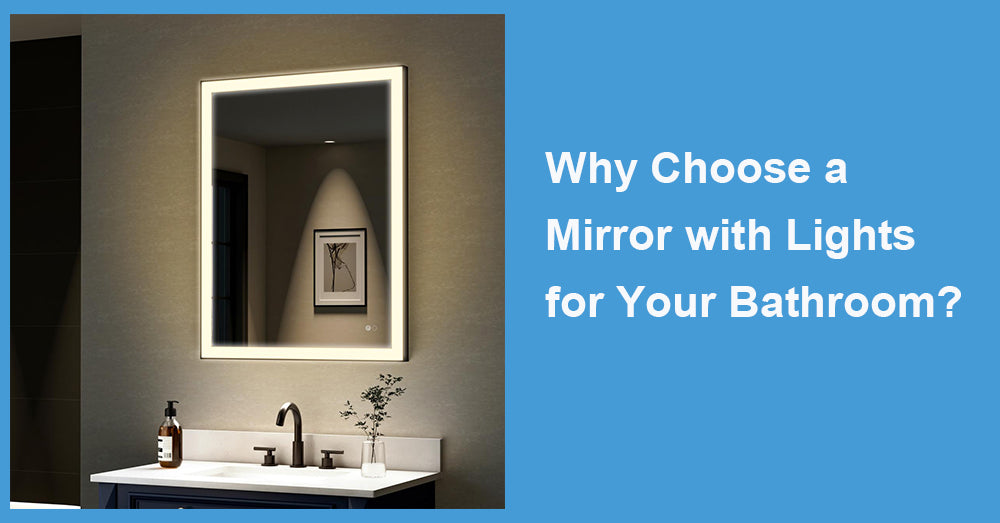
In bathroom renovations or lighting optimization, a mirror with lights is gradually shifting from an "optional configuration" to a core element in many solutions. Unlike traditional single-ceiling or wall lights, having a mirror does not simply increase the number of light sources. Still, it systematically improves the bathroom's lighting quality by altering the direction, distribution, and usage logic of the light. From an industry perspective, the significance of choosing a mirror with lights is not about visual novelty, but whether it truly solves long-standing usage problems.
1. The key to bathroom lighting is not whether it is bright or not, but whether it is illuminated correctly
Even with brightly lit ceiling lights installed, many bathrooms can still feel insufficiently lit or uncomfortable. The reason is not insufficient power in the lighting fixtures, but rather the unreasonable direction of the light.
Traditional ceiling lights are located above or behind the head, which can easily cast shadows on the face, especially during high-frequency activities such as washing, shaving, or makeup, seriously affecting operational accuracy. The illuminated mirror fundamentally improves this problem by placing the light source around or behind the mirror surface, allowing the light to shine on the user from the front.
2. Why is front lighting more in line with usage logic
Based on industry research and practical feedback, a uniform, positive lighting approach better aligns with the human eye's need for detail recognition. The light source in front of the face can reduce the contrast between light and dark, making the skin tone, contours, and details appear more realistic.
Mirrors with lights usually adopt a surround or backlit structure, which can create a continuous, soft illumination across the face rather than a single point of high brightness. This light structure not only enhances visibility but also reduces visual fatigue during long-term use.
3. The influence of mirror size on lighting effect
The mirror's size directly affects the range of light coverage. The larger the mirror, the larger the area of light that can participate in reflection and diffusion.
In practical applications, the standard width of the primary washing area mirror is 30-48 inches, and the height is mainly 26-32 inches. This size range can cover the main line of sight of standing users and effectively distribute light vertically.
If the mirror is too small, even with lighting, its illumination range is easily limited to a local area, making it difficult to achieve a good overall effect.
4. The actual impact of color temperature on bathroom experience
A critical advantage of a light mirror is its controllability of color temperature. Different color temperatures will directly affect the user experience and spatial atmosphere of the bathroom.
Warmer lighting is more suitable for relaxing environments in the morning and evening, while cooler lighting has advantages in clarity and detail presentation. The adjustable color temperature range is usually concentrated between 3000K and 6000K, which can adapt to different time periods and usage needs.
From an industry perspective, a stable, adjustable color-temperature system is more practical than a single bright light source.
5. The importance of brightness adjustment is often underestimated
In lighting design, pursuing "brighter is better" often backfires. The bathroom space has high reflectivity, and excessive light can easily cause glare, affecting comfort.
Mirrors with lights usually support a brightness adjustment function, allowing users to adjust light intensity as needed. When used in the morning or at night, lower brightness is softer; When delicate operation is required, the brightness can be appropriately increased.
This adjustability is an advantage that traditional fixed lighting fixtures find difficult to achieve.
6. Collaboration between the illuminated mirror and the overall lighting system
Choosing to have a mirror does not mean that other lighting fixtures can be eliminated. A reasonable bathroom lighting plan should involve multiple light sources working together.
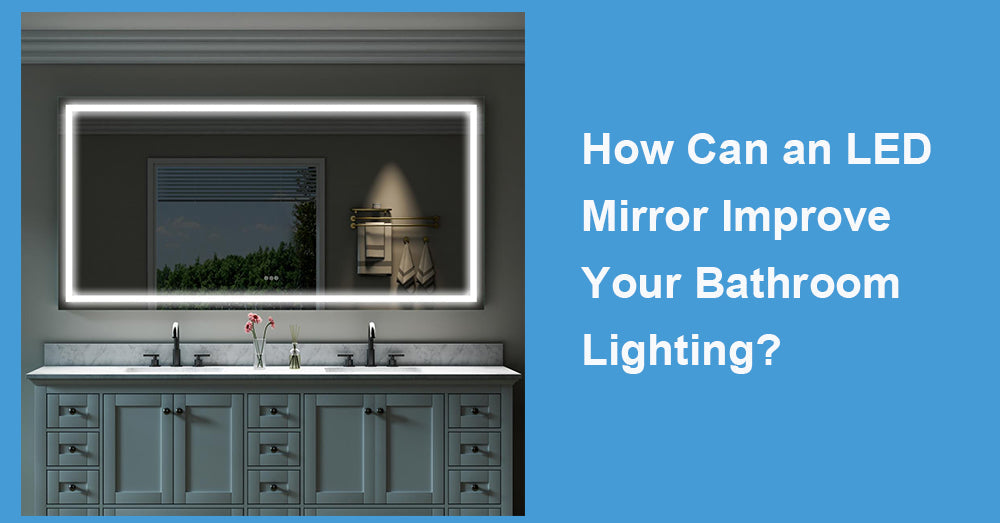
In mature designs, the illuminated mirror is responsible for facial functional lighting, while the overhead or auxiliary lighting fixtures are responsible for overall environmental brightness. The combination of the two can significantly enhance the brightness and sense of hierarchy of the space without increasing complexity.
Industry practice has shown that this lighting structure, with a clear division of labor, is more conducive to long-term, stable use.
7. The implicit influence of mirror structure and border design
The structural design of mirrors can also affect the lighting effect. Mirrors without borders or with extremely narrow borders are more conducive to light diffusion and reduce obstruction.
Thick or dark borders, although visually decorative, may reduce the efficiency of light diffusion. In bathrooms that emphasize practicality, mirror integrity is often more important than decoration.
In addition, high-quality mirrors perform better in terms of reflection realism and long-term stability, which helps maintain the overall lighting effect.
8. Realistic considerations of energy consumption and service life
According to industry data, LED light sources offer significant advantages in energy efficiency and lifespan. Under reasonable usage conditions, its service life can usually reach 10-15 years, and its energy consumption is relatively stable.
This means that, in the long term, illuminated mirrors can not only provide a better lighting experience but also reduce maintenance and replacement frequency, making them more cost-effective overall.
9. From the perspective of long-term use, the value of illuminated mirrors
Once the bathroom lighting plan is determined, the cost of later adjustments will be relatively high. Therefore, it is imperative to choose a solution that better meets long-term usage needs during the renovation phase.
By optimizing the direction, distribution uniformity, and controllability of light, the illuminated mirror significantly improves the daily user experience without changing the spatial structure. This improvement is not a short-term visual effect, but a constantly perceived value enhancement in daily use.

10. Conclusion
Choosing a mirror with lights is not about pursuing a "better" visual effect, but about obtaining a more reasonable and comfortable lighting experience. With front lighting, adjustable lighting, and integration with the overall lighting system, mirror lights can significantly enhance the practicality and comfort of the bathroom without increasing complexity. In rational planning for bathroom renovation, it is often a highly cost-effective choice.








































Leave a comment
This site is protected by hCaptcha and the hCaptcha Privacy Policy and Terms of Service apply.