














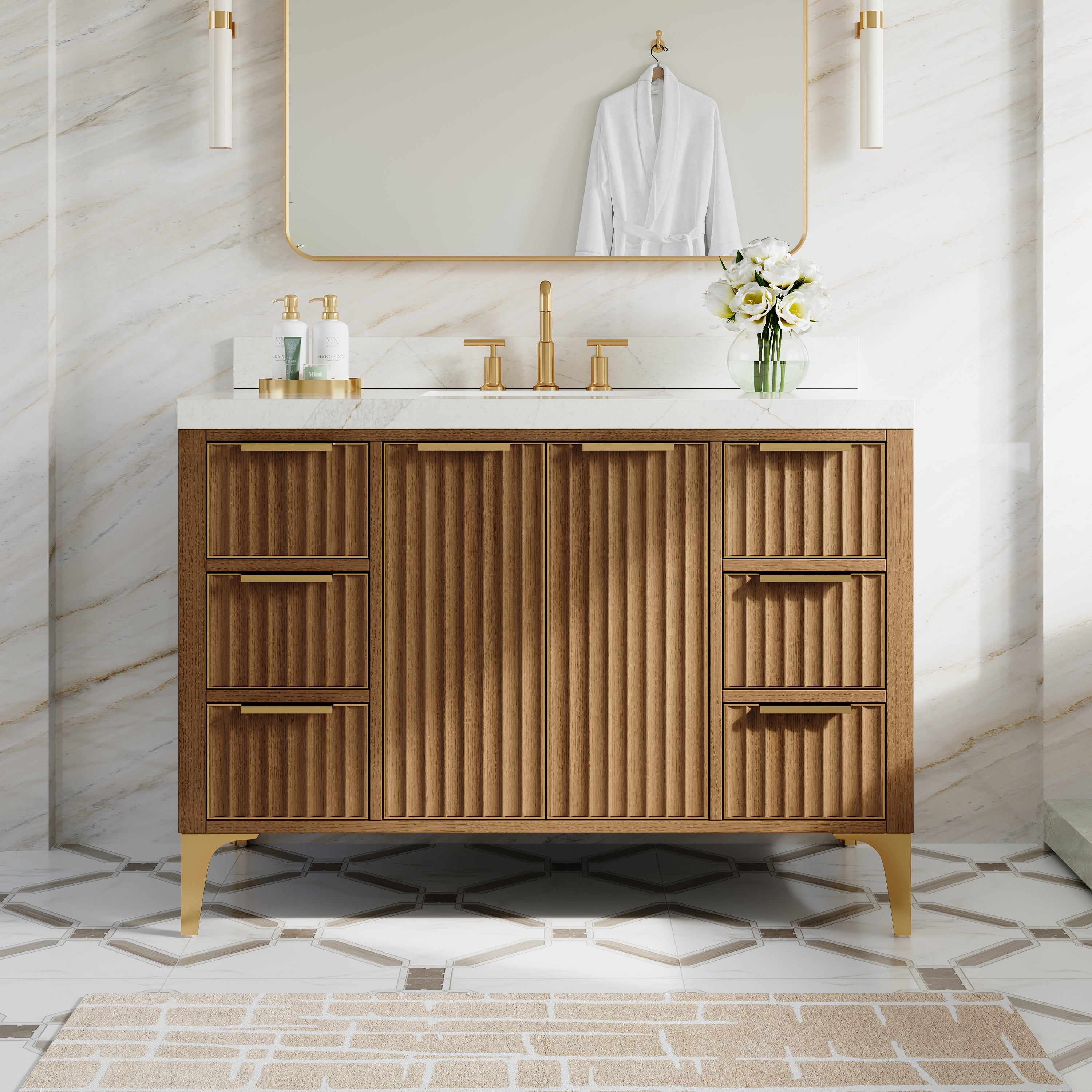
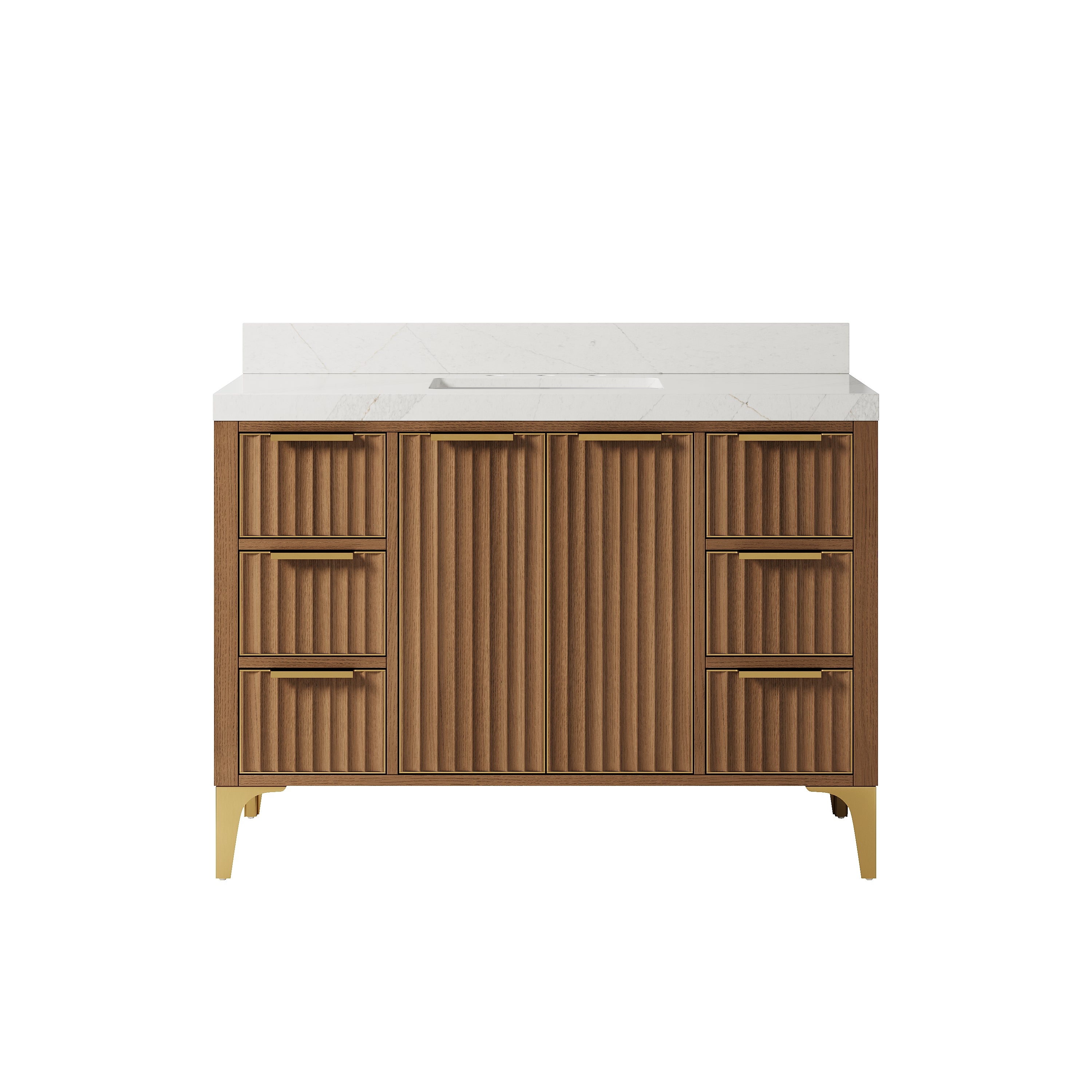


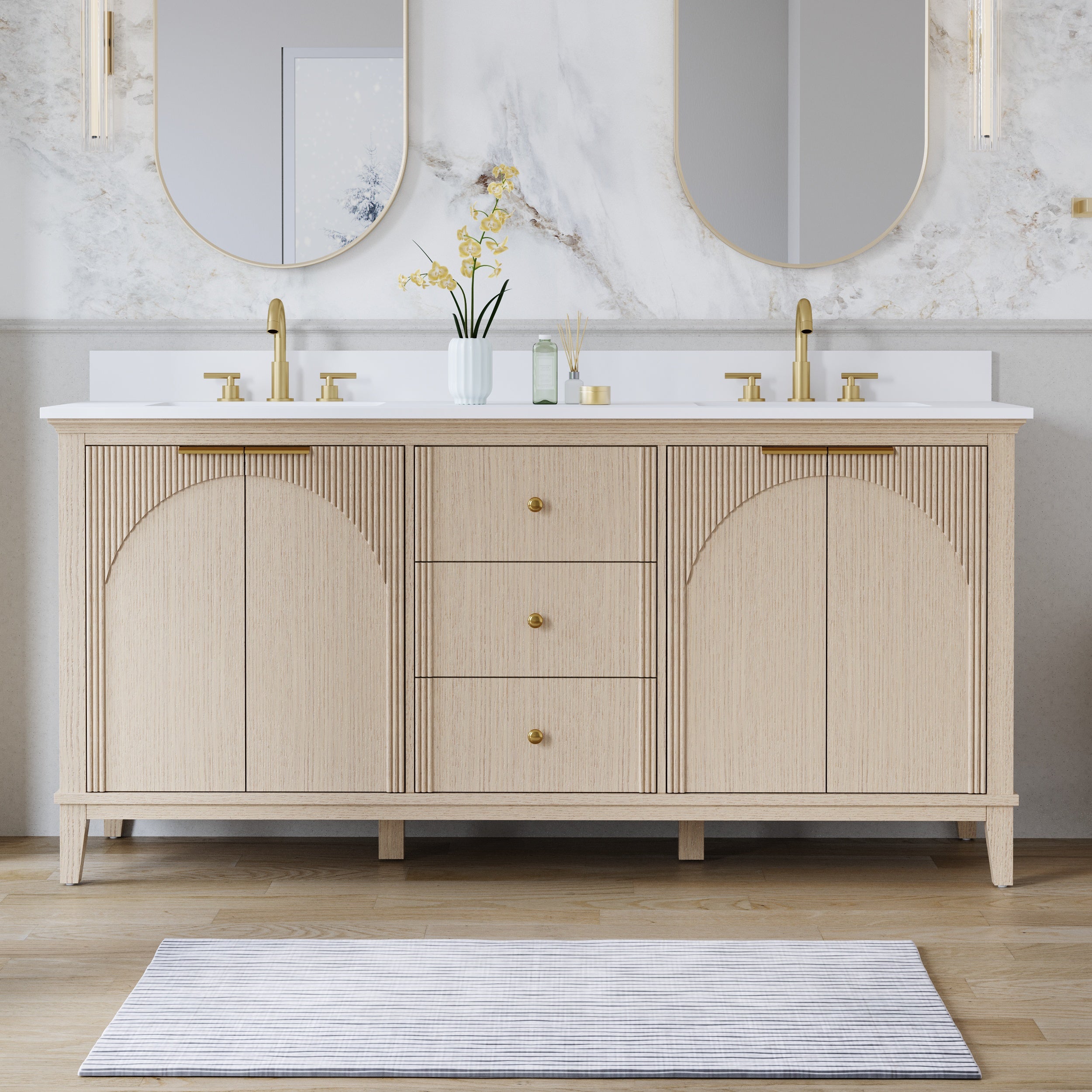
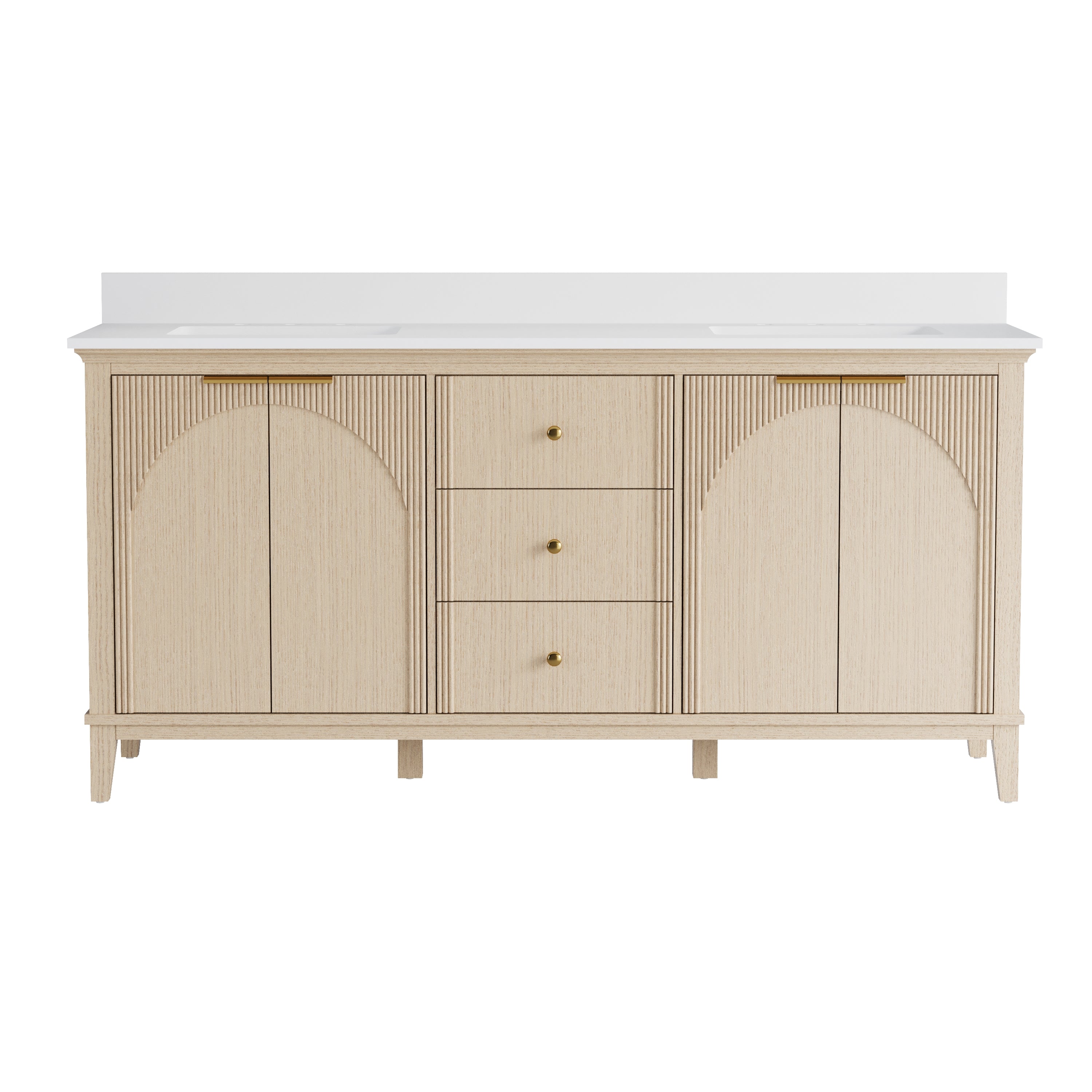
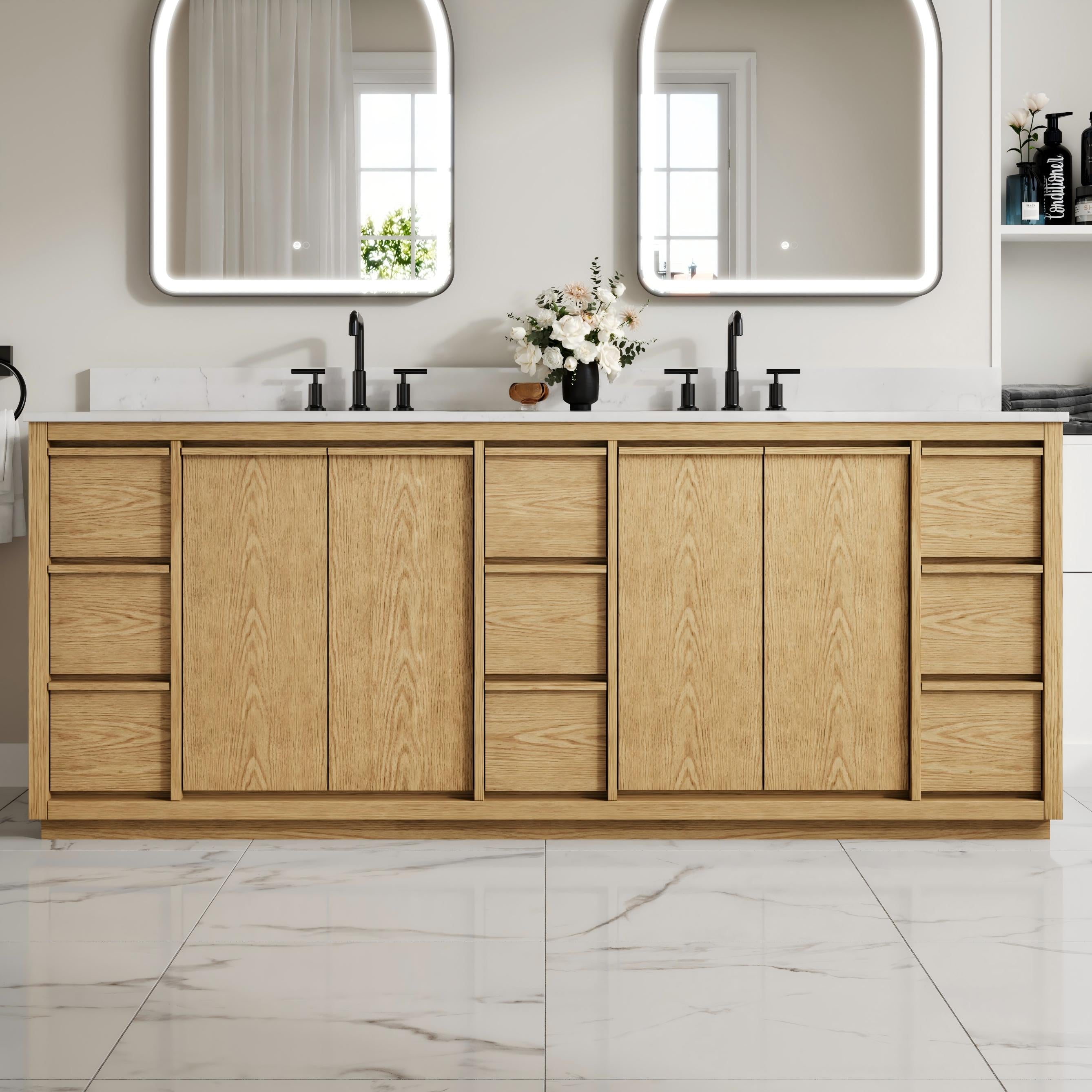
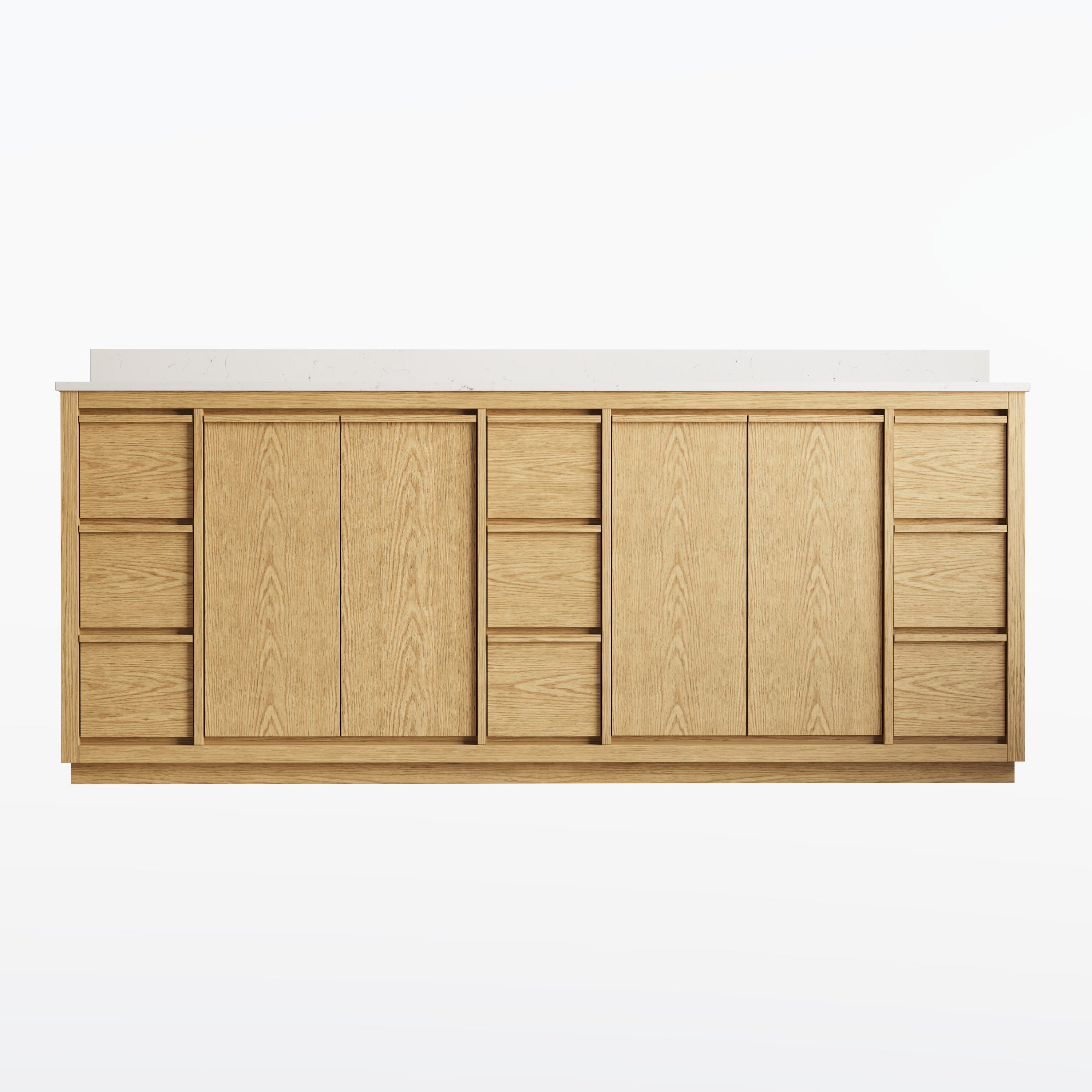
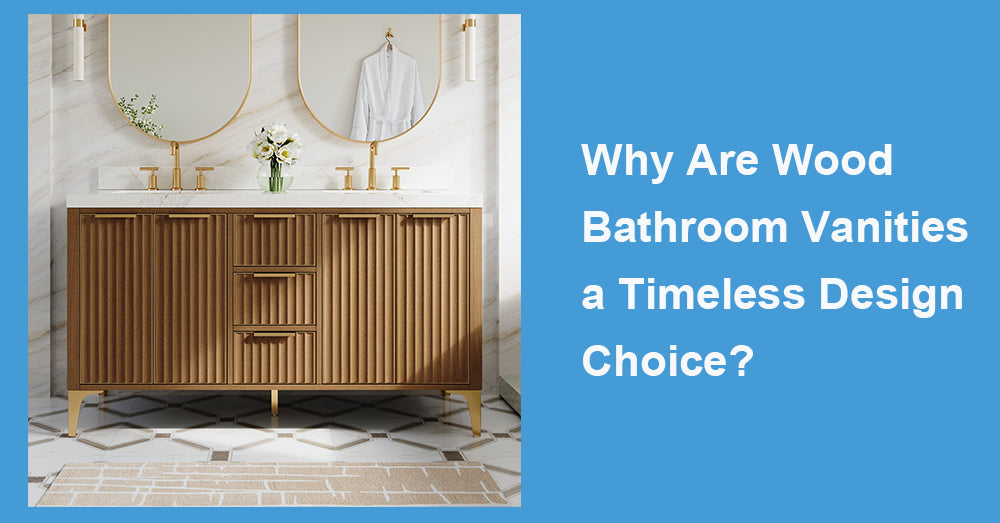
Wood bathroom vanities have stayed relevant through changing bathroom trends because natural grain does something painted cabinetry cannot easily reproduce: it adds warmth and texture without requiring extra decoration. Current renovation data supports that staying power. The 2025 Houzz Bathroom Trends Study found solid wood in 74% of upgraded vanities, while wood tones were the leading vanity color category at 28%. White oak represented 23% of solid-wood selections, second only to maple at 29%. Meanwhile, NKBA's 2026 Bath Trends Report found wood-faced vanities reaching 62% in popularity, ahead of painted cabinetry at 53%. Rather than belonging to one specific trend, wood continues to adapt as bathroom styles change.
Natural Grain Gives the Vanity Its Own Character
A painted vanity creates a controlled, consistent surface. Wood introduces variation.
Even cabinets made from the same species may differ slightly in grain, tone, and pattern. That variation can make a vanity feel closer to furniture than basic bathroom storage.
Common choices create noticeably different looks:
· White oak feels light and relaxed.
· Maple has a quieter, more uniform grain.
· Walnut creates a deeper, richer appearance.
· Birch can produce a clean, understated finish.
This means designers can use wood texture instead of relying on elaborate molding or decorative hardware.
Wood Fits More Than One Bathroom Style
One reason wood cabinetry lasts is that it does not belong exclusively to rustic design.
NKBA's 2026 research found transitional and timeless design favored by 70% of surveyed industry professionals. Organic and natural styling reached 65%, while contemporary, modern, and minimalist design reached 57%.
Wood can move comfortably between all three.
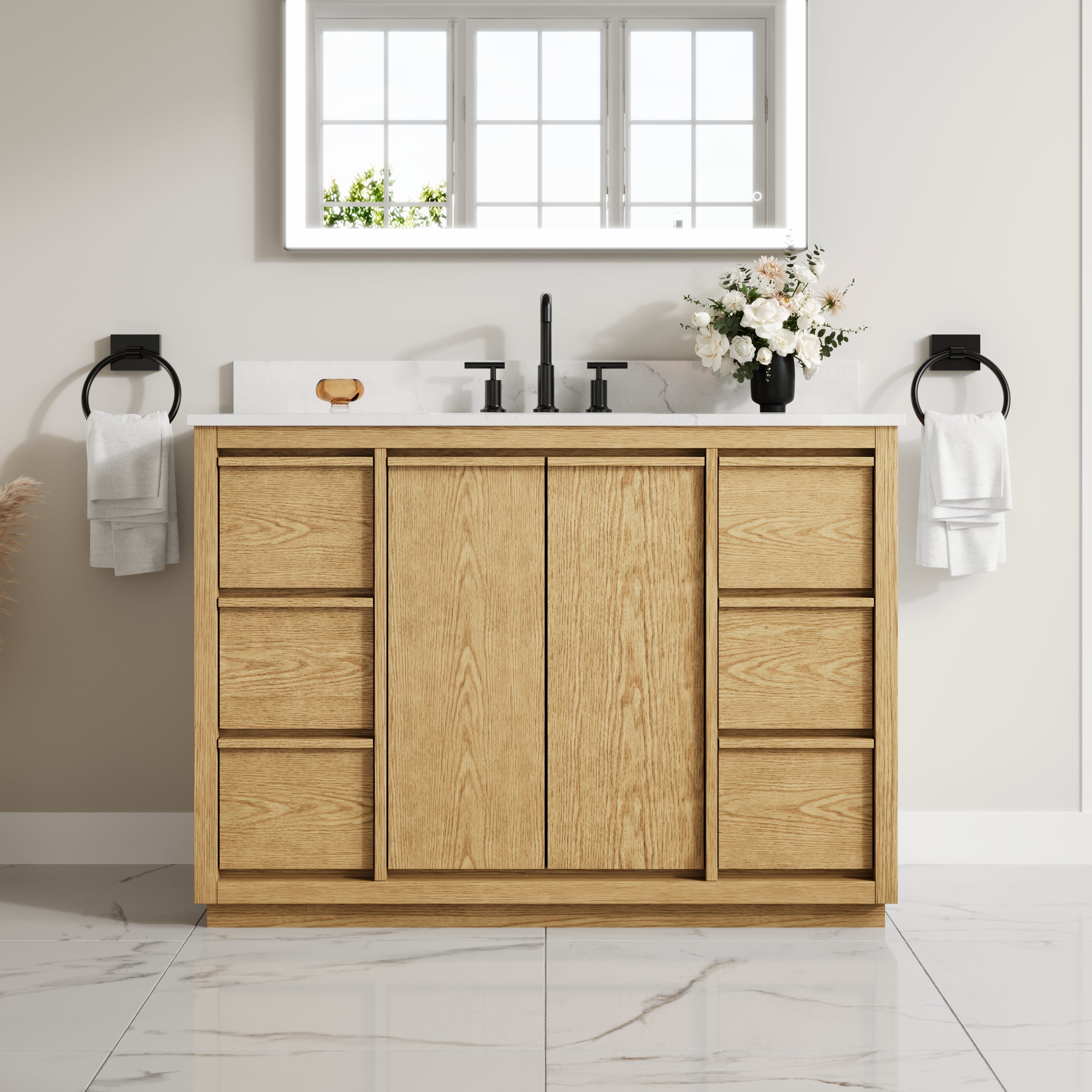
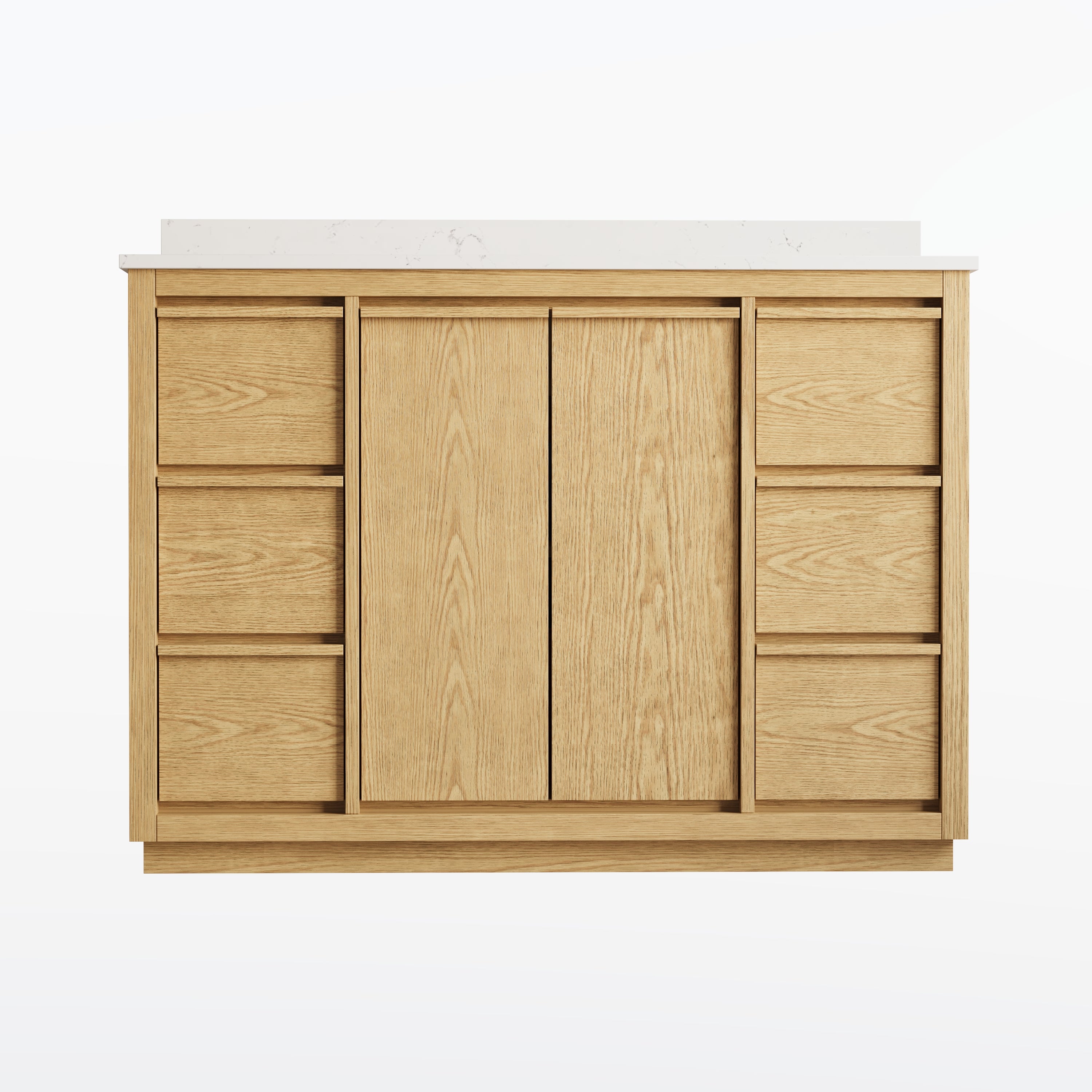
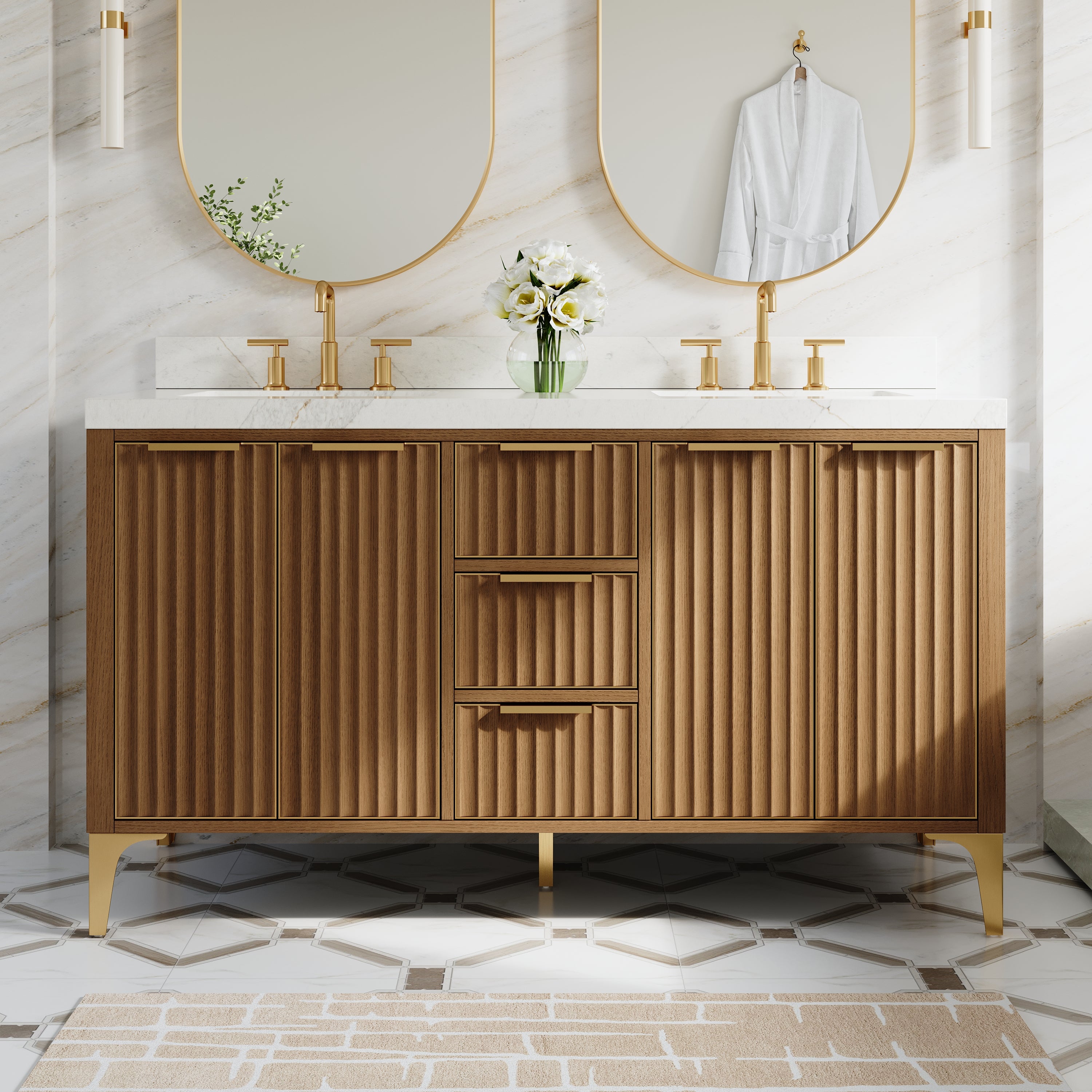
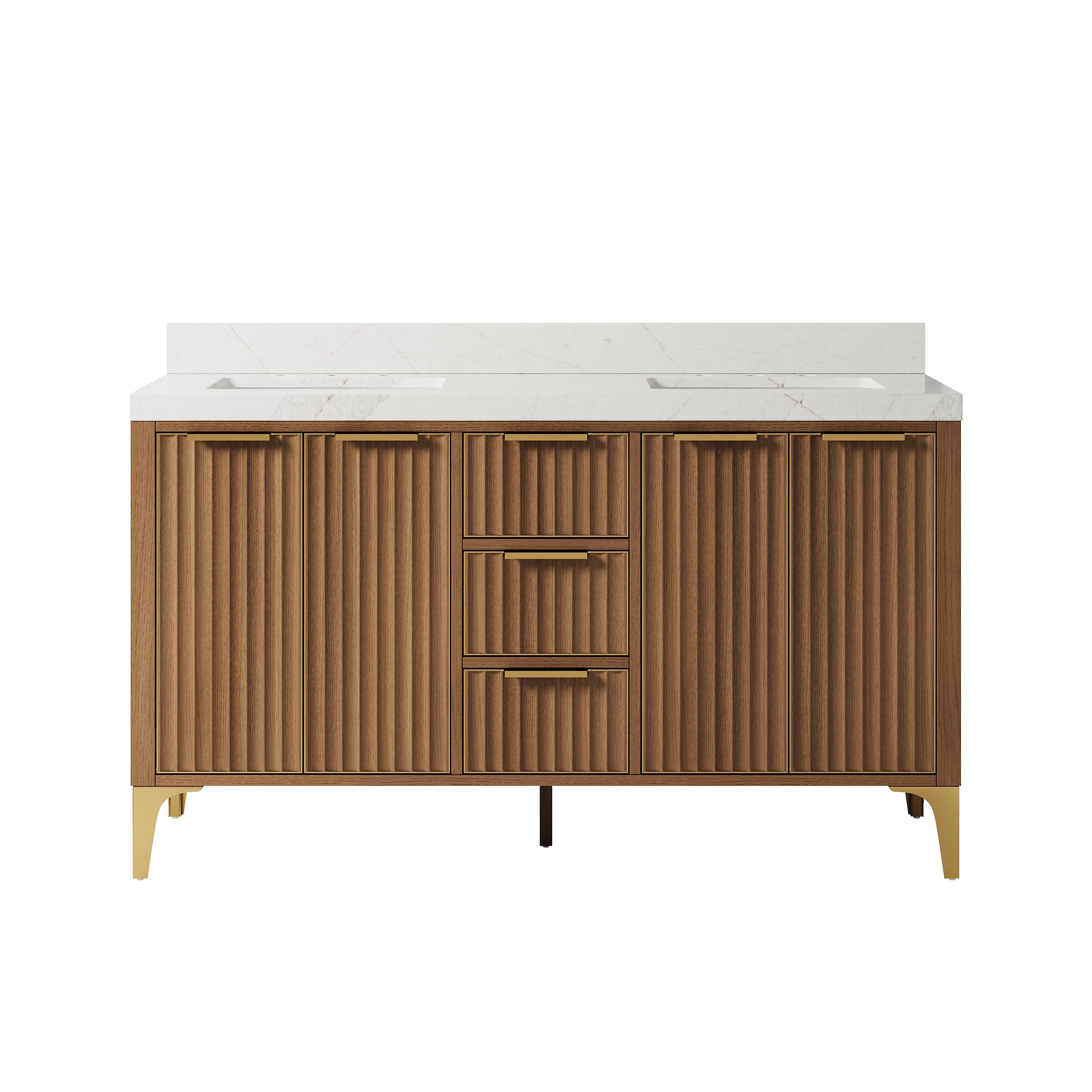
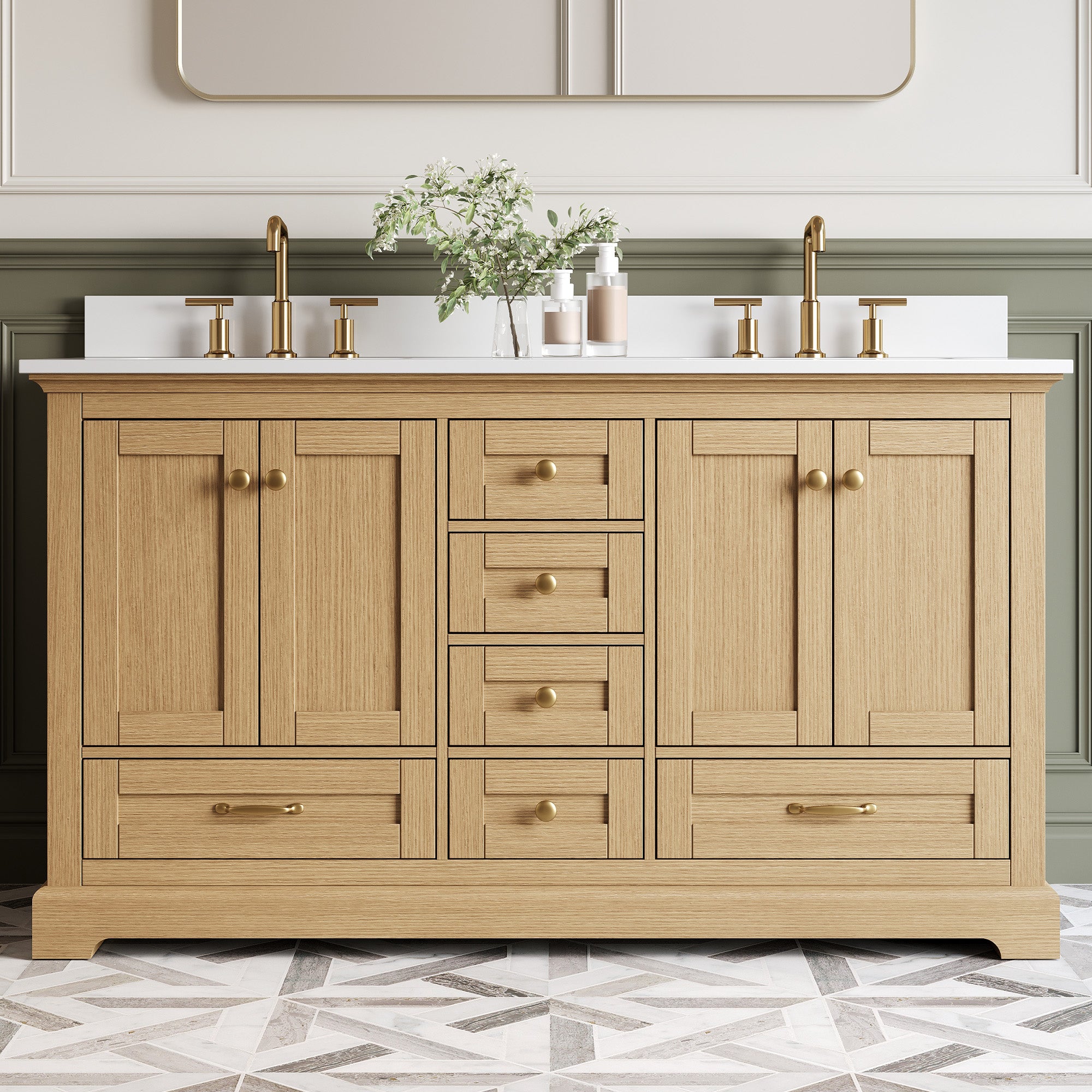
A 36-inch light oak vanity with flat drawers feels modern. Add Shaker doors and brushed nickel hardware, and the same material becomes more transitional. A 60-inch walnut vanity with simple hardware can feel sophisticated without becoming traditional.
The cabinet material stays familiar while the details around it change.
Light Wood Is Giving the Category New Momentum
Wood may be timeless, but the finishes attracting attention are changing.
Houzz's 2025 Emerging Summer Trends Report found searches for white oak bathroom vanities increasing 20%. The broader Bathroom Trends Study also found light wood accounting for 11% of vanity colors, while medium-to-dark wood represented 17%.
Light oak is particularly useful in bathrooms because it brings warmth without making the room feel visually heavy.
It pairs easily with:
· White quartz
· Beige stone
· Warm gray tile
· Matte black hardware
· Brushed nickel
· Soft green walls
That versatility has helped wood move beyond darker, furniture-style vanities.
Wood Works From Compact to Oversized Vanities
The material adapts well to very different cabinet dimensions.
A 24-inch or 30-inch wood vanity can bring character to a powder room without requiring additional decoration. A 36-inch model provides enough width for practical drawers and a single sink.
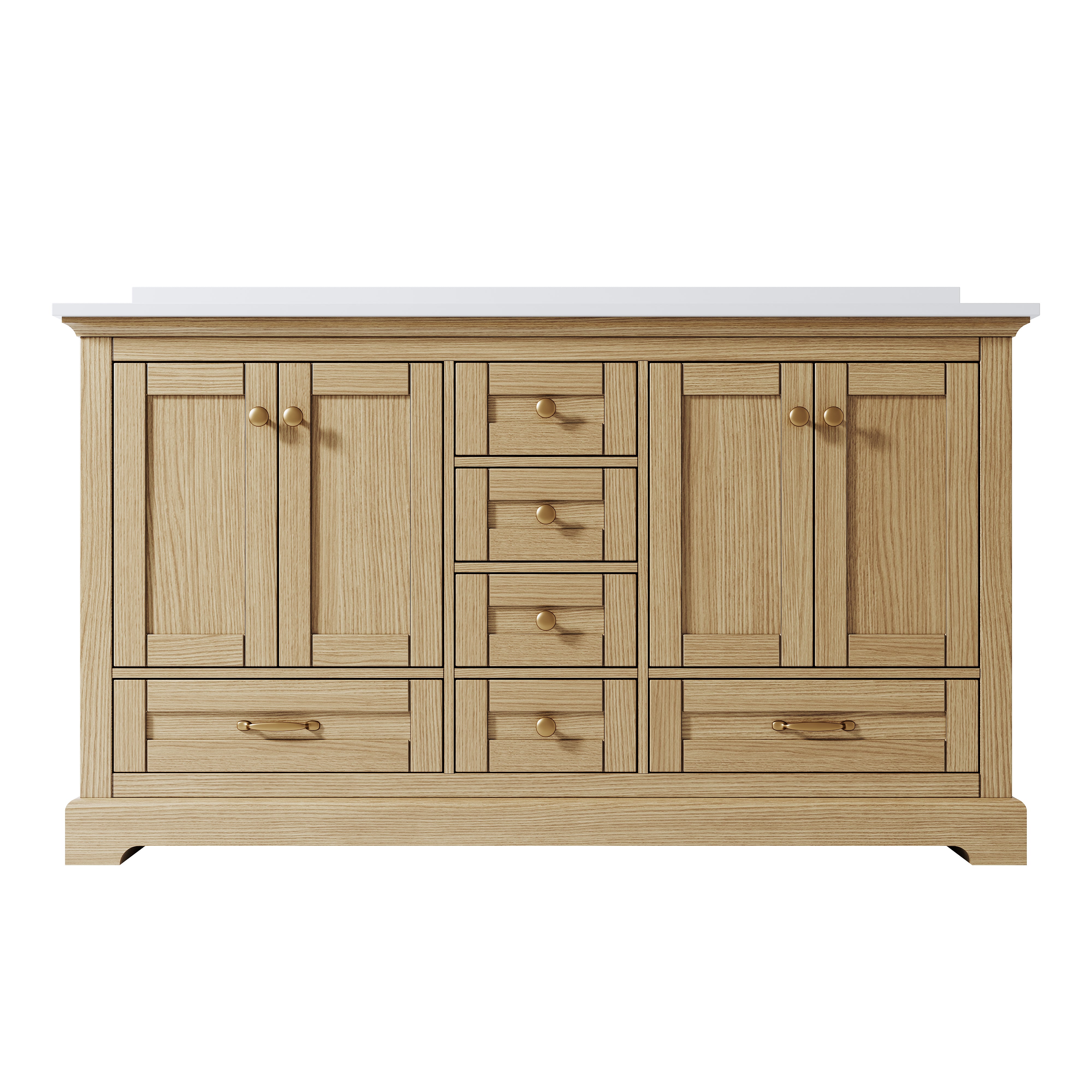
Larger 48-inch, 60-inch, and 72-inch vanities give designers more room to use continuous grain across several drawer fronts.
Houzz found that 47% of upgraded vanities measure 48 inches or less. Nineteen percent are 60 inches, 14% are 72 inches, and 13% are larger.
Wood works across that entire range rather than being tied to one particular bathroom size.
Simple Door Styles Let the Grain Do More Work
Wood cabinetry does not need complicated detailing to feel finished.
Houzz reports that Shaker doors remain the leading vanity style at 49%, while flat-panel fronts account for 26%.
Both work with wood, but in different ways.
Shaker fronts introduce structure and are easy to use in transitional bathrooms. Flat-panel fronts allow grain patterns to become more visible, making them well suited to contemporary vanities.
Fluted or reeded drawer fronts can introduce additional texture, but they are best used carefully. Too much detailing may compete with the natural variation already present in the wood.

Hardware Can Update Wood Without Replacing the Cabinet
A wood vanity can change personality simply by changing the metal around it.
NKBA found matte faucet finishes favored by 54% of respondents, brushed finishes by 51%, and satin by 46%, compared with 39% for polished finishes.
Those softer finishes work naturally with wood grain.
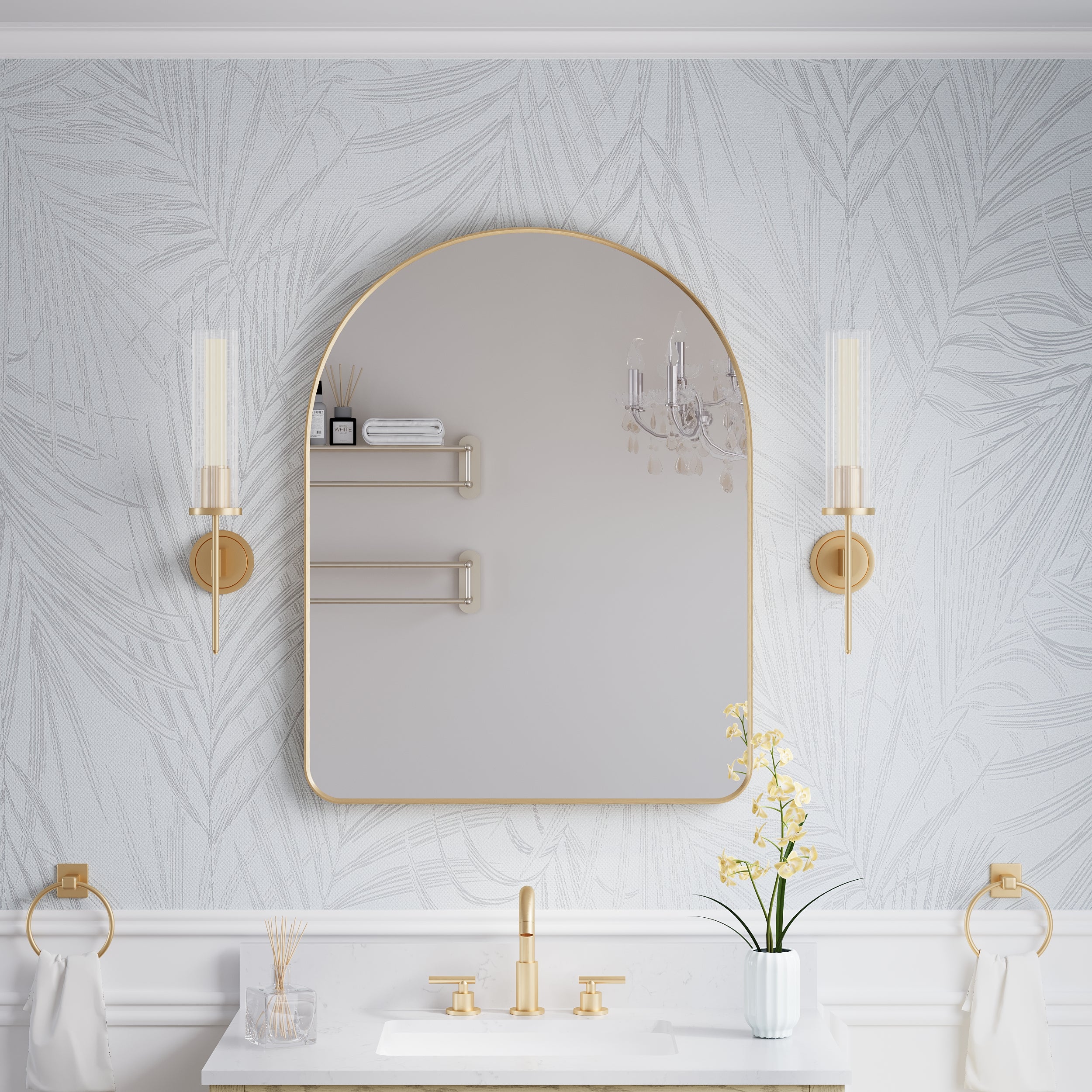
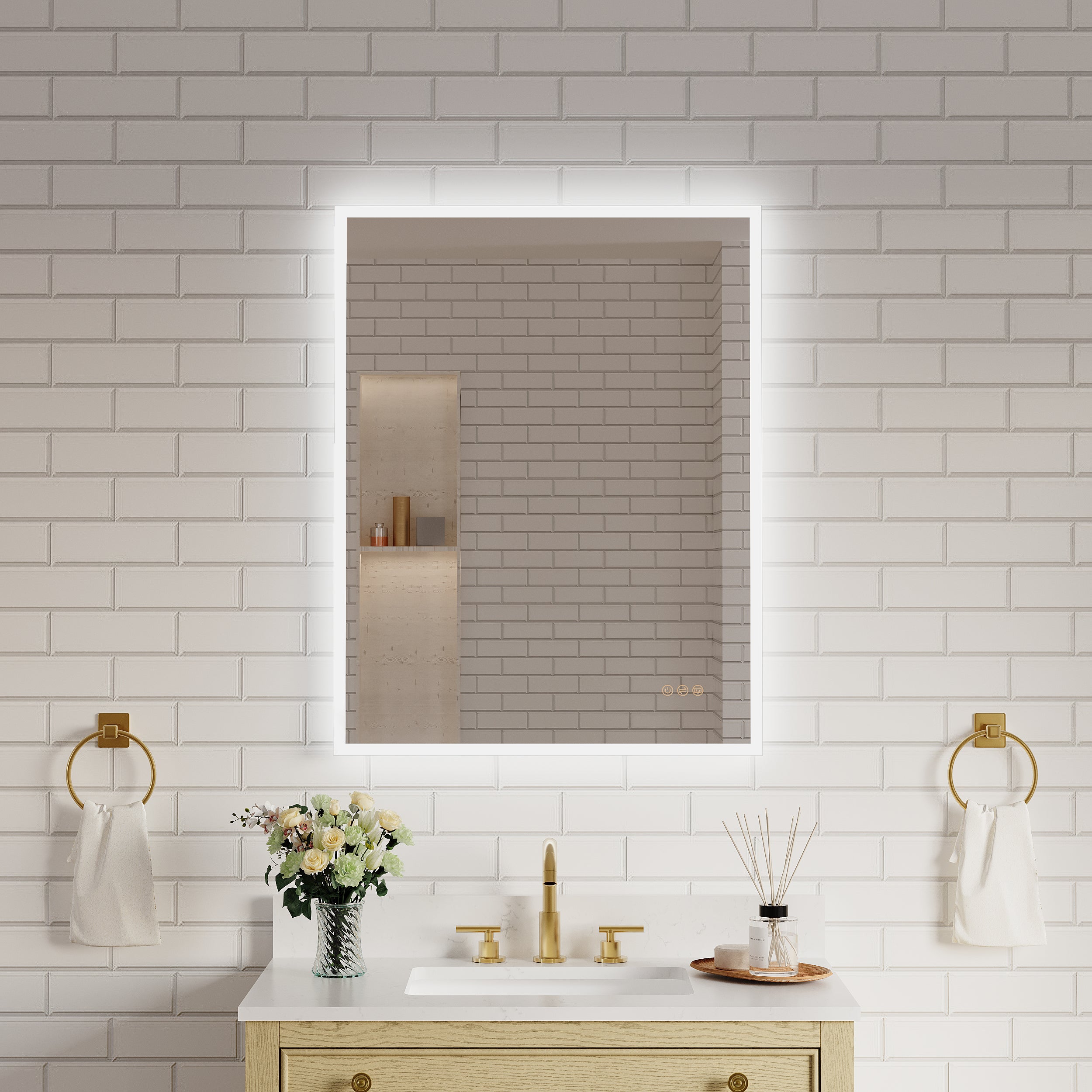
Matte black creates stronger contrast against light oak. Brushed nickel keeps the combination quieter. Brushed gold can emphasize warmer undertones in walnut or maple.
This makes a wood vanity easier to refresh years later. Hardware, mirrors, lighting, and wall color can change while the main cabinet remains.
Wood Can Make Modern Bathrooms Feel Less Sterile
Modern bathrooms often contain many hard surfaces: porcelain tile, quartz, glass, metal, and mirrors.
Wood breaks up that combination.
A light wood vanity beneath a white countertop can bring enough natural variation to stop the room from feeling overly clinical. In a darker bathroom, walnut can add depth without requiring another patterned material.
Industry judgment: The long-term strength of wood is not that it dominates the bathroom. It is that it can soften other hard materials while still remaining visually quiet.
This is especially useful in minimalist rooms where fewer materials have to do more work.
Bathroom Durability Depends on the Finish
Real wood still needs protection from moisture.
A good vanity should have sealed edges, protected plumbing cutouts, finished cabinet interiors, and a coating intended for humid environments.
Pay particular attention to:
· Door and drawer edges
· Areas around the sink
· Cabinet bottoms
· Plumbing openings
· Joints near the countertop
Natural material does not mean unfinished material.
Ventilation also matters. A properly ventilated bathroom helps limit prolonged exposure to steam and moisture, protecting both the vanity and the surrounding finishes.
Wood Lasts Because It Can Evolve With the Room
The strongest argument for wood bathroom vanities is not that they never change. It is that they handle change well.
Current data shows solid wood still used in 74% of upgraded vanities, wood tones leading vanity colors at 28%, and wood-faced cabinetry reaching 62% in NKBA's forward-looking research.
A light oak vanity can move from minimalist to organic simply by changing the mirror and tile. A walnut cabinet can shift from contemporary to transitional with new hardware and lighting.
That flexibility is what gives wood its staying power. The grain provides enough visual character to stand on its own, while the cabinet remains neutral enough to adapt as the rest of the bathroom evolves.












Leave a comment
This site is protected by hCaptcha and the hCaptcha Privacy Policy and Terms of Service apply.