






















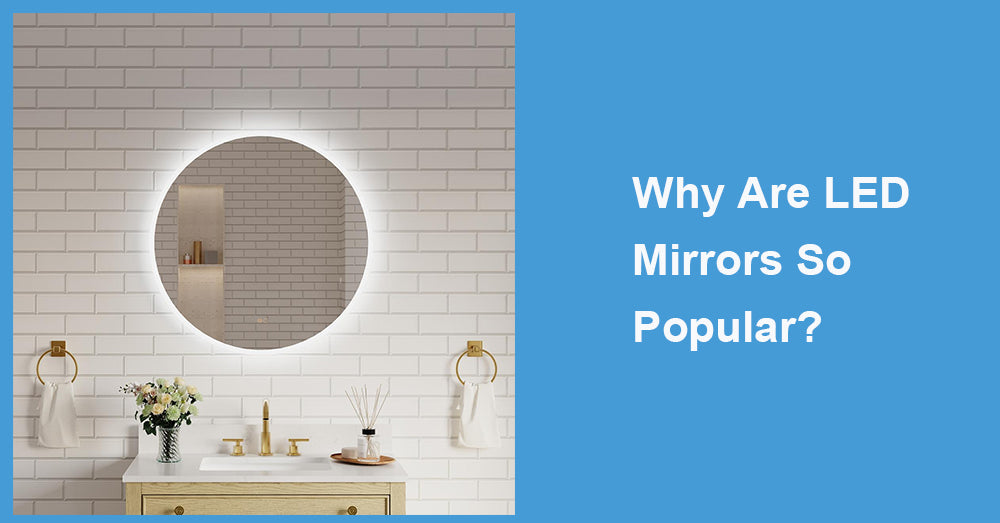
In modern home design, the combination of lighting and mirrors is becoming a new aesthetic trend. LED mirrors are rapidly becoming the preferred configuration in bathrooms, bedrooms, and even commercial spaces due to their excellent light efficiency, energy-saving features, and minimalist design. From daily care to space decoration, the popularity of LED mirrors not only reflects the advancement of lighting technology but also people's continuous pursuit of a higher quality of life and a more detailed experience. So, why have LED mirrors become so popular in just a few years?
1. The birth and design concept of LED mirrors
The core of LED mirrors lies in the perfect combination of efficient and energy-saving LED light sources with mirror structures. Compared to traditional mirrors, it not only has lighting functions but also optimizes the spatial atmosphere at a visual level. LED light sources are usually arranged around or behind mirrors, producing soft, uniform light through diffuse reflection, making facial lighting more natural.
The earliest LED mirrors were used in high-end hotels and commercial spaces, and later gradually entered ordinary households. Nowadays, it has developed into various forms, including backlit, front-lit, and bright LED mirrors, to meet the needs of different environments.
According to Grand View Research, the global LED mirror market has exceeded $3.5 billion in 2024 and is expected to maintain a compound annual growth rate of approximately 8% to 10% over the next five years (source: GrandViewResearch.com). This not only reflects the product's popularity but also demonstrates consumers' emphasis on a high-quality lighting experience.
2. Unique advantages of light expression
The primary reason why LED mirrors are popular is the quality of light they provide. Traditional bathroom lighting often uses top fixtures, which can cast shadows on the face and are not conducive to makeup, shaving, or skincare. The surround light source of LED mirrors can provide more uniform lighting, reduce shadows, and make skin tones look more realistic and natural.
The color rendering index (CRI) of LED light sources is usually above 90, indicating they can highly reproduce true colors under natural light (source: LightingEurope.eu). In addition, some high-end models are equipped with an adjustable color temperature function, allowing users to choose warm light (about 3000K), neutral light (about 4000K), or cool light (about 5000K) to adapt to different time periods or scenarios.
For example, warm light is better for relaxing nighttime environments, while cool light is better for dressing up or shaving in the morning. This flexibility makes LED mirrors not only lighting tools, but also a part of personalized living experiences.
3. Energy conservation and environmental protection: hidden advantages behind technology
The high energy efficiency of LED technology is one of the key drivers for its popularity. Compared with traditional halogen or incandescent lamps, LED light sources reduce energy consumption by about 75% and can last over 50,000 hours (source: EnergyStar.gov). This means that, at the same usage frequency, LED mirrors have lower long-term operating costs and a significantly reduced maintenance frequency.
In addition, LED light sources contain almost no harmful substances, such as mercury, and generate extremely low heat, making them safer and helping reduce indoor temperature accumulation. Some brands also use recyclable materials and low-carbon manufacturing processes in their designs, aligning their products with the trends of energy conservation and sustainable development.
In today's world, where energy conservation and environmental protection have become global priorities, LED mirrors offer a more environmentally friendly and economical choice for home lighting.
4. The popularization and experience upgrade of intelligent functions
In addition to lighting, the intelligence level of modern LED mirrors is also constantly improving. Features such as touch dimming, defogging and heating, Bluetooth speaker, time and temperature display, and even voice control are transforming bathroom mirrors from a single tool into an essential component of smart homes.
According to Statista, sales of LED mirror products with intelligent control functions will increase by more than 20% year-on-year in 2024, among which touch dimming and defogging are the two most commonly used functions (source: Statista.com).
For example, the defogging heating system can automatically remove mirror water vapor within a few minutes after showering, ensuring a clear view at all times. The touch panel allows users to easily switch between light brightness and color temperature without the need for traditional switch operations. These designs make the experience of LED mirrors more convenient and user-friendly, and also meet the expectations of modern people for "sensory intelligence".
5. Space Aesthetics and Decorative Effects
Another significant advantage of LED mirrors in spatial design is their decorative nature. The mirror surrounding the light source can create a soft reflection on the wall, making the small bathroom look more spacious; the Backlight design can also enhance spatial hierarchy and create a visual effect similar to that of a hotel.
From a styling perspective, LED mirrors are not limited to traditional rectangular or circular shapes. More and more designers are experimenting with unconventional designs and borderless shapes to adapt to a range of decor styles. For example, circular backlit mirrors are suitable for a soft and natural spatial atmosphere, while frameless rectangular mirrors are more in line with modern minimalist aesthetics.
According to a trend report released by InteriorDesign. Net, over 60% of interior designers prefer LED mirrors in bathroom lighting solutions due to their "practicality and visual value" (source: InteriorDesign.net). This makes LED mirrors no longer functional items, but the core visual elements of the overall bathroom design.
6. Safety and durability
In a humid bathroom environment, Safety is always the key to choosing lighting products. LED mirrors generally adopt a waterproof design, with a protection level typically between IP44 and IP65, which effectively resists water vapor intrusion (source: IECStandard.org).
In addition, LED light sources generate very little heat and will not cause local overheating of the mirror surface or shorten the lifespan of electronic components. High-quality mirror surfaces are usually made of explosion-proof silver mirrors or copper-free glass, which maintain clear reflections even after long-term use.
For families with children or older adults, these products are not only safe and reliable, but also reduce maintenance risks.

7. Market Trends and Future Development Directions
The popularity of LED mirrors stems not only from technological advancements but also from people's redefinition of the quality of living spaces. According to MarketWatch's research, over 40% of LED mirror products are used in bathrooms, followed by bedrooms and makeup areas, demonstrating the diversity of usage scenarios (source: MarketWatch.com).
Future LED mirrors will place greater emphasis on intelligence and the human-computer interaction experience. For example, some manufacturers are already developing automatic brightness adjustment and healthy lighting modes that automatically adjust the output brightness based on ambient light intensity to protect the eyes and optimize visual comfort. Some high-end models also plan to integrate environmental monitoring sensors that display data such as humidity and air quality, further expanding the product's functionality.
8. Conclusion: Comprehensive upgrade from functionality to experience
The popularity of LED mirrors is not accidental. It has achieved breakthroughs across multiple dimensions, including light efficiency, energy conservation and environmental protection, intelligent interaction, and aesthetic design, becoming a representative product in contemporary home furnishings that combines practicality and artistry.
In today's rapidly evolving lighting technology, LED mirrors not only deliver clear, bright visual experiences but also embody the humanization and refinement of spatial design. For families who pursue comfort, energy efficiency, and aesthetics, choosing a high-quality LED mirror is not only an upgrade to the details of life but also a long-term investment in light and beauty.









































Leave a comment
This site is protected by hCaptcha and the hCaptcha Privacy Policy and Terms of Service apply.