






















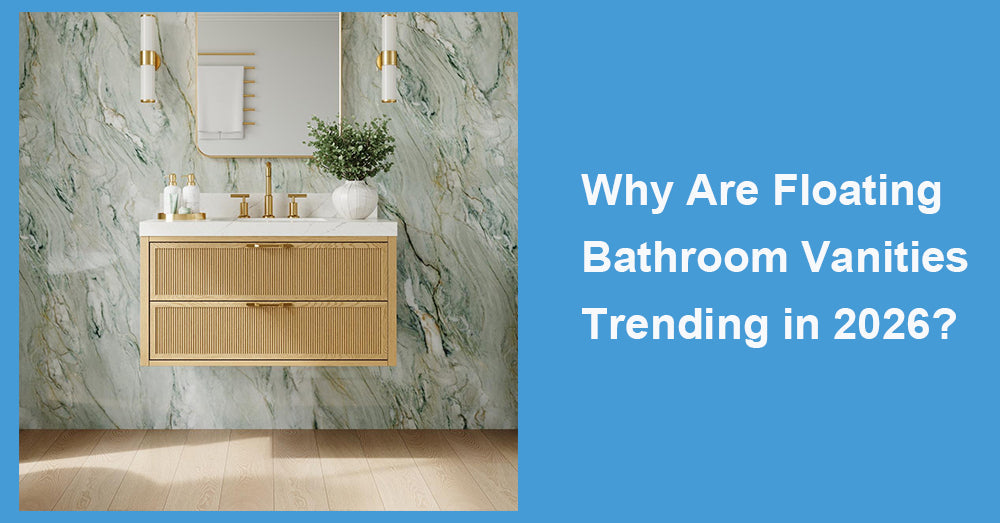
Floating bathroom vanities are gaining more attention in 2026 because homeowners want bathrooms that feel lighter, easier to clean, and more intentional rather than simply filled with traditional cabinetry. After more than 20 years of working with bathroom storage and remodel planning, I have seen wall-mounted vanities move from a niche contemporary choice into a practical option for primary baths, condos, and compact guest bathrooms. Their appeal fits several current priorities: visual openness, efficient storage, warmer materials, and spaces designed around everyday comfort rather than decoration alone.
1. Floating Bathroom Vanities Make Bathrooms Feel Less Crowded
The most immediate difference is the exposed floor beneath the cabinet.
A conventional vanity creates a solid block from countertop to floor. A wall-mounted model removes that visual weight, allowing the flooring to continue underneath. In a small bathroom, that simple change can make the room feel noticeably more spacious.
It also works in larger bathrooms. A long floating vanity creates a strong horizontal line without making the lower half of the room feel overly furnished.
Architectural Digest highlighted floating vanities in 2026 specifically for their streamlined storage and ability to keep floor space visually open.
2. The 2026 Bathroom Is Becoming More Relaxed and Spa-Like
One of the broader shifts I see in bathroom design is the move away from cold, purely functional rooms.
Homeowners increasingly want bathrooms that feel calm and restorative. Houzz's 2026 trend research points to rising interest in wellness-oriented spaces, nature-inspired materials, warmer palettes, and tactile surfaces. (Source: Houzz)
Floating cabinetry fits that direction well because it visually reduces clutter.
Warm Wood Is Replacing the Sterile Look
A floating vanity does not need to be glossy white.
In fact, warm wood finishes are becoming increasingly useful for balancing stone, tile, glass, and metal. White oak, walnut, and medium wood tones can make a modern bathroom feel softer without losing its clean architecture.
Better Homes & Gardens has also noted the return of warmer wood vanities in current 2026 bathroom design.
3. Easier Floor Cleaning Has Become a Real Selling Point
Design trends survive longer when they solve practical problems.
With a floating vanity, a mop or vacuum can move directly underneath the cabinet. There are no toe kicks or furniture legs creating narrow corners where hair and dust collect.
This is especially useful in family bathrooms.
Robot vacuums may also be able to travel below the vanity if enough clearance is provided. I recommend checking the height of your cleaning equipment before deciding on the installation height.
There is a tradeoff. Because the floor remains visible, dust beneath the cabinet is easier to notice. The design makes cleaning easier, but it does not eliminate cleaning.
4. Modern Storage Is Becoming More Efficient
One criticism of floating vanities has always been reduced storage.
That criticism is fair. Raising the cabinet off the floor removes some potential storage volume.
The better 2026 designs compensate through deeper drawers, organized compartments, and layouts that work around plumbing more intelligently.
Houzz's 2026 storage coverage highlights increased attention to drawers, inserts, and space-efficient vanity layouts rather than one large under-sink cabinet. (Source: Houzz)
Useful Storage Matters More Than Maximum Volume
A large cabinet is not automatically a better cabinet.
Deep full-extension drawers often make skincare, cosmetics, brushes, and grooming tools easier to access than a large open compartment.
For a guest bathroom or minimalist household, a two-drawer floating vanity may provide plenty of storage.
A family with towels, hair appliances, cleaning supplies, and backup toiletries may still be better served by a freestanding model.
5. Floating Designs Work Especially Well in Smaller Bathrooms
Small bathrooms are one of the strongest applications for this style.
Exposing additional flooring creates visual breathing room, while simple cabinet fronts reduce architectural clutter. A shallow floating vanity can also preserve more circulation space in a narrow layout.
Light wood and warm white finishes tend to reinforce that effect.
Still, do not assume a floating cabinet can be oversized simply because it does not touch the floor.
Width and depth remain important. If the vanity projects too far into the walkway or crowds the toilet, the room will still feel tight.
6. Customized Installation Height Adds Flexibility
Wall mounting gives homeowners more control over countertop height.
That flexibility can be useful for taller adults or bathrooms where standard vanity heights feel uncomfortable.
It also creates an opportunity for mistakes.
A vessel sink increases the effective height considerably. Mount the cabinet too high, and the basin may become awkward for shorter users or children.
Before installation, mark both the cabinet and finished sink height on the wall.
Stand in front of it.
That small test is more useful than relying entirely on a standard measurement.
7. Structural Requirements Are the Biggest Limitation
Floating cabinetry places significant load on the wall.
The vanity, countertop, sink, stored items, and daily use all need proper structural support. Drywall alone is not enough for a substantial installation.
During a full remodel, blocking can be installed inside the wall before it is closed. That is usually the cleanest solution.
Existing bathrooms can be more complicated. Reinforcing the wall may increase labor costs, particularly with heavy stone countertops.
For older homes where wall modification is difficult, a freestanding vanity may remain the more practical choice.
8. Plumbing Has to Look More Intentional
A floating vanity leaves less room to hide badly positioned pipes.
Drain and supply lines should enter the cabinet neatly and avoid interfering with drawer boxes. Pipes dropping below the cabinet undermine the clean floating effect.
Measure existing plumbing before ordering.
During a major renovation, moving the pipes may be worthwhile. During a simple vanity replacement, the cost of relocation needs to be considered before choosing the design.
9. The Trend Works Best When the Rest of the Room Is Balanced
A floating vanity should not be treated as an isolated statement piece.
Pair it with a well-scaled mirror, good lighting, restrained hardware, and materials that give the bathroom some warmth. A room filled entirely with sharp white surfaces can feel sterile even when the cabinetry is expensive.
Current design is moving toward rooms that mix clean structure with more personal, tactile materials rather than matching every finish perfectly.
That is where floating cabinetry works particularly well: it provides the clean framework while wood, stone, lighting, and texture add character.

10. Choose the Trend Only If It Fits the Bathroom
When comparing Wellfor options, start with wall strength, plumbing location, cabinet depth, usable storage, sink type, and installation height. Style comes after those decisions.
Maintain the vanity by wiping standing water promptly, using mild cleaners, running the exhaust fan after showers, and checking plumbing connections periodically.
Floating bathroom vanities are trending in 2026 because they match the way many homeowners want bathrooms to feel now—open, calm, organized, and easier to maintain. Choose one when the room benefits from visible floor space and clean architecture, but do not sacrifice storage or create an expensive structural problem simply to follow the trend.









































Leave a comment
This site is protected by hCaptcha and the hCaptcha Privacy Policy and Terms of Service apply.