























Bathroom medicine cabinets with mirrors are gaining popularity because they combine storage, reflection, lighting, and space efficiency in one product. Houzz reports that medicine cabinets are upgraded in 32% of bathroom renovations, up 3 percentage points from the previous year. Lighted mirrors have also risen to 22%, while lighting is upgraded in 82% of projects. These numbers suggest that mirrored storage is becoming a more important part of modern bathroom planning.
1. They Add Storage Without Using Floor Space
A medicine cabinet uses the wall above the vanity, which is already reserved for a mirror. This makes it particularly useful in smaller bathrooms where adding another floor cabinet may not be practical.
A 24-inch cabinet works well over compact vanities, while 30- to 36-inch models can provide more storage above midsize vanity areas.
NKBA’s 2026 Bath Trends research highlights stronger demand for organized storage, including dedicated space for medications, cosmetics, grooming tools, and charging devices.
Industry judgment: vertical storage is becoming more valuable as bathroom layouts focus on using every available inch efficiently.
2. Mirrors and Storage Work Better Together
Since almost every vanity needs a mirror, combining it with hidden storage makes the wall work harder.
Instead of keeping skincare, toothpaste, razors, and cosmetics on the countertop, these items can be stored directly behind the mirror. This creates a cleaner vanity area and makes everyday cleaning easier.
For a 30- or 36-inch vanity, that extra storage can make a noticeable difference because counter and drawer space may already be limited.
Industry judgment: multifunctional products are gaining an advantage because they reduce clutter without increasing the bathroom footprint.
3. Integrated Lighting Is Driving New Interest
Modern medicine cabinets increasingly include LED lighting around or inside the mirror.
NKBA reports that 91% of industry professionals consider lighting quality a major bathroom design priority, while 92% support task lighting. Integrated mirror lighting is also expected to remain important in future bath design.
A lighted medicine cabinet can provide focused illumination for shaving, skincare, and makeup while reducing shadows created by overhead lighting.
Industry judgment: lighting is helping medicine cabinets move from basic storage products into higher-value vanity features.
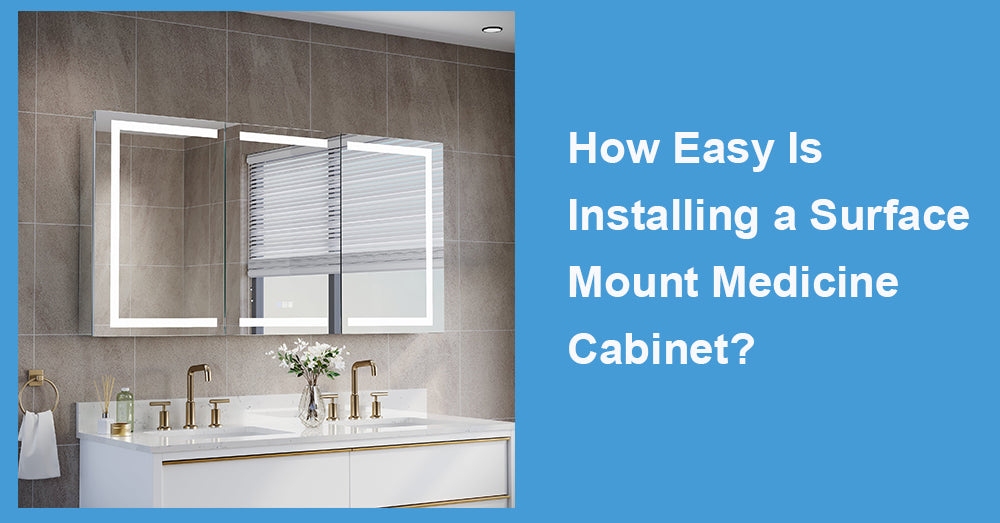
4. Surface-Mount Options Make Installation Easier
Medicine cabinets are available in both recessed and surface-mounted designs.
A recessed cabinet creates a flush appearance but requires cutting into the wall and checking for studs, pipes, or electrical wiring. A surface-mounted model attaches directly to the finished wall and usually requires less construction work.
Kohler notes that surface-mounted medicine cabinets do not require wall cutting, making them particularly useful for renovation projects.
Industry judgment: installation flexibility is one reason mirrored medicine cabinets are becoming easier to specify across different remodel types.

5. Technology Can Stay Hidden
Some newer medicine cabinets include outlets, USB charging, defogging, interior lighting, and other electrical features.
These functions help keep electric toothbrushes, grooming devices, and chargers away from the countertop. The bathroom can therefore gain more technology without looking visually busy.
NKBA’s recent research also points toward greater electrical integration and concealed charging solutions throughout bathroom cabinetry.
Industry judgment: concealed technology is becoming more desirable because functionality is increasing while bathroom design is becoming visually cleaner.
6. They Support Better Bathroom Organization
Organized bathrooms are becoming a larger design priority. Medicine cabinets allow frequently used products to remain at eye level rather than being stored deep inside vanity drawers.
Adjustable shelves also make it easier to accommodate both short containers and taller bottles.
Houzz reports that medicine cabinet upgrades now appear in 32% of bathroom renovation projects, showing renewed interest in this type of storage.
Industry judgment: easy access is becoming just as important as total storage capacity.
7. They Fit Wellness-Oriented Bathroom Design
Bathrooms are increasingly being planned around skincare, grooming, relaxation, and personal routines.
Houzz reports that 25% of primary bathrooms are used for rest and relaxation, while 24% support beauty and pampering routines. Better mirror lighting and organized storage naturally support both activities.
NKBA also reports strong interest in hotel- and resort-inspired bathrooms, reinforcing the move toward cleaner, more personalized spaces.
Industry judgment: medicine cabinets are benefiting from the shift toward bathrooms that support daily routines rather than serving only basic functions.
8. Size and Placement Still Matter
Before buying, check the width, height, depth, door swing, mounting type, and electrical requirements.
A 24-inch cabinet can work well above a smaller vanity, while 30- to 36-inch models suit many midsize layouts. Larger multi-door cabinets may work above 48- or 60-inch vanities.
Also make sure the cabinet doors will not hit side walls, sconces, or other fixtures when opened.
Industry judgment: the best medicine cabinet is not necessarily the largest one, but the model that fits naturally into the vanity wall.









































Leave a comment
This site is protected by hCaptcha and the hCaptcha Privacy Policy and Terms of Service apply.