

















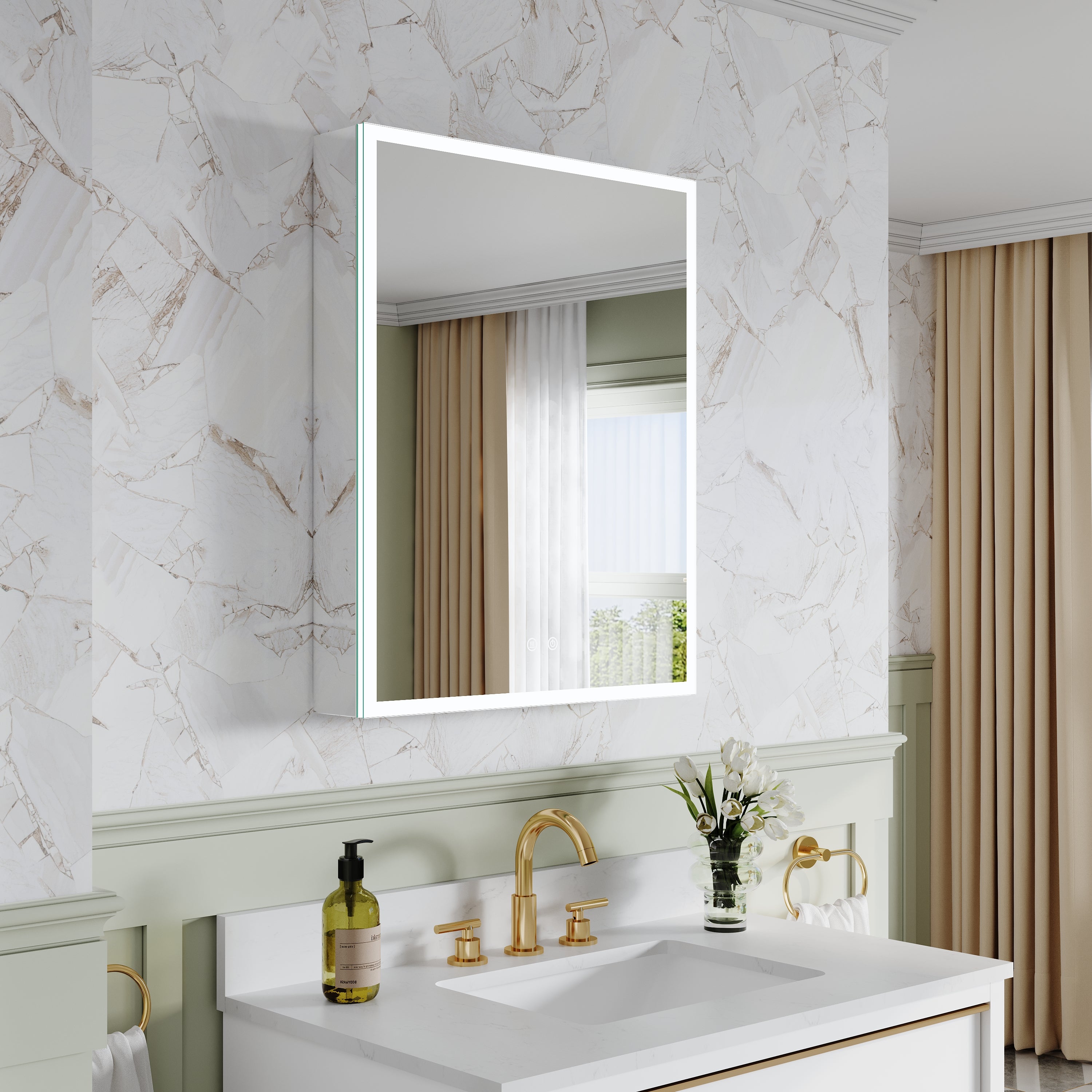
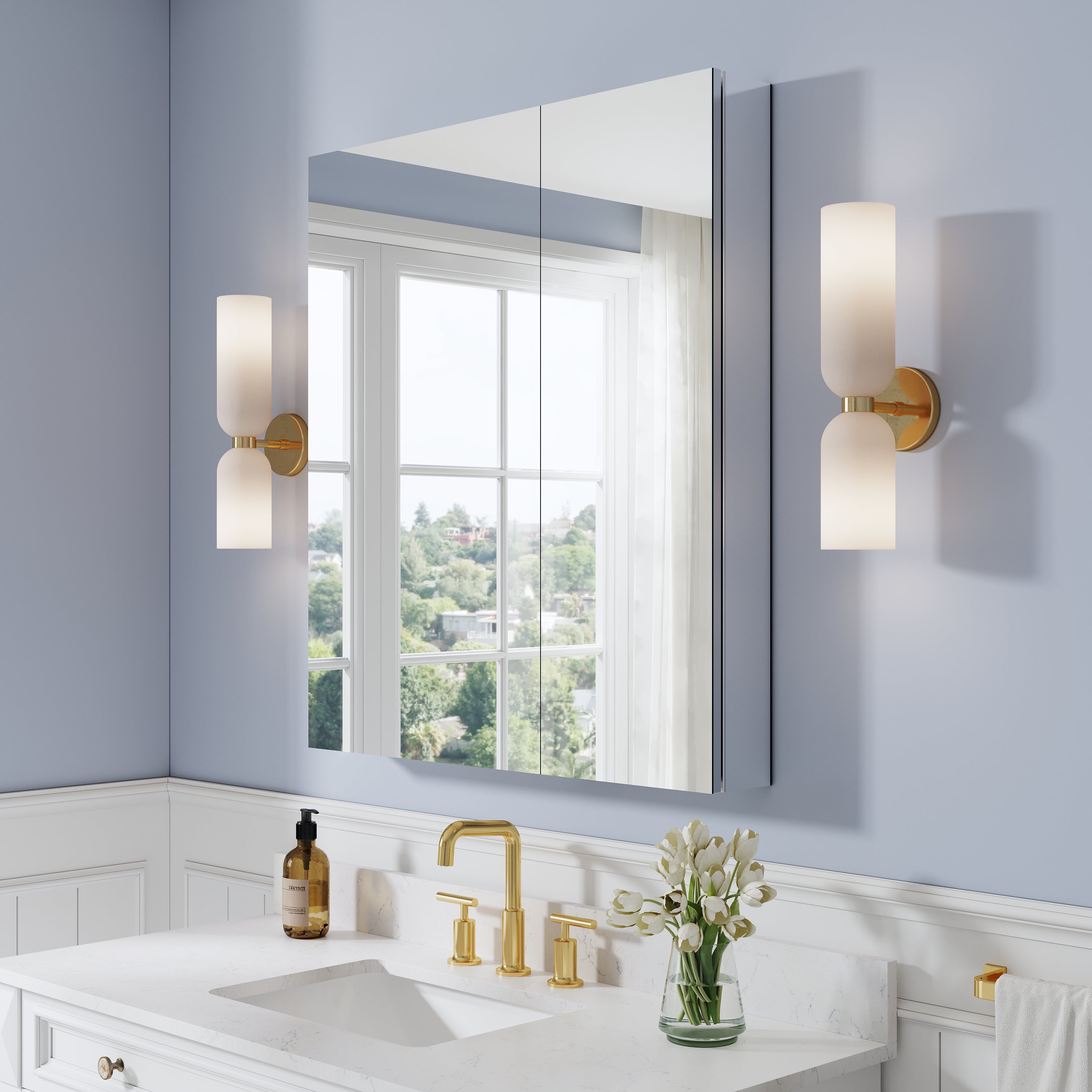
Installing a surface-mount medicine cabinet is generally one of the more straightforward ways to add mirror storage to a bathroom because the cabinet sits directly on the finished wall instead of requiring a recessed opening. That avoids cutting a large section of drywall, relocating unexpected plumbing, or working around framing inside the wall. The category is also becoming more relevant as bathroom storage receives greater attention. Houzz reports that medicine cabinets are upgraded in 32% of bathroom renovations, up 3 percentage points from the previous year. For a standard non-powered cabinet, careful measuring and secure wall attachment are usually the most important parts of the job.
1. Surface Mounting Avoids Major Wall Modification
The biggest installation advantage is that the wall usually remains intact. Recessed medicine cabinets require an opening between studs and may encounter pipes, wiring, blocking, or framing that needs modification.
A surface-mounted model attaches over the finished drywall, tile, or another approved wall surface. That makes it particularly useful in existing bathrooms where opening the wall would add labor and uncertainty.
2. Finding a Wall Stud Is Still Important
Easy installation does not mean the cabinet should simply be screwed into drywall wherever it looks best.
Medicine cabinets carry the weight of the cabinet itself, mirrored doors, shelves, toiletries, medicine bottles, grooming products, and other daily-use items. Secure attachment therefore matters.
Kohler specifies 2-inch screws for the mounting bar in one surface-mount system and requires at least one attachment point to reach a stud. Wall anchors are used where appropriate at the other locations.
For heavier cabinets, especially wide mirrored or lighted models, additional structural support may be necessary. Another Kohler surface-mount guide specifically warns that the product is heavy and recommends assistance when lifting it into position.
3. Cabinet Size Changes the Difficulty
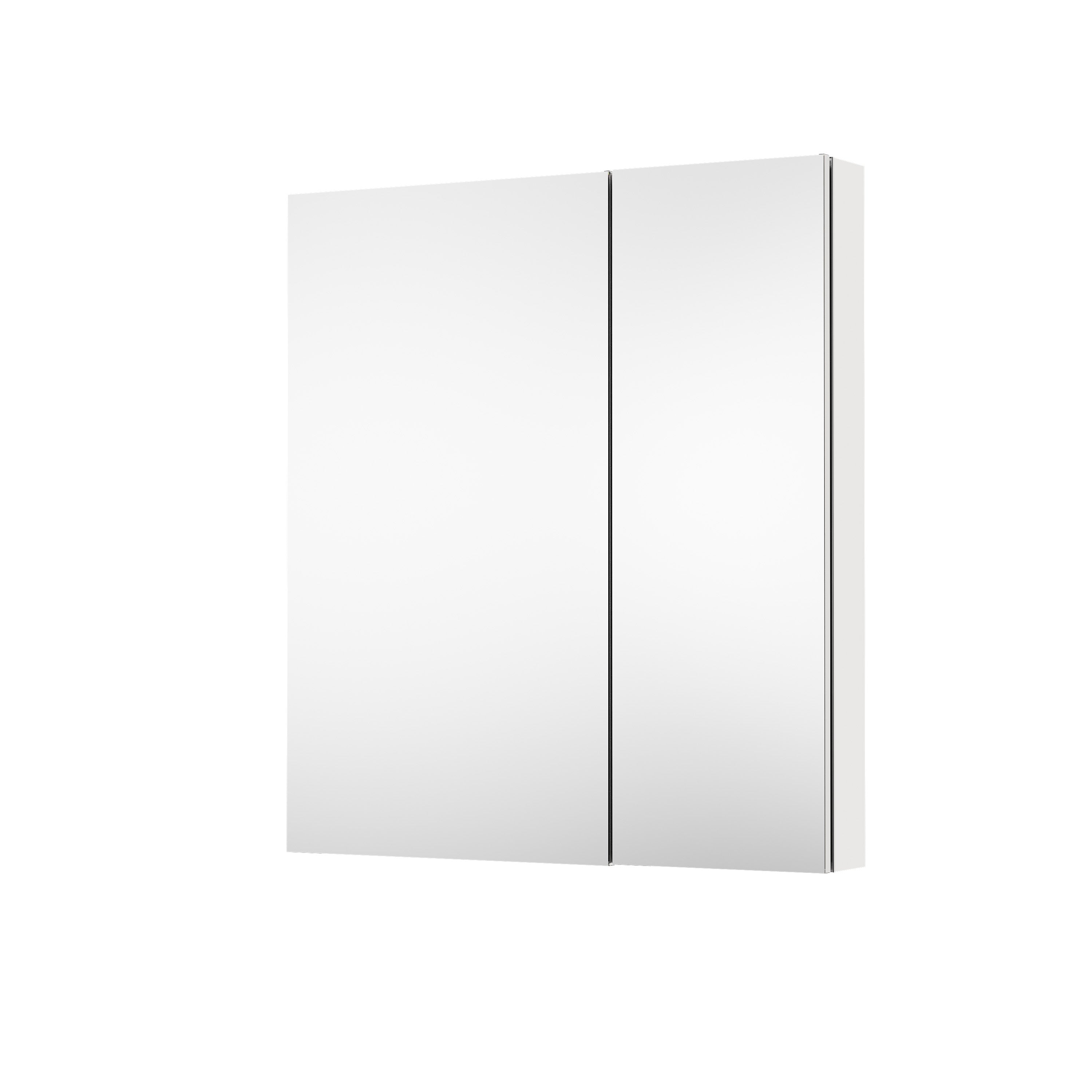
A compact medicine cabinet is usually easier for one installer to position and level than a wide multi-door cabinet.
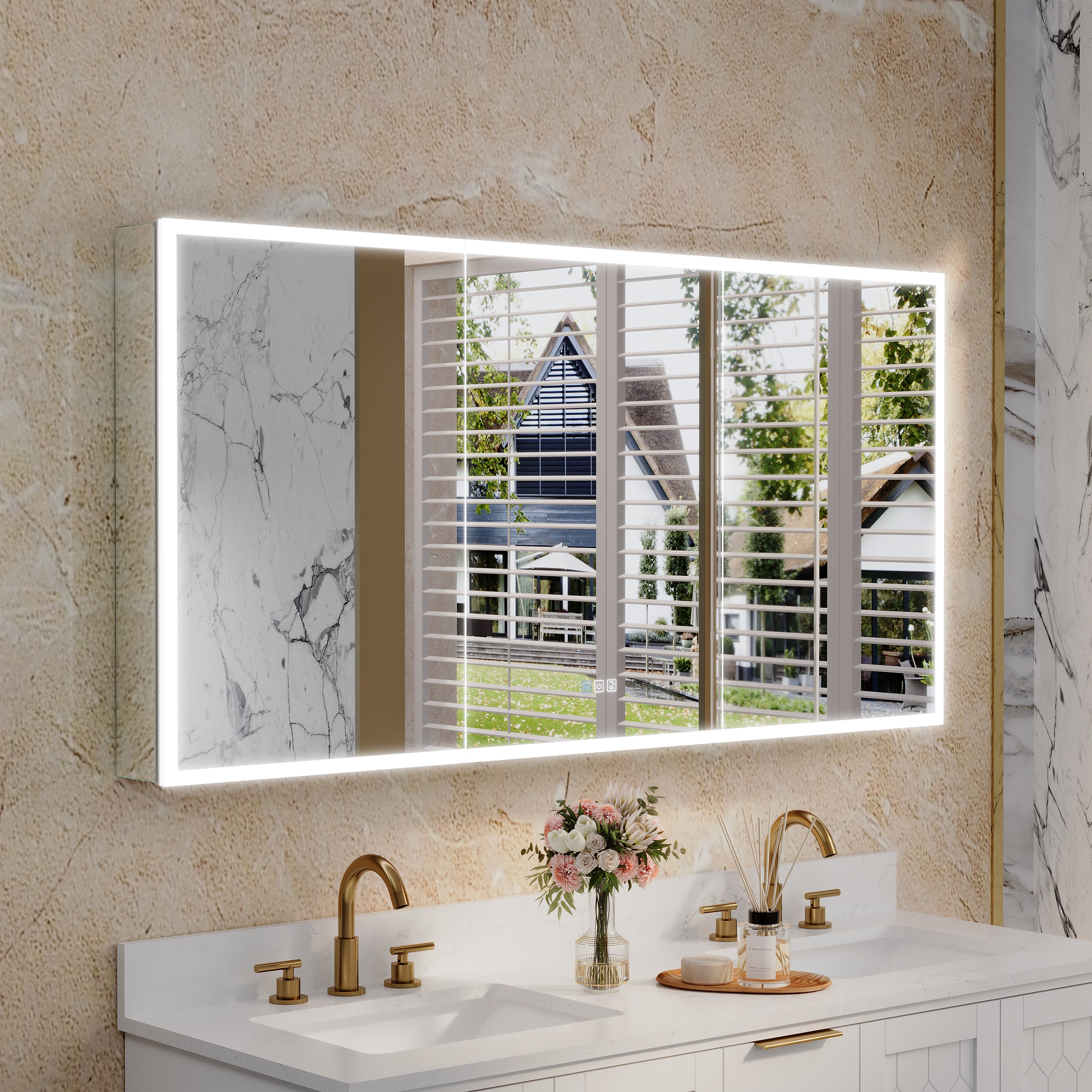
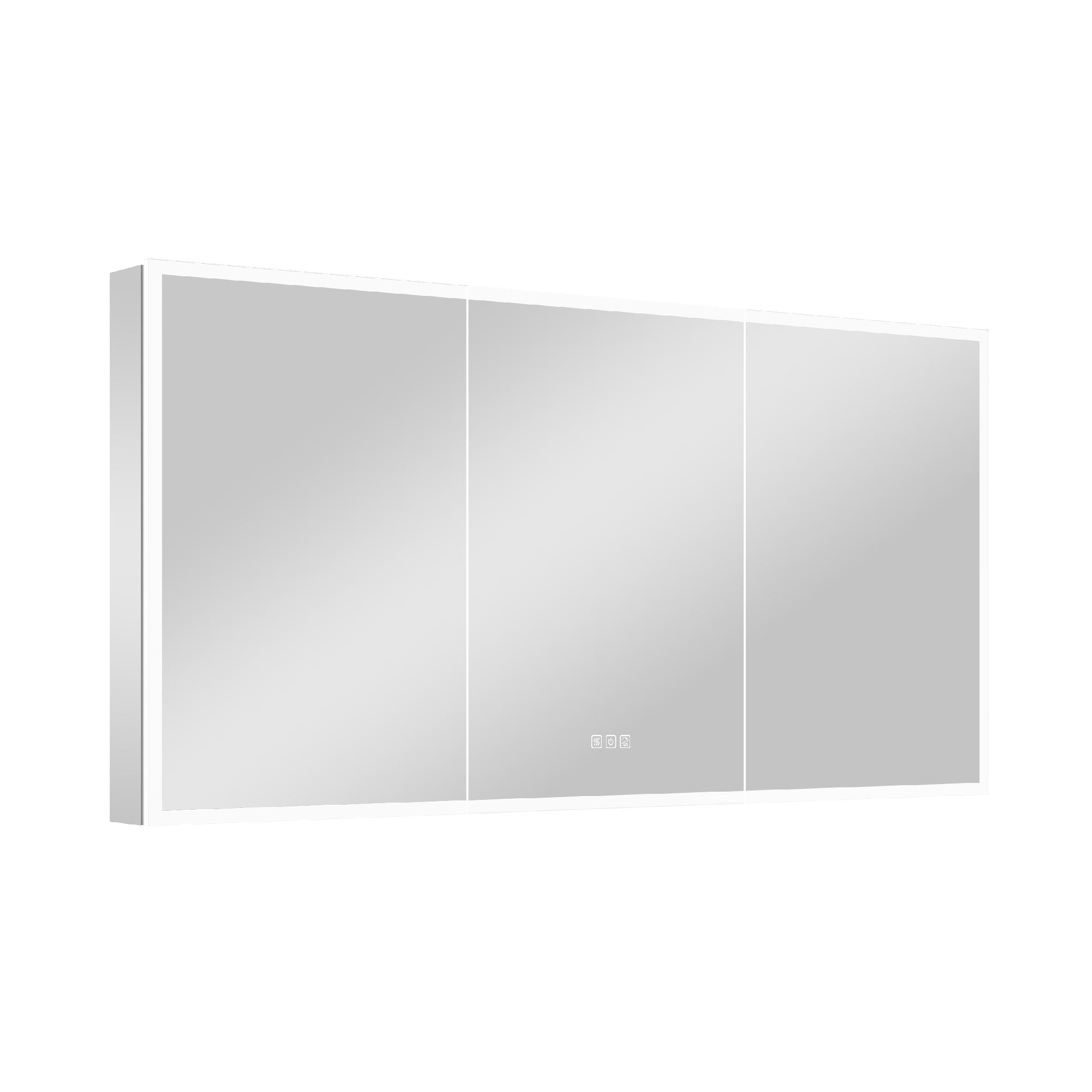
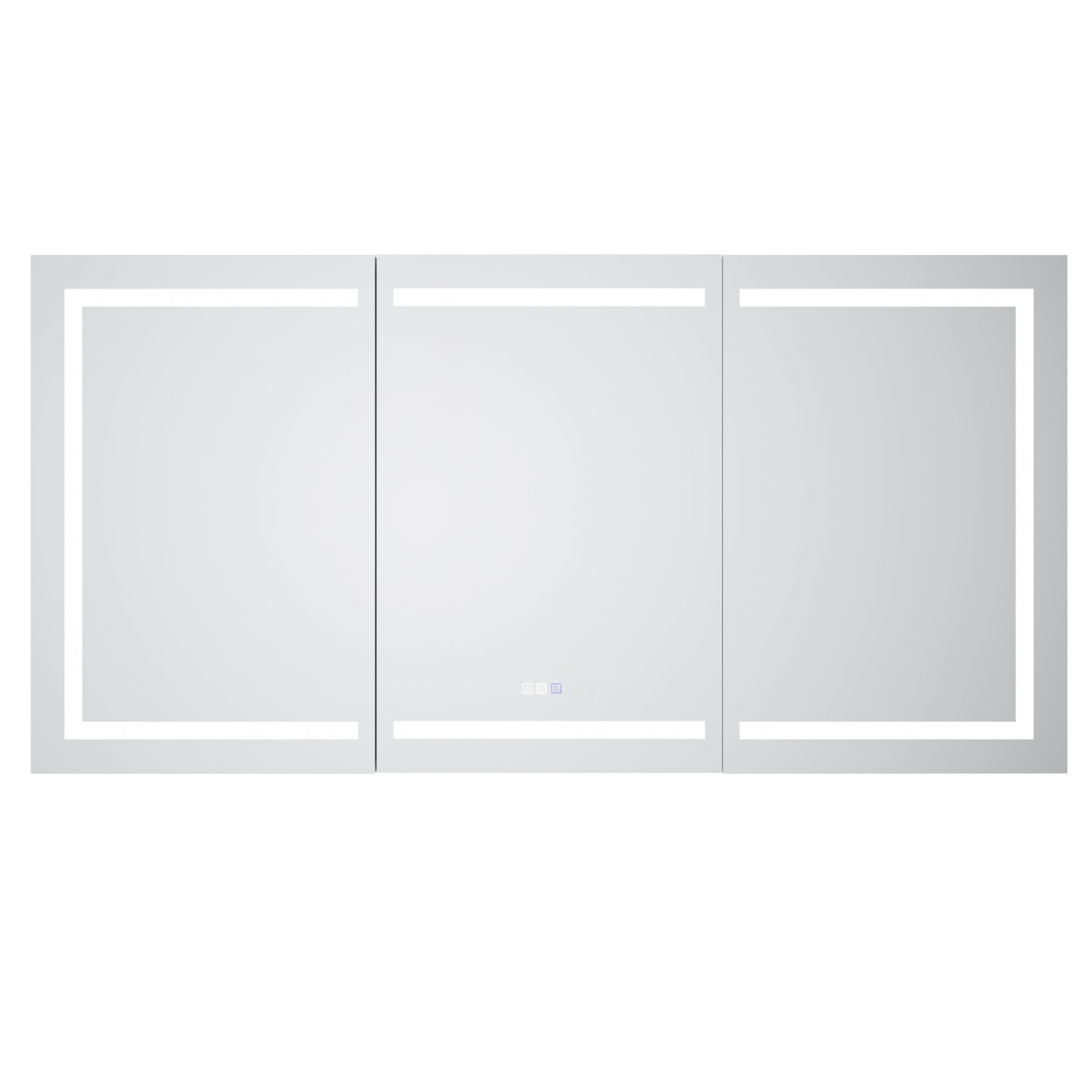
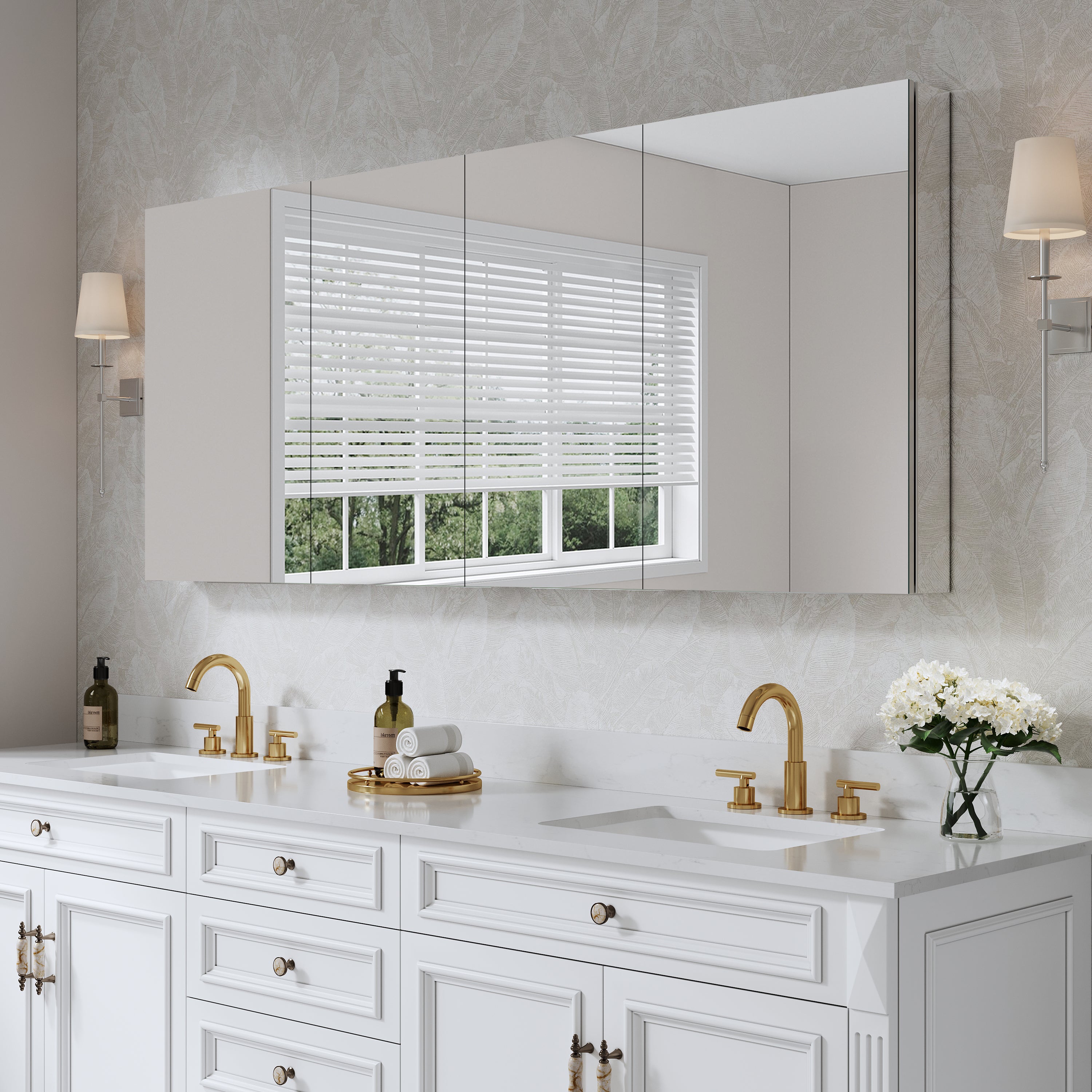
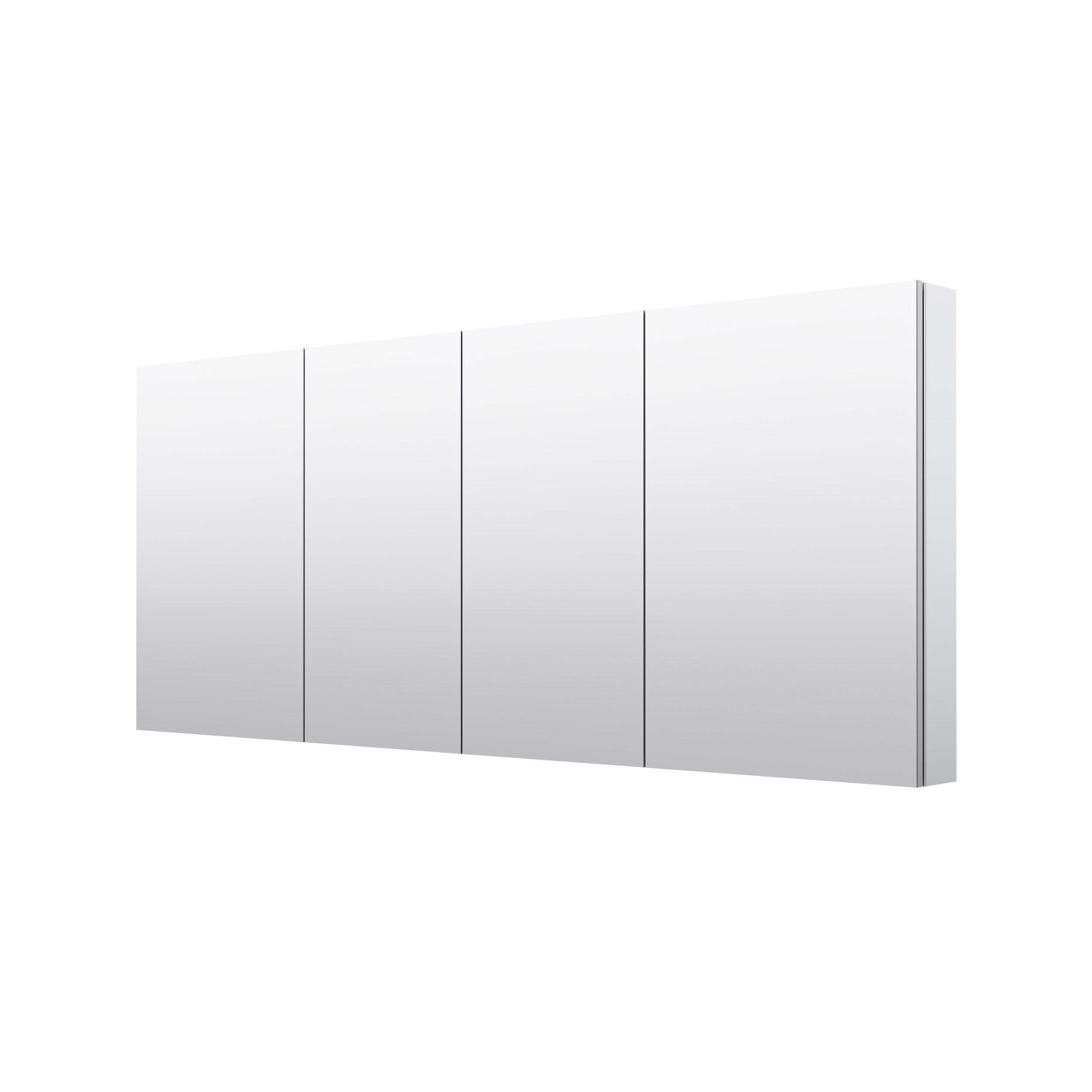
Common sizes around 20 to 24 inches wide work well above smaller vanities. A 30- or 36-inch cabinet can provide significantly more storage above a midsize vanity, while larger multi-door configurations may span 40 inches or more.
Before choosing the width, measure the vanity, faucet, lighting, and surrounding wall. The cabinet should not interfere with sconces, outlets, door casing, or nearby walls when the mirrored door opens.
A surface-mounted cabinet also projects farther into the room than a recessed model. Even a few inches of depth can matter when the vanity is positioned near a side wall.
4. Accurate Leveling Makes the Finished Installation Look Professional
A medicine cabinet is surrounded by strong horizontal and vertical reference lines, including the vanity top, tile joints, backsplash, ceiling, and mirror edges. Even a small installation error can therefore become visually obvious.
Before drilling, mark the centerline of the vanity and use a level to position the mounting bar. Kohler’s surface-mount instructions specifically call for verifying that the cabinet and mounting hardware are level before final attachment.
Do not rely entirely on the countertop being perfectly level, particularly in older bathrooms. Use an actual level and check the cabinet independently.
Once installed, confirm that mirrored doors remain aligned and open without contacting adjacent walls or lighting fixtures.

5. Lighted Medicine Cabinets Require More Planning
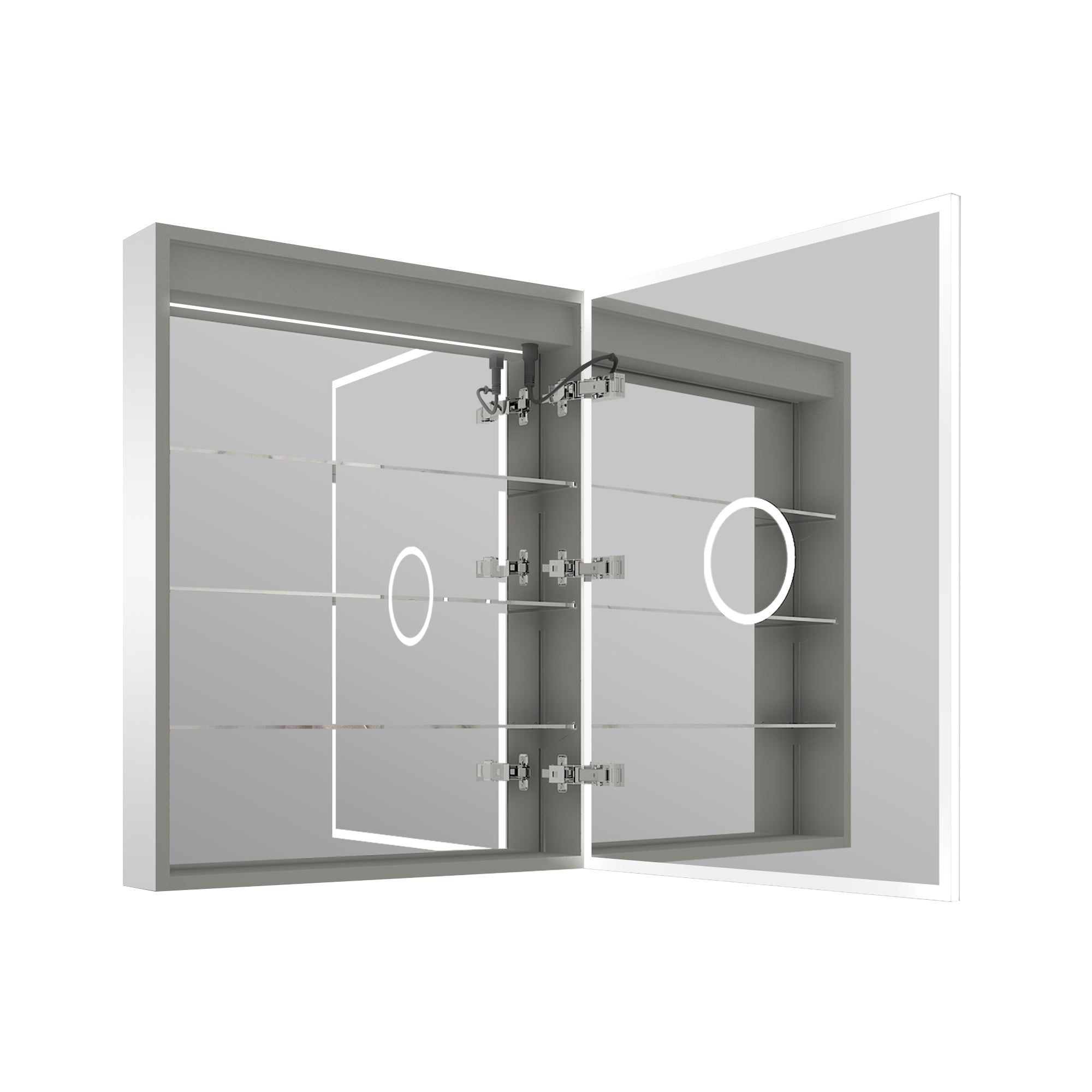
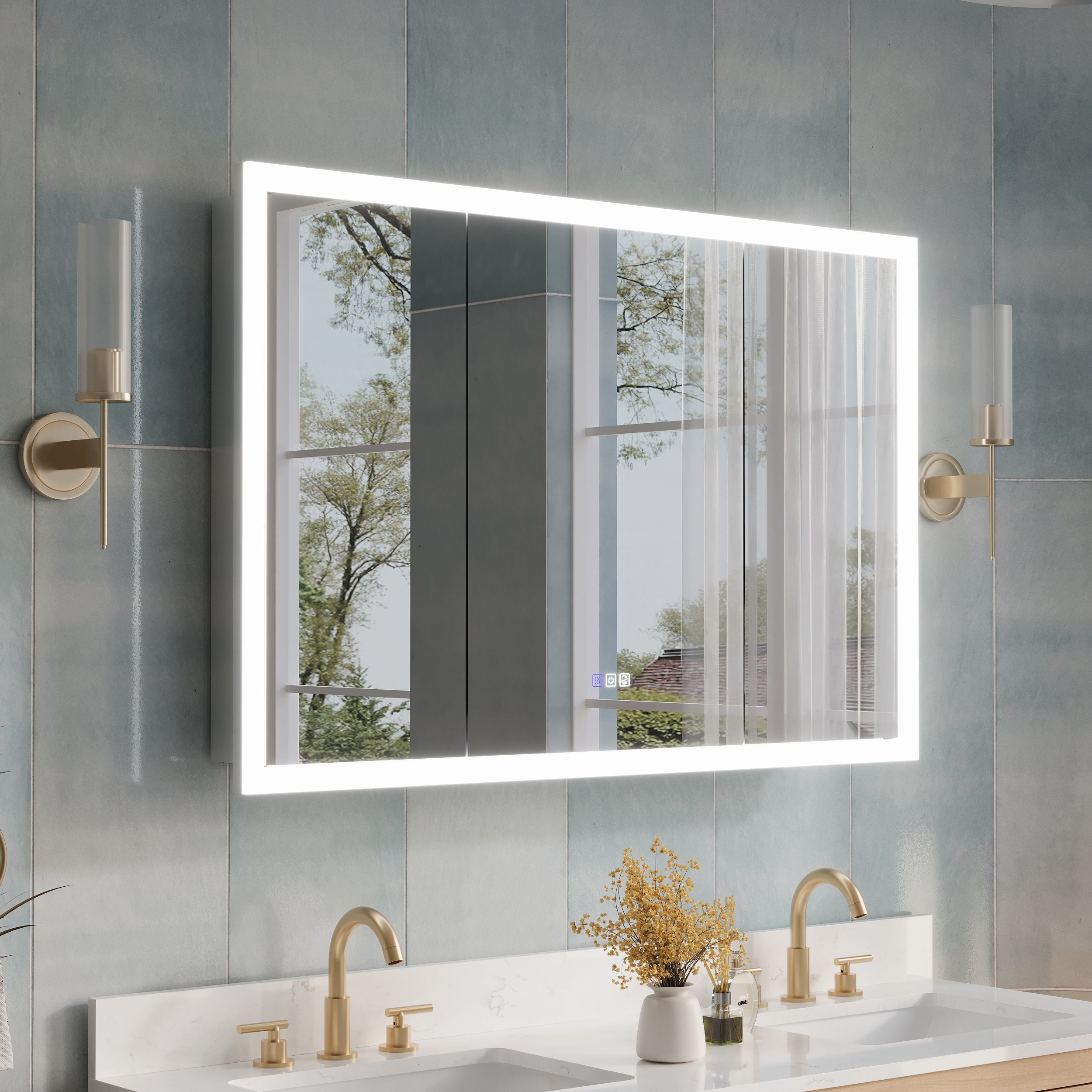
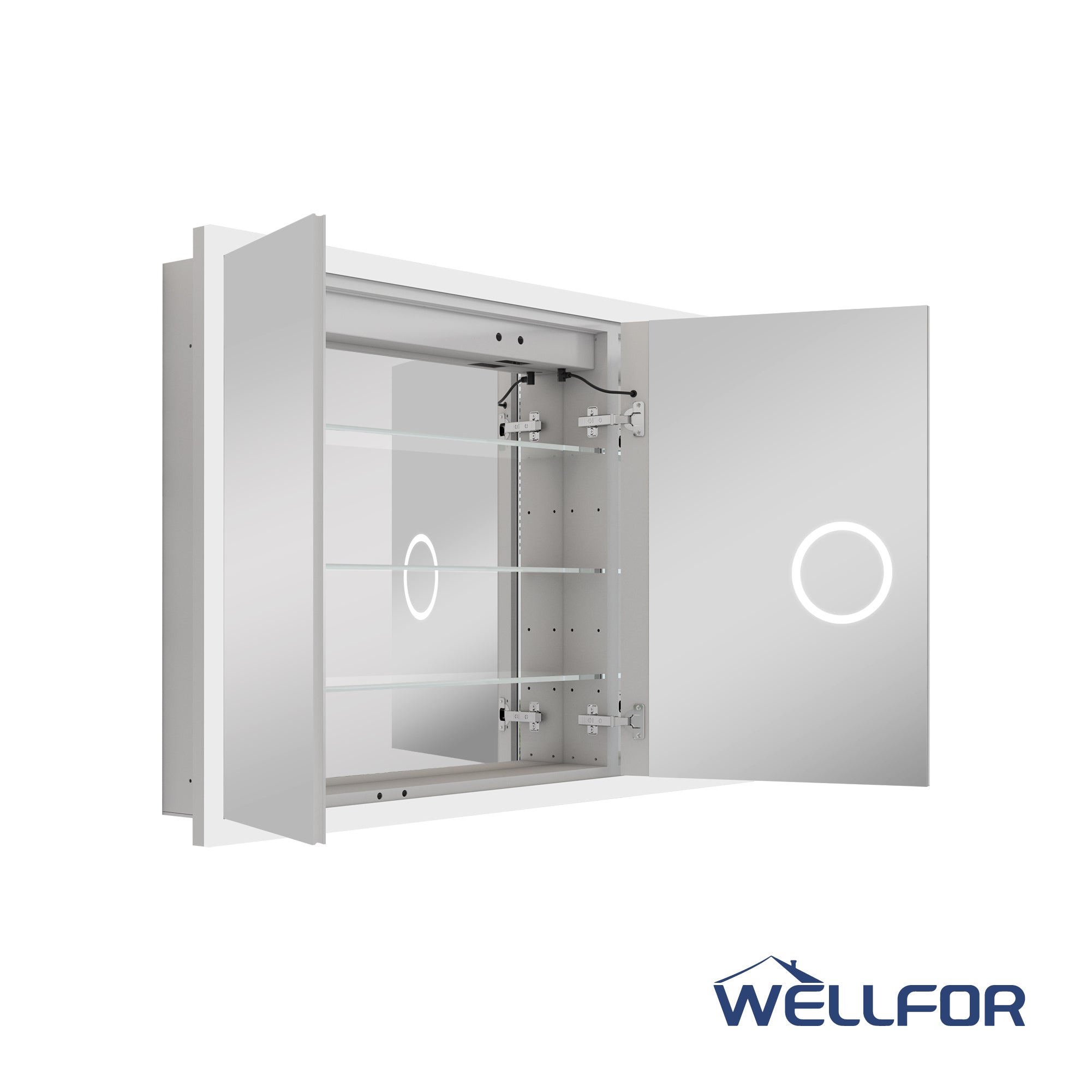
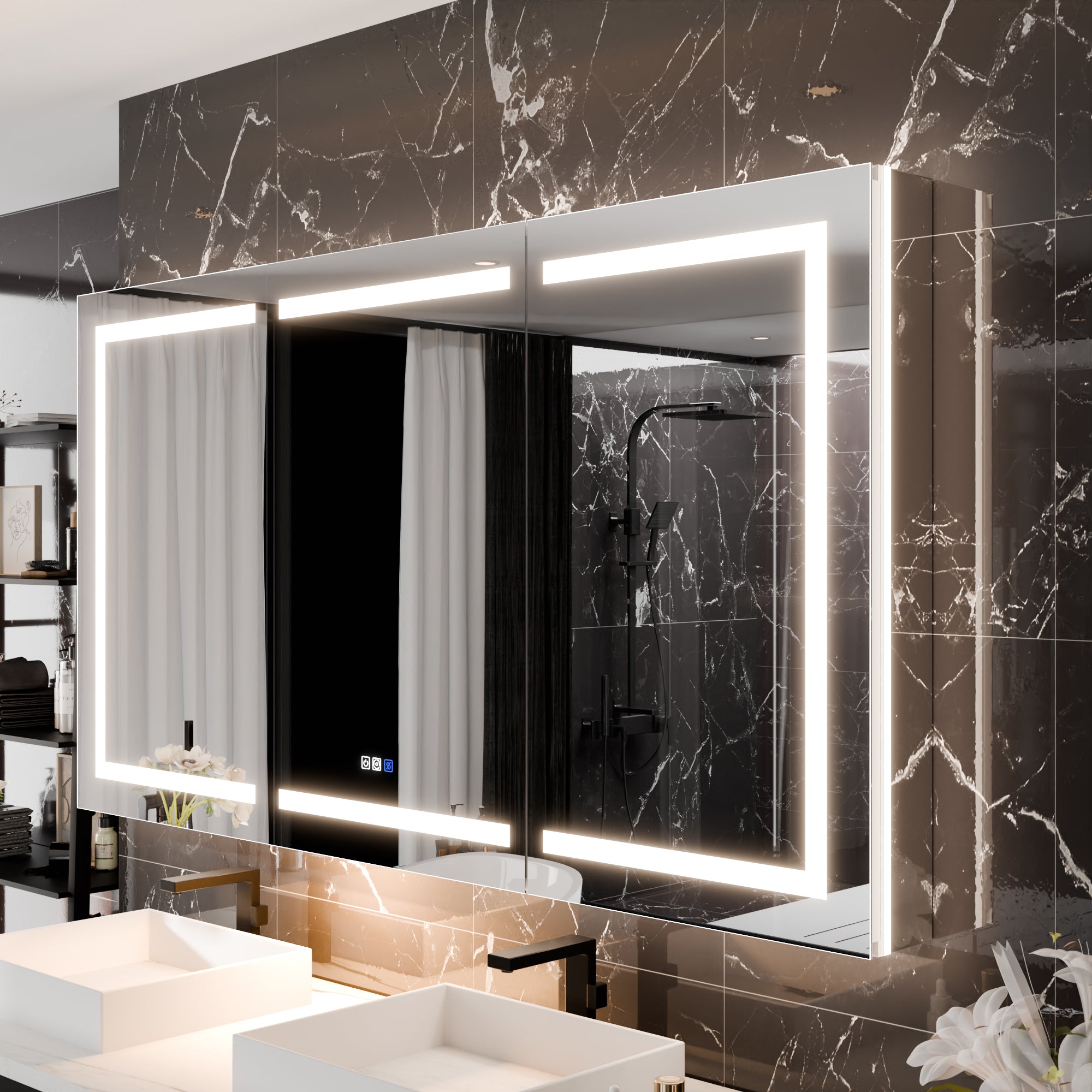
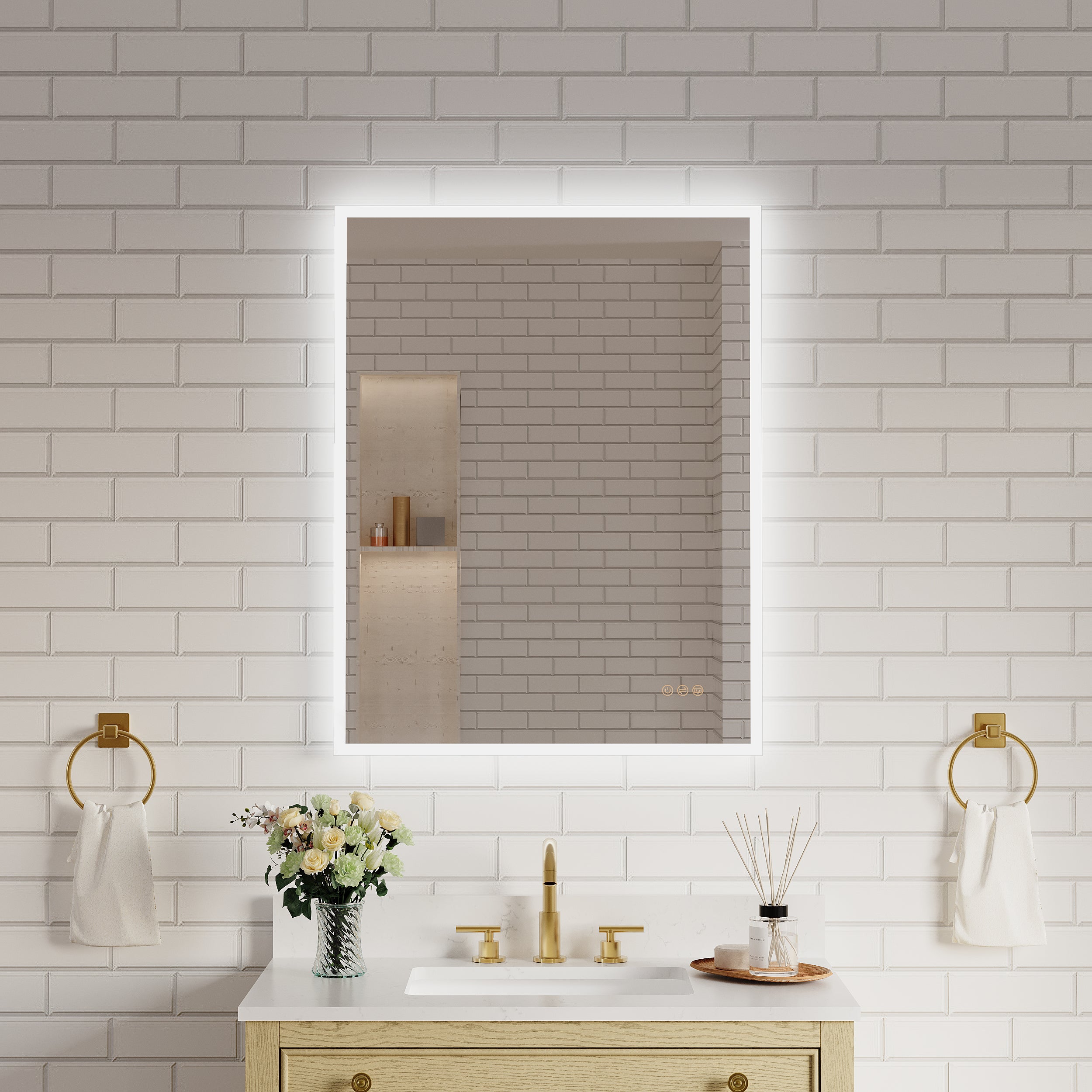
A standard cabinet without electrical features is considerably simpler than a model with integrated lighting, outlets, defogging, USB charging, or other powered functions.
NKBA’s 2026 Bath Trends research shows why these models are becoming more relevant. Lighting quality is considered a top bathroom-design priority by 91% of surveyed professionals, while 92% support task lighting. Integrated lighting in mirrors is favored by 47% over the next three years.
These features can improve daily use, but electrical work may need to be completed before the cabinet is mounted. Wiring positions, power requirements, and local electrical requirements should be reviewed before drilling begins.
If power must be added behind the cabinet, professional electrical work may become the most involved part of the installation.
6. Surface Mounting Can Be Better for Renovations
Surface mounting is particularly attractive when the wall has already been tiled or finished.
Cutting a recessed opening into tile introduces additional risk because the opening must be precise and concealed by the cabinet flange. There is also the possibility of discovering framing or utilities that prevent the desired recessed position.
With a surface-mounted cabinet, the installation can often proceed after the vanity and backsplash are complete. That makes it easier to use the finished vanity centerline as the reference point.
Houzz’s 2025 bathroom study found that lighting is upgraded in 82% of projects, while medicine cabinets are updated in 32%. Coordinating these two elements before drilling can prevent conflicts between the cabinet doors and light fixtures.
7. Storage Benefits Can Justify the Projection From the Wall
The main compromise is that a surface-mounted cabinet projects farther into the bathroom than a recessed design.
In return, it adds storage without using floor space. Shelves can hold medicines, toothbrushes, skincare products, razors, cosmetics, and other smaller items that would otherwise occupy the vanity countertop.
NKBA reports growing emphasis on customized bathroom storage, including dedicated organization for medications, cosmetics, hair tools, charging devices, and other daily-use products. Its 2026 research also found that 72% of industry respondents expect bathroom footprints to evolve partly to support more efficient storage and wellness functions.
A medicine cabinet can support that goal without requiring a wider vanity or separate floor cabinet.
8. Installation Preparation Matters More Than Special Skills
Before opening the box, check the cabinet dimensions, mounting hardware, wall construction, stud locations, mirror-door clearance, and installation instructions.
Lay out the hardware and confirm whether wall anchors are supplied. Some manufacturer instructions explicitly state that anchors for certain wall types are not included.
For tile installations, use suitable drill bits and avoid applying excessive pressure that could damage the finished wall. Larger cabinets should be lifted with assistance rather than balanced while mounting screws are installed.
If the cabinet includes electrical features, determine where the power connection must enter before fixing the cabinet to the wall.
9. Conclusion
Installing a surface-mount medicine cabinet is generally easier than installing a recessed model because it avoids creating a large wall opening and reduces the chance of encountering hidden plumbing or framing. For a basic cabinet, the job centers on accurate measurement, secure attachment, leveling, and safe handling.
The difficulty increases with cabinet width, weight, mirrored doors, integrated lighting, outlets, or other powered features. Buyers should therefore confirm the complete cabinet dimensions, projection from the wall, mounting requirements, stud locations, electrical needs, and door clearance before purchase.
Current bathroom trends favor better storage and more integrated mirror lighting, which gives surface-mounted medicine cabinets a useful role in both compact and larger bathrooms. When properly sized and securely attached, they can deliver substantial storage with relatively little disruption to the finished wall.
For many remodeling projects, that combination of practical storage, straightforward installation, and minimal wall modification is exactly what makes the surface-mounted format worth considering.












Leave a comment
This site is protected by hCaptcha and the hCaptcha Privacy Policy and Terms of Service apply.