














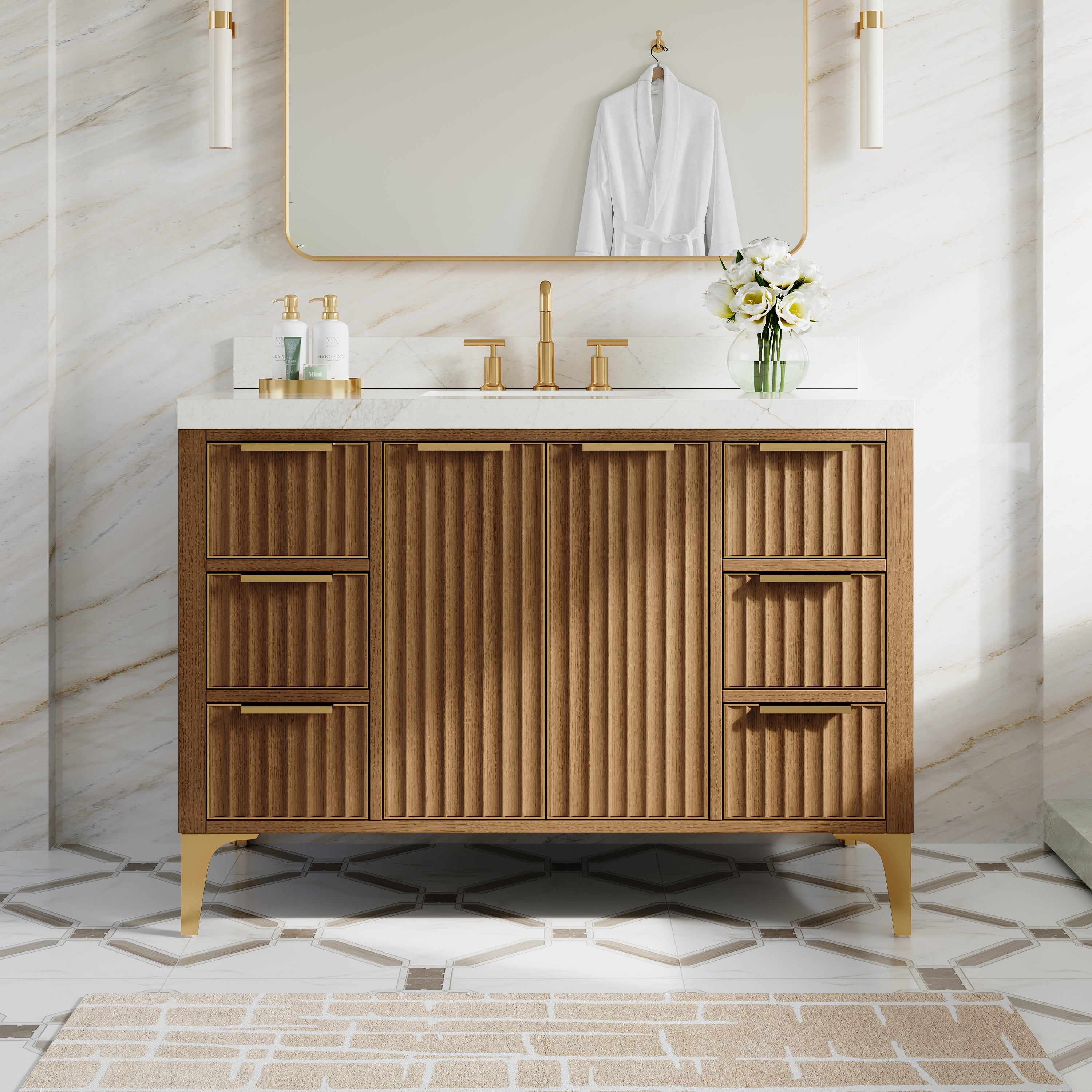
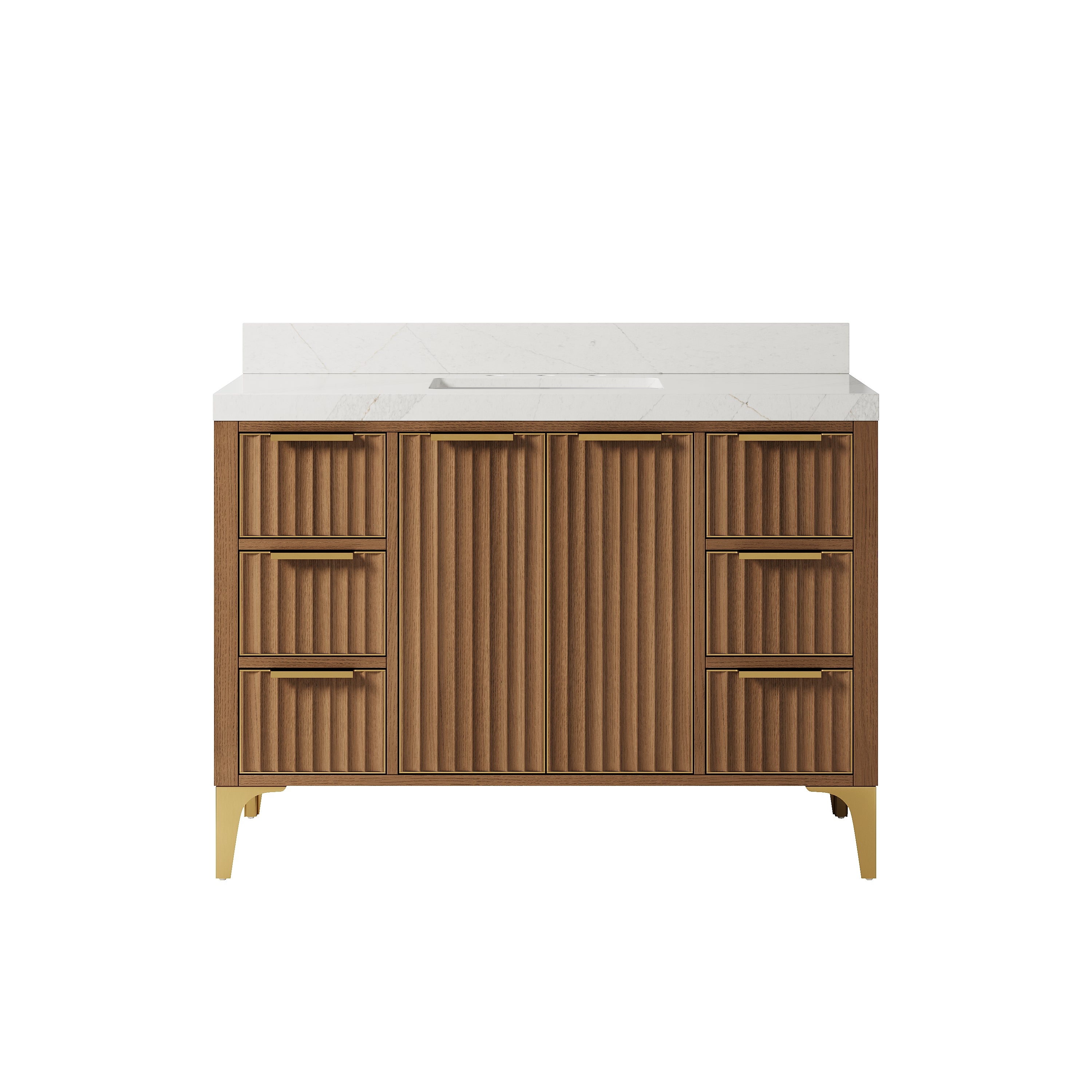


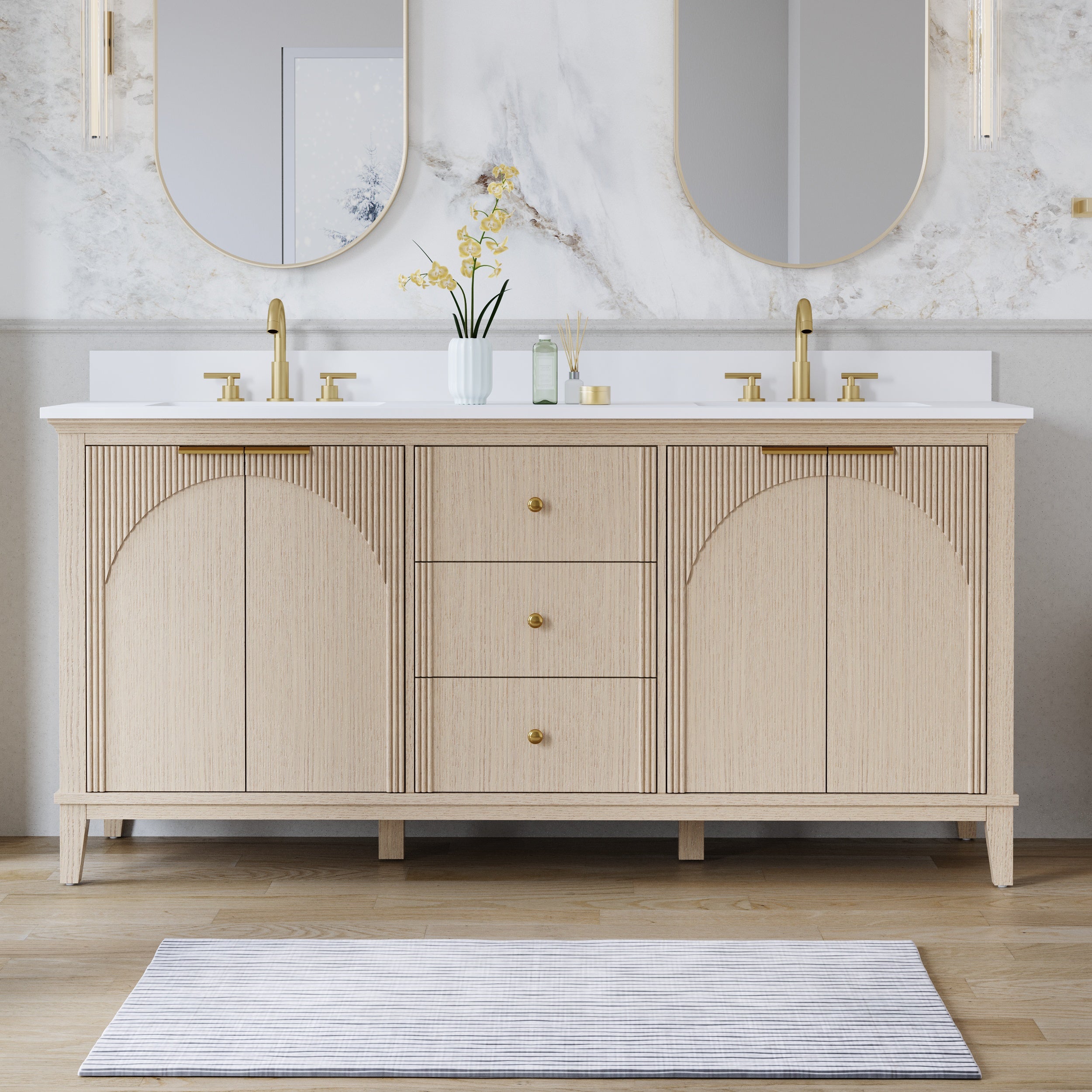
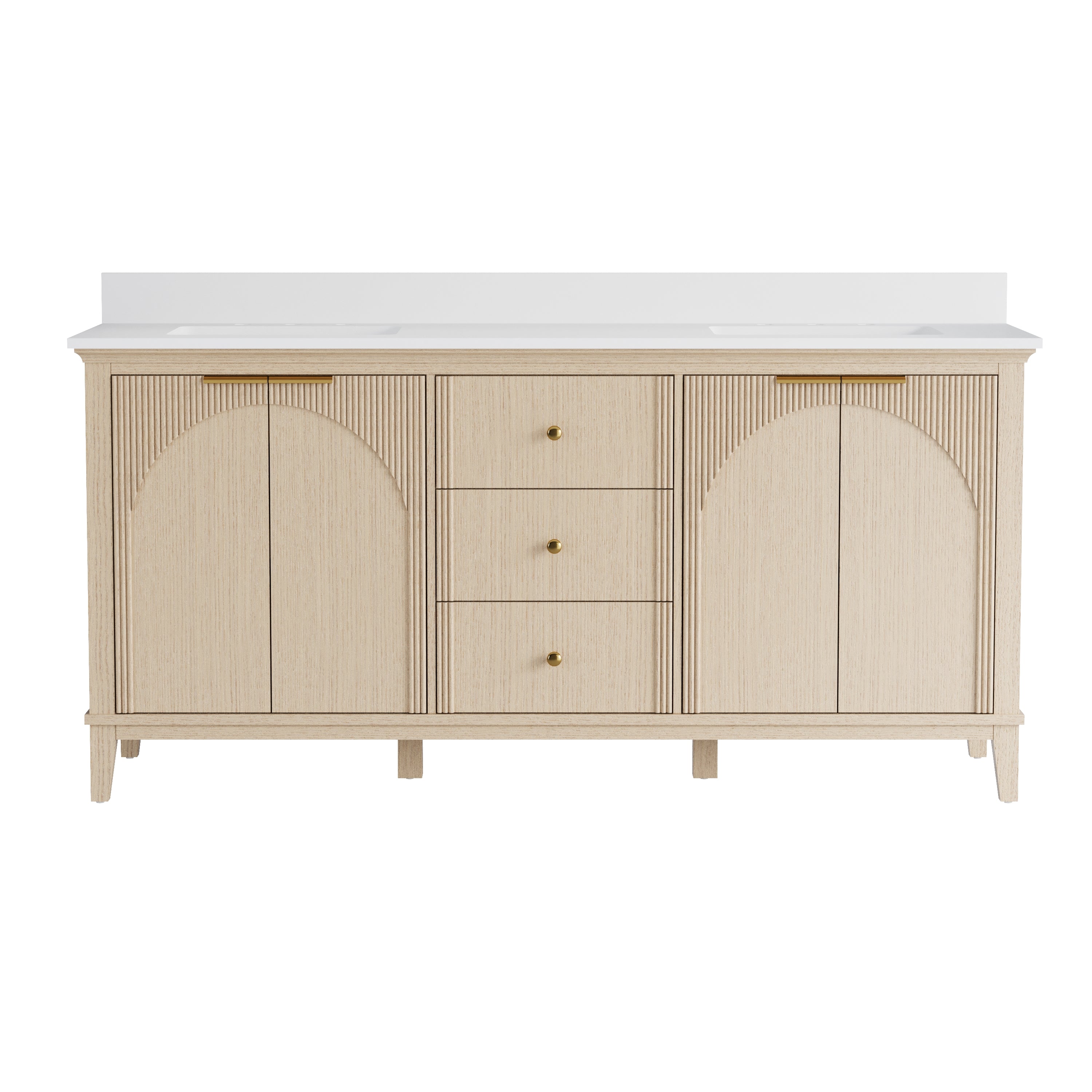
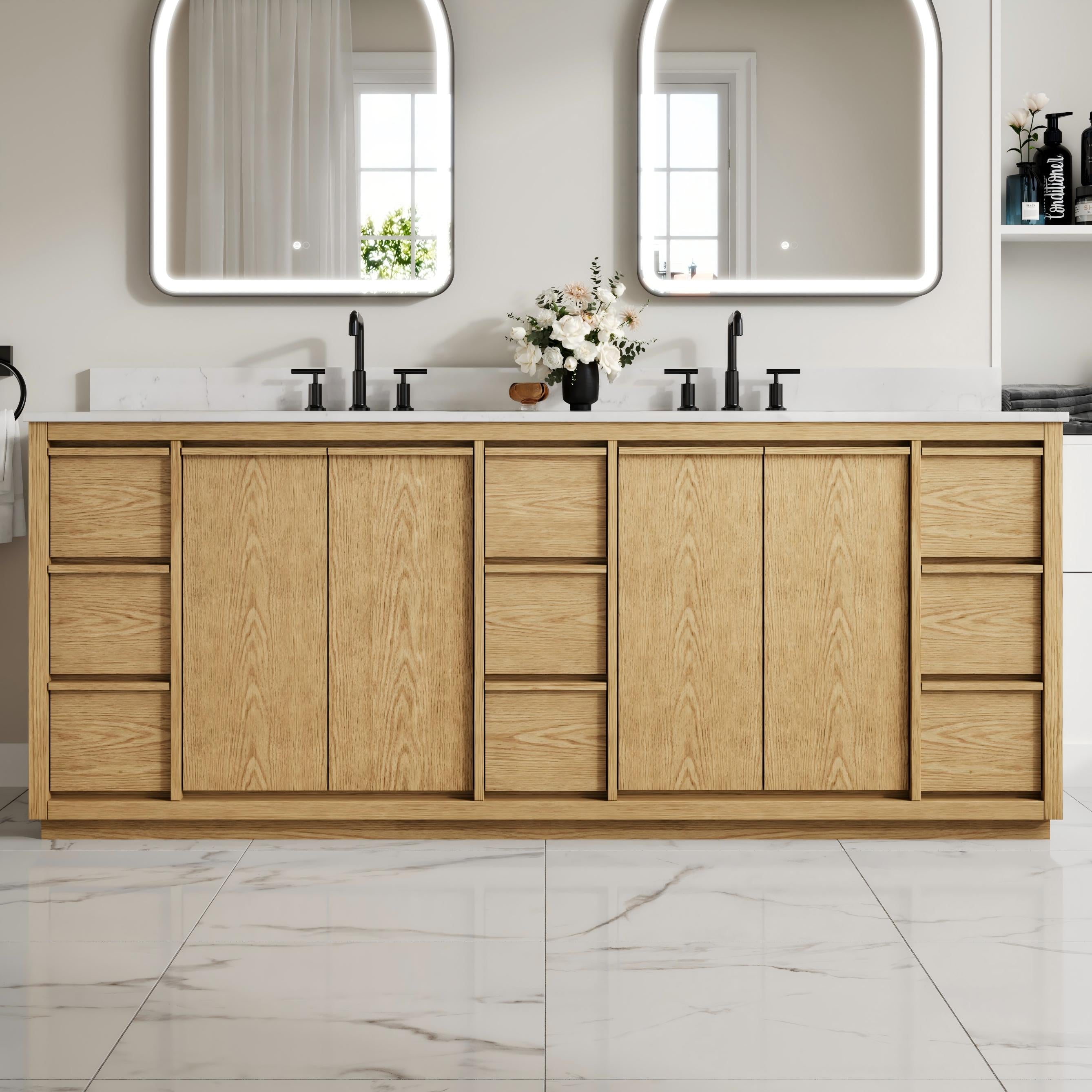
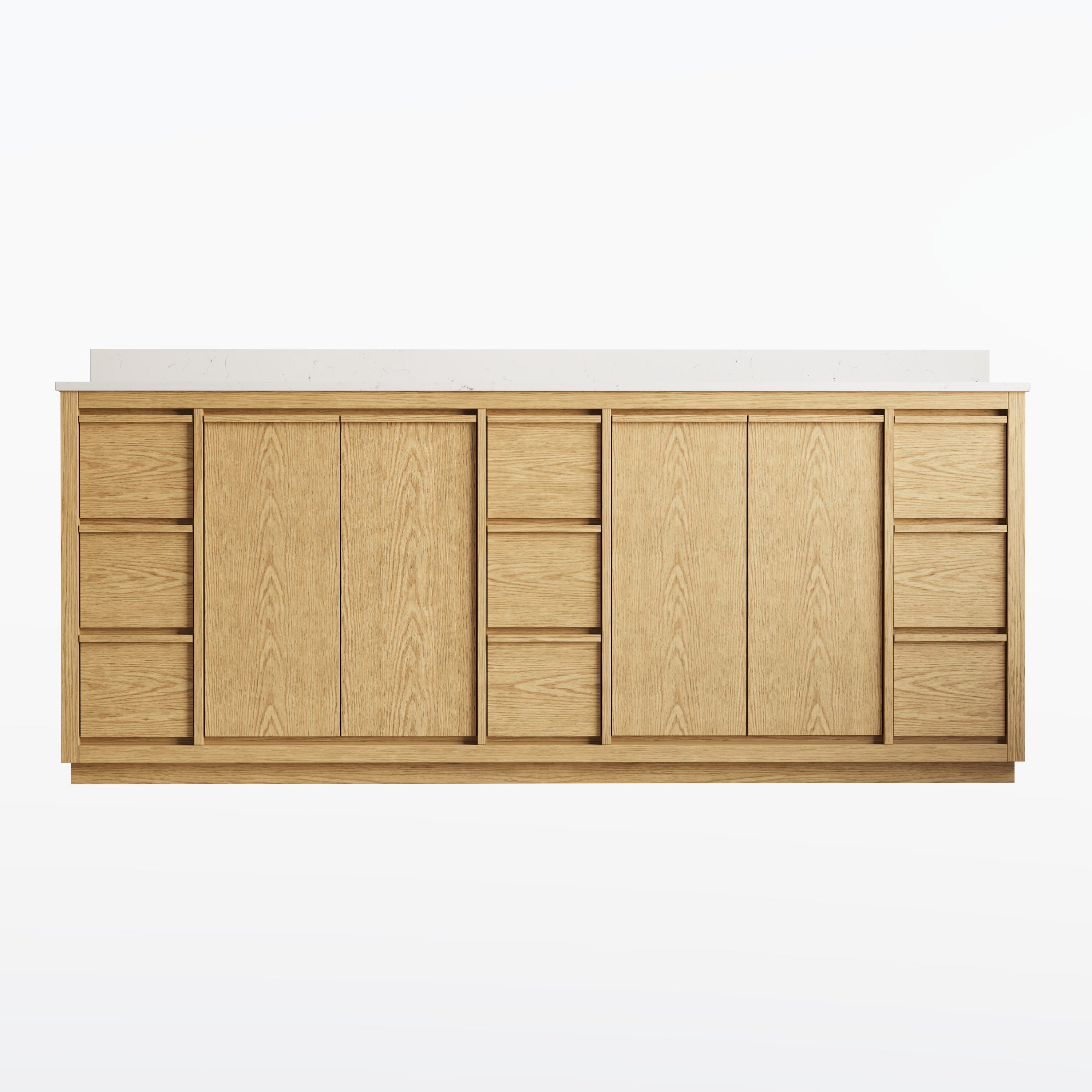

White vanities are one of the easiest ways to give a bathroom a cleaner, lighter appearance without committing to a highly specific design trend. After more than 20 years of working with bathroom cabinetry and remodel projects, I have seen white vanities work especially well in guest baths, condos, family bathrooms, and primary suites where homeowners want flexibility. The best choice, though, depends on cabinet size, door style, storage layout, finish undertone, and how much visual weight the room can comfortably handle.
1. White Vanities With Simple Fronts Create the Cleanest Look
For a minimal bathroom, cabinet detailing should be restrained.
Flat-front drawers produce the most streamlined appearance because there are fewer lines competing with the countertop, mirror, and tile. Shaker-style doors can also work, particularly in transitional bathrooms, but I would keep the hardware simple.
Slim pulls, discreet knobs, or integrated handles help the cabinet feel quieter.
The goal is not to remove every detail. It is to let the vanity support the room rather than dominate it.
2. Choose the Right White, Not Just Any White
White cabinetry is more complicated than it appears.
Some finishes have blue or gray undertones, while others lean toward cream or beige. The wrong white can make an otherwise good bathroom feel disconnected.
Compare the Vanity With Permanent Materials
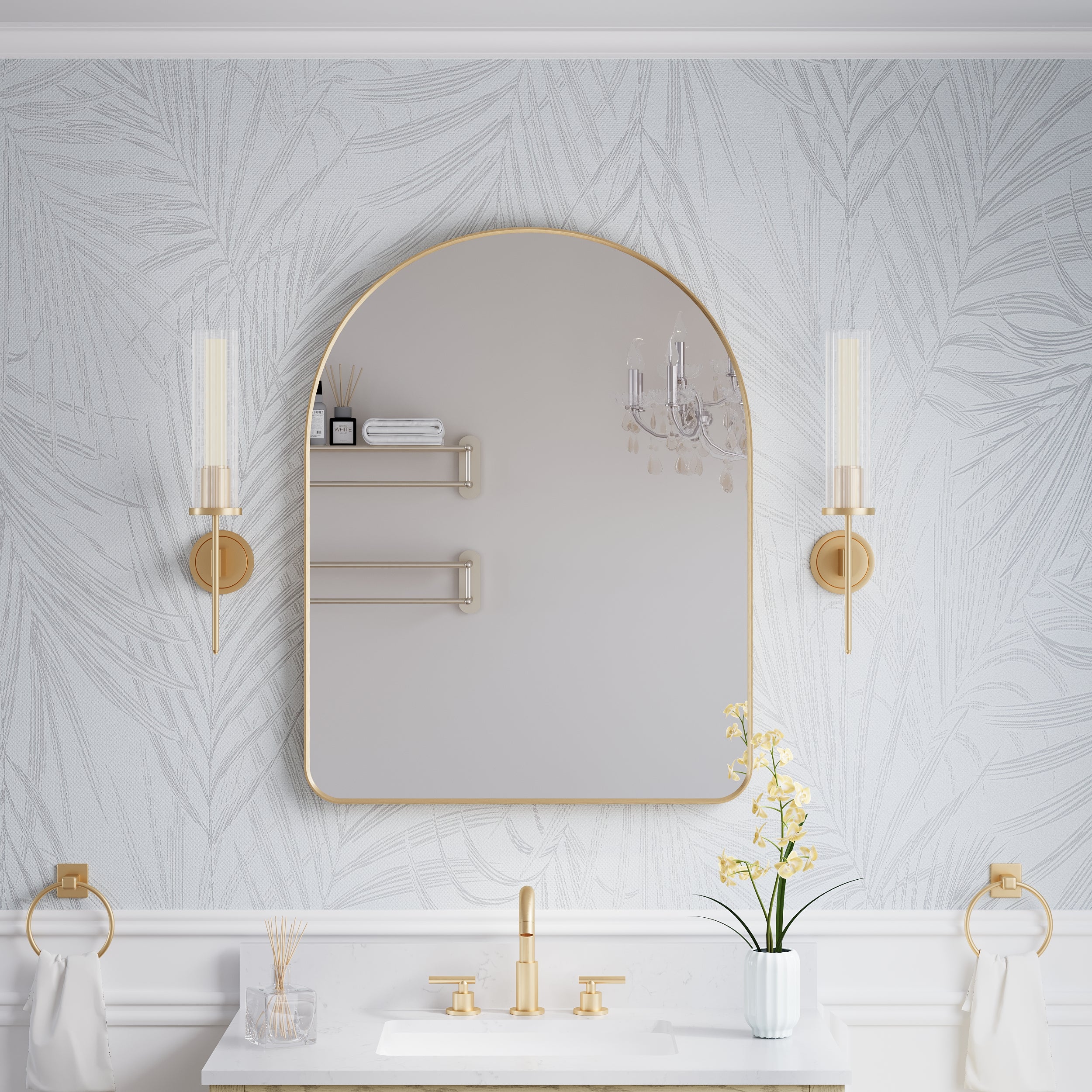
A cool white usually pairs comfortably with gray stone, crisp marble-look quartz, and chrome or nickel fixtures.
A warmer white works better with beige tile, cream stone, natural wood, and brass.
I always recommend viewing cabinet, countertop, and flooring samples together if possible. Bathroom lighting can make the same white appear completely different at night than it does in daylight.
3. Floating White Vanities Work Well in Small Bathrooms
If the goal is a fresh, minimal update in a compact room, a floating design deserves consideration.
Because the cabinet is raised above the floor, more tile remains visible. That can make the bathroom feel lighter and less crowded.
Cleaning underneath is easier too.
There are tradeoffs. Floating cabinets generally provide less total storage and require secure wall support. Plumbing placement also needs to be precise because exposed pipes can ruin the clean appearance.
For a small guest bath with moderate storage needs, the visual benefit is often worth it.
4. Freestanding Models Offer More Practical Storage
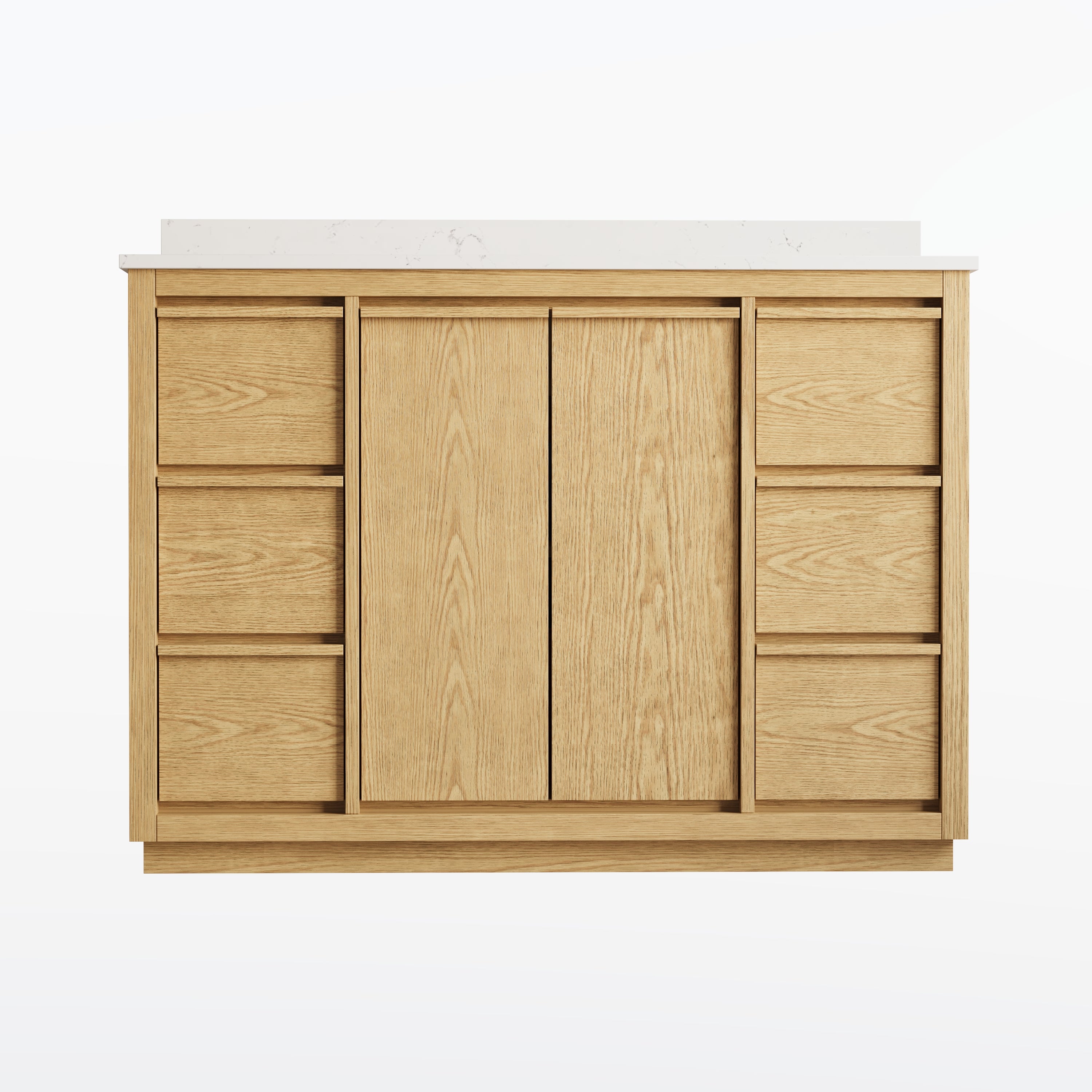
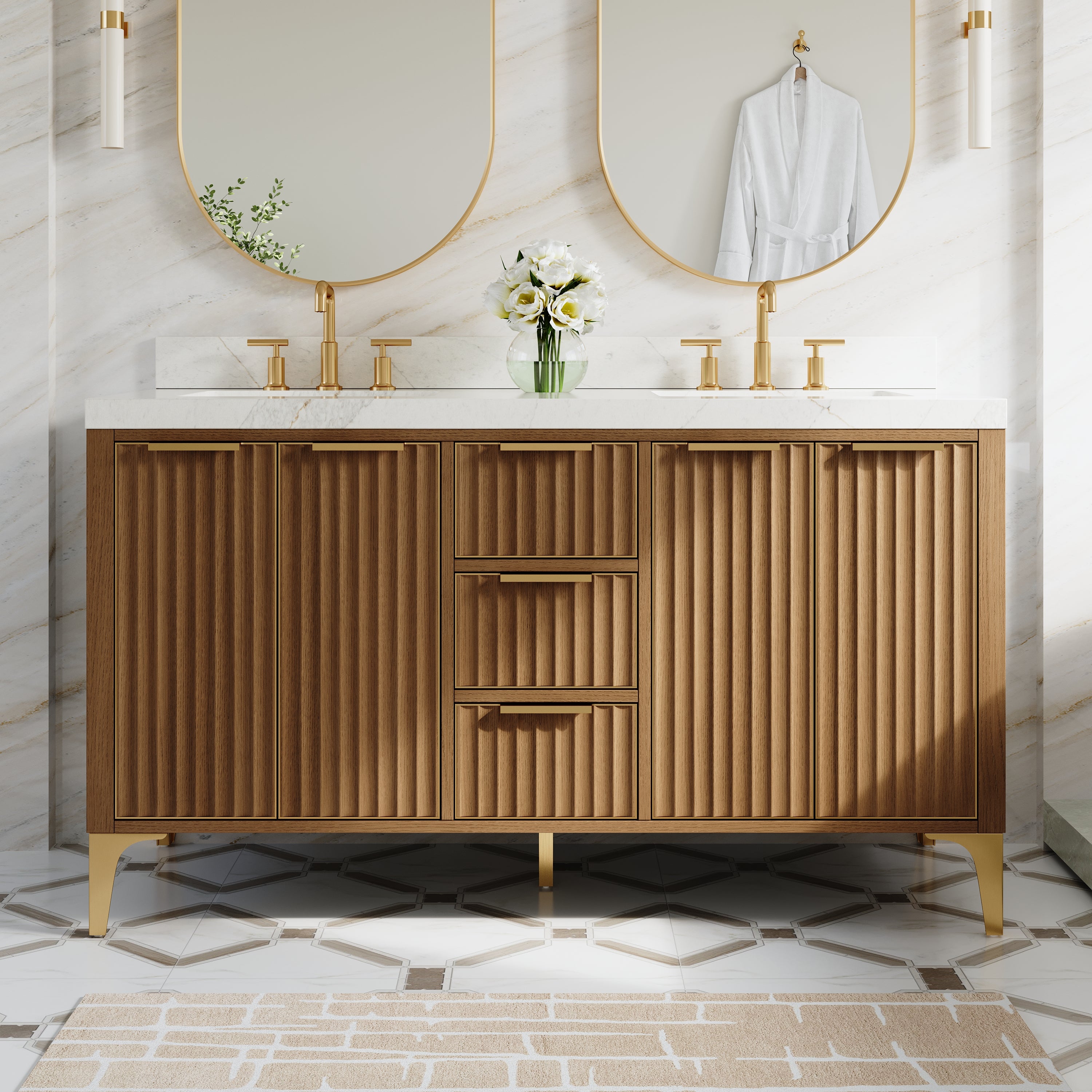
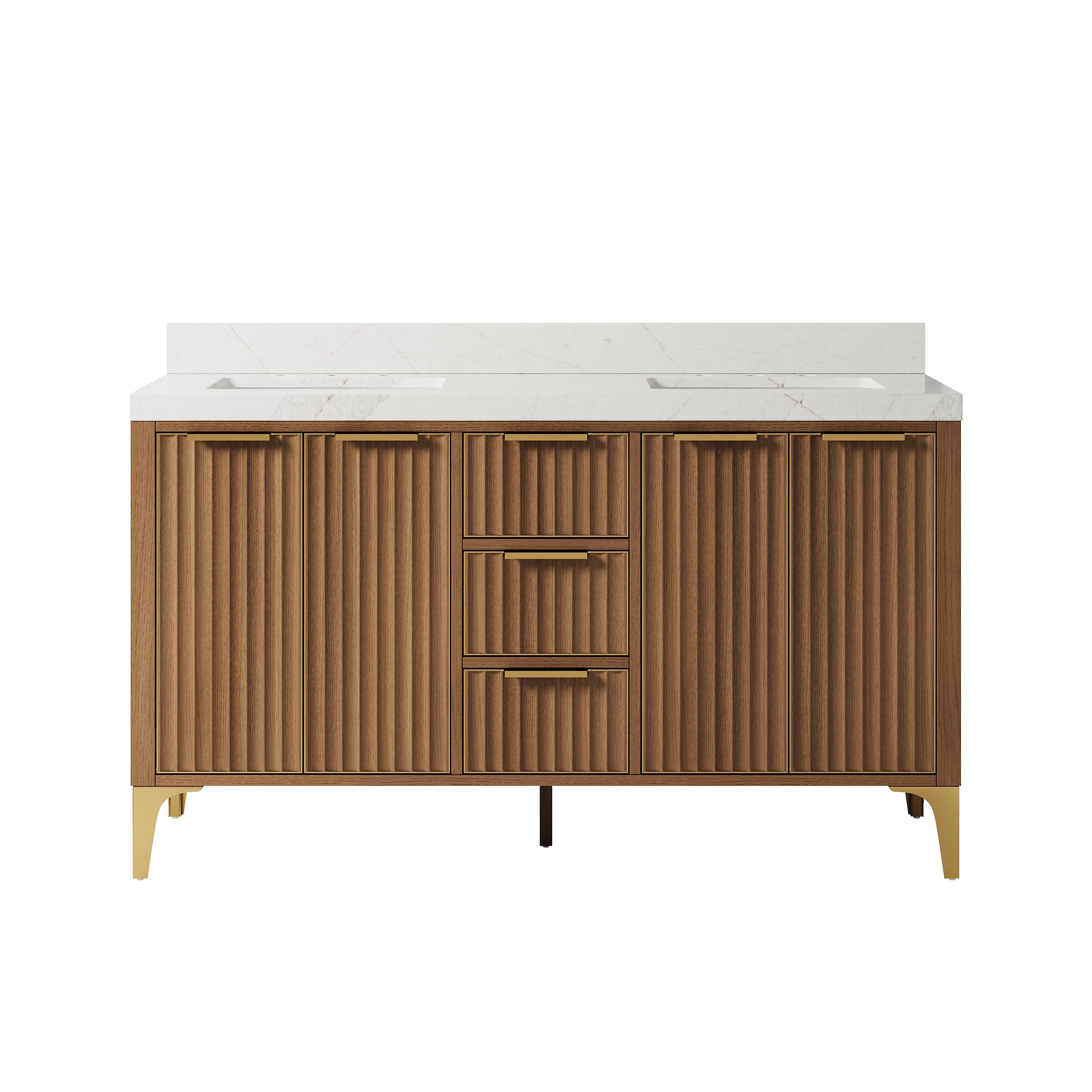
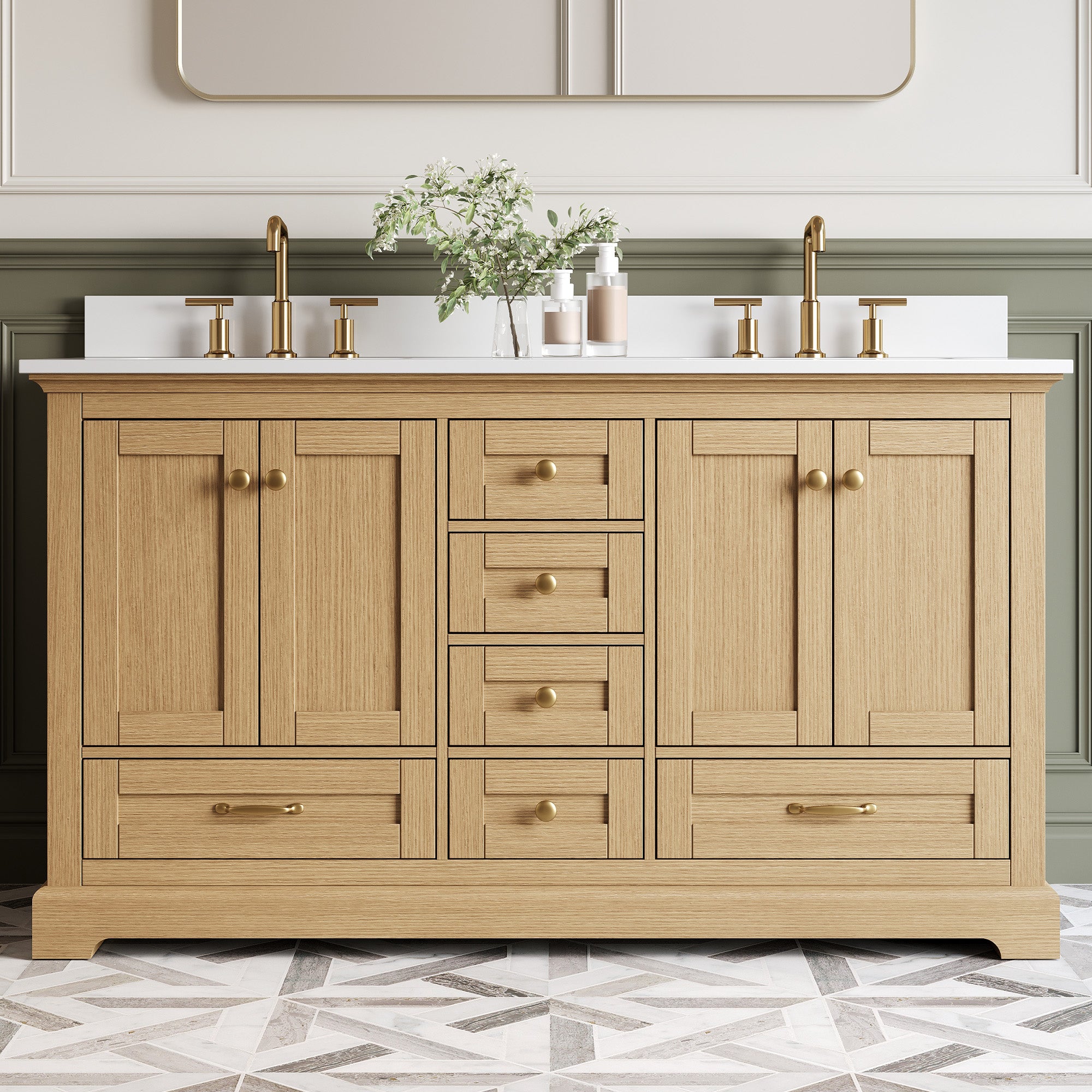
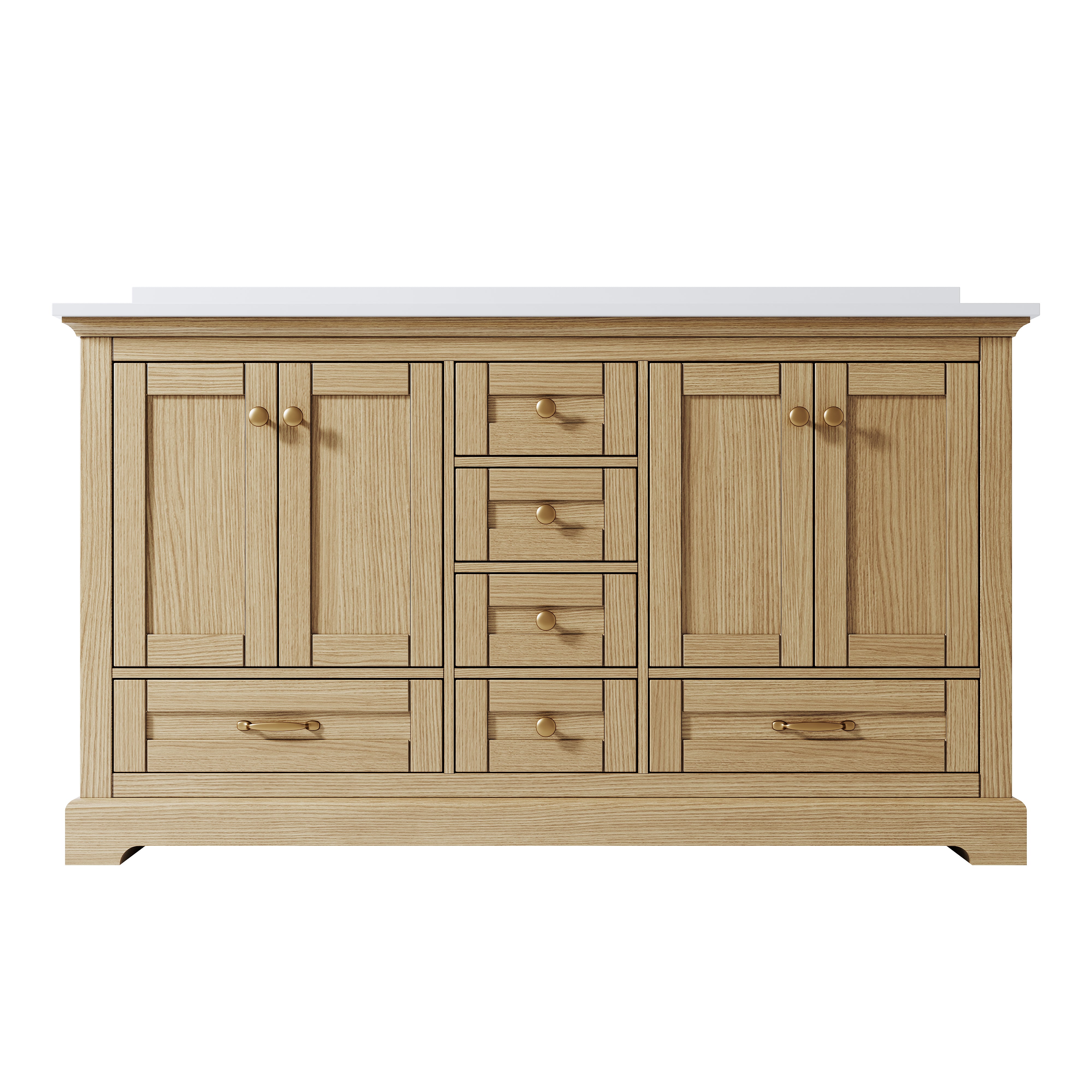
A freestanding white vanity is usually the better choice when storage matters more than maximum visual openness.
These cabinets often provide deeper drawers, larger under-sink compartments, and more usable vertical space.
Minimal Does Not Mean Storage-Free
One mistake I see in minimalist renovations is reducing storage so aggressively that the countertop ends up covered with toiletries.
That defeats the purpose.
Deep drawers are excellent for skincare, brushes, cosmetics, and grooming tools. Under-sink cabinets work better for tall bottles, cleaning supplies, and spare paper products.
A clean bathroom depends as much on hidden storage as it does on white surfaces.
5. Keep Vanity Size Proportional to the Room
White can reduce visual weight, but it cannot correct poor sizing.
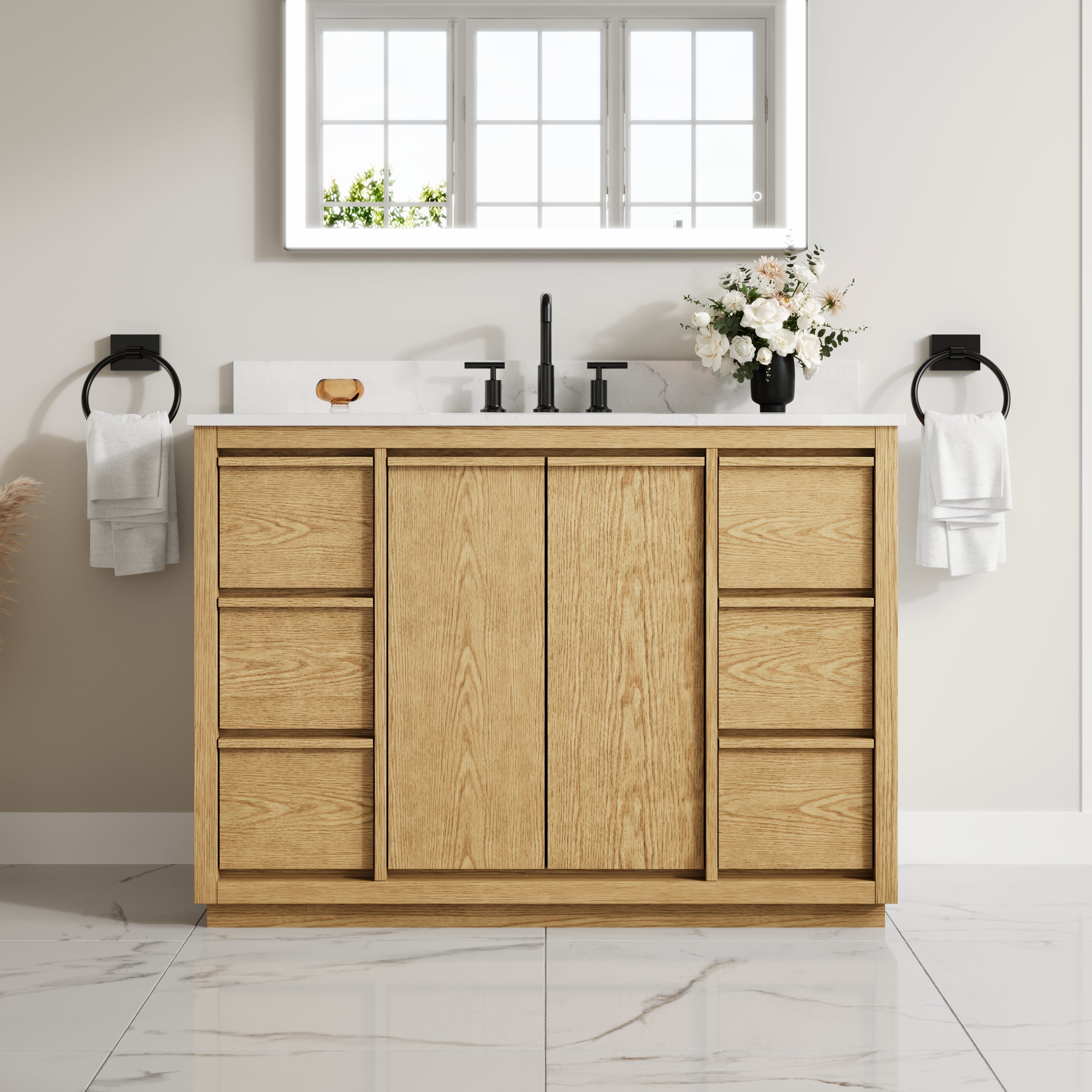
A 48-inch vanity may look elegant in a medium bathroom yet overwhelm a narrow guest bath. A 24-inch cabinet can save space but may leave the room short on counter area and storage.
For many guest and hallway bathrooms, a 30- or 36-inch vanity provides a practical balance.
In a larger primary bath, 48-, 60-, or 72-inch models may suit the scale better.
Measure cabinet depth as carefully as width. A shallow vanity can sometimes improve circulation more effectively than choosing a narrower cabinet.
6. Countertop Choice Defines the Minimal Style
White cabinetry works with almost any countertop, but some combinations feel cleaner than others.
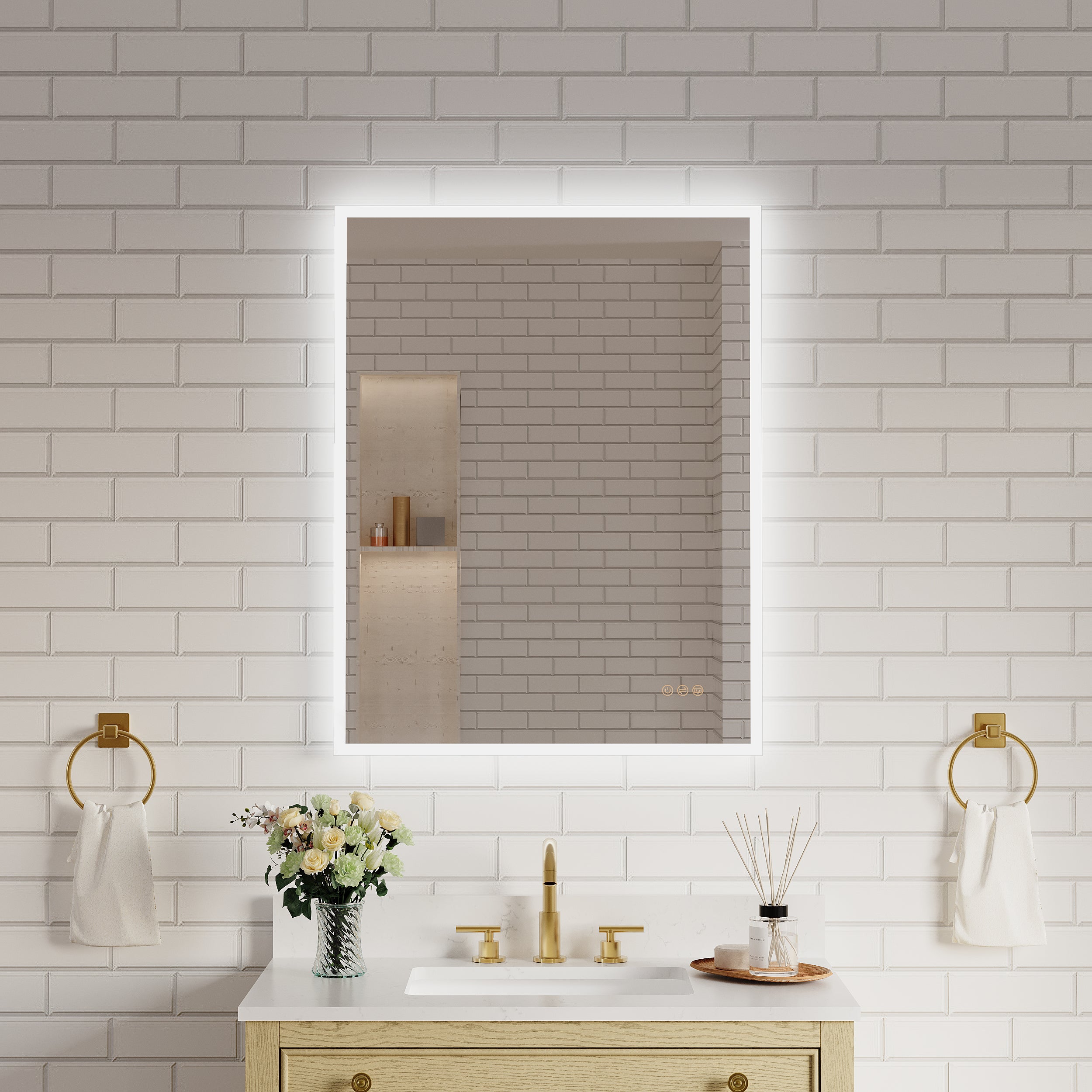
Plain or lightly veined quartz is a reliable choice because it adds subtle interest without becoming visually busy. Integrated sinks can create an especially streamlined look by reducing seams.
Dark countertops produce stronger contrast and may make the vanity feel more graphic.
Natural stone can work beautifully too, but dramatic veining may become the dominant feature in a small room.
If the vanity is meant to feel quiet, let only one material carry strong pattern.
7. Hardware Can Change the Entire Mood
Minimal bathrooms do not need invisible hardware, but the finish should be intentional.
Matte black adds contrast and works well with crisp white cabinetry. Brushed brass makes the room warmer. Polished nickel feels refined without looking overly decorative.
Avoid using too many metal finishes in a compact space.
One primary finish and perhaps one secondary accent are usually enough.
Hardware can be changed later, which is why I would invest more attention in cabinet construction and storage than in choosing the most fashionable pull.
8. White Has Some Real Maintenance Drawbacks
White vanities look fresh, but they show certain messes quickly.
Makeup, hair dye, toothpaste, fingerprints, and dark dust can stand out on pale cabinetry. High-gloss finishes may also reveal streaks under strong mirror lighting.
For everyday bathrooms, I usually prefer satin or low-sheen finishes.
They still look clean but are easier to maintain.
Use a mild, non-abrasive cleaner and wipe spills before they dry. Repair chipped corners promptly so moisture cannot reach exposed material underneath.
9. Construction Quality Matters More Than the Color
A minimalist vanity still needs to survive years of daily use.
Check drawer boxes, hinges, edge sealing, plumbing cutouts, and the cabinet floor beneath the sink.
Solid wood components can provide strength, while quality plywood is often a durable choice for cabinet boxes. Well-sealed engineered materials can also perform successfully.
What matters is how the vanity is built and protected.
A beautiful white finish over weak construction will not stay attractive for long.

10. Installation Should Preserve the Clean Lines
Set the cabinet level before installing the countertop. White cabinetry makes uneven drawer gaps and crooked edges easy to see.
Measure the drain and supply-line locations before cutting into the cabinet.
Seal the sink, faucet openings, backsplash, and countertop joints carefully. Test every plumbing connection before storing anything inside.
For a floating vanity, confirm that the wall has adequate structural support.
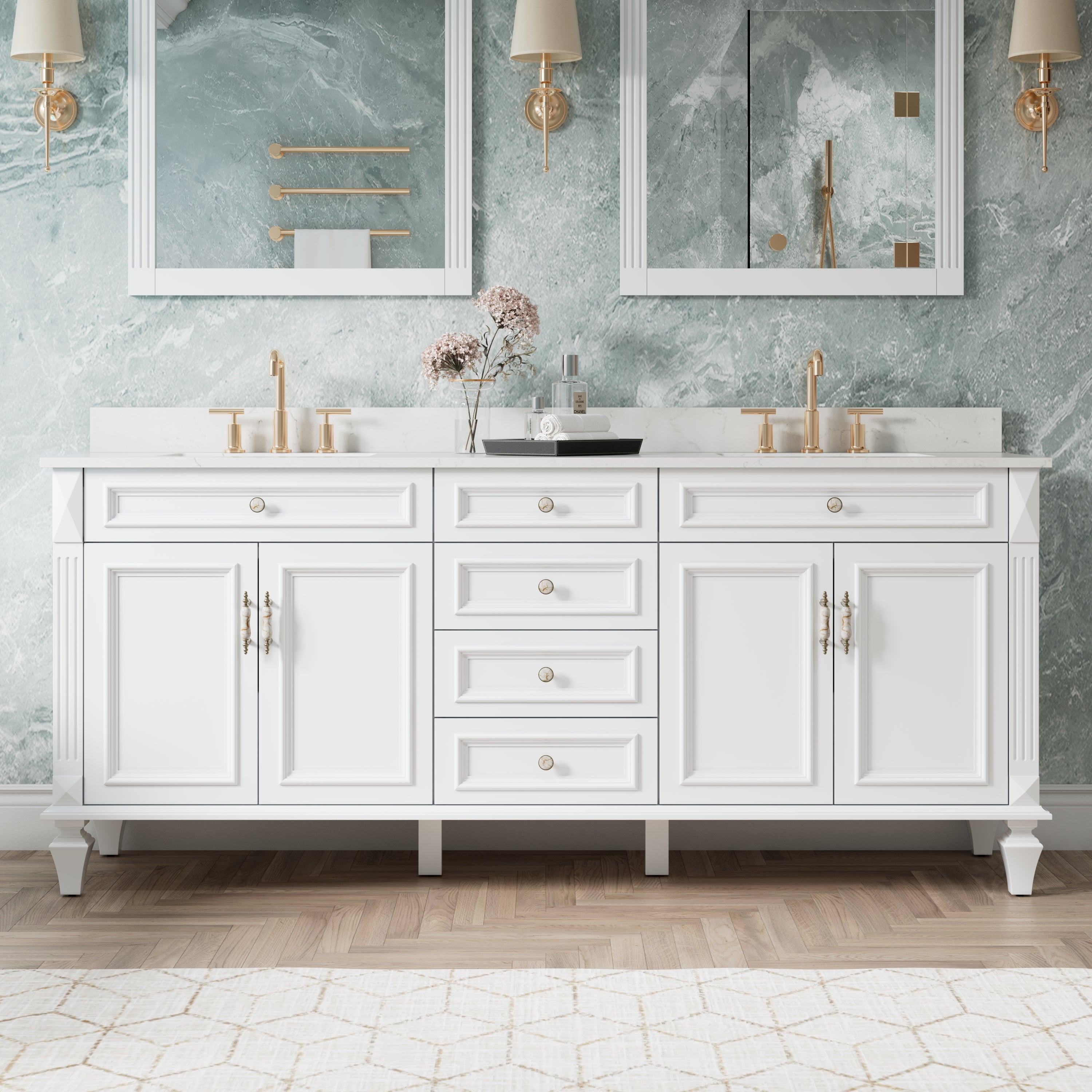
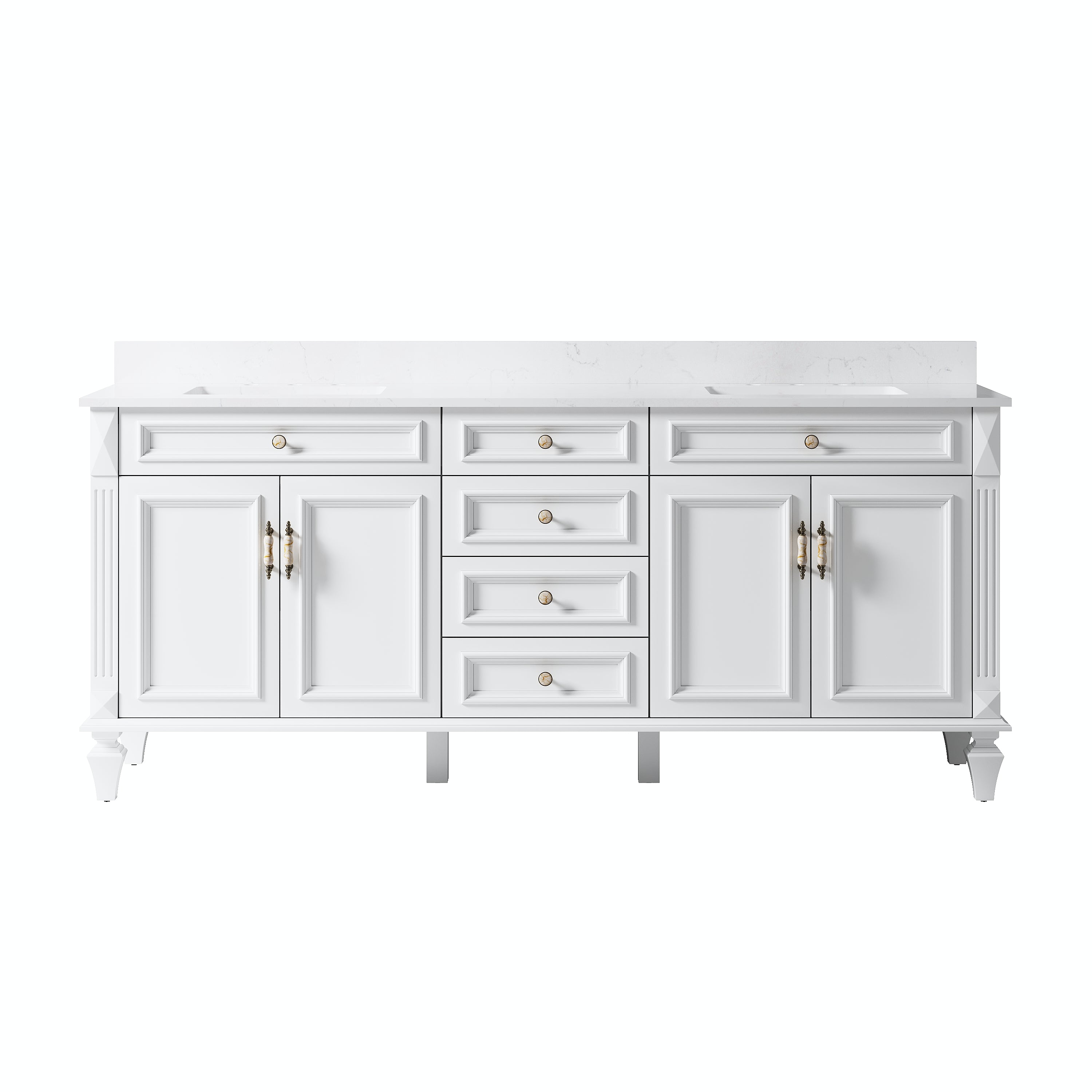
When comparing Wellfor options, focus first on size, usable storage, cabinet construction, finish undertone, and plumbing compatibility. Then choose the mounting style and hardware. The best white vanities for a fresh, minimal bathroom are the ones that keep visual clutter low while providing enough storage and durability to keep the room looking clean after the renovation is no longer new.
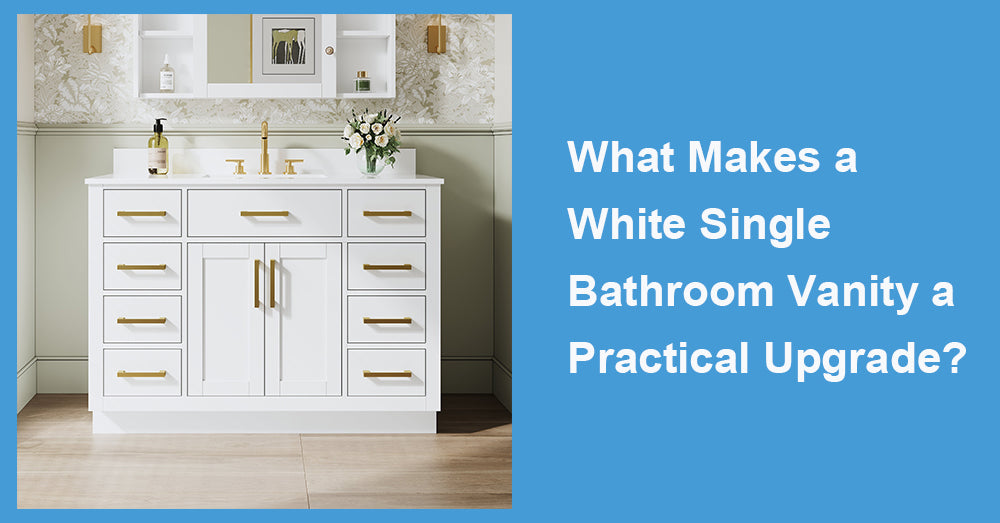

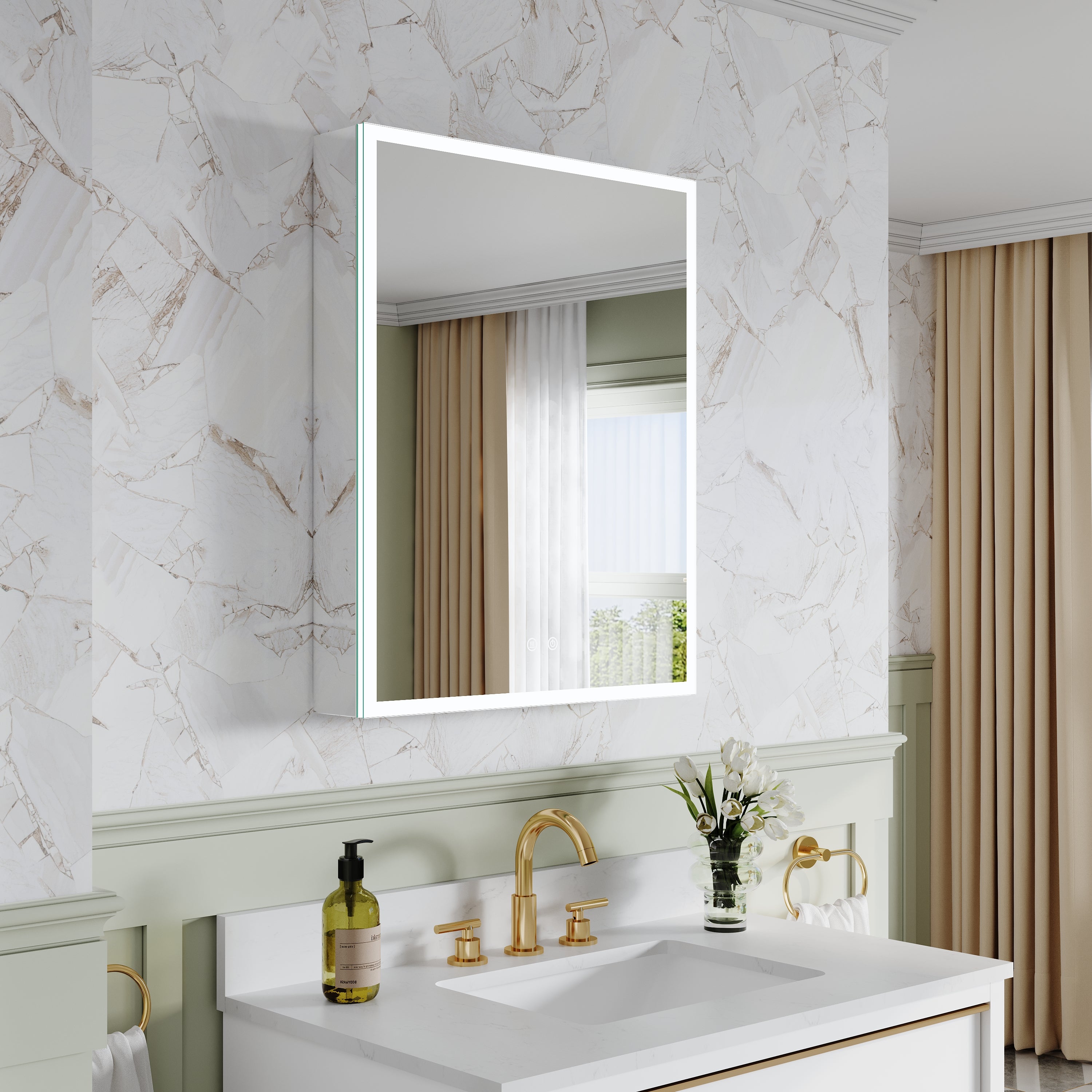













Leave a comment
This site is protected by hCaptcha and the hCaptcha Privacy Policy and Terms of Service apply.