






















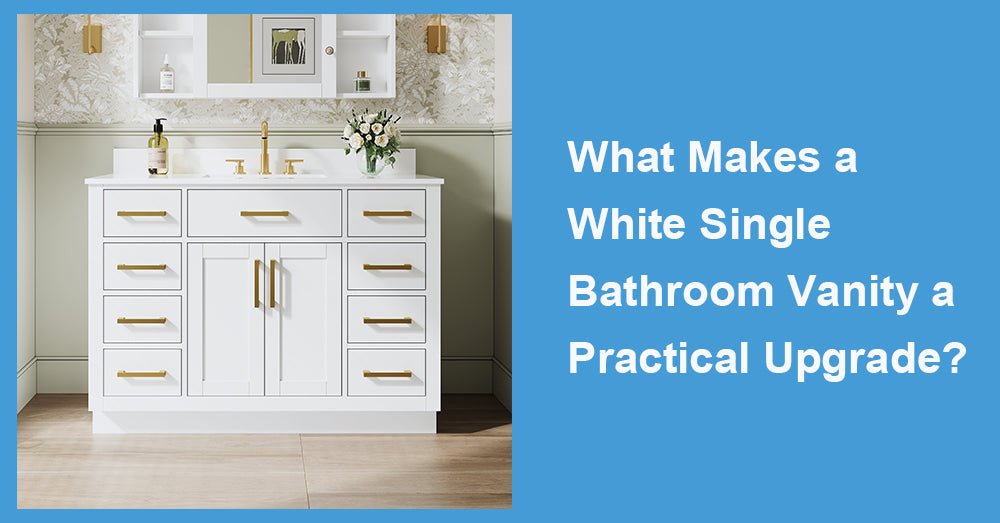
A white single bathroom vanity is a practical upgrade because it improves storage, sink function, and visual balance without demanding the floor space of a larger double-sink cabinet. The format is especially relevant in remodels where bathrooms need to work harder within a fixed footprint. Houzz's 2026 Bathroom Trends Study found that 47% of upgraded vanities measured 48 inches or less, while white accounted for 20% of vanity colors. White also remained the leading countertop color at 48%. Those numbers help explain why single-sink white vanities continue to appear in guest baths, hall bathrooms, and primary suites where usable storage matters more than adding a second basin.
A Single Sink Uses Cabinet Width More Efficiently
The most practical advantage is what happens underneath the countertop.
A second sink requires additional plumbing and removes space that could otherwise become drawers or cabinets. With one basin, a 36-inch, 48-inch, or even 60-inch vanity has more freedom to use its width efficiently.
That extra space can support:
· Full-extension drawers
· Adjustable shelves
· Hair-tool storage
· Cleaning supplies
· Extra towels
· Interior organizers
In a bathroom used mainly by one person at a time, that storage can be more valuable than a second sink.
A 36-Inch Vanity Fits Many Remodels
A 36-inch model is often a useful middle ground.
It is noticeably more functional than a compact 24-inch vanity but does not require the wall length of a 48-inch cabinet. There is usually enough room for one comfortable basin plus some usable countertop on either side.
A well-planned 36-inch configuration can include a shallow upper drawer, deeper lower storage, and an under-sink compartment without making the cabinet feel oversized.
Houzz's finding that nearly half of upgraded vanities measure 48 inches or less confirms how important this size range remains in current bathroom planning.
White Helps the Cabinet Feel Less Heavy
Vanity color has a surprisingly large effect on how crowded a bathroom feels.
A dark 48-inch cabinet creates a strong visual block, particularly in a narrow room. White tends to blend more easily with pale walls, tile, and countertops, so the cabinet can provide substantial storage without becoming the dominant feature.
The effect works particularly well with:
· Warm white walls
· Beige stone-look tile
· Light oak flooring
· Frameless shower glass
· Soft gray flooring
White does not add square footage, but it can reduce the number of strong visual boundaries within the room.
The Countertop Is Easy to Coordinate
White cabinetry gives buyers considerable freedom when choosing a top.
Houzz's 2026 data shows white leading upgraded bathroom countertops at 48%, followed by off-white at 20%. Engineered quartz was the leading countertop material at 45%, ahead of quartzite, granite, and marble.
For a single vanity, several combinations work well.
A white cabinet with white quartz creates a clean, continuous look. Beige veining introduces warmth. Soft gray veining can connect with cooler flooring, while a darker countertop gives the vanity more contrast.
On smaller 30-inch and 36-inch models, quieter patterns usually keep the counter from looking overly busy.
Drawers Can Make the Upgrade Feel More Significant
Replacing an older vanity does not feel like much of an upgrade if the new cabinet still has one large empty compartment beneath the sink.
Drawer planning is where newer designs often improve everyday use.
NKBA's 2026 Bath Trends Report points to growing interest in custom dividers, makeup storage, hair-tool compartments, charging spaces, medication organization, and integrated electrical features.
Useful drawer arrangements include:
· U-shaped drawers around plumbing
· Offset sink with a drawer bank
· Shallow drawers for daily products
· Deep lower drawers for towels and bottles
The goal is not simply to create more storage volume. It is to make stored items easier to find.

One Sink Leaves More Countertop Workspace
A single basin also preserves more of the countertop.
That can matter during morning and evening routines. Skin-care bottles, shaving products, hair tools, and cosmetics often need temporary space even when they are stored away afterward.
A 48-inch single vanity can provide substantially more open counter area than a double-sink vanity of the same width.
Industry judgment: In many bathrooms, one well-positioned sink plus useful counter space delivers more everyday function than squeezing two basins into a cabinet that is too narrow for them.
The difference becomes particularly noticeable when the vanity is used as a grooming station.
White Works With Changing Bathroom Styles
One reason white cabinetry remains useful is that it does not depend on a single design direction.
NKBA's 2026 report found transitional and timeless styling favored by 70% of surveyed professionals. Organic and natural design followed at 65%, while contemporary, modern, and minimalist styles reached 57%.
A white vanity can move between those looks simply by changing surrounding materials.
Shaker doors with brushed nickel can feel transitional. Flat-panel fronts and matte black pulls create a more modern look. Pairing the cabinet with light oak, beige stone, or muted green brings it closer to organic design.
The cabinet itself does not have to change.
Mirrors and Lighting Can Extend the Upgrade
A new vanity often looks incomplete if the old mirror and lighting remain untouched.
For a 36-inch vanity, a mirror around 30 to 36 inches wide can create a balanced proportion, although the final size should depend on wall space and fixture placement.
Lighting deserves equal attention. NKBA reports that 91% of professionals consider lighting quality a top bathroom design priority, while 92% favor task lighting in the primary bath.
A well-lit mirror makes a single vanity more useful for:
· Shaving
· Skin care
· Applying makeup
· Hair styling
· Contact-lens routines
An illuminated mirror can also save wall space where side sconces would feel crowded.
White Makes Future Updates Easier
Bathroom finishes often change long before the vanity itself wears out.
Hardware may move from chrome to brushed nickel. Beige walls may become sage green. A basic mirror may be replaced with an LED model. Flooring may change during a later remodel.
White cabinetry tends to tolerate these updates better than a highly specific painted color.
NKBA's latest color research also supports this flexibility. Neutrals remain dominant, with off-white, tan, white, and nature-inspired colors all playing major roles.
That makes white less of a short-lived trend and more of a stable background.
Maintenance Still Depends on Good Materials
White can make dust, toothpaste, and water marks easier to see, but that can also encourage quicker cleaning.
A practical vanity should have more than an attractive exterior. Check for:
· Sealed panel edges
· Finished plumbing cutouts
· Protected cabinet interiors
· Moisture-resistant coatings
· Properly sealed countertop joints
Bathroom humidity still needs to be controlled. EPA guidance recommends keeping indoor relative humidity below 60%, ideally between 30% and 50%, and addressing leaks or wet materials promptly.
A white finish will stay cleaner-looking longer when moisture problems are managed rather than hidden.









































Leave a comment
This site is protected by hCaptcha and the hCaptcha Privacy Policy and Terms of Service apply.