














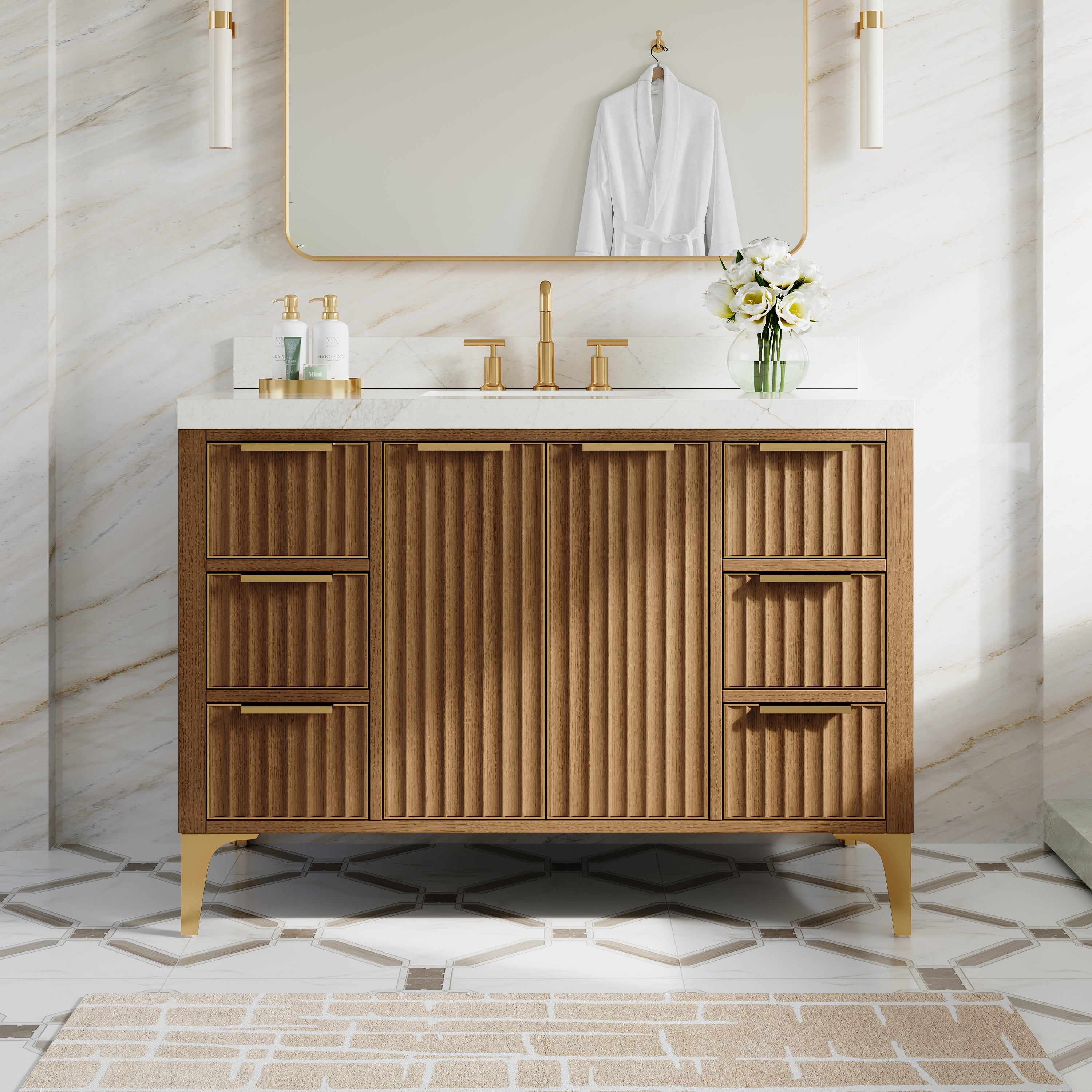
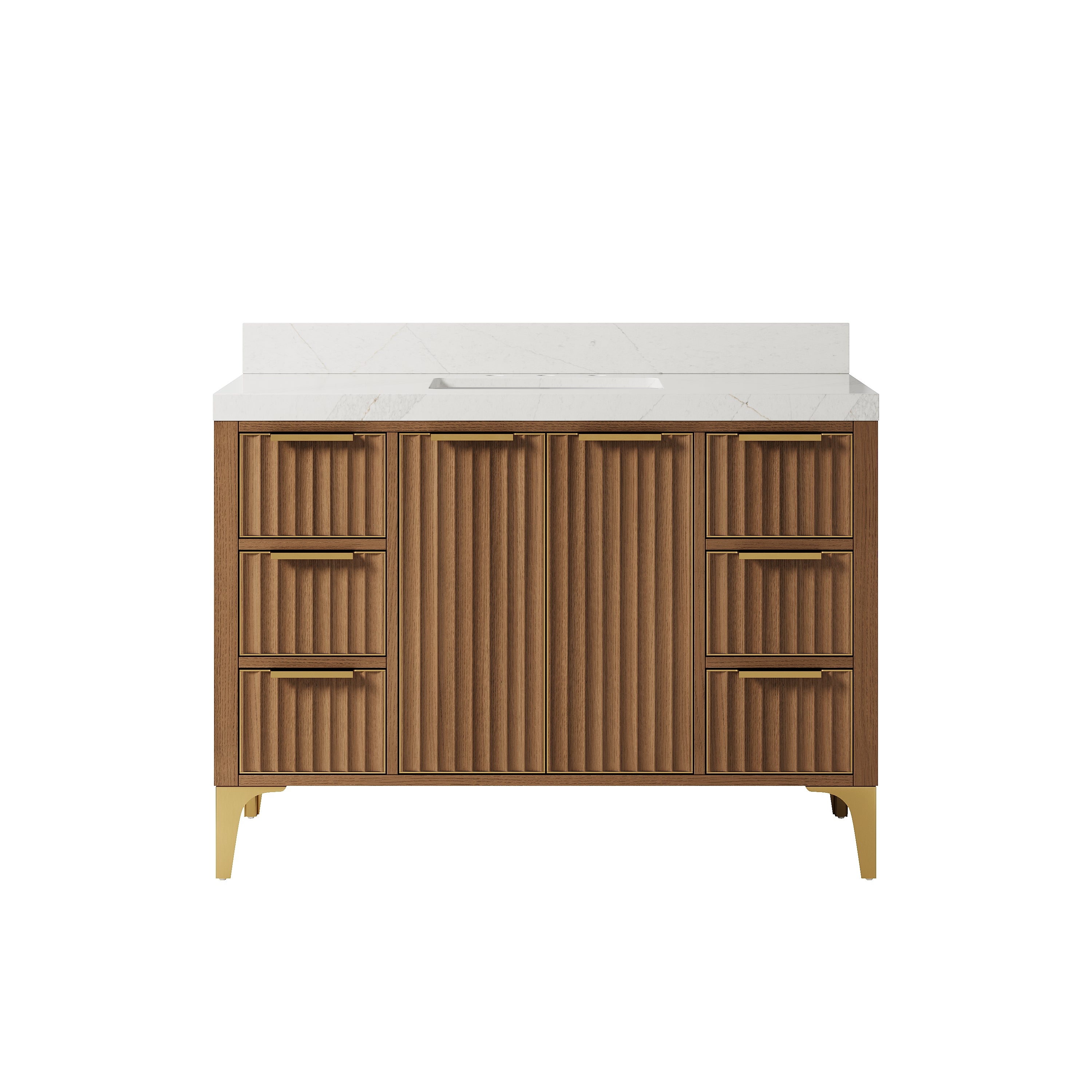


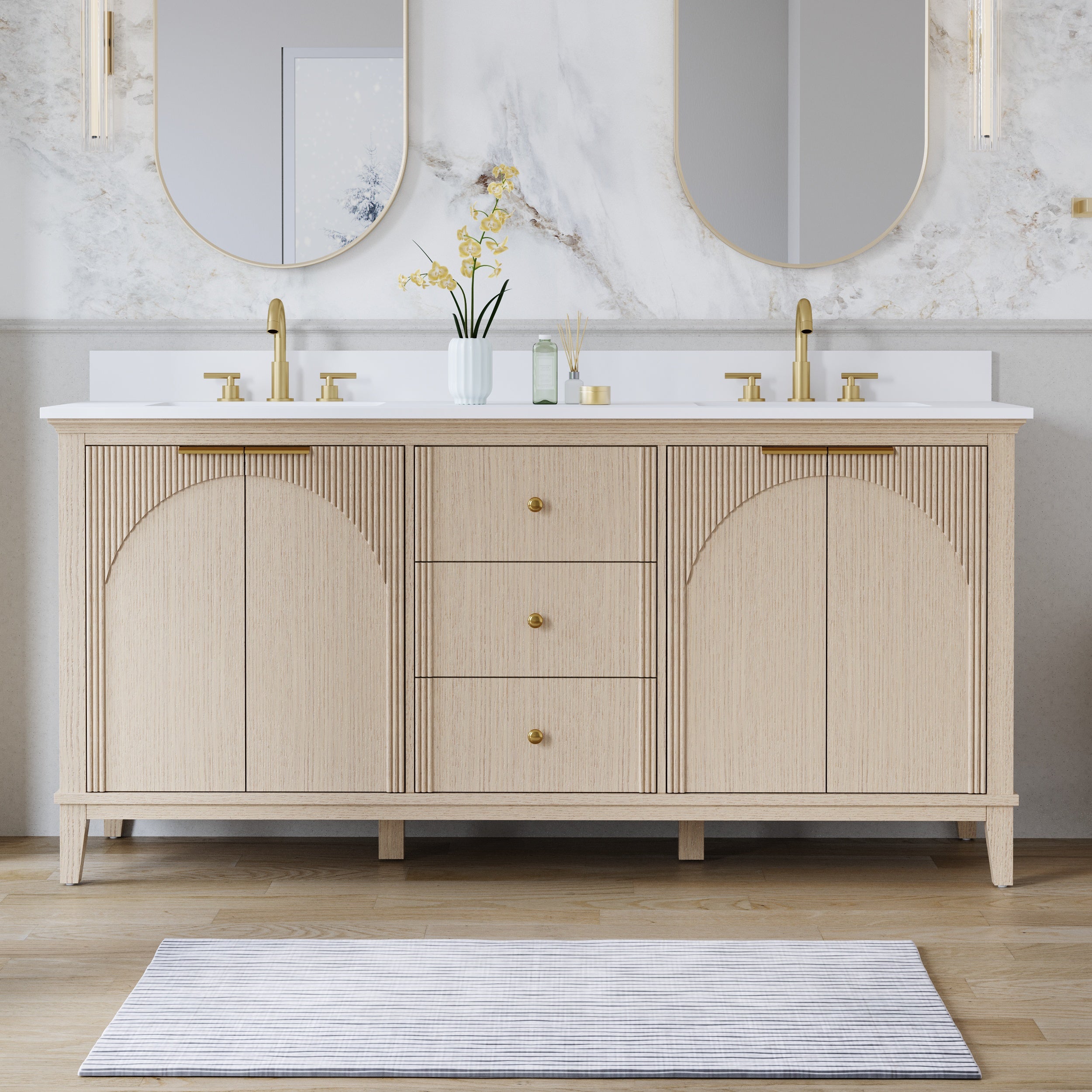
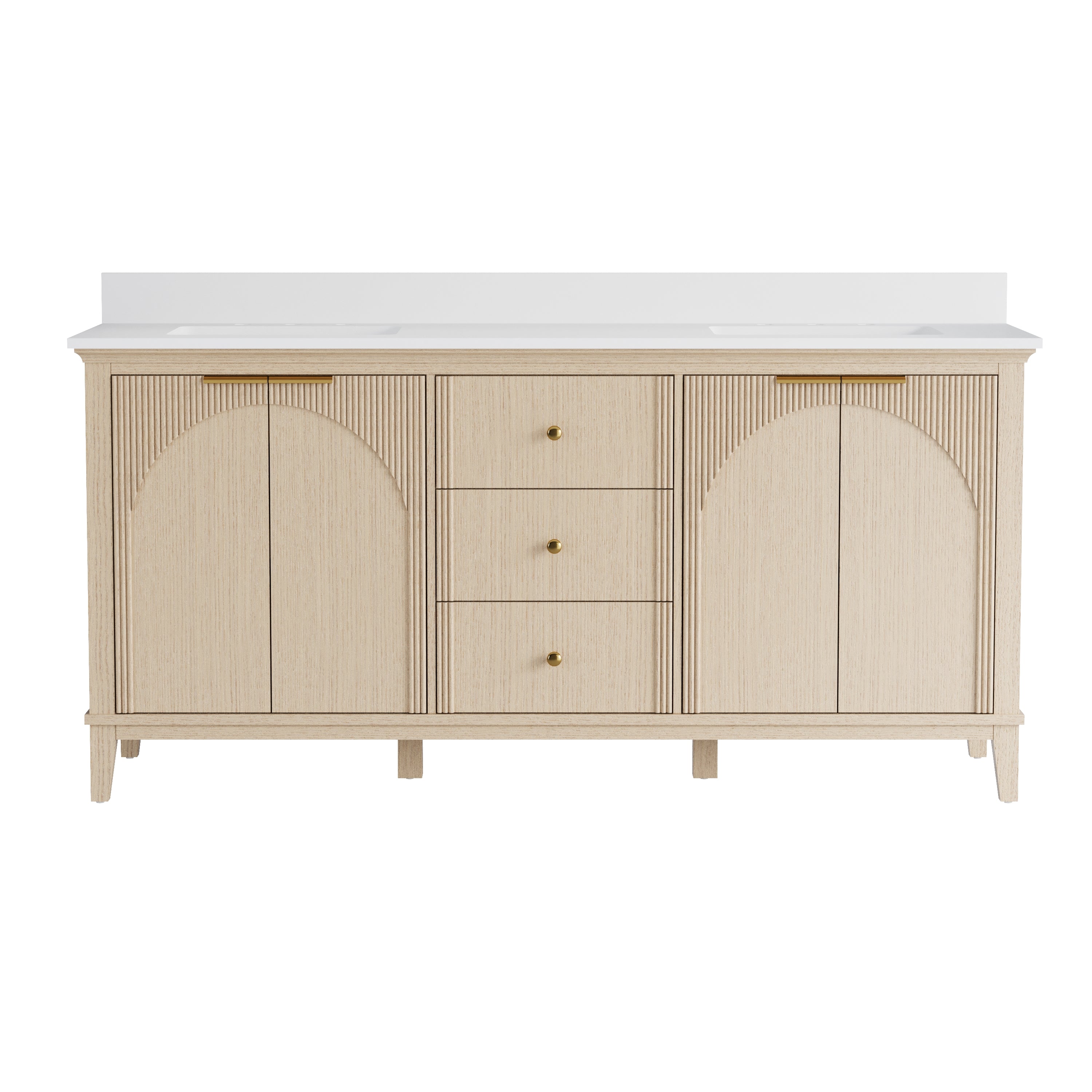
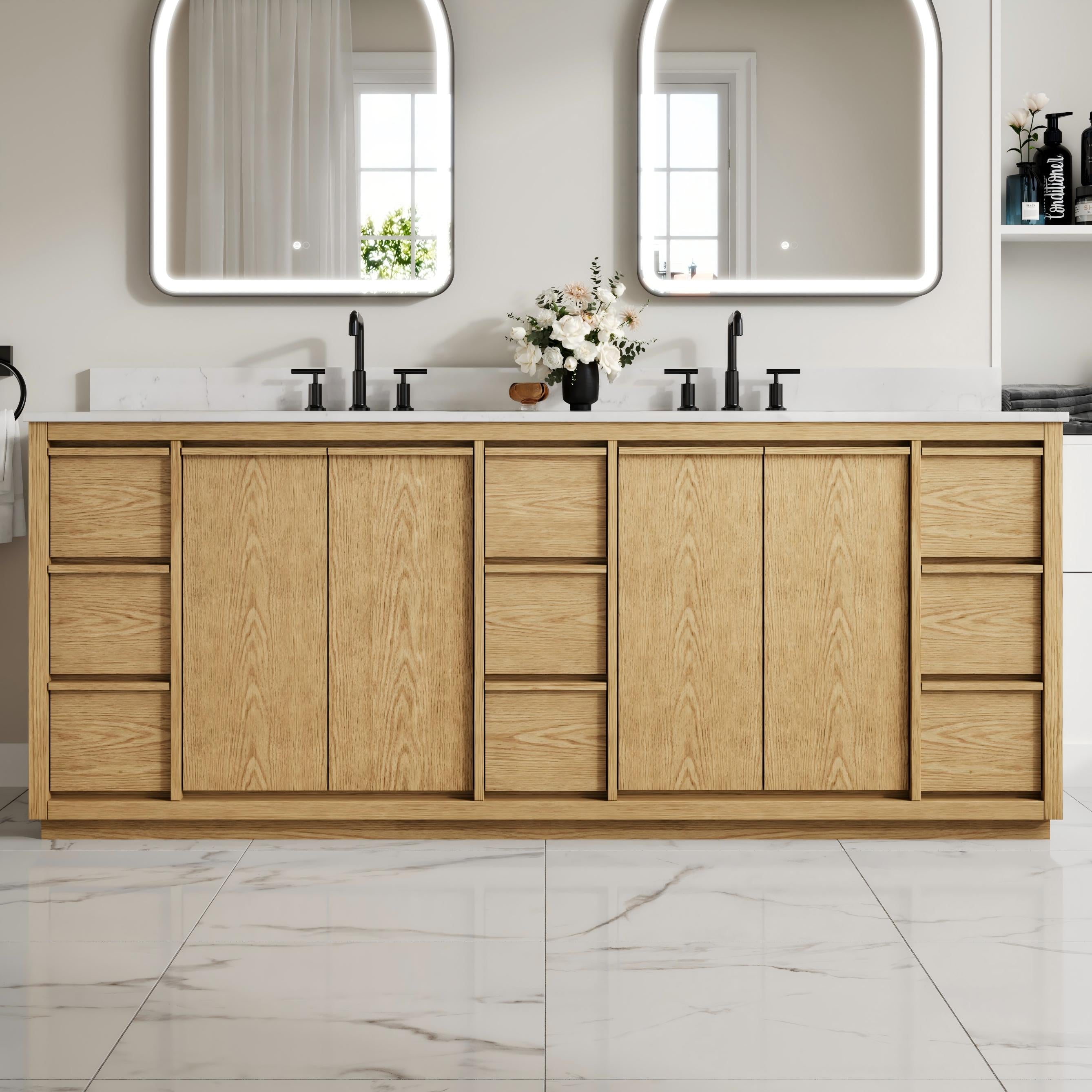
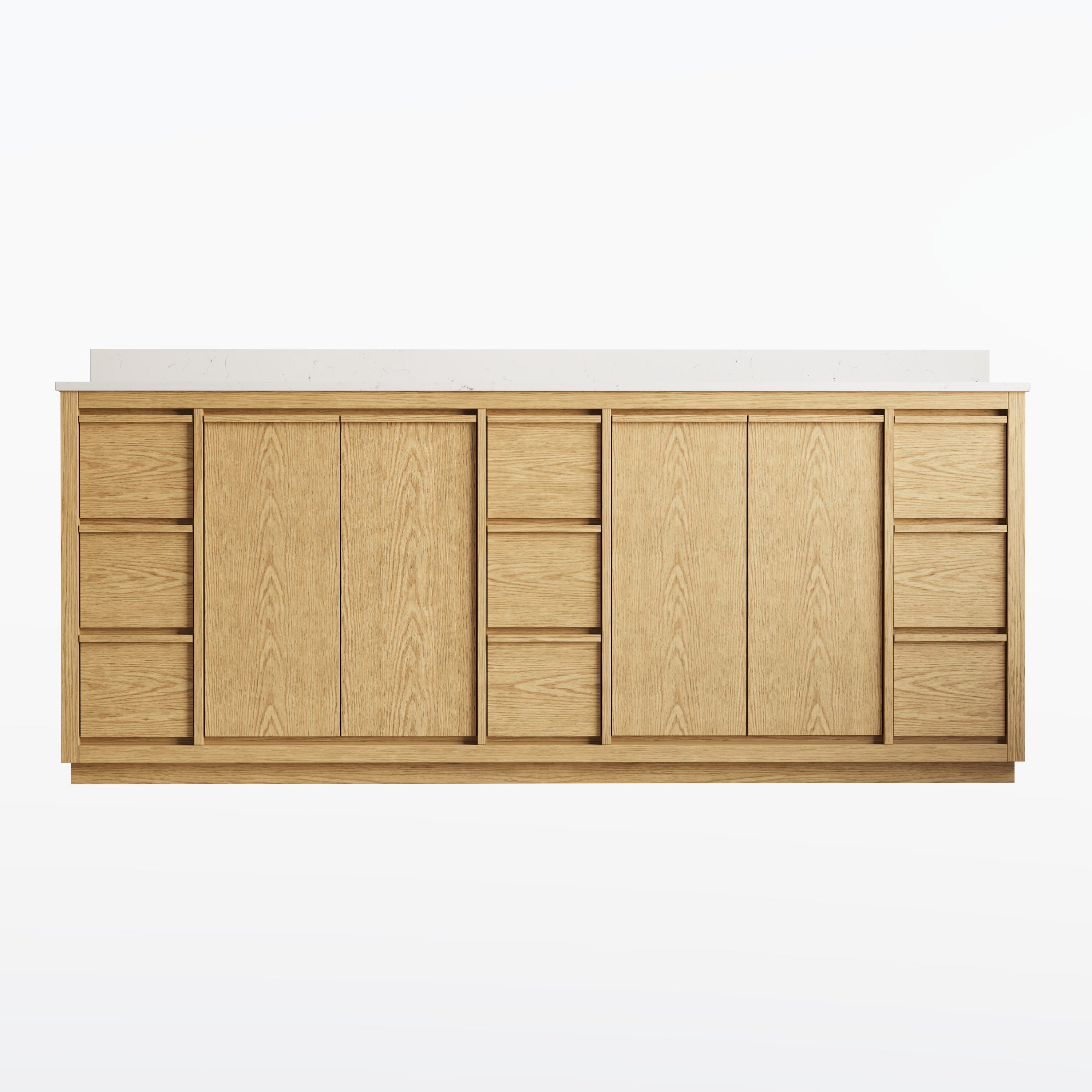

A natural wood vanity can bring warmth, texture, and long-term value to a bathroom, but the best-looking cabinet is not always the most durable one. After more than 20 years of working with bathroom cabinetry, I have found that the strongest choices combine attractive grain with stable construction, good sealing, practical storage, and hardware that can handle daily use. The goal is not simply to buy “real wood.” It is to choose a vanity that looks better with age while standing up to humidity, water, and constant opening and closing.
1. A Natural Wood Vanity Should Start With the Right Material
Wood species influences both appearance and performance.
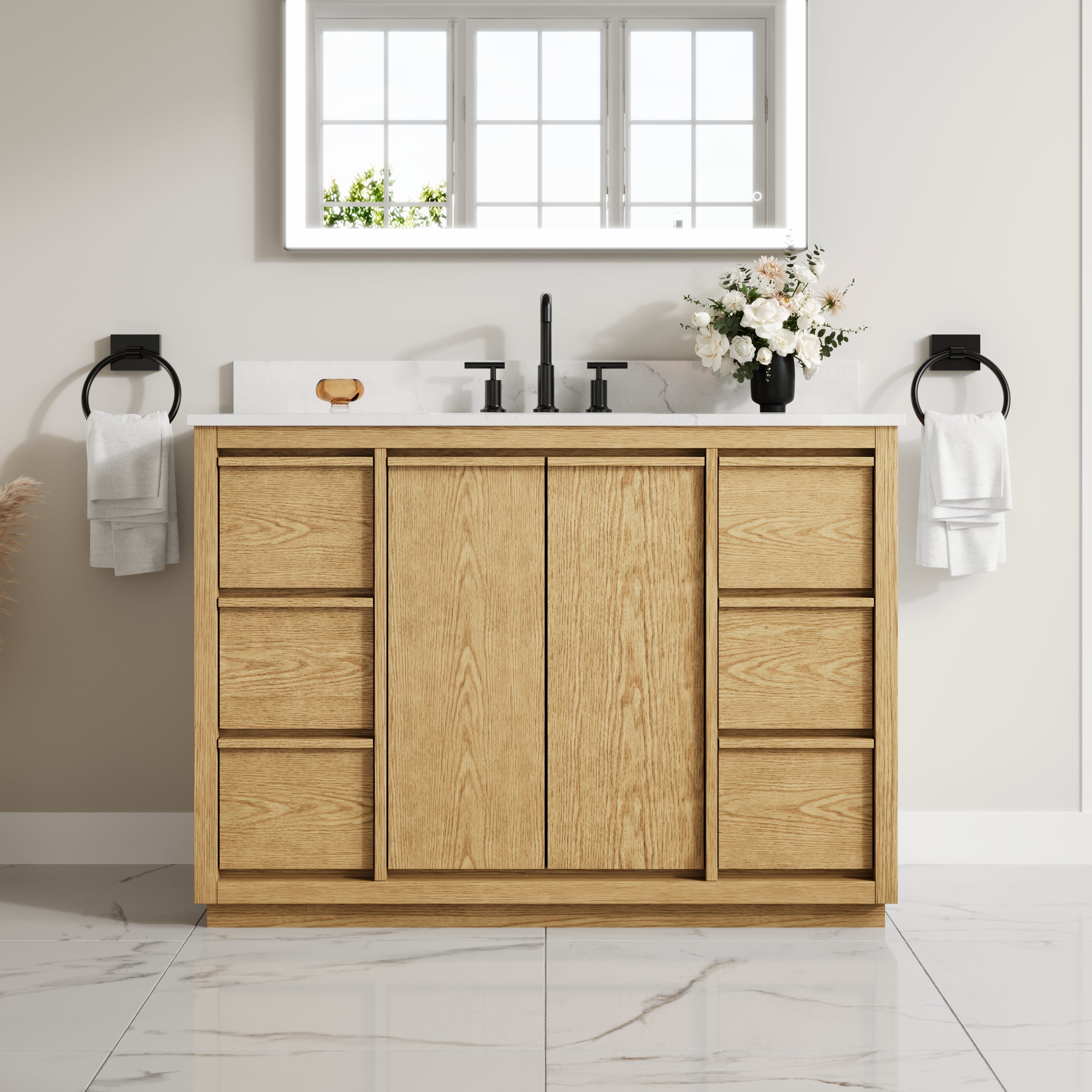
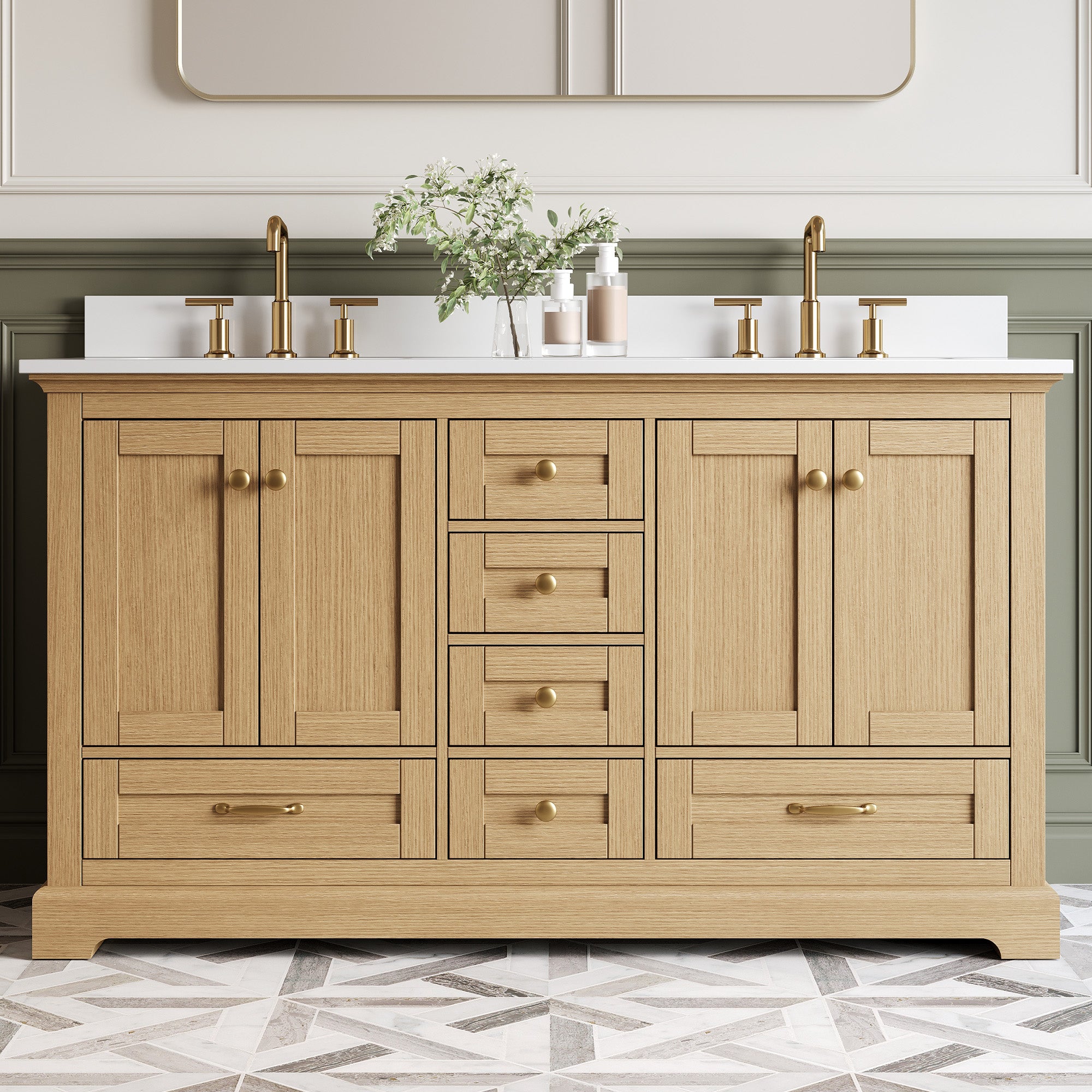
Oak is one of the most practical choices because its grain is attractive, it handles daily wear well, and it works with modern or transitional interiors. Walnut offers richer color and a more upscale appearance, but darker surfaces can show dust and dried water marks more easily.
Maple has a smoother, quieter grain and suits homeowners who want natural material without strong visual movement.
Do Not Judge Quality by Species Alone
A premium wood species does not guarantee a premium vanity.
Joinery, edge sealing, drawer construction, and cabinet-box material matter just as much. I would choose a well-built oak vanity over a poorly assembled walnut cabinet every time.
The structure determines how the vanity performs after years of use.
2. Quality Plywood Can Be a Smart Companion to Solid Wood
Many buyers assume the entire cabinet must be solid wood to be durable.
That is not necessarily true.
Quality plywood is often an excellent material for vanity boxes because its layered construction remains comparatively stable as humidity changes. Solid wood works especially well for doors, frames, and visible components where strength and appearance matter most.
This combination can offer a very good balance between durability, weight, cost, and repairability.
What I avoid are weak, poorly sealed materials in areas exposed to plumbing or floor moisture.
3. The Finish Is What Protects the Beauty
Natural grain is only valuable if the surface is protected.
A bathroom exposes cabinetry to steam, splashes, toothpaste, cosmetics, and frequent cleaning. A durable finish helps prevent moisture from reaching the wood beneath.
Check lower cabinet edges, drawer corners, and plumbing cutouts carefully.
Exposed Edges Are a Warning Sign
The front of a vanity may look perfect while unfinished areas underneath tell a different story.
Moisture often enters through hidden edges rather than broad finished surfaces.
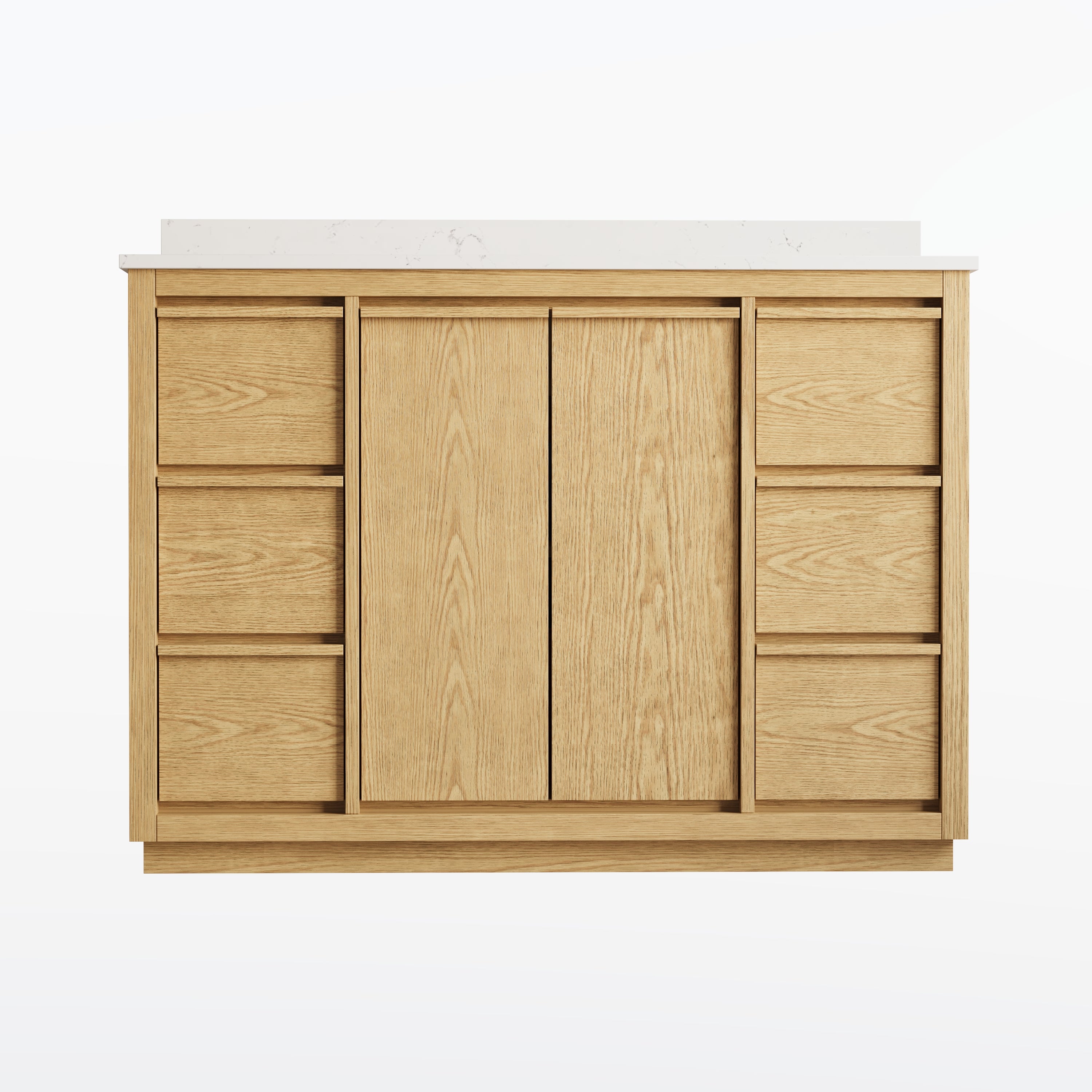
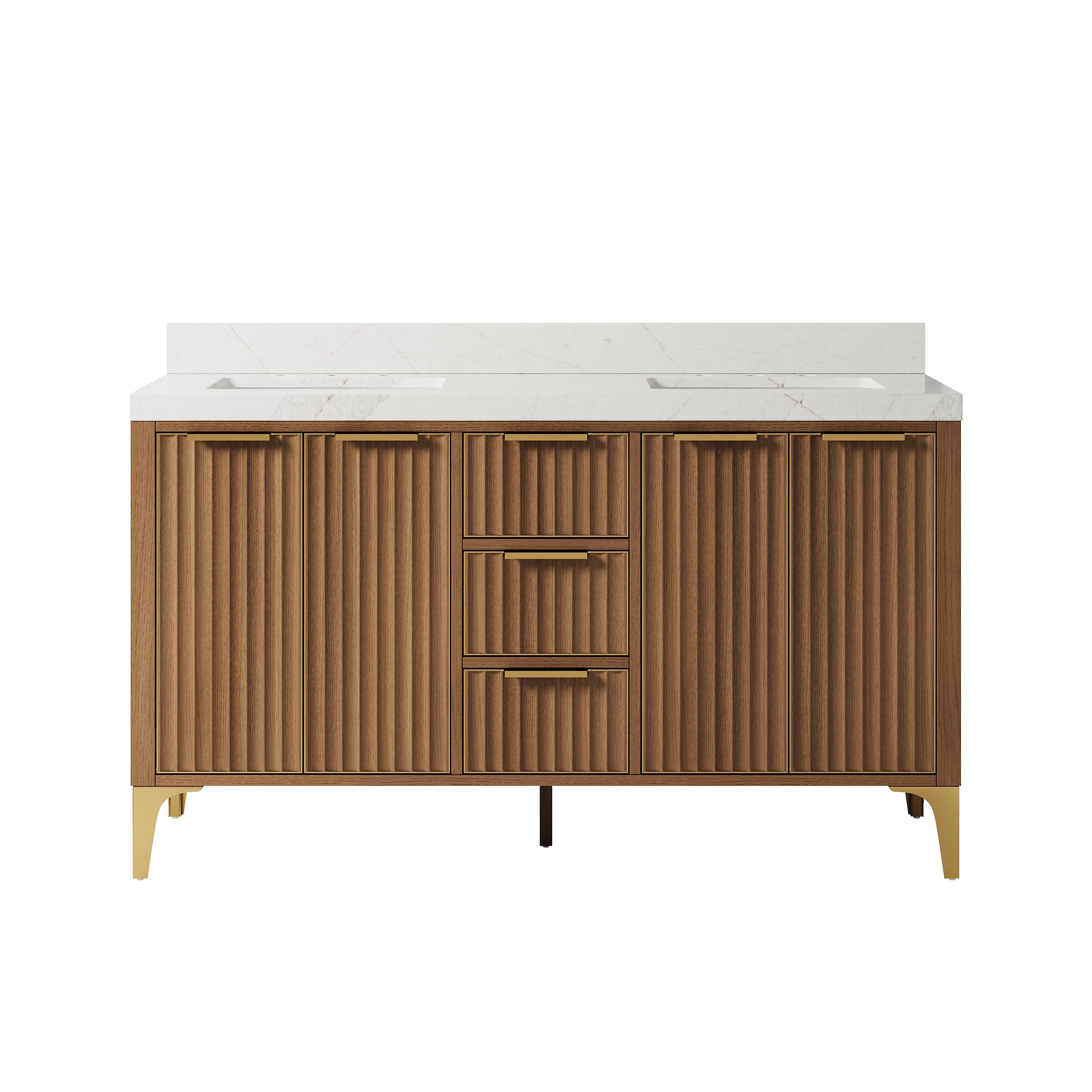
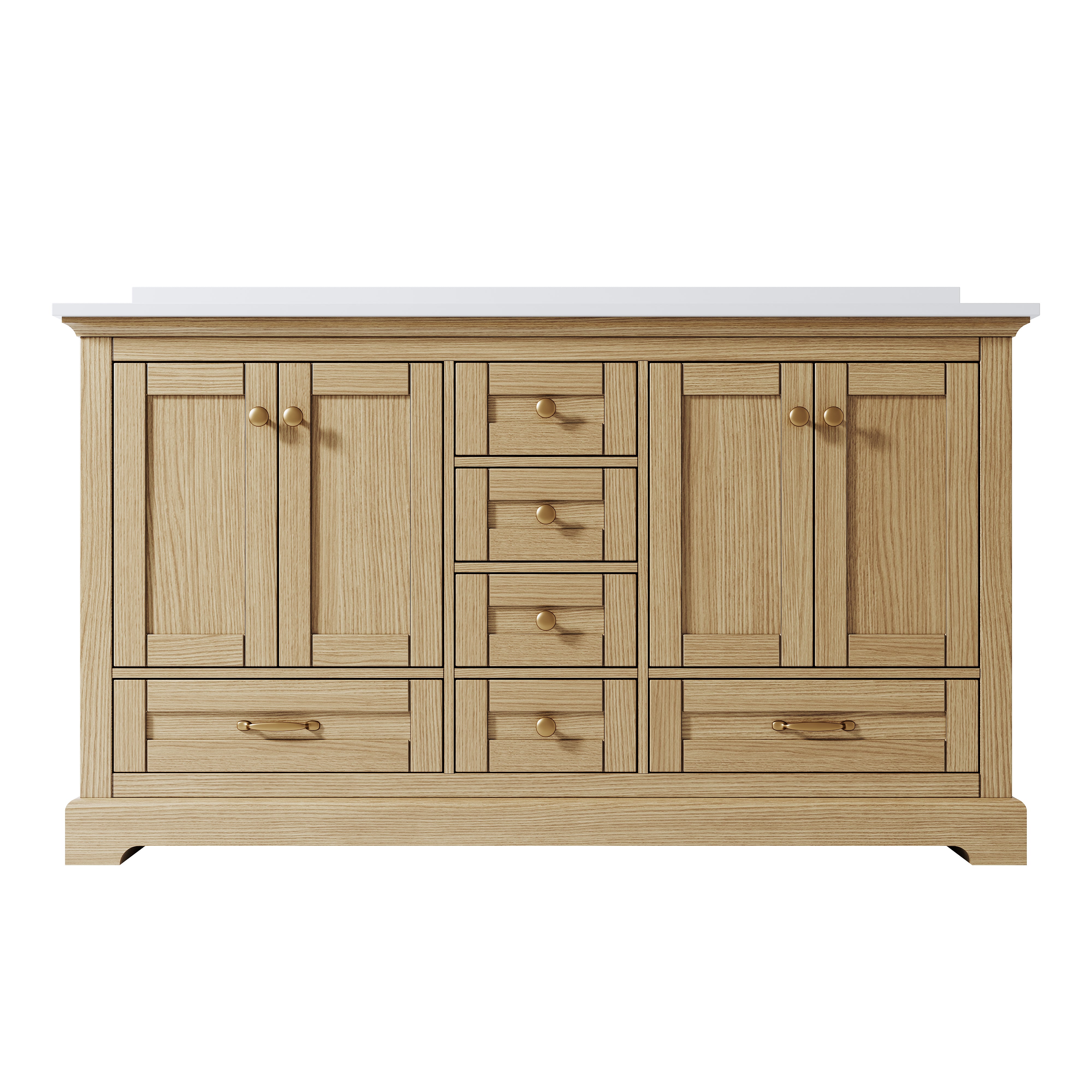
If you are shopping in person, inspect the cabinet interior and underside. If you are buying online, look for detailed product images rather than relying only on styled bathroom photography.
4. Grain Pattern Should Suit the Rest of the Bathroom
Beauty is partly about restraint.
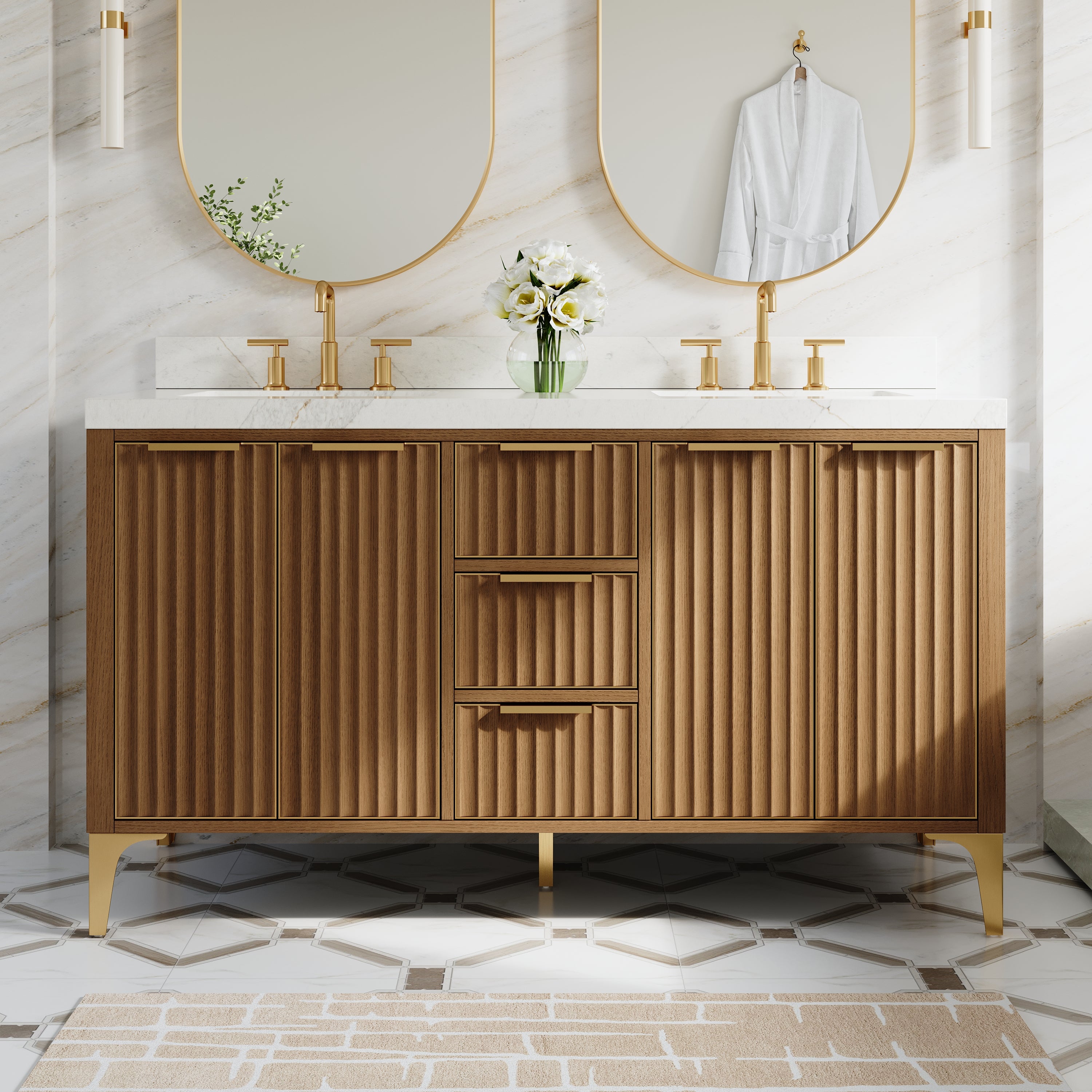
Strong oak grain can look excellent with simple white quartz or quiet stone. Walnut pairs well with warm neutrals and brushed metal hardware.
If the countertop already has dramatic veining, I usually recommend a calmer wood pattern.
Too much visual movement makes the room feel busy.
Natural wood should add texture, not compete with every other surface.
5. Storage Design Has a Major Effect on Durability
A cabinet used awkwardly tends to wear faster.
Deep drawers are useful for skincare, brushes, grooming tools, and cosmetics because users can reach items without digging through a crowded cabinet.
Under-sink storage works better for taller bottles and cleaning products.
Drawer Construction Matters
Open every drawer if possible.
The box should feel rigid, slides should move smoothly, and the bottom should not flex excessively.
Full-extension slides make storage easier to use. Soft-close hardware can reduce repeated impact on doors and drawer fronts, although good hardware installation matters more than the feature name itself.
A practical interior usually lasts better because it is used more naturally.
6. Natural Wood Has Real Bathroom Limitations
Wood is durable, but it is not waterproof.
Standing water can damage the finish, while long-term humidity can cause some wood components to move slightly. Small seasonal changes are normal.
Persistent moisture is not.
A natural wood vanity works well in a ventilated primary bath, guest bathroom, or family space where water is cleaned up reasonably quickly.
It is less suitable for open wet rooms where shower spray regularly reaches the cabinet or water pools around the base.
Fix the moisture problem first.
7. Freestanding and Floating Designs Age Differently
Freestanding wood vanities usually provide more storage and are easier to install in existing bathrooms.
Their lower edges, however, sit closer to floor-level moisture.
Floating vanities keep the cabinet away from wet flooring and make cleaning easier underneath. They also create a lighter appearance that works especially well with oak and other pale woods.
The downside is structural complexity. A floating model requires secure wall support and carefully positioned plumbing.
The best mounting style depends on the room, not just the design trend.
8. The Sink and Countertop Help Protect the Cabinet
A good countertop acts as the first line of defense against water.
Quartz is practical for busy bathrooms because cleaning is straightforward. Natural stone offers distinctive character but may require more care depending on the material.
Sink design also matters.
A moderately sized undermount sink usually leaves enough countertop to control splashes and provides useful space for toiletries.
Oversized basins can consume surface area and may push water closer to cabinet edges.
The sink should fit the vanity proportionally, not simply be as large as possible.
9. Installation Quality Can Extend the Vanity's Life
Measure the wall, cabinet depth, plumbing position, countertop overhang, and clearance around nearby fixtures before installation.
Set the vanity level so doors and drawers remain aligned.
Seal the sink, faucet openings, backsplash, and countertop joints carefully. Test every plumbing connection before loading the cabinet.
Slow leaks are one of the most damaging problems I see.
Keep shutoff valves accessible and avoid packing the under-sink area so tightly that plumbing cannot be inspected.

10. Maintenance Should Be Simple and Consistent
Use a soft cloth and mild, non-abrasive cleaner. Wipe standing water promptly and avoid leaving wet towels against cabinet fronts.
Run the exhaust fan after showers.
Inspect the area beneath the sink several times a year for leaks, discoloration, or swelling. Repair chips in the finish before moisture reaches exposed wood.
When comparing Wellfor options, look first at cabinet construction, sealed edges, drawer hardware, storage layout, and bathroom conditions. Then choose the wood species and grain that suit the room. The best natural wood vanity is not simply the one with the richest color or most dramatic grain; it is the one whose structure, finish, and daily usability are strong enough to let that natural beauty remain attractive for years.
















Leave a comment
This site is protected by hCaptcha and the hCaptcha Privacy Policy and Terms of Service apply.