















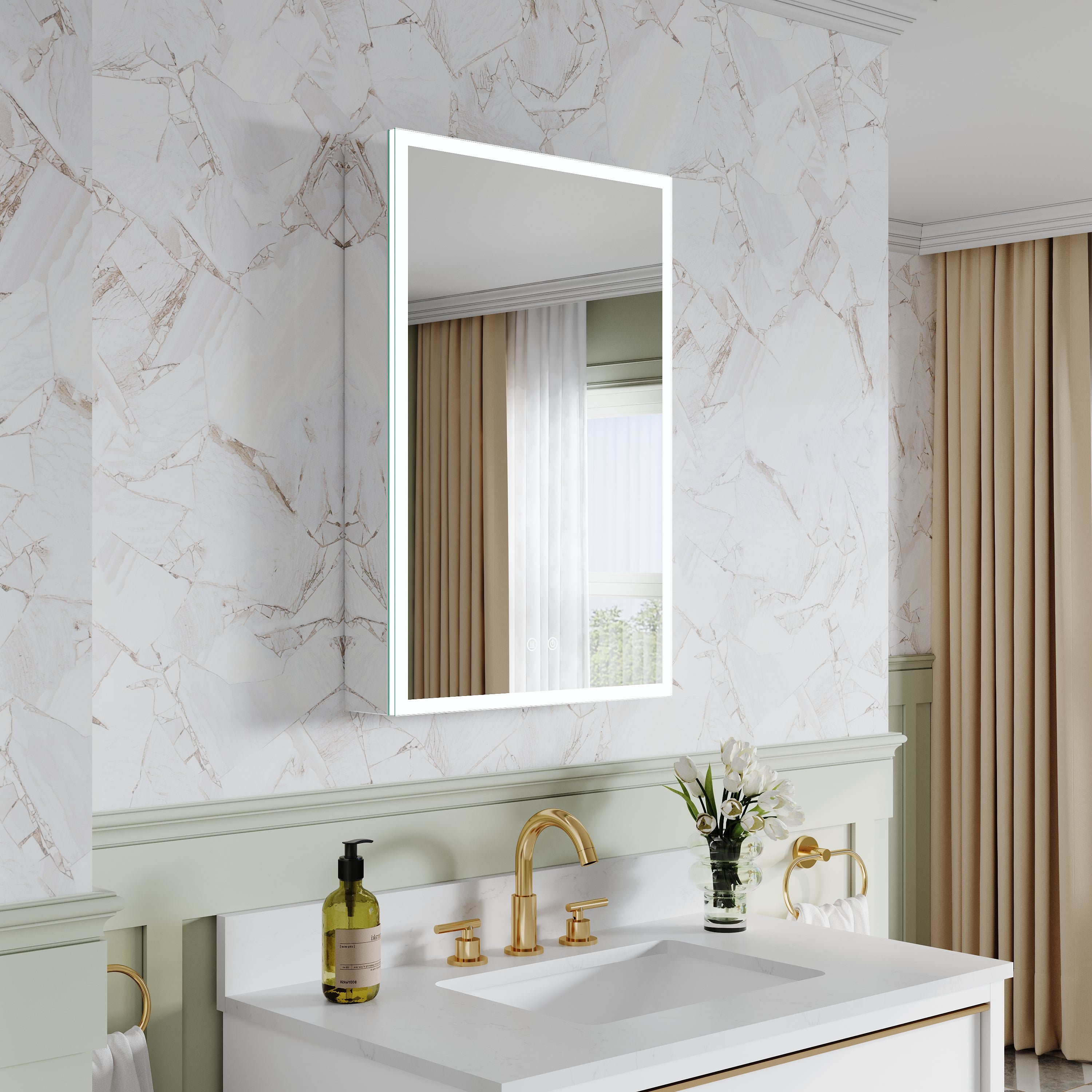
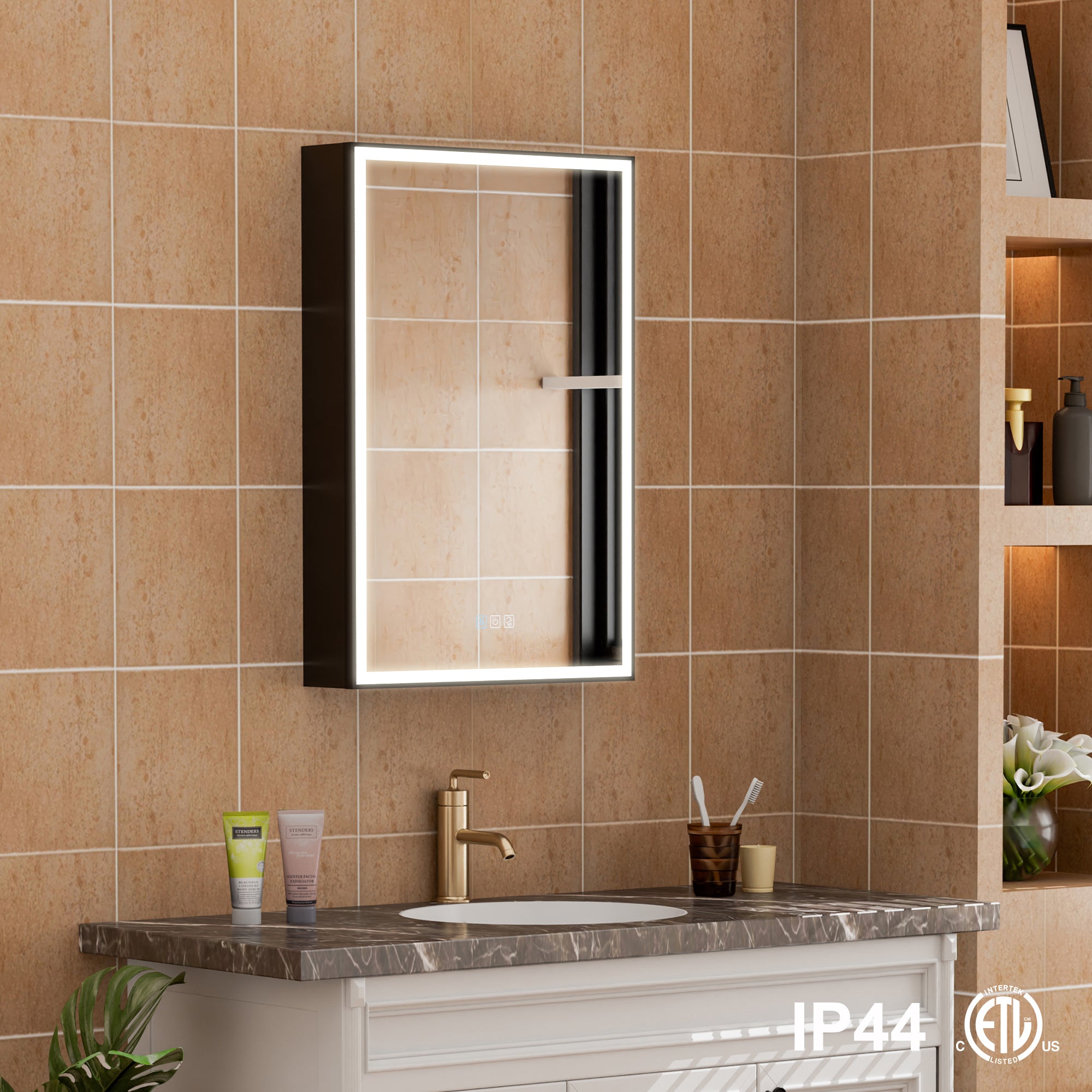










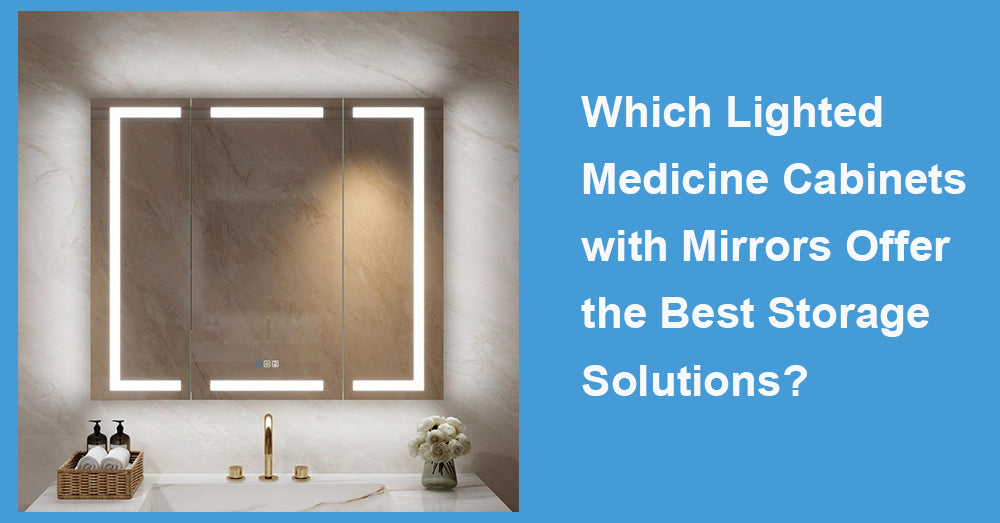
A bathroom can have a beautiful vanity, expensive fixtures, and carefully chosen tile, yet still feel untidy by the end of the week. The problem is often what happens around the sink. There are things people use every morning but don't necessarily want on display. Lighted medicine cabinets with mirrors address that awkward space between convenience and clutter. They put storage at eye level while providing light for grooming, although the arrangement behind the mirror has more influence on daily use than most product photographs suggest.
1. The Best Bathroom Storage Isn't Always the Biggest
Bathroom storage has an unusual problem: the smallest things are often the hardest to organize.
A spare towel can sit in a drawer for months without causing trouble. Contact lens supplies, face creams, razors, and toothbrush accessories are different. They need to be close enough to reach while standing at the sink, but leaving them on the countertop creates a collection of objects that has to be moved every time someone cleans.
A mirrored cabinet solves part of that problem by using wall space already occupied by a mirror.
But simply adding shelves isn't enough.
An interior filled with narrow compartments may look organized when empty. Once taller containers and awkwardly shaped grooming products arrive, some of those compartments become nearly useless.
Cabinets with removable or adjustable shelves give households more freedom to rearrange the space. It's a modest feature, but one that can matter more than having another few inches of cabinet width.
2. Which Lighted Medicine Cabinets with Mirrors Work Best for Different Bathrooms?
A medicine cabinet should be selected around the people using the room, rather than the number of features printed on its packaging.
Consider a bathroom shared by two adults. If both keep their everyday products behind the same mirrored door, mornings can become inconvenient. One person needs the mirror while the other is reaching across the sink to retrieve something.
A cabinet with several independently opening doors can make that routine less awkward.
In a guest bathroom, the priorities are different. Visitors usually need somewhere for a toothbrush, a few personal items, and perhaps a small toiletry bag. Large cabinets with elaborate lighting controls may add little practical value.
For a frequently used primary bathroom, however, integrated lighting and interior electrical outlets can be more worthwhile.
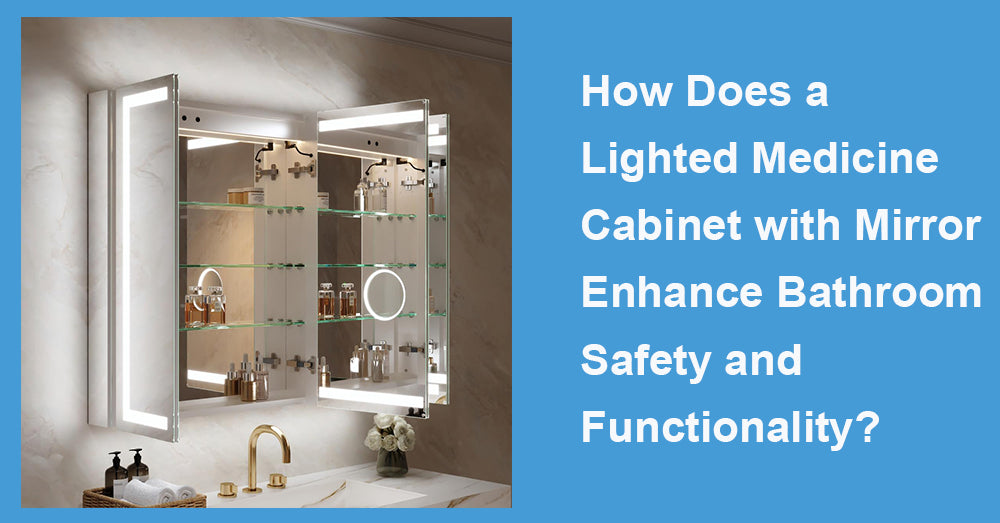
Wellfor offers illuminated medicine cabinets with different door arrangements, adjustable glass shelves, and lighting features on selected models. Some include internal outlets and illuminated compartments, which allow small rechargeable grooming tools to be stored away from the sink area.
Those extras are convenient, but they shouldn't distract from the cabinet's basic purpose. The shelves still need to accommodate the products being stored.
3. The Trouble With Perfectly Organized Bathroom Photos
Product photography has a way of making storage look effortless.
A few identical bottles sit neatly on glass shelves, the mirror is spotless, and there isn't a hair dryer or half-empty toothpaste tube in sight.
Real bathrooms aren't arranged that way.
One person may use three skincare products, while another has an electric shaver, contact lens solution, and several grooming accessories. The contents change, and the cabinet needs to accommodate that.
This is where adjustable shelving becomes useful. Fixed shelves can leave wasted space above short containers while preventing taller ones from standing upright.
An interior outlet may also be valuable, although its location matters. An outlet tucked behind a shelf or too close to a cabinet partition may be awkward to use with a bulky charging adapter.
It's worth looking for interior photographs showing the cabinet open, preferably with everyday bathroom products inside. A cabinet's external measurements rarely tell the whole story.
4. What Actually Makes a Medicine Cabinet Easier to Use?
Features often sound more impressive in a product description than they feel in an ordinary bathroom.
The differences are easier to see when considering specific routines.
|
Bathroom Situation |
Cabinet Detail That Helps |
What to Watch For |
|
Two people getting ready together |
Multiple independently opening doors |
Doors blocking access to the mirror |
|
Counter crowded with small appliances |
Interior electrical outlet |
Outlet location and electrical requirements |
|
Frequently changing toiletries |
Adjustable shelves |
Limited usable interior depth |
|
Bathroom with poor morning lighting |
Front-facing adjustable LEDs |
Excessive glare or uneven illumination |
|
Mirror covered with condensation |
Built-in defogging |
Heated area smaller than the mirror |
|
Narrow vanity against a sidewall |
Recessed or slim-profile cabinet |
Wall cavity and door clearance |
The most expensive configuration won't necessarily solve the most annoying problem. A cabinet with fewer electronic controls but better shelf access can be easier to live with.
5. Lighting Changes How the Storage Area Feels
Bathroom lighting is often treated as a decorative decision. It has a more practical effect around a medicine cabinet.
When the only light comes from the ceiling, shadows can fall across the face while someone stands at the sink. A mirror with front-facing LED illumination helps bring light closer to where grooming actually happens.
Backlighting serves a different purpose. It produces a softer glow around the mirror and can make a bathroom feel more relaxed in the evening, but it isn't always sufficient for precise grooming tasks.
Selected Wellfor LED medicine cabinets offer adjustable brightness and color temperature, giving users more control over the light at the mirror.
There is one detail worth considering before buying: the position of the light relative to the cabinet doors. With some designs, opening a mirrored door changes where the light falls or interrupts the illuminated surface.
A bathroom with good wall lighting may not need an elaborate illuminated cabinet. In a poorly lit room, however, the difference can be noticeable.

6. Installation Can Change the Budget
A recessed medicine cabinet might seem like a straightforward replacement for an old bathroom mirror. Then the mirror comes down, and the installer discovers a plumbing vent inside the wall. Suddenly, the cabinet can't go where it was supposed to.
This is fairly common in older bathrooms, where pipes and electrical wiring weren't arranged with recessed storage in mind. Wall studs can cause trouble, too. Cutting through one isn't an option without properly addressing the structural requirements, and moving plumbing can cost more than the cabinet itself.
For bathrooms with finished tile, a surface-mounted model often makes more sense. It sits against the wall rather than inside it, so there's less demolition involved. The trade-off is that the cabinet projects farther over the sink. That may be barely noticeable with a deep vanity, but less comfortable above a shallow countertop.
LED models bring electrical work into the picture. Some require hardwiring, and cabinets with integrated outlets may have specific circuit and installation requirements. Existing vanity lights don't necessarily mean there's a suitable connection available for the new cabinet.
Door clearance can also rule out an otherwise suitable model. A cabinet installed close to a sidewall may fit perfectly when closed, only for its mirrored door to hit the wall before opening fully.
For a bathroom renovation with exposed framing, these issues can be addressed before the walls are finished. When replacing a mirror in an otherwise completed bathroom, the existing wall conditions may have more influence on the choice than the cabinet's appearance.




































Leave a comment
This site is protected by hCaptcha and the hCaptcha Privacy Policy and Terms of Service apply.