






















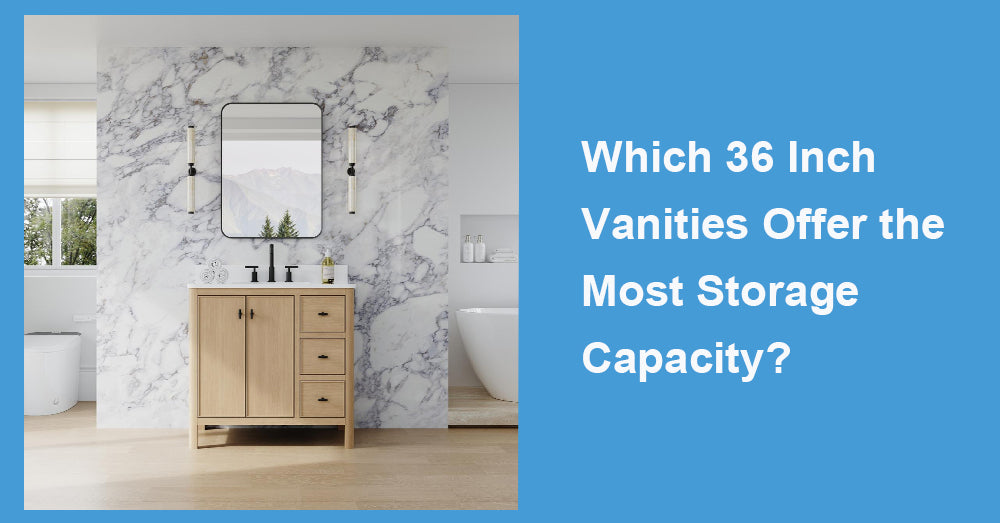
36 inch vanities are popular because they fit comfortably into many guest baths and medium-sized bathrooms without giving up too much storage. After more than 20 years of working with bathroom cabinetry, I have learned that storage capacity depends far more on the interior layout than on the cabinet width printed on the specification sheet. Two vanities with identical dimensions can perform very differently. Drawer depth, plumbing clearance, sink size, shelf placement, and cabinet construction all determine how much space you can actually use.
1. The Best 36 Inch Vanities Use Space Around the Sink Efficiently
The sink is usually the biggest obstacle inside a bathroom vanity.
A large basin and centrally positioned plumbing can consume much of the upper cabinet. That is why some 36-inch models look spacious from the outside but offer surprisingly little usable storage.
When storage is the priority, I usually look for a moderately sized undermount or integrated sink combined with drawers designed around the plumbing.
This leaves room for smaller daily products without sacrificing comfortable washing space.
An oversized decorative sink may look impressive, but in a 36-inch cabinet, every extra inch devoted to the basin has consequences below the countertop.
2. Drawer-Based Designs Often Provide Better Organization
Deep drawers are one of the most effective ways to increase usable storage in a compact vanity.
Unlike a large open cabinet, drawers bring the contents forward. Skincare products, brushes, cosmetics, razors, and grooming tools remain visible instead of disappearing into the back.
U-Shaped Drawers Can Recover Lost Space
Well-designed U-shaped drawers wrap around the drain and supply lines.
They do not provide the same capacity as a completely uninterrupted drawer, but they make use of space that would otherwise be wasted.
This is especially useful in a bathroom used every day.
One thing I always recommend checking is whether the visible drawer fronts are functional. Some vanities use false fronts directly below the sink because the basin occupies the space behind them.
Never judge storage from the exterior alone.
3. Door Cabinets Still Have an Important Advantage
Drawers are excellent for small items, but they are not ideal for everything.
A traditional cabinet beneath the sink offers more vertical space for tall cleaning bottles, spare toilet paper, hair appliances, or bulky packages.
For that reason, some of the most practical 36-inch vanities combine drawers on one side with a door cabinet on the other.
This mixed layout works particularly well in a guest bath or family bathroom because it accommodates different types of products.
The drawback is organization. Without shelves, small items can pile up inside a deep cabinet. An adjustable shelf or removable organizer can make a major difference.
4. Cabinet Depth Affects Storage as Much as Width
Homeowners tend to focus on the 36-inch width, but depth has a substantial effect on capacity.
A standard-depth vanity usually provides more usable drawer and cabinet space than a slim model designed for narrow bathrooms.
That does not mean deeper is always better.
If the vanity projects too far into the walking path, the extra storage becomes a poor trade. In a narrow bathroom, a slightly shallower cabinet that allows comfortable circulation is often the smarter choice.
Use painter's tape to mark the full footprint before purchasing.
5. Freestanding Designs Usually Maximize Capacity
If storage is your first priority, a freestanding vanity often offers more room than a floating model of the same width.
Because the cabinet can extend closer to the floor, designers have more vertical space for deeper drawers or larger compartments.
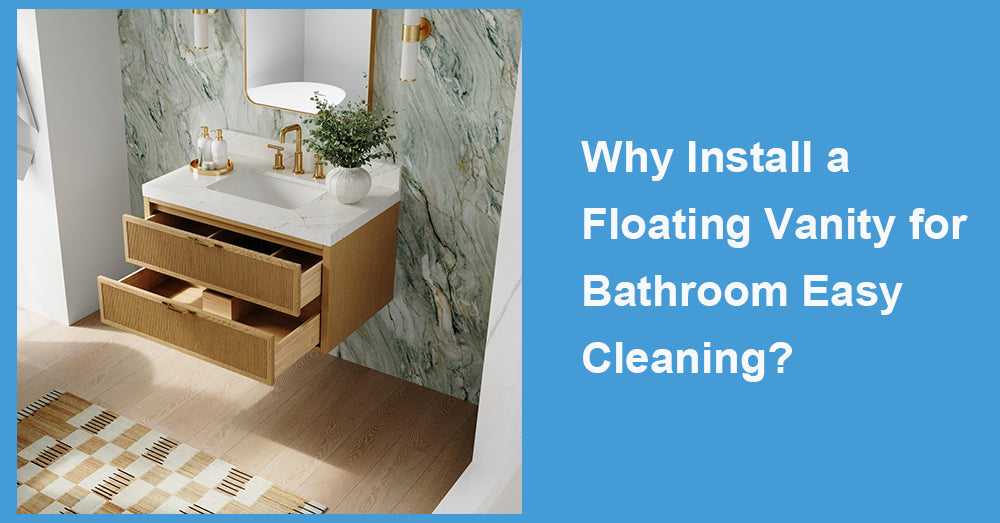
Floating vanities deliberately leave open space beneath the cabinet. This makes the bathroom feel lighter and simplifies floor cleaning, but that visual benefit usually comes at the cost of storage volume.
Floating Vanities Can Still Be Efficient
A floating design with two deep drawers may be more useful than a poorly organized freestanding cabinet.
The question is not simply how many cubic inches the vanity contains. It is how easily those inches can be used.
For a lightly used guest bath, the floating option may provide more than enough capacity while improving the room visually.
6. Pay Attention to Plumbing Before Buying
Plumbing layout can quietly eliminate a large portion of a vanity's storage.
Measure the drain and hot and cold supply-line positions, then compare them with the cabinet's interior diagram.
If the drain runs through a drawer bank, the installer may have to cut into the drawer or relocate the plumbing.
Both solutions can add cost.
In replacement projects, a cabinet with an open central plumbing area is often easier to install. During a full renovation, plumbing can be positioned to suit a more storage-efficient drawer layout.
Planning this early is much easier than modifying a new cabinet after delivery.
7. Storage Quality Matters More Than Storage Quantity
A cabinet filled with awkward compartments is not necessarily useful.
Full-extension drawer slides allow access to items at the back. Adjustable shelves accommodate bottles of different heights. Soft-close hardware can improve the daily experience, particularly in family bathrooms.
Look at drawer box depth as well.
Some vanities have attractive, tall drawer fronts hiding shallow interior boxes. Others use thicker framing that reduces internal width.
Interior dimensions are more meaningful than exterior appearance when storage matters.
8. Consider What You Actually Need to Store
A guest bathroom may need towels, paper products, cleaning supplies, and a small collection of toiletries.
A primary bathroom has very different demands.
Hair dryers, brushes, skincare, makeup, electric grooming tools, backup products, and medications can quickly fill a 36-inch cabinet.
Make a rough list before shopping.
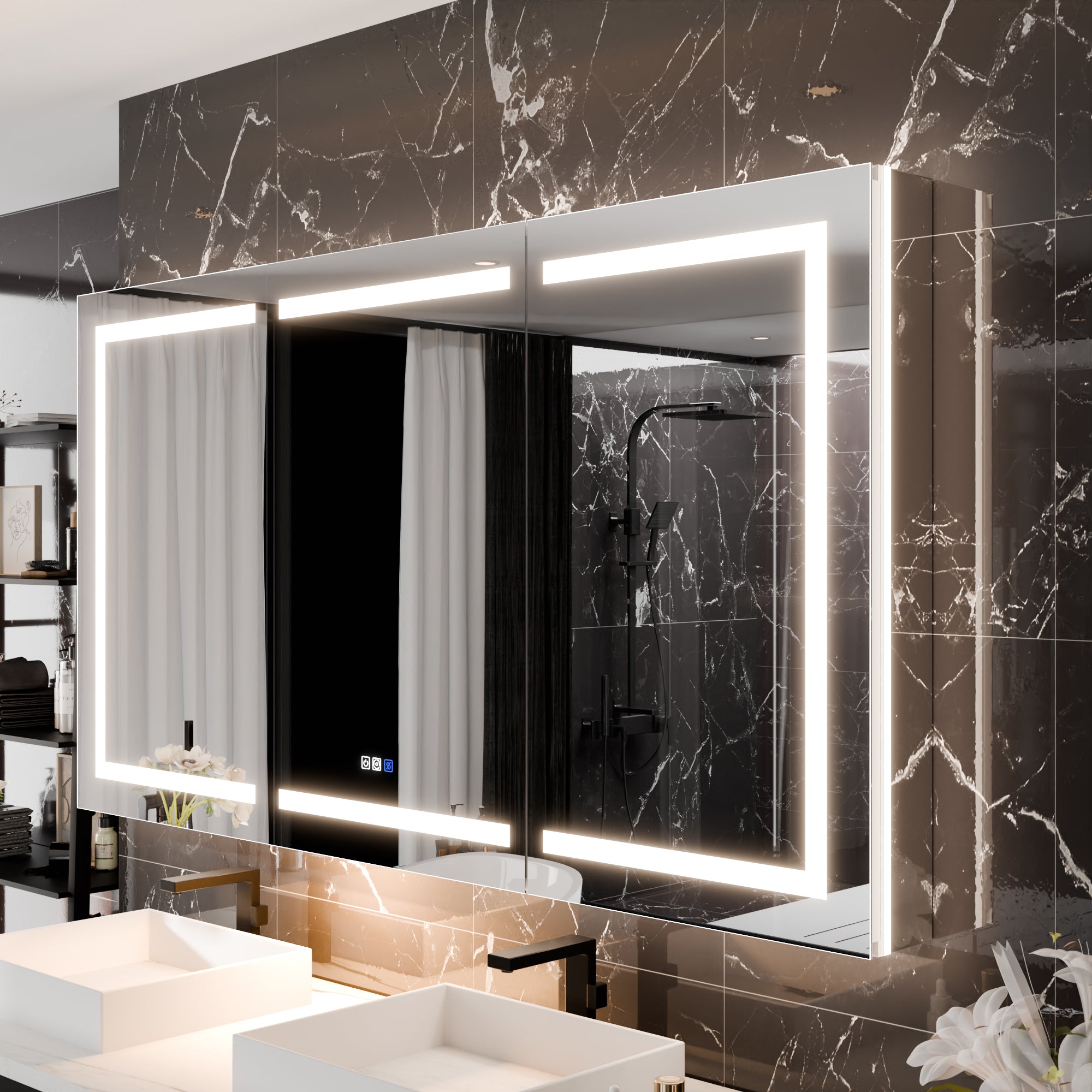
If your list is extensive, even the best 36-inch vanity may not be enough. A 42- or 48-inch model, wall cabinet, or medicine cabinet may provide better long-term storage than forcing everything into one small base.

9. Installation and Maintenance Protect Usable Space
Install the vanity level so drawers operate smoothly and door gaps remain consistent.
Keep plumbing cutouts neat and avoid removing more material than necessary. Leave shutoff valves accessible rather than burying them behind storage bins.
After installation, check beneath the sink periodically for slow leaks. Water damage can ruin cabinet floors and drawer boxes long before the problem becomes visible from the outside.
Use a mild, non-abrasive cleaner and wipe standing water promptly.
When comparing Wellfor options, focus on functional drawers, shelf placement, sink size, plumbing clearance, and interior dimensions rather than simply counting doors and drawer fronts. The most useful 36 inch vanities are the ones that turn limited cabinet volume into storage you can reach easily, while still leaving the bathroom comfortable to move through and simple to maintain.








































Leave a comment
This site is protected by hCaptcha and the hCaptcha Privacy Policy and Terms of Service apply.