




















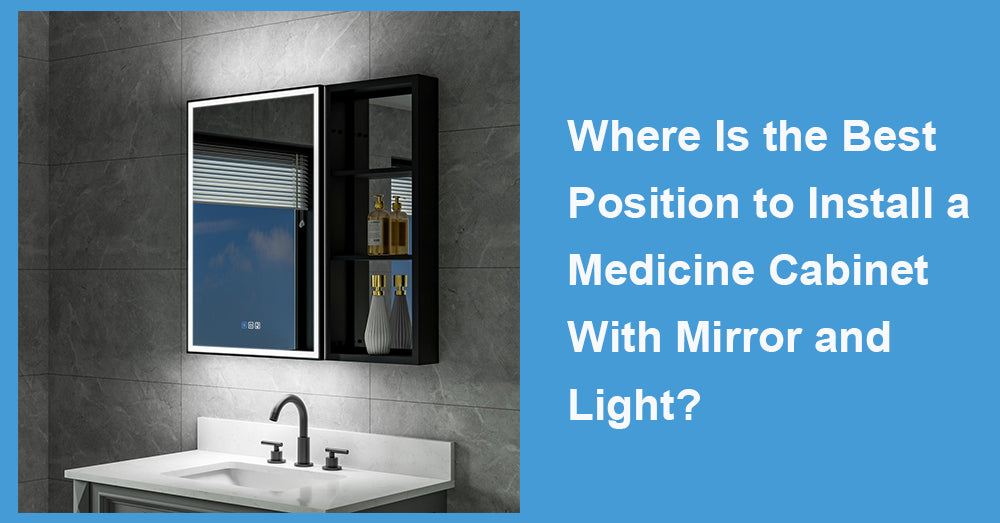
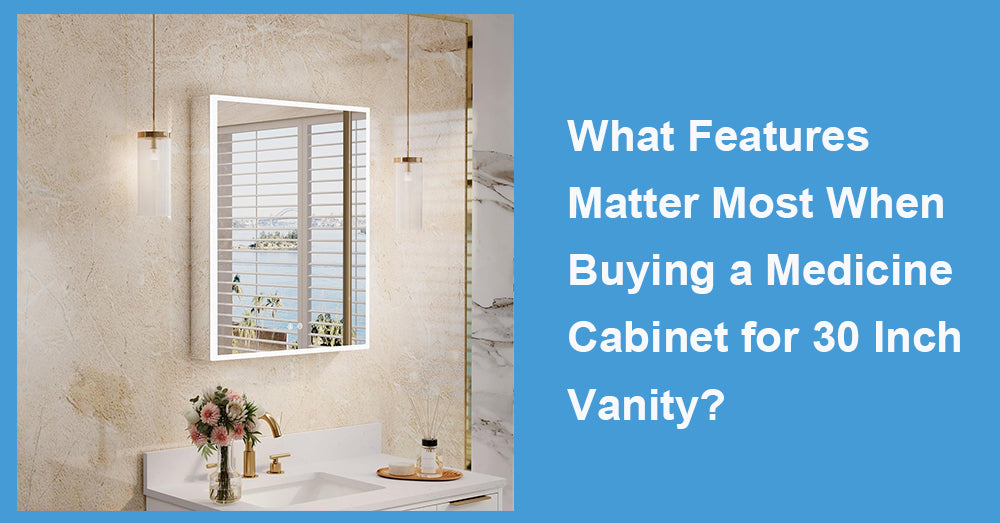
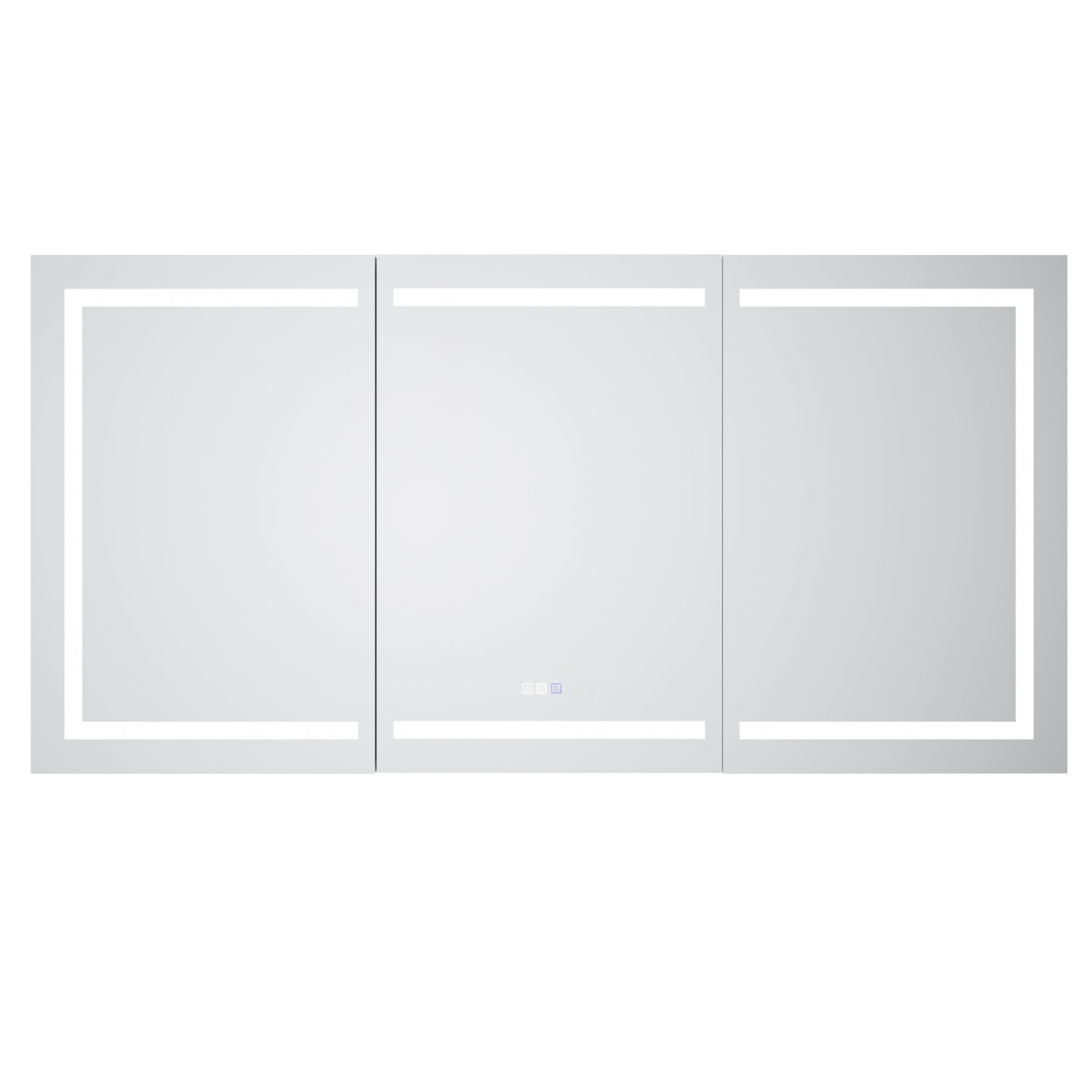
With the increasing trend of integrated bathroom functions, the medicine cabinet with mirror and light is gradually becoming the core configuration in modern bathrooms. It not only serves as a mirror but also integrates storage and lighting systems. The installation location is directly responsible for the daily user experience, safety, and the overall visual order of the space.
In practical projects, many problems do not come from the product itself but from improper selection of installation location: high mirrors cause lighting failure, low cabinets interfere with faucet operation, or unreasonable lighting positions cause facial shadows. Industry practice has shown that scientific location planning is often more critical than simply pursuing high configuration.
1. The core logic of installation height: based on the "natural line of sight area"
From an ergonomic perspective, installing a medicine cabinet should prioritize aligning with the natural line-of-sight height of most adults when standing. Based on a large number of design and construction cases, a distance of approximately 48-50 inches from the ground at the bottom of the mirror cabinet is considered ideal.
Within this height range, users can fully see the facial area without looking up or down, and the storage layer inside the cabinet is also at an easily accessible height. This is particularly important for integrated mirror cabinets with lighting, as the effective illumination range of the light is usually concentrated in front of the mirror and slightly below its center.
If the overall position of the mirror cabinet is too high, the light is likely to concentrate on the forehead or head area, and instead create shadows around the eyes and jaw; if installed too low, it may compress the operating space above the washbasin, affecting the convenience of using and cleaning the faucet.
2. Relative position to the washbasin: center alignment is the most secure solution
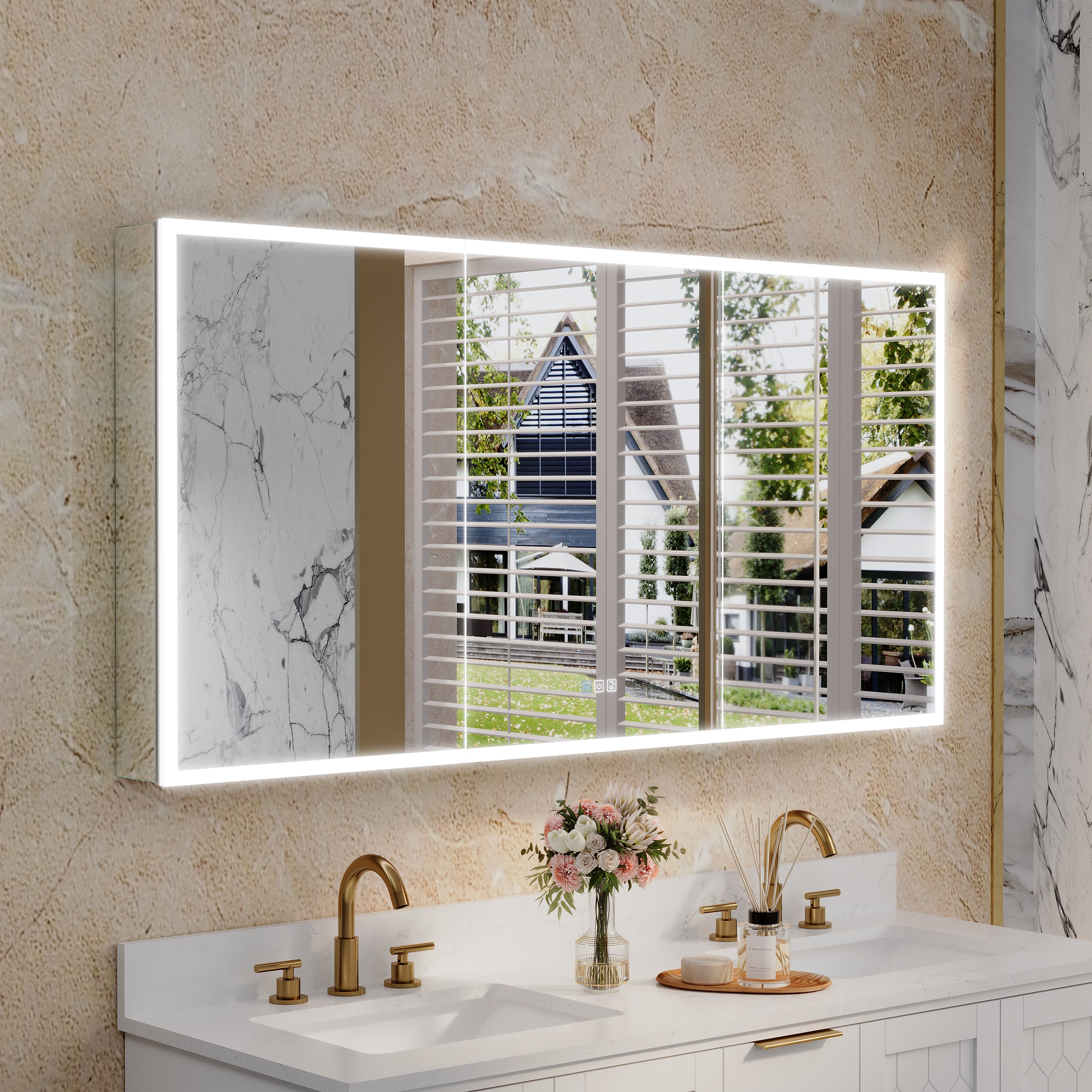
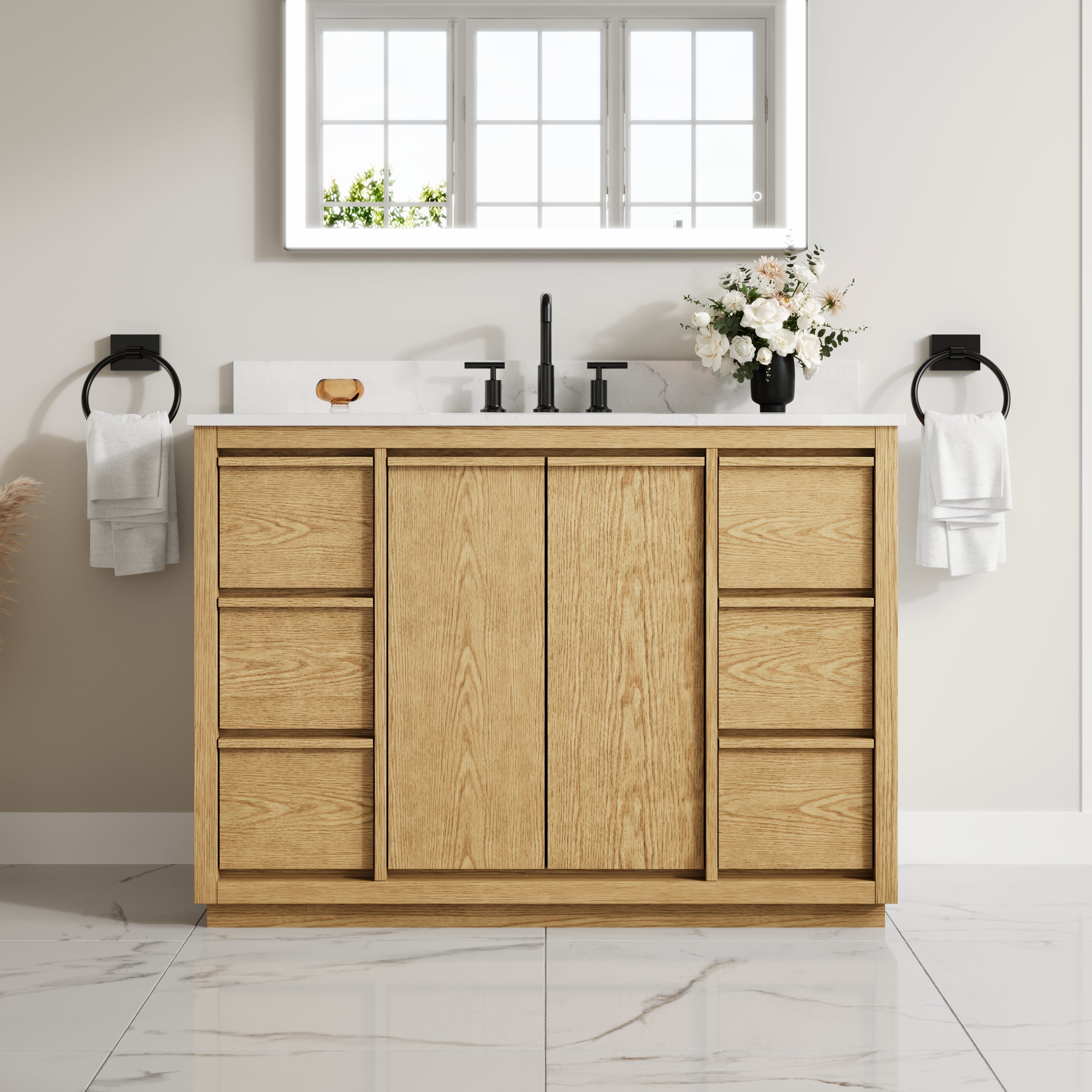
In most bathroom layouts, a medicine cabinet with a mirror and light is usually installed directly above the washbasin. Industry-wide recommendations:
The mirror cabinet should be aligned with the washbasin's centerline horizontally, ensuring visual balance and accurately illuminating the user's face.
From a functional perspective, the washbasin is a high-frequency use area where activities such as brushing teeth, washing the face, skincare, and shaving are concentrated. Aligning the mirror cabinet with the center of the washbasin can avoid problems such as uneven lighting, limited viewing angle, or unnatural body posture caused by positional deviation.
In practice, it is usually recommended to:
At least 6-8 inches of vertical clearance should be maintained between the bottom of the mirror cabinet and the countertop of the washbasin, while ensuring a safety margin of about 3 inches between the top of the faucet and the lamp body to prevent the cabinet door from opening or interference between the lamp body and the faucet.
3. Location strategy under dual washbasin layout
In the design of dual washbasins or longer dressing tables, the installation method of medicine cabinets often changes. There are two more common practices in the industry:
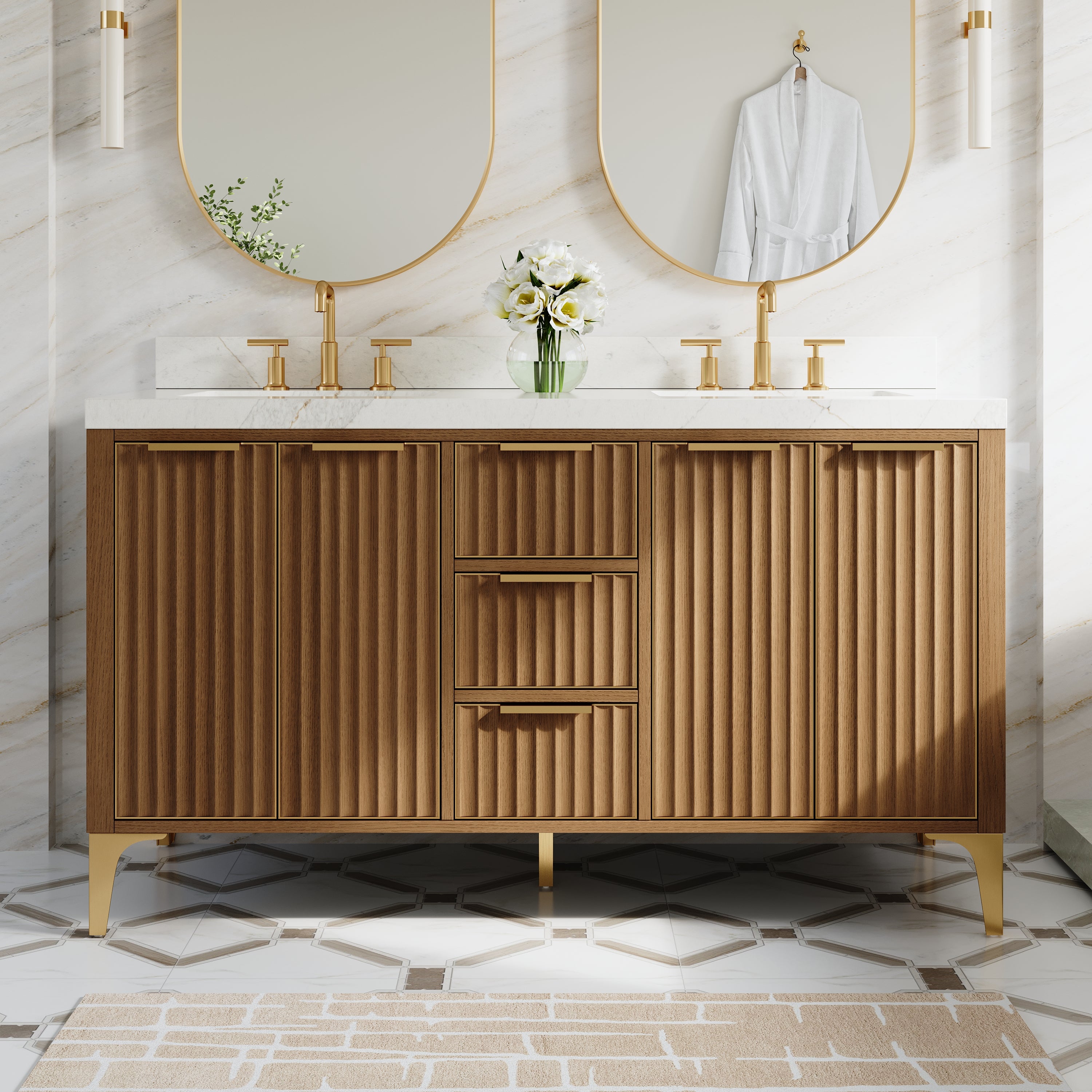
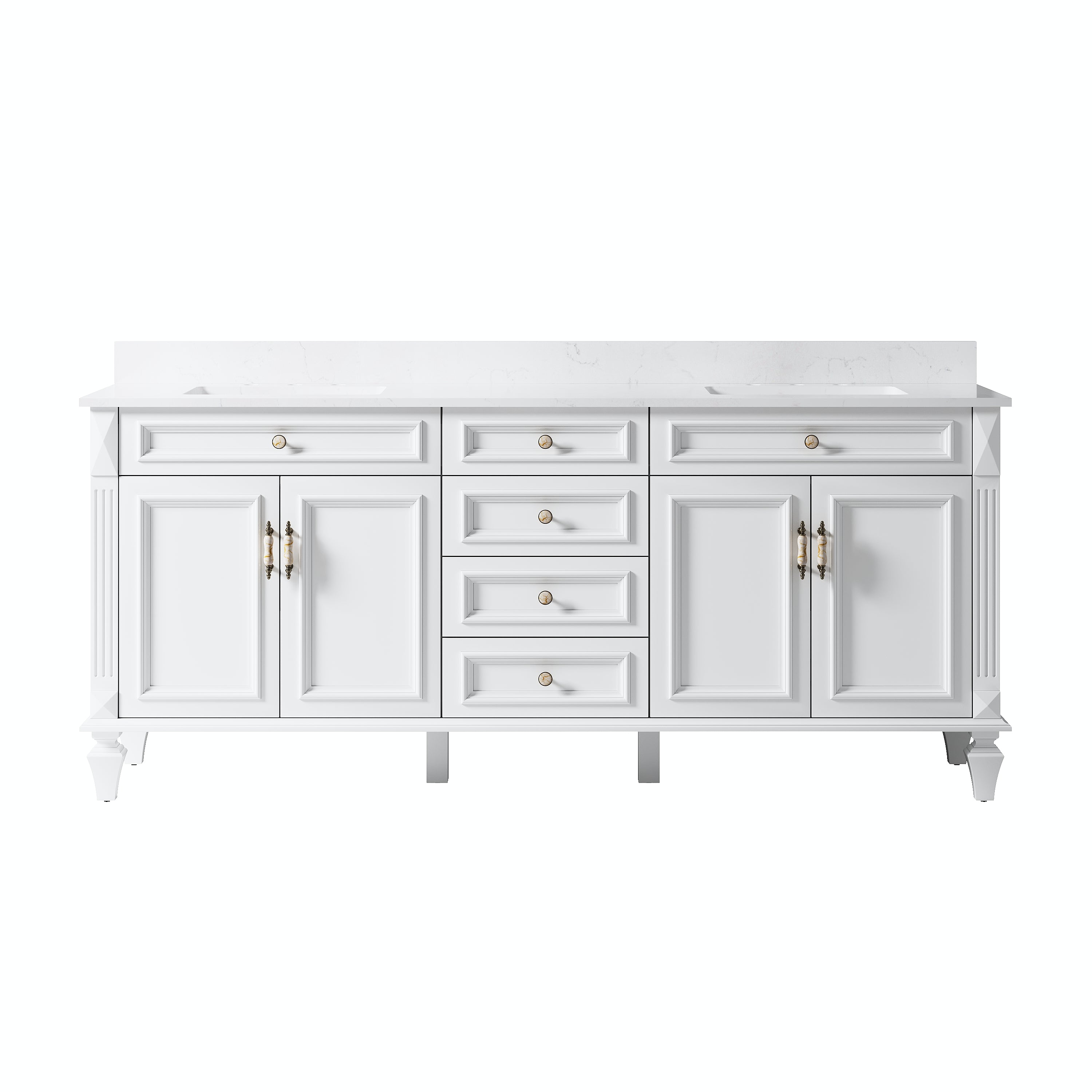
The first method is to install a separate mirror cabinet for each washbasin and maintain a symmetrical layout in the horizontal direction. This approach allows each user to have independent lighting and storage space, resulting in a more balanced user experience and better alignment with the design logic of high-end bathrooms.
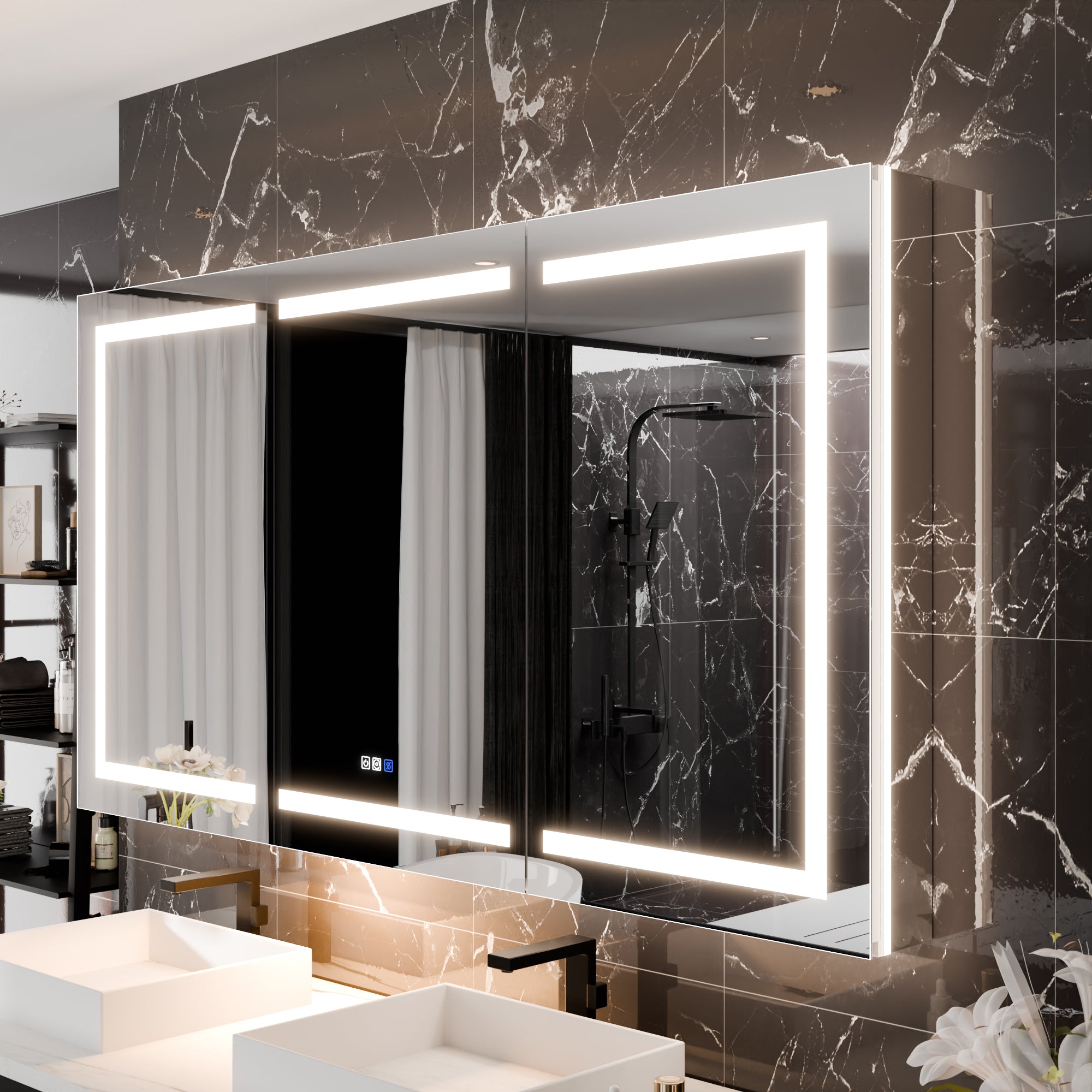
The second method is to use an integrated wide mirror cabinet to cover the entire washbasin area. This scheme is visually more complete, but attention needs to be paid to whether the lighting distribution is uniform and whether the overall height of the mirror cabinet still meets the user's line of sight.
Regardless of the method used, it is still recommended to set the bottom of the mirror cabinet at around 48-50 inches to avoid neglecting ergonomic principles due to changes in cabinet size.
4. The influence of lighting type on installation location
One significant advantage of a medicine cabinet with a mirror and light is the integrated design of the lighting and mirror. Different lighting structures have varying sensitivities to installation locations.
For integrated LED light strip mirror cabinets, the light is usually located at the edge of the mirror or in the illuminated area on the back, and its optimal effect depends on whether the mirror cabinet is facing the user. Therefore, this type of product emphasizes the precision of installation height, and once the position deviates, the lighting effect will significantly decrease.
If the mirror cabinet itself does not have lighting and is supplemented by external lighting fixtures, the fixtures are usually installed about 75-80 inches above the mirror cabinet. At this point, the height of the mirror cabinet should still prioritize visual comfort, rather than simply accommodating the position of the lighting fixtures.
5. The influence of embedded and wall-mounted installation on location selection
From the perspective of installation structure, medical cabinets are mainly divided into two categories: embedded and wall-mounted.
The embedded mirror cabinet is set into the wall, with a flatter appearance that visually resembles traditional mirrors. This installation method requires more rigorous positioning planning. Once the opening is completed, the adjustment space is limited in the later stage, so the height and centerline need to be accurately determined in the early design stage.
Wall-mounted mirror cabinets are flexible to install and require minimal wall modifications, making them suitable for renovation projects. In this case, although the adjustment is relatively convenient, the same height and alignment principles should still be followed to avoid sacrificing long-term user experience for "convenient installation."
6. Comprehensive recommendations from an industry perspective
In terms of comprehensive functionality, safety, and design aesthetics, the following consensus has been widely formed in industry practice:
The bottom of the mirror cabinet is about 48-50 inches above the ground, which can meet the visual and operational needs of most users.
Aligning horizontally with the center of the washbasin helps achieve even lighting and visual balance.
Maintain a reasonable distance between the countertop and the faucet to avoid conflicts during daily use.
The installation of mirror cabinets with lights should prioritize serving the "light shining on the face" rather than focusing solely on the appearance ratio.
In double washbasins or large-sized countertops, priority should be given to symmetrical or partitioned installation logic.

7. Conclusion
A medicine cabinet with a mirror and light is not just a simple storage or lighting component, but one of the most frequently used functional nodes in the bathroom. A well-placed installation not only enhances daily comfort but also significantly improves the overall texture and professionalism of the toilet.
From an industry perspective, future bathroom design will pay more attention to the collaborative relationship between "people light space", and the installation position of the mirror cabinet is the most fundamental and easily overlooked key detail in this cooperative relationship.





























Leave a comment
This site is protected by hCaptcha and the hCaptcha Privacy Policy and Terms of Service apply.