






















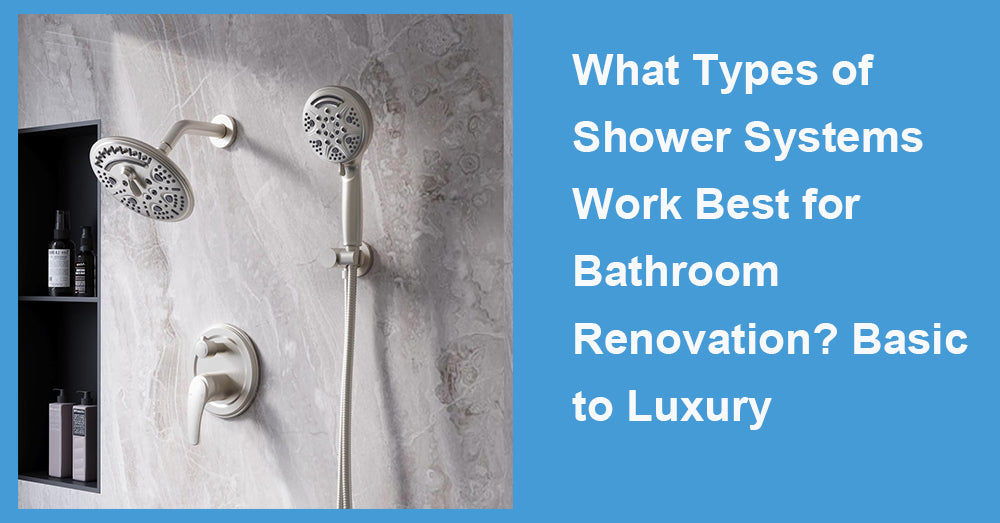
1. Basic Shower System: Practical functionality, suitable for small spaces
For most American households, the basic Shower System is the most common and cost-effective choice. It usually includes a fixed showerhead, a handheld sprayer, and a mixer valve.
Advantages:
Easy installation
Basic systems are primarily designed with exposed surfaces, suitable for bathrooms or old house renovations that have already completed wall construction. The installation process is straightforward and typically does not require any modifications to the pipeline. The general installation height is approximately 80 inches above the ground, allowing for user comfort of varying heights.
Low maintenance cost
Fewer components and easy maintenance.
Save space
For small bathrooms with an area of 40-50 square feet (sq ft) or less, an exposed shower system is the best choice as it does not compress the shower area space.
Shortcoming:
The water pressure regulation is limited, the temperature changes are not precise enough, and the spraying method is single. More suitable for budget-limited or rental apartment decoration projects.
2. Mid-range upgraded Shower System: Balancing Beauty and Experience
For users who pursue a more comfortable experience, the mid-range Shower System is an ideal choice for bathroom upgrades. It usually features a thermostatic valve, multiple outlet modes, and a more refined exterior design.
Core features:
Constant temperature control system
Automatically adjust the ratio of hot and cold water to maintain a constant outlet temperature (temperature difference controlled within ± 1 ° F). Even if other faucets in the home are turned on simultaneously, there will be no sudden changes in temperature.
Multi-functional water outlet mode
The mid-range system typically offers various spraying methods, including rain shower, massage, and atomization, which can be easily switched with a single click through a knob or button.
Hidden pipeline design
The pipeline is embedded in the wall, making the appearance simpler and cleaner. Especially suitable for modern minimalist or Nordic-style decorations. The recommended shower head size is 8-10 inches in diameter, which can cover the entire body without taking up too much space.
Upgrading water-saving technology
Most mid-range products utilize Air Injection technology to maintain high water pressure while conserving water. For example, the Grohe Euphoria series features a low flow design of 1.75 GPM (gallons per minute), which is both energy-efficient and comfortable.
Applicable population:
Family users with a moderate budget (around $300-$800) who seek a balance between quality and experience.
3. High-end intelligent Shower System: A combination of technology and luxury
With the popularization of smart home concepts, high-end intelligent Shower Systems are gradually becoming a standard configuration for high-end residences and luxury apartments.
This type of system integrates intelligent control, energy-saving design, and immersive experience, truly turning bathing into a "technology SPA".
Main highlights:
Digital Temperature Control System
Users can accurately set the temperature (such as 102°F) and control the water flow rate and outlet point through the touchscreen or mobile app. Some high-end systems even support voice control via Alexa or Google Home.
Multi-outlet design
It features a large rain shower head (12-16 inches) at the top, body jets, a handheld showerhead, and a water outlet faucet, which can create a full-body surround water effect.
Energy-saving intelligent sensing
The infrared sensing system can automatically turn on when the user enters and stop when they leave, preventing water waste.
Lighting and Sound System
Some high-end brands, such as Kohler Konnect series, combine LED ambient lights, Bluetooth speakers, and atomized water technology to make every shower a relaxing experience.
Installation suggestion:
Intelligent systems typically require reserved power and control modules inside the wall; therefore, it is recommended to plan for this during the early stages of decoration. The installation height should match the space, and it is recommended that the shower area be at least 60-70 square feet.

4. Choose the appropriate Shower System based on the size of the bathroom
Bathroom area (sq ft), recommended types, installation suggestions, advantages:
A ≤ 50 sq ft: Basic Shower System, exposed installation, saves space, is economical, and practical
50-80 sq ft: Thermostatic control mid-range system with hidden pipeline design, beautiful and comfortable, precise temperature control
≥ 80 sq ft: Intelligent multi-outlet system with embedded installation for luxurious experience and diverse functions
Examples:
For small-sized apartments (40 sq ft bathroom), it is recommended to use a 36 x 36 inch shower area with a dual-mode showerhead system.
The independent villa master bathroom (over 100 sq ft) features a 60-inch broad rain shower head, combined with a thermostatic valve, to create a comfortable experience with full-body coverage.
5. Key parameters to pay attention to when choosing a Shower System
Water Pressure Compatibility
The average water pressure for residential properties in the United States ranges from 40 to 60 psi, and the minimum working water pressure requirement should be confirmed before selecting a product.
Flow rate
Choose products that meet EPA WaterSense (1.8 GPM) standards, which are both environmentally friendly and water-saving.
Material and Durability
The main body is preferably made of brass or stainless steel material, with a chrome plating or wire drawing treatment on the surface, which effectively prevents corrosion and oxidation.
Warranty and Maintenance
Choose branded products that offer at least a 5-year warranty and have strong universality of accessories for easy maintenance and future upgrades.
6. Industry Trend: Parallel Integration of Intelligence and Sustainability
The future Shower System will incorporate more AI technology and sustainable design concepts:
Personalized temperature memory: The system can automatically recognize the user and retrieve their commonly used settings.
Energy-saving recycling system: Some new products can recover waste heat, reducing energy consumption.
Modular design: Supports the expansion of functional modules, such as adding music, fragrance, or atomizing nozzles.
According to Statista (source: Statista.com), the global market size of innovative shower systems is expected to exceed $5 billion by 2030, with energy conservation and intelligent control becoming mainstream development directions.
7. Summary: The most suitable is the best
From basic to luxurious, each level of the Shower System corresponds to different lifestyles and budget requirements.
For ordinary households, practicality and water conservation are the primary focus. For users who seek a better quality of life, a constant temperature and multiple water outlets can provide a more comfortable experience. In high-end residential areas, intelligent control and customized design are emerging as new trends.
Conclusion:
The Shower System that best suits your space and needs is the best choice. A high-quality shower system not only enhances the bathroom's aesthetics but also plays a crucial role in improving quality of life, making every shower a moment of relaxation and enjoyment.








































Leave a comment
This site is protected by hCaptcha and the hCaptcha Privacy Policy and Terms of Service apply.