






















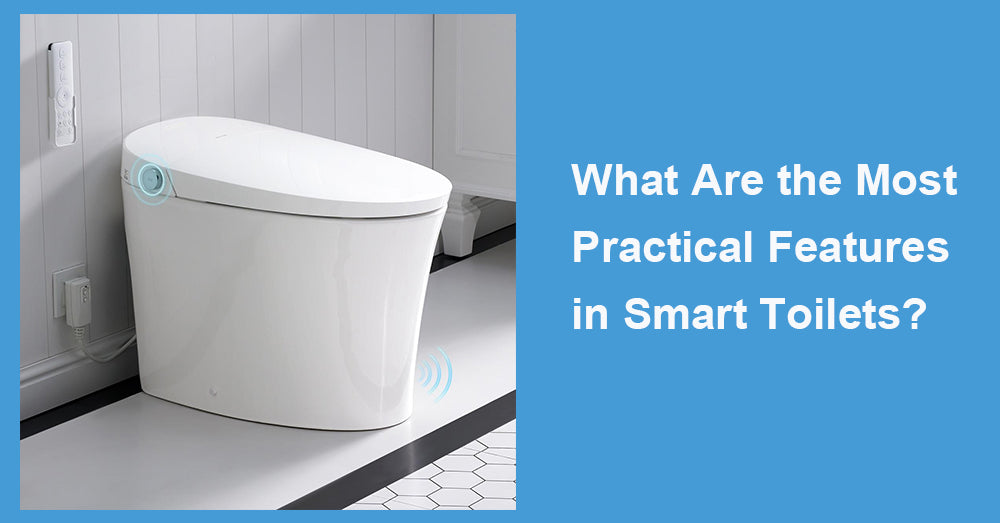
The wave of smart homes has already entered the kitchen and living room, and now it has quietly changed our bathroom. Smart Toilets are no longer just a luxury item in high-end hotels or model rooms, but a practical choice that more and more families are considering when decorating.
Its advantage lies not only in its technological capabilities but also in making life more comfortable, hygienic, and energy-efficient. Which features are convenient and worth investing in? Let's take a look at each one below.
1.Why are smart toilets becoming increasingly popular
Market data indicates that the global smart toilet market is expected to reach approximately $9.5 billion in 2023 and grow to over $20 billion by 2030. This suggests that people's emphasis on home hygiene, energy conservation, and comfort is constantly increasing.
More and more consumers are discovering that upgrading the bathroom not only enhances the living experience, but also makes the home more upscale. And smart toilets precisely meet these needs.
2.The five most practical functions
1. Automatic flushing and sensing cover plate
This is the most basic and practical function.
Benefits: No need to touch the flush button with your hands —more hygienic; some models also automatically lift and lower the lid, freeing your hands completely.
Suitable for: Families with elderly people, children, or those with high cleanliness requirements.
Reminder: During installation, confirm the sensing distance and whether there is a power interface to avoid frequent flushing due to accidental contact.
In addition, some high-end models can automatically recognize usage frequency and time, intelligently adjusting water volume to achieve more energy-efficient water use.
2. Heating seat cushion, cleaning and drying
The most popular "comfortable three piece set" for smart toilets.
Sitting up in winter is much warmer;
Washing instead of paper towels is cleaner and more environmentally friendly;
The drying function can reduce the use of tissues.
A survey shows that over 70% of users consider heating and rinsing functions to be their favorite parts.
The only thing to note is that this type of function will consume slightly more power and requires socket support during installation.
Some high-end models also have "personalized memory", which can save preference settings for spray water temperature and intensity for different family members, allowing everyone to have the most comfortable experience.

3. Water saving design (dual flushing/low water consumption)
Water conservation is one of the increasingly essential functions in modern households.
Most smart toilets adopt a "dual flush design", using different amounts of water for defecation and urination, which can save an average of 20% -30% of water consumption.
Many products have earned WaterSense water-saving certification, with flushing volumes as low as 1 gallon per flush.
In the long run, this not only significantly reduces water bills, but also aligns with the concept of sustainable living.
Some products can also automatically adjust the flushing intensity based on water pressure, maintaining cleanliness while saving water.
4. Self cleaning, deodorizing, and antibacterial
This type of feature can eliminate the annoyance of frequent cleaning.
The self-cleaning nozzle will automatically rinse after each use to maintain hygiene;
Antibacterial glaze and "pre spray wetting" function can reduce dirt adhesion;
The automatic deodorization system can neutralize odors and keep the bathroom air fresh.
Although seemingly minor details, these designs can significantly reduce the frequency of cleaning.
Some new models even use ultraviolet sterilization or electrolytic water deodorization technology to improve hygiene levels further and make maintenance easier.
5. Intelligent control and health monitoring (new trend)
With the popularity of smart homes, smart toilets have become smarter too.
High-end models support app or remote control, allowing adjustment of parameters such as spray water temperature, pressure, and seat cushion temperature.
Some products can also be connected to systems such as Alexa and Google Home for voice control.
Some brands are even developing health monitoring functions to help users understand their physical condition by analyzing defecation data. Although it is still in the experimental stage, it is expected to become a part of family health management in the future.
The future smart toilet is not just "automated", but more likely to become a "health assistant", providing personalized life advice for users.
3. Selection and installation suggestions
Confirm the power and waterway conditions
Smart toilets require a power supply (usually 120V) and stable water pressure, so it is best to plan when renovating old houses. Small bathrooms should reserve socket positions in advance and ensure they are waterproof.
Select functions according to requirements
Want to be more comfortable → Choose heating+cleaning+drying;
Want to save water → choose double flushing or low water consumption;
Want peace of mind → Choose from cleaning+deodorizing.
It is recommended to prioritize basic practical functions to avoid piling up too many unused configurations.
Reasonable budget
Mid range products (around $400 to $800) are already sufficient for daily use, while high-end models (over $2000) often come with intelligent controls and health monitoring. The key is to choose the 'usable' rather than the 'most expensive'.
Pay attention to brand and after-sales service
Choosing a brand with comprehensive after-sales service and easy part replacement is more reliable. Regularly cleaning the nozzle and filter after installation can extend their service life and maintain stable performance.
Conclusion
Smart toilets have evolved from "novel technology" to "practical household appliances".
Whether it's the warm winter cushions, the convenience of automatic flushing, or the peace of mind brought by self-cleaning and water-saving design, it is gradually changing our way of life.
If you are considering upgrading your bathroom, you may want to start with a smart toilet.
Choosing a truly "user-friendly, clean, and worry free" smart toilet may be the most valuable investment in your home decoration this year.









































Leave a comment
This site is protected by hCaptcha and the hCaptcha Privacy Policy and Terms of Service apply.