






















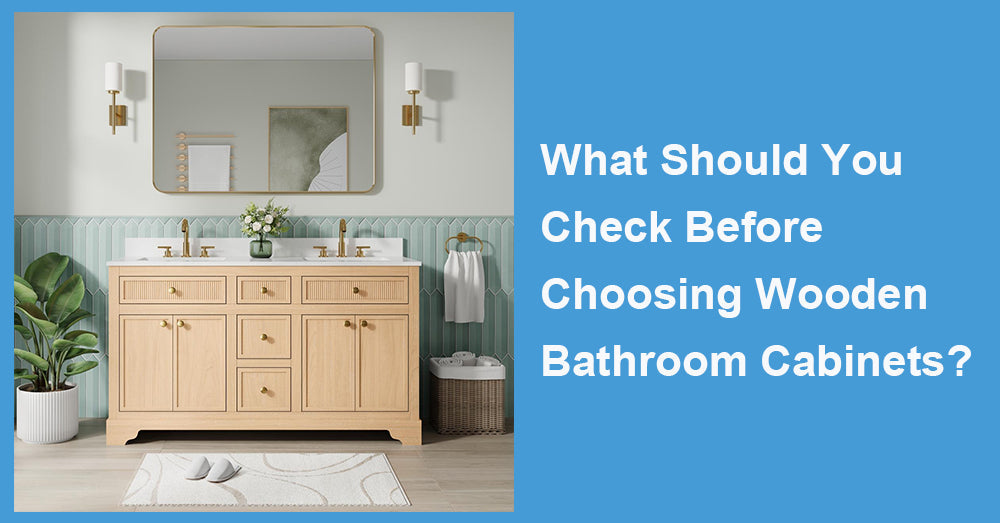
Wooden bathroom cabinets can add warmth, storage, and lasting character, but appearance should never be the only buying criterion. After more than 20 years of working with bathroom cabinetry, I have seen attractive units fail because of poor edge sealing, weak drawers, unsuitable dimensions, or hidden plumbing conflicts. Before choosing a cabinet, check how it is built, how the room handles moisture, and whether the storage layout supports daily use.
1. Check What “Wooden” Really Means
The phrase wooden bathroom cabinets can describe several types of construction. A cabinet may use solid wood for the face frame and doors, plywood for the box, or veneer over an engineered core. Each approach can work when the materials suit bathroom conditions.
Solid wood offers strength, visible grain, and repair potential. Quality plywood is practical for cabinet boxes because its layered construction remains comparatively stable as humidity changes. Well-sealed engineered wood may also perform successfully in budget-conscious projects.
Be cautious when a description says only “wood material” or “premium board.” Ask which parts are solid wood, plywood, MDF, or particleboard.
Solid Wood Is Not Waterproof
This is a common misunderstanding. Solid wood can tolerate ordinary humidity when properly finished, but standing water and slow leaks may still cause staining, movement, or warping. Edge protection matters as much as the species.
2. Inspect Construction at the Weak Points
Cabinet failures often begin at edges, joints, drawer bottoms, and plumbing cutouts.
Look for sealed edges around the base, sink area, and back panel. Drawer boxes should feel rigid when extended. Thin bottoms that flex under light pressure may not hold bottles and grooming tools for long.
Check hinges and slides. Soft-close action is pleasant, but smooth movement and secure mounting matter more than the label.
When shopping in person, open every door and drawer several times. Uneven gaps, rubbing fronts, and loose hardware can reveal rushed assembly.
3. Measure the Room, Not Just the Wall
A cabinet can fit the available width and still be wrong for the bathroom.
Measure at floor level, countertop height, and near the top of the cabinet. Older rooms are not always square, while baseboards and door trim may reduce the usable opening. Confirm the countertop overhang too.
Depth affects daily comfort. A standard cabinet may project too far into a narrow walkway or interfere with the toilet, shower door, or entrance.
Test the Footprint Before Ordering
Mark the complete dimensions with painter’s tape. Stand at the proposed sink position, open nearby doors, and see whether another person can pass comfortably. This is more reliable than judging from a photograph.
4. Compare Storage With Your Daily Routine
A guest bathroom and a family bathroom do not need the same layout.
Deep drawers work well for skincare, cosmetics, brushes, and grooming tools because small items remain visible. Open space beneath the sink is better for cleaning products, extra paper goods, and tall bottles. Adjustable shelves add flexibility if they do not block shutoff valves.
Do not count drawer fronts without checking whether they open. Some are decorative because the basin occupies the space behind them. Plumbing cutouts can also remove more storage than expected.
For two people sharing a primary bathroom, separate drawer zones may be more useful than one large cabinet cavity.
5. Match the Finish to the Room
Natural oak, walnut, and darker stains change under daylight, warm bulbs, and cool LEDs. Compare samples in the actual bathroom whenever possible.
Light wood warms a compact room without adding much visual weight. Medium tones suit transitional interiors. Dark cabinets can anchor a spacious bathroom, but they may feel heavy in a narrow layout.
Strong grain may compete with dramatic stone or patterned tile. When the countertop or shower wall already has pronounced movement, a quieter finish usually creates better balance.
Wood is a strong fit for ventilated primary baths, guest bathrooms, and family spaces where splashes are wiped promptly. It is less suitable for open wet rooms, frequently flooded bathrooms, or rentals where maintenance is inconsistent.
6. Plan Plumbing and Installation Early
Record the drain and supply-line positions, then compare them with the cabinet diagram. Pipes that conflict with drawers may require relocation or force the installer to remove useful storage.
Freestanding cabinets are usually easier to fit around existing plumbing. Floating models create a lighter appearance and simplify floor cleaning, but they need secure wall framing.
Install the cabinet level so doors and drawers stay aligned. Seal the sink, countertop, faucet openings, and backsplash joints carefully. Test every connection before filling the cabinet.

7. Be Honest About Maintenance
Wood cabinetry does not require complicated care, but it does need consistent habits. Run the exhaust fan during showers, wipe standing water, and avoid leaving wet towels against cabinet doors.
Use a soft cloth with a mild, non-abrasive cleaner. Harsh chemicals may damage the protective coating. Inspect the plumbing several times a year, and repair chipped finish before moisture reaches the material underneath.
When comparing Wellfor options, begin with identified materials, sealed construction, usable storage, full dimensions, and plumbing compatibility. Then choose the mounting style and finish that belong in the room. Well-selected wooden bathroom cabinets should make daily routines easier, tolerate normal bathroom conditions, and remain serviceable long after the first impression of the wood grain has faded.









































Leave a comment
This site is protected by hCaptcha and the hCaptcha Privacy Policy and Terms of Service apply.